To avoid these ads, REGISTER NOW!

Ratchet GREASE for round heads.

MarcSeattle

Well-known member
Joined
Mar 25, 2010
Messages
575
Location
Seattle
I know what you mean. I use Permatex Assemby Lube (the red stuff) which seems to be thin enough but still clings. Everyone has an experience though, so somewhere some engineer must have tested the choices.
 
To avoid these ads, REGISTER NOW!

ronkz650

Well-known member
Joined
Oct 29, 2022
Messages
220
Location
Denver, CO
I used super lube, and found it always turns to a sticky mess in a short time. I used it where moisture could possibly be the blame. Don't ever use it where water may ever be near, I learned that for sure, but even in a ratchet where it's 100% dry, it turns to a sticky mess every time for me. So far 3 in 1 oil has worked fine for me.
 

dnschmidt

Well-known member
Joined
Oct 3, 2014
Messages
7,276
Location
Phoenix, AZ
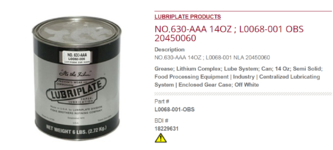
I use Superlube but I don't think this is rocket science. For ratchets that are hard to take apart I simply dunk them in Dexron VI ATF. Any lube is better than no lube and this isn't a high speed application. All you're trying to do is reduce friction and metal to metal contact. For my grinders I use John Deere Corn Head grease as its very thin NGLI 0 I believe just like the Lubriplate shown above. I believe that would work fine as well. If you use a normal NLGI #2 grease in a grinder all you accomplish is having the grease flung onto the walls of the gear case with nothing remaining on the gears. The corn head grease is thixotropic and goes from solid to liquid as it undergoes shear. That's why it’s so good for the grinder application.
 

RandyJ

Member
Joined
Aug 11, 2020
Messages
10
Location
Dallas-Fort Worth
I bought a 3 oz tube of Super Lube from Amazon it is NLGI 2 grade, which is about the thickness of typical grease.
In my humble opinion it probably is too thick for fine tooth ratchets, (I did put a little regular grease in my old 3/8 Craftsman V series and it seems good but have not used it yet). After looking at the Super Lube website for a bit I discovered that they do sell NLGI 00 grade which is much thinner. However I could not find a place to buy a 3 oz tube of the grade 00 stuff. All 3 oz tubes I saw for sale were grade 2.
A Tekton website has small packages of Super Lube, (item #C01510), but does not specify the NLGI grade.

I ended up ordering a 14.1 oz container from the Super Lube website, (41160/00). This grease seems semi liquid at room temperature.
I think it will work better than the NLGI grade 2 stuff.
 

Attachments

  • IMG_1795.JPG
    IMG_1795.JPG
    640.7 KB · Views: 25
  • IMG_1796.JPG
    IMG_1796.JPG
    811.7 KB · Views: 39
Last edited:

lardy1

Well-known member
Joined
Mar 17, 2019
Messages
3,399
Location
Michigan
I think I've sat in every seat on this bus and I'm right back where I started. If I disassemble, it gets fresh 3 in 1. Other than that, I just use them. A ratchet isn't going to generate much heat.

I've often wondered how much lubrication actually influences backdrag. I'm certain individual designs will vary from one to the other but individually, I suspect there is less than we might think. I read a thread in here when I first started coming here about it and there were good points made but no solid, measured comparisons. I sometimes think the cushion of the lubricant reducing vibration causes us to think it's lighter just because it's smoother. I'm guessing, though.
 

CHI_Tool&Die

Well-known member
Joined
Jul 20, 2021
Messages
1,386
Location
Chicago, IL
I think I've sat in every seat on this bus and I'm right back where I started. If I disassemble, it gets fresh 3 in 1. Other than that, I just use them. A ratchet isn't going to generate much heat.

I've often wondered how much lubrication actually influences backdrag. I'm certain individual designs will vary from one to the other but individually, I suspect there is less than we might think. I read a thread in here when I first started coming here about it and there were good points made but no solid, measured comparisons. I sometimes think the cushion of the lubricant reducing vibration causes us to think it's lighter just because it's smoother. I'm guessing, though.
It’s weird. Like my Williams are lubricated all over the entire head. But my Proto instructions show that grease is only supposed to go on the pawl and not the teeth so I’m kinda confused as to the point of lubrication. My 1/2” sounds so dry I wanted to take it apart and work on it some.
 

seber

Well-known member
Joined
May 31, 2016
Messages
4,195
Location
Deep East Tx.
When I take crusty ratchets apart, I put them back together with red grease. I don't know the spec. It's been in my shop for many years. Then I spin the ratchet well and put it in a vise and give it hell. If it slips, take it down and switch to oil. There doesn't seem to be any correlation between type of ratchet and type of lube to make it work. If it works with grease, I consider that to be a good thing as the grease will last longer in use. The only exception is high tooth count lever types as I don't expect them to do well with grease. But then, I've only done a couple of those and that was just because they were new.
 

ecotec

Well-known member
Joined
Oct 5, 2010
Messages
5,444
When I take crusty ratchets apart, I put them back together with red grease. I don't know the spec. It's been in my shop for many years. Then I spin the ratchet well and put it in a vise and give it hell. If it slips, take it down and switch to oil. There doesn't seem to be any correlation between type of ratchet and type of lube to make it work. If it works with grease, I consider that to be a good thing as the grease will last longer in use. The only exception is high tooth count lever types as I don't expect them to do well with grease. But then, I've only done a couple of those and that was just because they were new.
Dual 80’s do fine with SuperLube, as do dual pawl Wrights and Pittsburgh Pros.
 

CHI_Tool&Die

Well-known member
Joined
Jul 20, 2021
Messages
1,386
Location
Chicago, IL
Update: I disassembled, cleaned, and lubricated my 1/2” Proto round head with super lube as I had it on hand. Damn thing is smooth as a Ko-ken ratchet now. These palm control ratchets are just awesome. I’m going to work on the rest of them this weekend. That graphite grease from the factory really gums up and it took awhile to clean the pawl, spring and other parts.
 

AEAdam

Well-known member
Joined
May 27, 2023
Messages
2,750
Location
SE PA
if your ratchet is quieter when you are done rebuilding it, you did it wrong. You want to hear and feel a strong mechanical clicking when ratcheting

If you grease your gear teeth, especially for fine toothed ratchets, the pawl(s) won’t go 100% home and you‘ll wear or fail your ratchet.

The grease goes between the gear and the face plate and body. Grease the sides of the pawl. If a little grease gets on the gear, you’ll be fine.

Everything inside your ratchet benefits from a little oil. Don’t degrease your ratchet guts. They may corrode. A few drops of 3in 1, then grease in the right spots. You can buy superlube oil, but I’m pretty sure it’s compatible with good ole fashioned mineral oil like 3 in 1.

PS, I dont know what Koken does, but it is possible to polish gear teeth to make them smoother feeling and quieter. I wouldnt be surprised if they were achieving a higher than normal surface finish.
 

CHI_Tool&Die

Well-known member
Joined
Jul 20, 2021
Messages
1,386
Location
Chicago, IL
Update #2. I don’t think these ratchets like super lube. The first go was smooth but then upon using it more the ratchet slips into neutral when trying to change directions. Basically the whole anvil will turn with the dial. So I tried tightening and loosening the torx screw with zero success. Took it all apart and cleaned it out. Tried reassembly dry and the ratchet isn’t slipping into neutral anymore but it’s binding. Took it apart a third time and just dropped some oil in and now I cannot reassemble it. I don’t know if the heart spring is bent or what but it’s being a real nightmare. I’m walking away and going to work on it tomorrow.
 

RandyJ

Member
Joined
Aug 11, 2020
Messages
10
Location
Dallas-Fort Worth
I just put a new 3/8 kit in a round head 1/4 SK 40970 with the grease that came with the kit. It is very smooth, very little backdrag. I did clean out the gunk that was in it and it is a new mechanism so it is not all the lube.

I used to only lube my pear head ratchets when they started acting up. I guess the pawl was not able to move freely causing the ratchet to not catch consistently and/or the adjustment lever not to work well. I usually just used whatever was handy, WD40, 3 in one, motor oil. That almost always fixed the immediate problem.

But the lighter the oil the faster it drains and drys out. Also, if there is a buildup of gunk its just not going to work as well as if it was cleaned out and re-lubed, (in the right way for the particular ratchet:) ). Sealed ratchets may need a grease that won't swell the seals. As noted in other places on GJ, cold temperatures can have an effect if too thick grease is packed in.

Last week I tried some 90w gear oil which lubed really well but I don't like the odor. :oops:
 

RFBIII

Member
Joined
Apr 17, 2023
Messages
9
Location
Not-so-free America (California)
It's your ratchet so it is your prerogative to use the lubrication that you choose for it. I'll throw in my 2 cents and advise use of Lubriplate SFL-0 since a ratchet is a pawl against gear application. Lubriplate SFL-0 is the same lubrication that I generally use on my firearms, ideal for lubricating things like a pistol slide riding on the pistol receiver.

Lubriplate SFL-0 is also food grade and non-toxic so it is safer to use and be around!
 

AEAdam

Well-known member
Joined
May 27, 2023
Messages
2,750
Location
SE PA
I'll throw in my 2 cents and advise use of Lubriplate SFL-0 since a ratchet is a pawl against gear application.
Lubriplate SFL-0 is also food grade and non-toxic so it is safer to use and be around!
Lubriplate is an old company who know what they are doing and make high quality products for industry. The grease you are recommending is a modern full synthetic similar to Superlube, but less viscous. It contains an anti-microbial, presumably for food service equipment. SFL and Superlube are both food safe. The addition of PTFE found in Superlube would probably make it the better choice for a weapon slide or a ratchet.

Lubriplate and SuperLube make synthetic greases in a range of viscosities. SFL-0 is a O grade (less viscous) grease than Superlube NLGI 2.

For this conversation, more than brands or even viscosities chosen, the key is differentiating between corrosion prevention needed on the gear and pawl teeth and the lubrication required on the sliding (non-toothed) surfaces. You really don’t want to pack a ratchet head full of any grease.
 
To avoid these ads, REGISTER NOW!

RFBIII

Member
Joined
Apr 17, 2023
Messages
9
Location
Not-so-free America (California)
Lubriplate is an old company who know what they are doing and make high quality products for industry. The grease you are recommending is a modern full synthetic similar to Superlube, but less viscous. It contains an anti-microbial, presumably for food service equipment. SFL and Superlube are both food safe. The addition of PTFE found in Superlube would probably make it the better choice for a weapon slide or a ratchet.

Lubriplate and SuperLube make synthetic greases in a range of viscosities. SFL-0 is a O grade (less viscous) grease than Superlube NLGI 2.

For this conversation, more than brands or even viscosities chosen, the key is differentiating between corrosion prevention needed on the gear and pawl teeth and the lubrication required on the sliding (non-toothed) surfaces. You really don’t want to pack a ratchet head full of any grease.
AEAdam, you may be correct. PTFE could be a worthwhile addition to the formulation of the lubricant used. Presently I have lots of the Lubriplate SFL-0 on hand so I certainly want to exploit its use.

While, as they say, YMMV, I have found the Lubriplate working splendidly on my ratchets, mostly round head type, which include:
  • Classic single rocking pawl SK units
  • Facom era sliding pawl SK units (SK "Tuff 1")
  • Allen tri-prop sliding pawl units
  • Craftsman tri-prop sliding pawl units
  • Proto (current design and production) sliding pawl units
Even my old Proto pear head torque wrench with dog pawls and a couple of older Craftsman pear head ratchets seem quite happy running this lubricant system. No hiccups in ratcheting action and no shifting into neutral. Nothing but smoothness and reliability.

And, yes, I concur that you do not want to pack the ratchet mechanism with grease. It is not an automotive wheel bearing. As the Lubriplate motto says "It's the film".
 

AEAdam

Well-known member
Joined
May 27, 2023
Messages
2,750
Location
SE PA
AEAdam, you may be correct. PTFE could be a worthwhile addition to the formulation of the lubricant used. Presently I have lots of the Lubriplate SFL-0 on hand so I certainly want to exploit its use.

While, as they say, YMMV, I have found the Lubriplate working splendidly on my ratchets, mostly round head type, which include:
  • Classic single rocking pawl SK units
  • Facom era sliding pawl SK units (SK "Tuff 1")
  • Allen tri-prop sliding pawl units
  • Craftsman tri-prop sliding pawl units
  • Proto (current design and production) sliding pawl units
Even my old Proto pear head torque wrench with dog pawls and a couple of older Craftsman pear head ratchets seem quite happy running this lubricant system. No hiccups in ratcheting action and no shifting into neutral. Nothing but smoothness and reliability.

And, yes, I concur that you do not want to pack the ratchet mechanism with grease. It is not an automotive wheel bearing. As the Lubriplate motto says "It's the film".
The US Army is switching to a dry solid film lube (DSL) for small arms instead of running wet. Even in the absence of sand, the dry film outperformed the CLP they had previously used.

There might be an opportunity for tool manufacturers to switch to dry film lube as a permanent treatment in lieu of grease.

You are correct that the applications (weapon slides/BCGs) are similar to ratchets and not similar to wheel bearings for example.
 
Last edited:

RFBIII

Member
Joined
Apr 17, 2023
Messages
9
Location
Not-so-free America (California)
Update #2. I don’t think these ratchets like super lube. The first go was smooth but then upon using it more the ratchet slips into neutral when trying to change directions. Basically the whole anvil will turn with the dial. So I tried tightening and loosening the torx screw with zero success. Took it all apart and cleaned it out. Tried reassembly dry and the ratchet isn’t slipping into neutral anymore but it’s binding. Took it apart a third time and just dropped some oil in and now I cannot reassemble it. I don’t know if the heart spring is bent or what but it’s being a real nightmare. I’m walking away and going to work on it tomorrow.

CHI_Tool&Die, take heart! I own many of the Facom design sliding pawl type of round head ratchets, including several Proto round head units such as yours. As such I have disassembled and reassembled all of them, cleaning and lubricating as necessary. All of them work reliably and I have full confidence in reaching for any of them to do the job.

While I obviously don't know all the details of your ratchet challenge I can relate my experiences, which may be helpful to you. Very recently I acquired a Proto J4757F 1/4" drive flex handle unit. It was not as smooth as my existing Proto (and other) sliding pawl ratchets, and did slip into neutral. So, in brief, I proceeded as follows:
  • I disassembled the ratchet head mechanism, putting the parts in a magnet bowl to prevent the untimely exodus of one of the parts (can you say "heart spring"?).
  • I used my trusty Remington Shotgun Cleaner to remove any existing lubricant, the villain in this particular tale.
  • After the parts were clean and dry I applied a film of Lubriplate SFL-0 to the annular head gear teeth, and to the pawl and anvil assembly surfaces upon which the pawl moves back and forth.
  • Upon having the aforementioned parts in normal position back in the ratchet head I applied a drop of Blue Loctite to the Torx fastener so that it was ready to be used.
  • The heart spring legs are inserted into the top pawl hole and then the selector switch cover is put into place. Slide into place making sure the pin on the cover catches the bottom or point of the heart spring as the cover slides into its place.
  • While holding the assembly in place in the ratchet head thread the Torx fastener back into its appointed hole and tighten until it bottoms. Then back the fastener off a nominal 1/4 turn.
  • Check your ratchet for correct function including, of course, the switching action.
Every time I have encountered a ratchet malfunction (so far, always caused by dry or sticky or gummy or gooey lubricant) I have emerged victorious. My ratchets, as they should, bring joy to me, not grief.

Hope this is helpful, and wishing to you much success in your current tool challenge!
 

CHI_Tool&Die

Well-known member
Joined
Jul 20, 2021
Messages
1,386
Location
Chicago, IL
CHI_Tool&Die, take heart! I own many of the Facom design sliding pawl type of round head ratchets, including several Proto round head units such as yours. As such I have disassembled and reassembled all of them, cleaning and lubricating as necessary. All of them work reliably and I have full confidence in reaching for any of them to do the job.

While I obviously don't know all the details of your ratchet challenge I can relate my experiences, which may be helpful to you. Very recently I acquired a Proto J4757F 1/4" drive flex handle unit. It was not as smooth as my existing Proto (and other) sliding pawl ratchets, and did slip into neutral. So, in brief, I proceeded as follows:
  • I disassembled the ratchet head mechanism, putting the parts in a magnet bowl to prevent the untimely exodus of one of the parts (can you say "heart spring"?).
  • I used my trusty Remington Shotgun Cleaner to remove any existing lubricant, the villain in this particular tale.
  • After the parts were clean and dry I applied a film of Lubriplate SFL-0 to the annular head gear teeth, and to the pawl and anvil assembly surfaces upon which the pawl moves back and forth.
  • Upon having the aforementioned parts in normal position back in the ratchet head I applied a drop of Blue Loctite to the Torx fastener so that it was ready to be used.
  • The heart spring legs are inserted into the top pawl hole and then the selector switch cover is put into place. Slide into place making sure the pin on the cover catches the bottom or point of the heart spring as the cover slides into its place.
  • While holding the assembly in place in the ratchet head thread the Torx fastener back into its appointed hole and tighten until it bottoms. Then back the fastener off a nominal 1/4 turn.
  • Check your ratchet for correct function including, of course, the switching action.
Every time I have encountered a ratchet malfunction (so far, always caused by dry or sticky or gummy or gooey lubricant) I have emerged victorious. My ratchets, as they should, bring joy to me, not grief.

Hope this is helpful, and wishing to you much success in your current tool challenge!
I took a break from the ratchet today. I'm the kind of guy that will get obsessive over something like this and I don't want it to take over my holiday weekend. I'll be back at it tomorrow. When you put together your ratchets, are you holding the drive in a vise? I'm curious if that is what is causing my problem with the heart spring. I'm not sure if the heart spring is seated properly because I can change direction, but every so often the whole drive will spin as if the drive is completely disconnected.
 

RFBIII

Member
Joined
Apr 17, 2023
Messages
9
Location
Not-so-free America (California)
I took a break from the ratchet today. I'm the kind of guy that will get obsessive over something like this and I don't want it to take over my holiday weekend. I'll be back at it tomorrow. When you put together your ratchets, are you holding the drive in a vise? I'm curious if that is what is causing my problem with the heart spring. I'm not sure if the heart spring is seated properly because I can change direction, but every so often the whole drive will spin as if the drive is completely disconnected.
CHI_Tool&Die,

No, I do not use a vise nor would I recommend one. Your fingers and thumb should be able to hold the assembly together with enough firmness to achieve reassembly and reach the objective of a fine working ratchet!

My guess is that the pin on the underside of the switch cover is not properly engaged with the heart spring. This may come from assembling by more-or-less vertically lowering the switch cover onto the waiting assembly.

The heart spring is called such since it resembles an iconic heart shape (of course) and the switch cover pin needs to catch onto the bottom of the heart shape, opposite from the top lobe shapes and the two spring "legs" that fit into the pawl's top hole. This, of course, as the heart spring lies on top of the rotating assembly, with the fastener hole centered to the spring, waiting for you to attach the switch cover.

With regard to putting on the switch cover this analogy may be helpful. An aircraft landing on an aircraft carrier deck comes in at an angle, and after making contact needs to have its tailhook catch a cable. Similarly you need to slide the cover into place, catching the bottom point of the heart spring with the pin, and then continuing to move the cover into place. The heart spring is now tensioned by having its bottom point stretched by the pin. Hold the assembly firmly together while you insert and tighten the Torx fastener. Again, factory standard is to bottom the screw and then back off a quarter turn (with something like Blue Loctite used to keep your screw adjustment from changing or the fastener from backing out over time).

Hoping this answers your question(s). I'm sure that you are more than capable of getting your ratchet to perform properly and, having had success, will not view future disassembly and reassembly as too daunting of a proposition.

Please let us know how you fare. Here's to a happy, content, and satisfied tool user!
 

dnschmidt

Well-known member
Joined
Oct 3, 2014
Messages
7,276
Location
Phoenix, AZ
If you are going to use an oil instead of a grease there is nothing in the lubrication world that has had more science put into it than ATF. When you consider what it all has to do to accomplish its intended purpose the chemistry involved is impressive. I like corn head grease for many purposes but if it's oil that I need I'm using ATF.
 

CHI_Tool&Die

Well-known member
Joined
Jul 20, 2021
Messages
1,386
Location
Chicago, IL
CHI_Tool&Die,

No, I do not use a vise nor would I recommend one. Your fingers and thumb should be able to hold the assembly together with enough firmness to achieve reassembly and reach the objective of a fine working ratchet!

My guess is that the pin on the underside of the switch cover is not properly engaged with the heart spring. This may come from assembling by more-or-less vertically lowering the switch cover onto the waiting assembly.

The heart spring is called such since it resembles an iconic heart shape (of course) and the switch cover pin needs to catch onto the bottom of the heart shape, opposite from the top lobe shapes and the two spring "legs" that fit into the pawl's top hole. This, of course, as the heart spring lies on top of the rotating assembly, with the fastener hole centered to the spring, waiting for you to attach the switch cover.

With regard to putting on the switch cover this analogy may be helpful. An aircraft landing on an aircraft carrier deck comes in at an angle, and after making contact needs to have its tailhook catch a cable. Similarly you need to slide the cover into place, catching the bottom point of the heart spring with the pin, and then continuing to move the cover into place. The heart spring is now tensioned by having its bottom point stretched by the pin. Hold the assembly firmly together while you insert and tighten the Torx fastener. Again, factory standard is to bottom the screw and then back off a quarter turn (with something like Blue Loctite used to keep your screw adjustment from changing or the fastener from backing out over time).

Hoping this answers your question(s). I'm sure that you are more than capable of getting your ratchet to perform properly and, having had success, will not view future disassembly and reassembly as too daunting of a proposition.

Please let us know how you fare. Here's to a happy, content, and satisfied tool user!
Thank you! I greased the ratchet again and put it together. It’s annoying trying to line the pin up with the spring but I think I got it this time. Every so often the entire mechanism will spin if I try to change the direction but I noticed my flex 1/2” does the same and I haven’t messed with that one. So I am going to leave it and see how it goes. I really do love these palm control ratchets. I know I said Snap-on are really nice in another thread but then I go out and use the Protos and fall in love again. I think I’m a Proto round head kinda dude at heart. 😄
 

ecotec

Well-known member
Joined
Oct 5, 2010
Messages
5,444
The only ratchet that I ever had an issue with SuperLube was a Proto.

If I ever open up another Proto, I may just use Ultra Slick 81950.

I put a socket on it and clicked it through all the teeth a bunch of times and it worked better and better.

Is the heart spring the spring that goes into the selector switch?

Out of all the ratchet designs I have… I like the mechanism of these the least.
 
Last edited:

CHI_Tool&Die

Well-known member
Joined
Jul 20, 2021
Messages
1,386
Location
Chicago, IL
The only ratchet that I ever had an issue with SuperLube was a Proto.

If I ever open up another Proto, I may just use Ultra Slick 81950.

I put a socket on it and clicked it through all the teeth a bunch of times and it worked better and better.

Is the heart spring the spring that goes into the selector switch?

Out of all the ratchet designs I have… I like the mechanism of these the least.
Yeah the heart spring is the thing holding the entire pawl onto the drive/anvil and the cap has a peg which goes into the v of the heart spring and that creates the tension to change direction. I was having issues with alignment and direction changing probably because the torque on the screw is what applies all the holding force. It’s not my favorite mechanism but when it works it’s so smooth.

As far as the super lube, my first attempt I applied as much as I saw on the instructions. After a few members said otherwise I cleaned it and put just a bit on it. It seems to be much better. I guess in this case a little goes a long way.
 

joel_400

Well-known member
Joined
Oct 16, 2022
Messages
405
Location
Nw ohio
Throughout my wife's ratchet collection I've cleaned over 150 ratchets...many of them went from non-working to working just by cleaning and lubing them. I've only ran into a few that were fubar'd enough they couldn't be fixed and some are rare enough I've not been able to find parts. I have made or substituted some parts. Once I did a couple snap on repairs I got a couple small tunes of Super Lube from the Snap on man. It's all I've used on ratchets since. I use a minimal amount and it seems to work very well.
Joel
 

AEAdam

Well-known member
Joined
May 27, 2023
Messages
2,750
Location
SE PA
If you are going to use an oil instead of a grease there is nothing in the lubrication world that has had more science put into it than ATF. When you consider what it all has to do to accomplish its intended purpose the chemistry involved is impressive. I like corn head grease for many purposes but if it's oil that I need I'm using ATF.
It’s for sealed systems with sumps. Excellent light oil, but too light for an unsealed ratchet and really wrong for the application. You really want something that will stay put and has thickness for the sliding surfaces.
 
Last edited:

dscheidt

Well-known member
Joined
Apr 26, 2017
Messages
2,892
If you are going to use an oil instead of a grease there is nothing in the lubrication world that has had more science put into it than ATF. When you consider what it all has to do to accomplish its intended purpose the chemistry involved is impressive. I like corn head grease for many purposes but if it's oil that I need I'm using ATF.
The science is on making it work in the particular kind of transmission it's put in though, not into making a magic oil. (And a quick look at the range of ATF offered by a single maker will tell you there's lots of application specific lubrication going on.) It's very nice light oil, and the endurance under extreme conditions is impressive. but that doesn't make it the right oil for anything else. That's not tot say it's not suitable for a lot of general low demand oil uses. But in a ratchet, it's going to leak out and make a mess in the drawer. Something a little thicker or stickier works better, but it's really hard to screw up lubing a ratchet. Too much grease is about the only way to do it.
 

tamaraw

Well-known member
Joined
Jun 6, 2022
Messages
842
...there is nothing in the lubrication world that has had more science put into it than ATF.
Must be great for everything then! I'll be sure to throw that in my engine, use on my door hinges, spread on my cookie sheet, use in the bedroom, etc. :lol:

ATF is designed as a hydraulic fluid and high speed lubricant... it can also be a nasty solvent, have a bit of an odor, and is hydrophilic in nature. Not to mention that there are many different types for different vehicles.

It's fairly thin and not something you would want leaking out and getting on your skin, automotive interior, woodworking project, etc.

Pretty much anything will "work" in a ratchet but ATF's strengths don't apply in that application while many of its downsides do. As far as friction modifiers and rust preventatives go, there are just way cleaner options.
 

dnschmidt

Well-known member
Joined
Oct 3, 2014
Messages
7,276
Location
Phoenix, AZ
I've used ATF for decades and it works fine. The fact that it's super thin and gets everywhere is more or less the point. I have several sealed head ratchets that I simply dunk in ATF and to paraphase a famous hot sauce commercial "That **** gets everywhere." Lay it on a microfiber towel for a day and wipe it off and you're good to go for another five years.
 

tamaraw

Well-known member
Joined
Jun 6, 2022
Messages
842
I've used ATF for decades and it works fine.
You could use canola oil and it would "work fine". Sure, ATF can work, it's just not the space age wonder-lubricant you were making it out to be. Also has a few downsides compared to other options but nobody is telling you what to use.

I have several sealed head ratchets that I simply dunk in ATF...
I have yet to see a sealed round head ratchet ;)
 

darkzero

Well-known member
Joined
Oct 20, 2011
Messages
3,325
Location
SoCal
I have several sealed head ratchets that I simply dunk in ATF
I have yet to see a sealed round head ratchet ;)
What is considered a sealed ratchet? If it's sealed, shouldn't dunking in oil not do very much?

I have a ratchet or two that I remember having orings inside (not round heads) but I don't consider them to be sealed. Dunking would work on those but that's not how I would lube them.

I do have some V-series Craftsman ratchets that at a quick glance don't appear to be able to disassemble easily. I suppose those I would try dunking if ever needed (ATF wouldn't be my 1st choice though).
 

tamaraw

Well-known member
Joined
Jun 6, 2022
Messages
842
What is considered a sealed ratchet?
I have seen some of the Facom models or Snap-on dual 80s advertised as such.

Typically a pear head with a flat top (anvil doesn't poke through) and some sort of o-ring or similar on the bottom. Supposed to prevent dust or fluid intrusion.

If it's sealed, shouldn't dunking in oil not do very much?
My thoughts exactly. And if oil could get in, it can certainly get out too. And does this mean that the user isn't disassembling the mechanism to clean? Too many questions if you think about that statement for more than a second.
 
To avoid these ads, REGISTER NOW!
Top Bottom