zmotorsports
ALLIANCE MEMBER
I don't mind leaning forward to reach park or reverse but wanted to have 1,2,D within comfortable reach while driving. What did you do to make a auto floor shifter work on your '84 square body?
I initially though that tilting it back would help with reach to R, P, but it didn't really and looked goofy. I don't think I posted v1.0

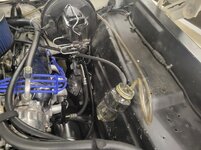
I agree. Catch can can prevent getting burned with coolant. Burping the system can spray your feet, or it can vent itself at any time. It can also act as an memory element, providing evidence of an event that pushed coolant out.
Justin, similar to you, I fabricated a base in which to mount the B&M Quick Silver on to raise it up enough to be comfortable. Also like you, I had mine to where I just had to lean forward for Reverse and Park, but the ratcheting for the forward gears was able to be performed sitting in standard driving position without having to exert any body English to reach. As you are aware, when racing everything has to be comfortable without taking eyes off of road or maneuvering one's body for certain functions. That being said, this was early on in my fabrication journey, being still in High School, so mine looked nothing as nice as yours. The later ones I did when I had my speed shop I was much more pleased with.
As for cooling system catch cans, I think they are much more of an integral part of the system than merely getting burned by coolant or showing evidence of coolant being pushed out because in a normal functioning system that has the correct pressure cap on it, coolant will get pushed out. The catch can goes one step further to allow that coolant that has been expelled from the radiator to actually be drawn back in when the system cools and therefore prevents air pockets in the system.
One of the services I really pushed back when I had my speed shop was the installation of surge tanks into the cooling system. I found owners were less likely to keep an eye on their coolant levels and just wanted to drive their cars until one day all of a sudden they are down enough coolant that the system is not functioning as it should and they have no idea when the coolant was lost, whether it was a sudden loss or over a period of months. The surge tank allows the owner to open and verify the level occasionally without ever having to remove the radiator cap. Because the surge tank is vented to atmosphere, all they have to do is check it occasionally for any evaporation from the surge tank. I'd tell my clients to just check it every once in a while, when they checked other vital fluids and there should be no need to remove the radiator cap if everything is functioning fine.


 We banter back and forth quite a bit so I know he had to see that coming. He couldn't have walked into that one completely blind.