To avoid these ads, REGISTER NOW!

Rebuilding a monarch 10ee lathe

OP
G

Grant Gunderson

Well-known member
Joined
May 17, 2013
Messages
2,323
Location
Bellingham, WA
The thought that continuously pops into my head as I admire your rebuilding skills and attention to detail...is that some people (engineers I suspect) actually sat down with pen and paper and designed this machine. Sure there was probably some trial and error, and modifications from earlier designs..but still 90% of the design is probably from the original right?
I wouldn't short sell your 7 years of training. I'm constantly amazed by what engineers are able to come up with simply with pen and paper. I can fabricate stuff in my garage by trying and bending and reworking stuff by trial and error and make modifications but I can never just sit down and draw stuff that will work ..at least not until after I build it.

Thanks for sharing with us!
As my dad's been aging rather rapidly, I've been having more and more conversations with him and the work that he did as an Engineer, for both the Navy Nuclear power laboratory designing reactors for submarines, to his work at Hanford as an
Engineer in the 200 area, when they converted from processing plutonium to Nuclear waste around other projects he still wont talk about. I've learned so much from him over the years, from watching him work in his shop as a kid, to now, talking to him about what ever project I am working on and getting his insights and advice. Just when I think I'm getting a good grasp on things, something will casually get mentioned about his past work experiences and I quickly realize I still dont know ****. It's really hard to watch our parents age, and I realize and accept thats a fact of life, but I'm really not looking forward to the day where I cant have my daily calls with him talking about random projects etc and getting his advice and input.... its like there is this immense amount of wisdom I've slowly been tapping into, but I realize I'll never be able appreciate all of it in the time he has left.
It's not as complex, but I have to say I was impressed when I rebuilt my '39 Warner & Swasey turret lathe. Those guys knew how to build a machine that lasts. Mine's eighty-plus years old, and has certainly made hundreds of thousands of parts- and save for a few places, it's still tight as a drum.

The turret locking mechanism is solid as a rock, there's zero play in the spindle, there's no appreciable wear in the collet mechanism (originally a motorized, power collet closer, which I converted to manual since the motor was missing) the sliding ways for the turret ram are smooth as glass and show very little wear (although they're replaceable, and it's certainly possible they were at some point replaced) the power feed gear drive for the ram works smoothly and perfectly in all gears, the feed clutch works perfectly...

Compare something like that, or Grant's 10EE, to even a $10K modern import, and it's night and day.

Doc.
The difference and what modern society has lost site of, is these machines where built to do a job I the best way possible, not to a price point. For example, could a bracket be held in place by a couple ⅜ bolts? Sure, but instead of using two bolts, the Monarch also uses two tapper pins in addition to not only secure a bracket but to ensure perfect alignment. It's just a better way of doing things that we have lost in favor of short term profits.

While a modern CNC machine, can be more efficient and accurate, none of them can hold the tolerances for decades and decades like the high-end old iron can. Modern machines are built to be disposed of, not to keep working.

What a lot of people dont realize is the 10EE was the machine that made the Atomic era possible. It was the one of the only machines that was capable of manufacturing the fuel rods to a high enough precision, as well as one of the only machine that was capable of accurate machining the Plutonium cores for the nuclear arsenal.

I've been told Monarch still builds and sales the 10EE to custom order for smoothing like $250K+
 
To avoid these ads, REGISTER NOW!
OP
G

Grant Gunderson

Well-known member
Joined
May 17, 2013
Messages
2,323
Location
Bellingham, WA
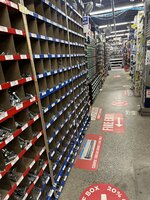
With the long Holiday weekend ahead, I decided it would be smart to stock up and replenish my hardware supply. Hardware Sales here in Bellingham, is a one of a kind hardware store, it's an old school family run hardware store, but it spans over 4x4 city blocks. It's massive. Best way to describe it it, that its like walking inside of the McMaster-carr catalog. It's the kind of places that can make cable rigging for logging out fits, and also supplies all 3 of the major oil refineries in town. Back in the day you could even buy dynamite there!
IMG_0280.jpeg
IMG_0279.jpeg
IMG_0278.jpeg
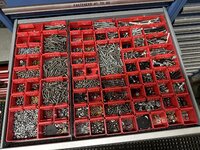
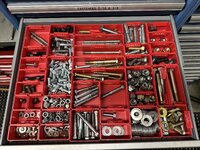
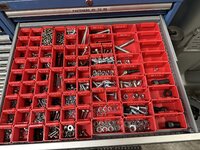
Thats just a small fraction of the hardware they stock... it's unreal the selection they have on hand. There prices may be a bit higher than Lowes or Home Depot, or ordering online, but I'd gladly pay the price difference when I know they will heave exactly what I need in stock, and they actually have super knowlegeage staff. Almost all of them in each department are retired from their perspective trades. Their plumbing section, abrasives department, tools, etc all have unmatched selection. I'd be willing to bet it's one of the biggest hardware stores in the country. Best part of it, is they sale all of the hardware by the piece, so you can go in and buy exactly what you need, or do what I do and buy it buy the box and get a nice 20% discount.
IMG_0282.jpeg
IMG_0283.jpeg
IMG_0285.jpeg
IMG_0286.jpeg
IMG_0287.jpeg
Now with a hardware store like that only 10 minutes away, you might ask why I keep such a large selection on hand. Well the answer is they are not open 24 hours, and I hate having to stop mid-project to run and get more hardware, so I like to keep a good selection on hand so I can maximize my productivity when I'm working in my shop.... just like why I like having all of my tools well organized. Being able to quickly find what you need can speed any project up ten fold.
 
OP
G

Grant Gunderson

Well-known member
Joined
May 17, 2013
Messages
2,323
Location
Bellingham, WA
Ok, back to the lathe. I took all of the bearing retainers back off of the apron and painted them.
IMG_9801.jpeg
I also cut new gaskets for them as well.
IMG_9803.jpeg
And installed all of them. I then needed to reinstall the thrust washers for the worm gear.

IMG_0288.jpeg
I had ordered new ones from McMaster. However I wasn't too keen on the ones that arrived. They are a thinner stack and quite frankly just not as high of quality as the originals.
IMG_9888.jpeg
Since the originals are in very good shape, I lubed them with way oil.
IMG_9891.jpeg
and inserted a thrust bearing stack on each side of the worm.
IMG_9892.jpeg
With both stack in, I then drove the retaining bushing on the end, in flush with the casting. You can see a brass drift was used to help keep everything in line.
IMG_9893.jpeg
The bushings then get retained by dog point set screws from the bottom. The apron is now ready to be installed!
IMG_0040.jpeg
In order to install it, I used some long threaded bolts, a couple of spacers and some nuts. This way I can have it held in place while I connect the oil line to the carriage and then raise it. The spacers keep the paint from getting damaged. Now, you could do this with long SHCS, however the lathe used and outdated SHCS standard that requires smaller head SHCS, so modern ones need to be ground down to fit, and I didnt want to do that for two temporary bolts.
IMG_0043.jpeg
I placed some thick foam to protect the oil catchment of the lathe to rest the apron on. I then threaded the long bolts into the apron so it can hang in place.
IMG_0045.jpeg
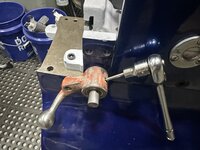
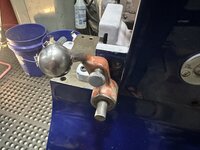
Next I need to install the carriage lock. You can see I coated the threads with Tef-Gel
 
Last edited:
OP
G

Grant Gunderson

Well-known member
Joined
May 17, 2013
Messages
2,323
Location
Bellingham, WA
IMG_0048.jpeg
You can see here how the carriage lock bracket fits between the carriage and the apron. It fits over the carriage oil line to help hold it in place.
IMG_0047.jpeg
Now, I can connect th carriage oil line to the apron. I slowly raised the apron until the line met up with the Tee on the side.
IMG_0049.jpeg
I then tighten it down with a ⅜" flare nut wrench. I can now secure the apron into place.
IMG_0054.jpeg
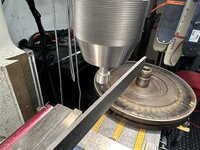
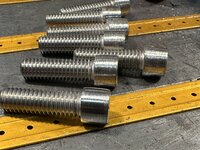
As I mentioned earlier, Modern SHCS's dont fit the lathe's counter bores in this size. So all of the bolt heads need to get ground down. Sure would be nice if I had a working lathe to do this.... so I started by chucking the bolts into my drill, and spinning the drill while grinding the heads with my bench grinder. That made fast work of taking them down to size.
IMG_0065.jpeg
Thats a **** finish tho.
IMG_0064.jpeg
So I chucked the bolts into the mill, and then spun it while holding a file to them. I also knocked the edges down too.
IMG_0067.jpeg
I then followed them with a stone.
IMG_0066.jpeg
Thats way better... now you will never see this finish on the lathe, but its important to me that I dont skip on the small details, even if they are hidden from sight.
IMG_0068.jpeg
They all got coated with Tef-Gel prior to installation.
IMG_0071.jpeg
Once I got them in, I removed the two temporary bolts and replaced those with the correct size as well.
 
OP
G

Grant Gunderson

Well-known member
Joined
May 17, 2013
Messages
2,323
Location
Bellingham, WA
The drain plug for the apron is ⅛NPT
IMG_0057.jpeg
I chased the threads with a pipe tap.
IMG_0058.jpeg
I decided I dont want to use a pipe plug for the drain. I feel a valve with a hose barb will make changing the oil easier and less messy, so I will be more inclined to do it regularly in the future. I sued my bench vise to assemble the barb and valve first. Since these are pipe threads they get a wrap of teflon tape.
IMG_0060.jpeg
A brass elbow goes into the drain port first, then I attached the valve and pipe ******.
IMG_0079.jpeg
I could then fill the apron with way oil using a funnel.
IMG_0080.jpeg
I'm glad I am using the white backer for the site gauges, even with that it's damn hard to see the oil line with fresh oil! The apron pump oil pumps oil when the apron is traveling along the bed of the lathe so I ran it back and for a few times until the pump primed and I started to see the ways coated with oil. Only leak was the damn site glass. I used a rubber 0-ring behind the 3D printed part. I need to replace that o-ring with the original cork style. I'm going to run this batch in oil for just a short period of time, then drain and replace it anyways to make sure any errant stuff from assembly gets flushed out. When I do that I'll change the sight glass seals over.
Screenshot 2023-11-22 at 10.41.58 AM.png
Once I confirmed I had no other leaks, I installed the chasing dial assembly. Note you can see the silicone plug I put over the drain ****** to keep it clean.
IMG_0085.jpeg I then chased the holes on the end of the apron for the travel dial bracket. The travel dial bracket gets secured with two button head screws.
IMG_0088.jpeg
The travel dial holder gets secured to the bracket with two SHCS using this leveling washer setup.
IMG_0089.jpeg
The travel dial then slides into its mounting bracket, and finally the set screw here gets tightened to put pressure on the spring assembly that holds the dial to the bed.
IMG_0091.jpeg
and it works! .... remember I rebuilt it earlier in this thread.
 
Last edited:
OP
G

Grant Gunderson

Well-known member
Joined
May 17, 2013
Messages
2,323
Location
Bellingham, WA
Moving to the other end of the carriage I need to install the carriage stop dovetail.
IMG_0093.jpeg
I used an 8-32 thread forming tap to chase the hole.
IMG_0094.jpeg
The dovetail fits over the two pins and gets secured by the single 8-32 screw.
IMG_0097.jpeg
One of my carriage stops is the original dial indicator. I cleaned up the indicator way earlier in this thread. I plan on getting its housing chromed with the rest of the small parts. It is secured over the dovetail, but a set screw.

Other than having the handles / way wiper covers sent out for chrome. and the front bearing covers painted the carriage / apron is finally fully done mechanically.
 
OP
G

Grant Gunderson

Well-known member
Joined
May 17, 2013
Messages
2,323
Location
Bellingham, WA
The new bearing nut for the spindle arrived today!
IMG_0290.jpeg
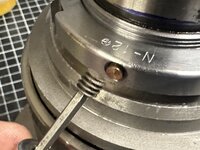
The spindle uses an N-12 standard bearing nut, thats been cross drilled for two set screws to push on brass plugs to lock it into place.
IMG_0291.jpeg
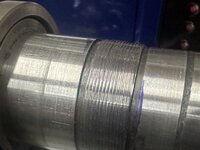
The new nut also wouldn't thread on smoothly. Ugh. Upon close inspection, I should see the spindle was starting to damaged the thread on the nut. See the second thread down belle the blue mark I made on it. So this confirms I need to chase the threads on the spindle.

The problem is a N-12 bearing nut is 2.360"-18 Thread Size. So here is our problem, 2.360" sure seems like and odd size, well thats because is 60MM, but instead of using a Metric thread pitch they used a thread pitch of 18TPI
IMG_0294.jpeg
as confirmed by my thread gauge. A bearing locknut thread chaser in this size is only $370 from McMaster..... So I ordered one of these universal thread chasers.... hopefully that works! So the spindle is still on hold.
 

RickP

Well-known member
Joined
Jan 15, 2013
Messages
1,552
Location
Annapolis, MD
The problem is a N-12 bearing nut is 2.360"-18 Thread Size. So here is our problem, 2.360" sure seems like and odd size, well thats because is 60MM, but instead of using a Metric thread pitch they used a thread pitch of 18TPI
Unbelievable! Threading anything that big is hard enough, even before adding English/metric problems into the mix. (and I thought I was having problems with metric hydraulic fittings -- it's nothing compared to your challenges)

Back when your lathe was designed, I'm really surprised they used metric for a spindle and bearing nut of that size.
 
OP
G

Grant Gunderson

Well-known member
Joined
May 17, 2013
Messages
2,323
Location
Bellingham, WA
Unbelievable! Threading anything that big is hard enough, even before adding English/metric problems into the mix. (and I thought I was having problems with metric hydraulic fittings -- it's nothing compared to your challenges)

Back when your lathe was designed, I'm really surprised they used metric for a spindle and bearing nut of that size.
Even back then, Metric was the defacto standard for bearings. So all of the bearings on the lathe are actually standard metric sizes. The challenge I found is the specs for the flanged bearings have changed over the years and modern bearings use snaprigns instead of flanges but those snap rings have a larger OD.

So the Spindle thread had to be a 60mm diameter as thats the inner. bore for the spindle bearings. Since metric threads where not yet that common 80+ years ago, they just used a standard English thread to cut them once they had machined the spindle to the proper metric dimensions. My plan of attach is to clean up the spindle best I can one the tool arrives, blue it up and see where its actually binding, then chase the threads. A previous owner had that spindle nut off at some point, and they did a **** job of removing it / installing it without the proper hook spanner, so I'm guessing they F'd the threads at that point.
 
OP
G

Grant Gunderson

Well-known member
Joined
May 17, 2013
Messages
2,323
Location
Bellingham, WA
Since I gotta wait on the spindle yet some more, I'm going to move along to the lathes end gearing.

First is installing the tumbler shaft clutch assembly into the end of the gear box.
IMG_9904.jpeg
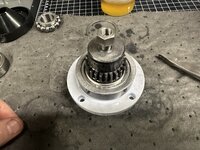
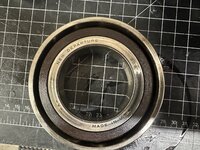
The bearings in it are a bit tricky. I uses a flanged angular contact New Departure NM0205B bearing that faces into the gear box. The modern replacement is a 205 angular contact bearing. The issue is I had zero luck finding a modern bearing in that size with the proper flange. The best I could find was one with a snapring, but the snap ring OD is too larger to fit.
IMG_9913.jpeg
While I dont like doing this, its pretty easy to swap the inner races on an angular contact bearing, so I put the inner race and bearing ring from the new 205 bearing into the older ND outer ring.

IMG_9896.jpeg
IMG_9915.jpeg
IMG_9916.jpeg
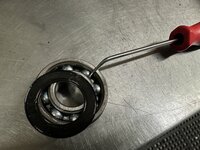
The outer bearing is a standard 6205 bearing. I had ordered mine with the snap rings, so I simply removed the snap ring to use it.
IMG_9897.jpeg
I lubed every thing here with the same gear oil the gear box uses, and then pressed the outer bearing in.
IMG_9923.jpeg
I then pressed the inner (now flanged) angular contact bearing in. The flange here is critical as it keeps the bearing stack and clutch from being forced out of the gear box when shifting from feed to threads. A that flanges needs to be flush with the protrusion on the bearing cover plate or it wont fit into the bore on the gear box.
IMG_9939.jpeg
I then cut a new gasket and slid the change gear stud in into the bearing stack.
IMG_9936.jpeg
The change gear goes on with the gear facing in to the bearing. Seems like you'd want it the other way, but this is how Monarch specs it in the manual.
IMG_9937.jpeg
The heavy washer then slides on next.
 
OP
G

Grant Gunderson

Well-known member
Joined
May 17, 2013
Messages
2,323
Location
Bellingham, WA
The feed shaft bearing assembly goes in next.
IMG_9945.jpeg
It uses two 6204 bearings. I am replacing them with new SKF ones. The outer bearing was sheilded originally and I ordered new sealed bearings.
IMG_0406.jpeg
The inner bearing must be open on both sides, as this is what allows you to fill the gear box by pouring oil into the feed shaft bearing assembly. So I simply removed the seals from the new bearing.
IMG_0407.jpeg
and flushed it with brake cleaner to remove the factory grease.
IMG_0409.jpeg
I then lubed it with gearbox oil.
IMG_0411.jpeg
The open bearing then goes into the inner side of the feed shaft bearing assembly
IMG_0412.jpeg
It gets retained by a large wire snap ring. I installed it by starting one end in the groove then working it around with my fingers pushing it in.
IMG_0415.jpeg
Once the snap ring was 75% in I then used an old bearing race in the arbor press to force it into its groove. I could then slide the shaft in. The non-threaded side goes into the gear box.
IMG_9951.jpeg
The sealed bearing then gets pressed in on the outer side of the feed shaft bearing assembly
IMG_9955.jpeg
IMG_0419.jpeg
I then cut a new gasket and placed it on to the inner end of the feed shaft bearing assembly and then tapped in a wood-ruff key for the gear.
 
OP
G

Grant Gunderson

Well-known member
Joined
May 17, 2013
Messages
2,323
Location
Bellingham, WA
IMG_0420.jpeg
An old bearing race was a perfect drift for pressing the gear on to the shaft. Note the flanged side faces into the feed shaft bearing assembly.
IMG_9959.jpeg
It then gets retained by two ¼-20 set screws. I can now install the unity into the lathe.
IMG_9961.jpeg
Once in, I checked that it meshed well with the gear box, by shifting the feed / threads knob.
IMG_9962.jpeg
I then bolted it in with 4 SHCS. Not, I didnt install the oil fill port yet. I plan on having that chromed.
IMG_9964.jpeg
The quadrant goes on next. I started by giving all of its mating surfaces it a thin film of super lube grease.
IMG_9965.jpeg
The gear stud then drops in from behind.
IMG_9966.jpeg
The Quadrant then slides over the feed shaft bearing assembly
IMG_9967.jpeg
It gets retained buy the Quadrant clamp
IMG_9969.jpeg
It uses two heavy washers, as always the beveled side of the washers faces out.
IMG_9970.jpeg
It gets clamped down using two ⅜-24 nuts. It's important to not lock it down yet, we will need to adjust it once we install the gearing.
 
OP
G

Grant Gunderson

Well-known member
Joined
May 17, 2013
Messages
2,323
Location
Bellingham, WA
IMG_9972.jpeg
The quadrant gear bracket also gets lubed with Super Lube.
IMG_9974.jpeg
And its gear stud also drops in from the back.
IMG_9976.jpeg
It then gets retained by two SHCS.
IMG_9979.jpeg
Each of the Quadrant gears uses Two *** 6205-ZZ NR bearings. These bearings all have snap rings to locate them. Once again all end gear parts get lubed with Super Lube grease.
IMG_9980.jpeg
I pressed one set of bearings into the back of each gear.
IMG_9982.jpeg
and then pressed the front ones in.
IMG_9985.jpeg
Ready to be installed.
IMG_9988.jpeg
Prior to installing the two Quadrant gears, the reverse shaft end gear needs to go on first. Now you would think the side with the protrusion would face into the lathe to give the gears clearance. This is not the case. I went back and double checked both my photos from disassembly and the photos in the Monarch parts manual. The protrusion side faces out. Note the machine keys is in the gear.
IMG_9989.jpeg
It easily slides onto the shaft.
IMG_9991.jpeg
A heavy washer, beveled side out goes on next.
 
OP
G

Grant Gunderson

Well-known member
Joined
May 17, 2013
Messages
2,323
Location
Bellingham, WA
IMG_9993.jpeg
The reverse shaft end gear, then gets retained by a ⅜-24 fine thread nut.
IMG_9994.jpeg
The quadrant gear stud bushings go on to each of the gear studs.
IMG_9996.jpeg
I then installed the upper quadrant gear. The top quadrant gear has a "Q" and a light "G" stamped in it. Once on the stud, I slide it up to mate with the Reverse shaft end gear.
IMG_9997.jpeg
Once I was happy with its engagement, I slid on its heavy washer and then retained it with yet another ⅜-24 fine nut. Once secured, I rotated the gears to make sure they still meshed well. Note, towards the top of the gear, you can see one of the witness marks on it.
IMG_9999.jpeg
I then installed the lower quadrant gear on its stud. It has a has a "Q" and "P" stamped into it.
IMG_0001.jpeg
I then slid the Lower Quadrant gear over and meshed it with the end gear on the tumbler shaft clutch. Once I was happy with its engagement, I secured it with another heavy washer and ⅜-24 nut.
IMG_0004.jpeg
I then rotated the Quadrant up, so the lower and upper quadrant gears meshed properly and then tightened down the two ⅜-24 nuts on the quadrant clamp.
IMG_0007.jpeg
I then lubed the matting surfaces of the belt tightener bracket with Super Lube and slid it on.
IMG_0103.jpeg
It gets retained by a new ⅜-16 button head bolt and a heavy washer. It doesn't get tightened down until the belt is installed.
IMG_0008.jpeg
My lathe came with a spare belt tightener pulley. I cleaned out the set screws that retain the inner bearing spacer.
 
OP
G

Grant Gunderson

Well-known member
Joined
May 17, 2013
Messages
2,323
Location
Bellingham, WA
IMG_0010.jpeg
and then sued the arbor press to press both bearings and spacers out of each.
IMG_0014.jpeg
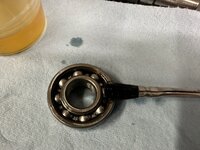
All 4 of the bearings were toast. Look at how bad that grease is. You can also see both of the inner bearing spacers from one of the pulleys here.
IMG_0098.jpeg
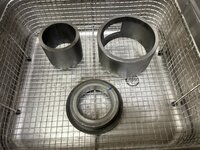
I cleaned the pulleys up in the ultrasonic. You can see a difference in how they changed the inner beveling on these over the years.
IMG_0099.jpeg
I begin by pressing in one of the two new 8503 bearings.
IMG_0101.jpeg
I then install the larger OD inner bearing spacer and use an alignment punch to line its counterbores up for the set screws that retain it.
IMG_0102.jpeg
It gets retained with two ¼-20 set screws that set just bellow the surface of the pulley. The inner pacer goes in next, then I press in the second bearing.
IMG_0105.jpeg
The pulley stud then gets lubed with Super Lube and slides into the the pulley and through the bracket.
IMG_0107.jpeg
It also gets a heavy washer
IMG_0110.jpeg
And then secured by its nut.
IMG_0116.jpeg
I then install the woodruff key into the Feedshaft.
 
OP
G

Grant Gunderson

Well-known member
Joined
May 17, 2013
Messages
2,323
Location
Bellingham, WA
IMG_0117.jpeg
The feed shaft pulley then slides on, with its inner protrusion side facing onto the gear box.
IMG_0118.jpeg
IMG_0119.jpeg
A new conical locking washer goes on next.
IMG_0120.jpeg
IMG_0122.jpeg
I then use a hook spanner to tighten the No4 bearing lock nut.
IMG_0127.jpeg
I can then drive the locking tab into the nut to secure it.
 
OP
G

Grant Gunderson

Well-known member
Joined
May 17, 2013
Messages
2,323
Location
Bellingham, WA
Next is installing the Vee belt pulley on the motor back gear box.
IMG_0131.jpeg
First I install its woodruff key. Note how the output shaft has been balanced with the two larger holes drilled into it. Interesting.
IMG_0134.jpeg
The pulley then slides on, and gets secured by its retaining plate with 4 SHCS.
 
OP
G

Grant Gunderson

Well-known member
Joined
May 17, 2013
Messages
2,323
Location
Bellingham, WA
I now need to install the Speed Selector and the two Vee belt tensioner pulleys.
IMG_0217.jpeg
My lathe came with a spare Vee belt tensioner pulley. All 3 are quite worn. Once the lathe is finished, I will work on machining new surfaces on them. For now, tho, I just selected the two with the least amount of wear on them.
IMG_0218.jpeg
The belt tensioner pulleys ideally use 87504 bearings with protrusions on them. However a 6204 will work as well. My supplier only had two of the 87504's in stock, so I used one of each on each pulley.
IMG_0221.jpeg
I begin by installing the two ¼-20 dog point set screws that retainer the inner bearing spacer.
IMG_0224.jpeg
I then use a larger bearing drift to press the first bearing in.
IMG_0226.jpeg
I then press the second bearing in, followed by the inner flanged bushing.
IMG_0228.jpeg
Note, at some point Monarch changed the length of the inner bushings. I suspect at some point they changed to non-flanged bearings. Once I discovered this, I changed by bearings around, so the longer inner bushing got both of the bearings with the extended protrusion and the other got both of the standard bearings. That worked perfectly.
IMG_0229.jpeg
The left hand belt tensioner bracket simply installs with two long SHCS. The stud for the pulley then gets greased and inserted into its key way.
IMG_0230.jpeg
The pully assembly then slides on with the flanged bushing side facing in. IT then gets retained by a heavy washer and nut.
 
To avoid these ads, REGISTER NOW!
OP
G

Grant Gunderson

Well-known member
Joined
May 17, 2013
Messages
2,323
Location
Bellingham, WA
The Right hand Vee belt tension has the speed selector shaft in it, and must be installed as a unit, so its a bit more complicated.
IMG_0168.jpeg
The bracket for selecting the back gear goes onto the outer shaft first.
IMG_0169.jpeg
I used an alignment punch to align the bracket with the bore for the dog point set screw that retains it.

IMG_0171.jpeg
IMG_0173.jpeg
The speed sector shaft then gets lubed with Super Lube.
IMG_0174.jpeg
and slides into the high / low gear shaft. I then lubed the outside of the high-low shaft.
IMG_0175.jpeg
and slid it into the Vee belt tensioner bracket.
IMG_0177.jpeg
I the slide the shafts into the locking bracket for the high / low selector. I then need to install the ⅛" machine key. No idea where the original went, so I marked a new one.
IMG_0178.jpeg
cut it to length.
IMG_0179.jpeg
and cleaned up al lot tis edges with a file before tapping it into the shaft.
IMG_0180.jpeg
I then only very loosely inserted the SHCS that retain the Vee belt tensioner bracket. It needs to be free to move for now.
 
OP
G

Grant Gunderson

Well-known member
Joined
May 17, 2013
Messages
2,323
Location
Bellingham, WA
IMG_0187.jpeg
The connection rod for the high / low selector goes on next. It will only fit one way in order to give the speed control chain room.
IMG_0188.jpeg
I start by sliding its pivot pin through it.
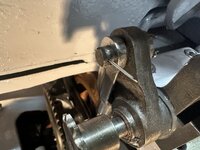
IMG_0189.jpeg
and then a new cotter pin
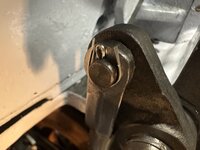
IMG_0190.jpeg
that then properly gets bent to secure it.
IMG_0191.jpeg
The lower pin is the same, but it must be inserted from the right hand side.
IMG_0193.jpeg
and then secured.
IMG_0197.jpeg
With the connecting rod in, I can then install the speed control chain. The assembly must only be loose in the lathe right now, as it needs to be able to pivot down slightly to get the chain on.
IMG_0198.jpeg
With the chain wrapped around both sprockets, I can then insert the master link.
IMG_0199.jpeg
Master link in.
IMG_0201.jpeg
The outer plate goes on next. and then a small clip holds it on.
 
OP
G

Grant Gunderson

Well-known member
Joined
May 17, 2013
Messages
2,323
Location
Bellingham, WA
IMG_0204.jpeg
The chain is now installed.
IMG_0183.jpeg I can now fully tighten all 4 SHCS that secure the brackets.
IMG_0184.jpeg
I then used a drift to tap the high/low selector on. It still needs paint. That will have to wait till it warms up in the spring.
IMG_0185.jpeg
It gets secured with a set screw.
IMG_0194.jpeg
I then check its operation and ensure it properly shifts the back gear. I then install its locking screw into the high-speed setting.
IMG_0233.jpeg
I then install the RH fee belt tensioner pulley, its heavy washer and then its retaining nut.
 
OP
G

Grant Gunderson

Well-known member
Joined
May 17, 2013
Messages
2,323
Location
Bellingham, WA
Next, I need to install the drains for the headstock / gear box.

IMG_0062.jpeg
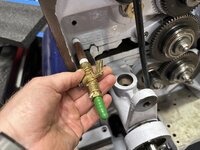
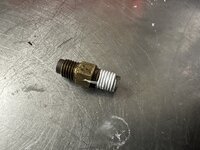
They use ¼ NPT threaded fittings. Instead of the standard pipe and plug Monarch used, I am going to use a brass valve and ****** on each to make draining them way easier. I being by fitting the parts together on the bench vise.
IMG_0063.jpeg
IMG_0076.jpeg
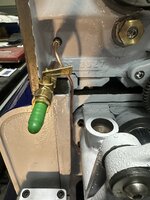
After chasing the drain holes with a pipe tap, I then install the new drain assembly as a unit. Next I need to install the overflow drain line.
IMG_0205.jpeg
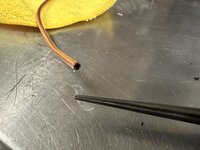
It uses Bijur copper tubing. I begin by reaming the end of it.
IMG_0206.jpeg
With the end cleaned up, I can then install the flare fitting for it.
IMG_0207.jpeg
Here is the connections all laid out. Nut, olive, inner ferrule, and then the Bijur coupling. It looks just like one of their metering units, but it's hollow. One side of it uses ⅛ NPT threads the other is Bijou's compression fitting threads.
IMG_0208.jpegThe NPT side only gets teflon tape.
IMG_0211.jpeg
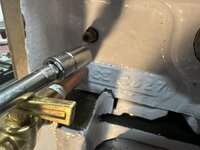
I chased the threads of the casting with a pipe tap, then installed the Bijur coupling with a socket. I then measured and prepped the drain tube.
IMG_0213.jpeg
Here is the tube side fittings ready to go on.
IMG_0214.jpeg
I then used a flare crow foot wrench to tighten it.
 
OP
G

Grant Gunderson

Well-known member
Joined
May 17, 2013
Messages
2,323
Location
Bellingham, WA
IMG_0216.jpeg
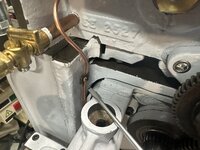
I then ran the tubing down and slid it into the drain hole for it in the bottom of the gear box casting. It drains bellow the gear box, into an area on top of the main base casting, then eventually into the sump bellow the bed of the lathe.
IMG_0236.jpeg
The lien then gets secured with a Bijur clamp.
IMG_0422.jpeg
I then installed the new drain pipe, valve and ****** for the gear box. This willow allow me to simply attached a house to the ****** and then open the valve to drain the gear box and headstock into waist containers. Way cleaner then the factory method of just using a pipe plug.
 
OP
G

Grant Gunderson

Well-known member
Joined
May 17, 2013
Messages
2,323
Location
Bellingham, WA
Next I need to install the spring latch for the top end gear cover.
IMG_0238.jpeg
Both mounting holes get Tef-Gel
IMG_0239.jpeg
The bracket then gets retained by two shouldered bolts with springs on them.
 
OP
G

Grant Gunderson

Well-known member
Joined
May 17, 2013
Messages
2,323
Location
Bellingham, WA
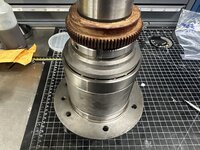
Ok, its finally time to put the Spindle back in!
IMG_0294.jpeg
The threads for the spindle are 60MM with a thread of 18TPI. Nothing like a combo on English and metric to make things interesting, but this is indeed the standard for a N-12 bearing nut.
IMG_0290.jpeg
Old nut on the left. New o the right. Even tho its an odd ball metric / English thread combo its a standard off the shelf part at McMaster. My old nut doesn't want to thread on smoothly and neither does the new one. I need to chase the threads. They actually sell a dedicated die for chasing bearing nuts in each size. It's only $370. thats way too rich for my blood for a one of use.
IMG_0312.jpeg
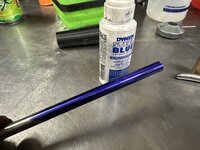
So I coated the spindle threads with Dykem.
IMG_0307.jpeg
I then picked up a universal thread chaser on Amazon for $40 Lots of options and they clearly are all the same import item, so I ordered the cheapest ones. It was actually better built than I expected and came with a full set of chasing dies for English and metric. So I installed the 18TPI die.
IMG_0310.jpeg
I found the easiest way to use it, is align the teeth of the die to the threads in the middle of the threaded section, then run it forward / reverse chasing all of the threads. After each pass give it a ⅛ turn of the handle to tighten it against the threads to take another pass.
IMG_0427.jpeg
5 passes latter, all of the dyekem has been removed and I have clean threads!
IMG_0429.jpeg
The new bearing nut easily goes on by hand now.
IMG_0430.jpeg
I then placed both of the bearing spacers and the rear bearing retainer into the ultrasonic, spindle nose side down and let it do its job. We want everything as clean as possible.
IMG_0431.jpeg
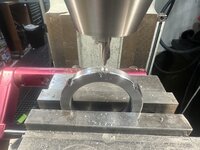
While those parts were washing, I moved on with modify the bearing nut to lock in place. First I placed into in the mill vise and used a square to align it vertically.
IMG_0433.jpeg
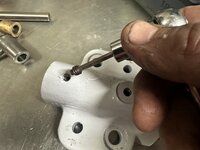
I used an edge finder to find the center of the flat section. I then spot drilled it.
 
OP
G

Grant Gunderson

Well-known member
Joined
May 17, 2013
Messages
2,323
Location
Bellingham, WA
IMG_0437.jpeg
I then cross drilled the entire nut with a long #7 drill bit.
IMG_0438.jpeg
I then added a counter sink to the edges.
IMG_0439.jpeg
before using a ¼-20 gun pint tap to tap it.
I then used a small stone to deburr the inner surface and finally a thread file to make sure the threads where still perfect.
IMG_9732.jpeg
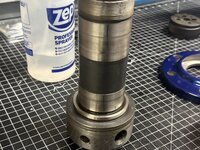
Here is a shot of the spindle prior to cleaning it. The blue sharpie mark highlights where the spindle was scribed by the factory. This is important to properly aligning the bearing.
IMG_9734.jpeg
I cut a new gasket to go behind the spindle retaining plate. Note it has two drain holes in it. A smaller one, and then a larger one. The larger one aligns with the bottom of the head stock to drain the oil back into it. The smaller one, (Upper Right in pic) doesn't align with anything. My guess is it was a mistake at the factory.
IMG_9757.jpeg
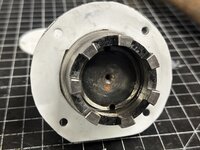
The spindle uses New Departure 20212 Angular contact bearings in a back to back configuration. The front Bearing is also flanged. 60MM bore, 110mm OD. Replacement bearings are around $500 on Ebay. Luckily both of mine seem good. These are the only bearings on the entire lathe I haven't replaced. On the bearings, there is a very finely marked witness mark on both the inner and outer races that indicate the high spot in the bearing and where it needs to align on the spindle. This is very critical give how high of precision the lathe is. Unfortunately I couldn't get a good shot of the marks on the inner spindle, even with a flashlight.
IMG_0443.jpeg
The spindle retaining ring goes on first. Then the front spindle bearing slides onto the shaft, flange side down. Its a tight slip fit. No force at all was needed. Note the inner and outer races have alignment marks that match those on the spindle shaft. I then slid on the inner bearing race separator. I made sure to keep track of the nose side. Note how it also has an alignment mark.

Screenshot 2023-11-27 at 5.09.05 PM.png
The outer bearing race separator goes on next. Notice how it also has the same alignment marks. In duplex angular contact bearings these bearing separators are specially ground to provide for an exact amount of preload on the bearings, thus the alignment is critical.
IMG_0446.jpeg
Here you can see again how it's all aligned, and ready for the rear (non flanged) spindle bearing to go on next. The text faces out, as these are designed to be in a back to back configuration.
IMG_0448.jpeg
The bearing slides on, as does the rear bearing retainer that is also ground to match the bearing. See how it's all aligned. ITs worth noting now too, I gave everything a coating of the spindle bearing oil prior to installation.
 
OP
G

Grant Gunderson

Well-known member
Joined
May 17, 2013
Messages
2,323
Location
Bellingham, WA
IMG_0450.jpeg
I tightened the bearing nut down by hand (tapered side faces bearing) so I didnt alter the alignment. I then gave it a finally torque with a hook spanner wrench. Note, the bearing nut only needs to be fairly snug, since it is all reground for the preload, you cant really over or under torque it unless you got really crazy.
IMG_0451.jpeg
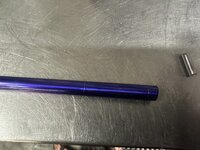
The brass plugs go into the holes I cross drilled and tapped in the new bearing nut. These protect the spindle threads.
IMG_0452.jpeg
IMG_0454.jpeg
I then installed ¼-20 set screws behind the brass plugs. Note how they have been machined flat?
IMG_0455.jpeg
Finally I torqued the set screws down.
IMG_0457.jpeg
Next, I tapped in the woodruff key for the phenolic tachometer gear.
IMG_0459.jpeg
The tachometer gear then slides on.
IMG_0461.jpeg
I then cleaned and oiled all of the matting surfaces in the head stock.
IMG_0463.jpeg
I then installed the new gasket I cut forte front spindle retainer. Note the drain hole is at the 6 o'clock position, as is the large cutout in the outer bearing separator.
IMG_0465.jpeg
I then slid the spindle into the head stock. I then setup the same ⅜ bolts, nuts and spacers I used for installing the apron. Note, locking at the back of the lathe directly inline with the bolt, is a notch in the outer bearing separator. This needs to align with the hole in the head stock for its retaining screw.
 
OP
G

Grant Gunderson

Well-known member
Joined
May 17, 2013
Messages
2,323
Location
Bellingham, WA
IMG_0466.jpeg
Here is another view of that notch that needs to be aligned with the set screw hole in the head stock.
IMG_0467.jpeg
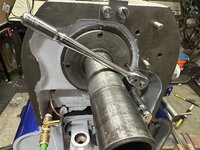
I then slowly pushed the spindle back in by alternating ½ turns on each nut.
IMG_0475.jpeg
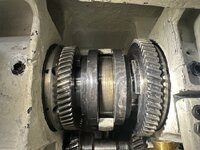
As the spindle pushes in, when it gets close to the shifter clutch, you need to hold it by hand to align it with the spindle. I found having it shifted into the forward position helped. Once it was on, I kept pushing the spindle in, until I could test the full operation of the clutch.
IMG_0478.jpeg
I noticed the spindle was starting to bind slightly, so I loosen the bowls holding the rear bearing retainer / oil slinger on. This freed it up.

IMG_0468.jpegI then kept pushing the spindle in slowly.
IMG_0477.jpeg
While pushing it in, I kept and eye out to make sure the tachometer gear would clear its bore. Once though I kept spinning the spindle by hand while pushing it in, to make sure the gears properly aligned.
IMG_0479.jpeg
Once the spindle was fully seated, I installed the large setscrew on the back side of the headstock to retain it. If everything is properly aligned it will be flush with the casting.
IMG_0472.jpeg
I then torqued down the screws on the rear bearing retainer I then installed the 6 1" ⅜-16 SHCS that retain the front spindle retainer.
IMG_0482.jpeg
and time for the moment of truth. I placed my 0.0005" Mititouyo dial indicator on the spindle and spun it countless times. I got less then .0005" of total runout. you can't do that with a modern Chinese lathe! Not bad for a 80 year old machine! I'm happy with that!
IMG_0485.jpeg
I then installed the head stock oil pan with 8 flat head screws.
 

AEAdam

Well-known member
Joined
May 27, 2023
Messages
2,782
Location
SE PA
Grant, tell us about the presses you are using. I see what looks like an arbor press. How big is it? Do you also have a hydraulic press? I thinking about buying an arbor press, but unsure if I should just jump to a hydraulic press.
 

F-22

Well-known member
Joined
Jan 23, 2022
Messages
1,830
Grant, tell us about the presses you are using. I see what looks like an arbor press. How big is it? Do you also have a hydraulic press? I thinking about buying an arbor press, but unsure if I should just jump to a hydraulic press.
A ~20 ton manual hydraulic press costs about 200€. If you have neither, I'd go for that first - it can do everything. An arbor press is just faster for light stuff. Maybe eventually find a cool old arbor press on craigslist or flea markets...
 
OP
G

Grant Gunderson

Well-known member
Joined
May 17, 2013
Messages
2,323
Location
Bellingham, WA
Grant, tell us about the presses you are using. I see what looks like an arbor press. How big is it? Do you also have a hydraulic press? I thinking about buying an arbor press, but unsure if I should just jump to a hydraulic press.
Well this is garage journal so the correct answer is you need both :ROFLMAO: I have a large FAMco 3r ratcheting arbor press. I paid less than 1cent a pound for it.
IMG_6446.jpeg
It’s about as big as they make them without going to a floor standing compound press. For me it’s a better solution than hydraulic. It allows you to be way more precise when working on projects that require precision. Yet it’s big enough it can easily take are of wheel bearings too. FAMco is made in the same town as Snapon and the quality of it is top notch. In the time I’ve had it I haven’t once needed more force then it can provide.

A hydraulic press really starts to shine if you are working on heavy equipment or do a lot of automotive projects ( even those a big arbor press can do )

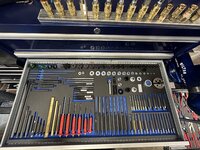
Either way what ever press you go with, putting together a good assortment of drifts is more important than the press. I have a large assortment of bearing drifts and pin punches I use.
IMG_8834.jpeg
A bench block is nice to have for it as well. I also have a large assortment of automotive bearing drifts plus various pipe sections, steel plate and of course old bearing races.

The FAMco is designed to use interchangeable heads on it for broaches etc. at somepoint I’ll machine an adapter for it to hold my various pin punches.
 
OP
G

Grant Gunderson

Well-known member
Joined
May 17, 2013
Messages
2,323
Location
Bellingham, WA
Now that the spindle is in, I can get the belt drive system back on the lathe.
IMG_0493.jpeg
The woodruff key for the spindle lock goes in next.
IMG_0494.jpeg
The side with the larger protrusion faces into the lathe. It has not set screw to lock it in place.
IMG_0497.jpeg
I then add the two woodruff keys for the Vee Belt Pulley.
IMG_0499.jpeg
IMG_0501.jpeg
Note, how the Vee belt pulley has been balanced by drilling it. Before I can fully install it, I need to make a new part for the spindle lock and install it. Once the pulley is on there isn't enough room.
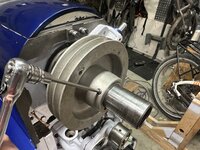
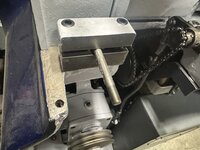
IMG_0242.jpeg
The bronze bushing in the spindle lock was damaged when the rod was bent. So I am replacing it with a new off the shelf bushing.
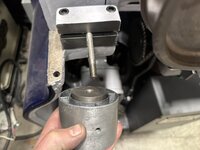
IMG_0243.jpeg
Its a snug press fit on the arbor press
IMG_0244.jpeg
Once in, the inner diameter of the bore is now too tight. ITs amazing how much it changed by being pressed in.
IMG_0245.jpeg
I then reamed it to fit the new shaft.
IMG_0246.jpeg
I then drilled a small dimple into the bushing to receive the dog point set screw that locks it in place.
 

Great white

Well-known member
Joined
Nov 6, 2009
Messages
175
I wish I had the space (and money) for a 10EE.

Would be way overkill for the stuff I do though. It's a want, not a need. My little restored and upgraded TH42 Atlas does the jobs I need done:

fr_3846.jpg

You're doing right by that old girl though. Thread is an enjoyable read.

Carry on.

:cool:
 
OP
G

Grant Gunderson

Well-known member
Joined
May 17, 2013
Messages
2,323
Location
Bellingham, WA
IMG_0248.jpeg
Bushing secured with the dog point set screw. As always all threads get a coating of Tef-Gel.
IMG_0250.jpeg
Next, I need to make a new plunger shaft for the spindle lock. I start by bluing up the new ⅜ rod.

IMG_0252.jpeg
I then insert a transfer punch into the old rod section.
IMG_0253.jpeg
And use it to transfer the location of the holes to the new rod shaft.
IMG_0255.jpeg
I now have an accurate location to drill the cross holes for the pins.
IMG_0257.jpeg
IMG_0258.jpeg
The inner locking bushing, needed to get cleaned up with a reamer to properly fit the new shaft.
IMG_0527.jpeg
I then used an edge finder and the DRO o note mill to find the exact center of the shaft. I then spot drill it with a center drill. A normal drill would want to wander trying to start on a round shaft.
IMG_0530.jpeg
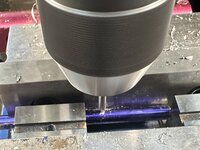
Since this is only a ⅛" pin, and I am drilling it under sized, with a small drill, I am using the fine feed wheel on the mill. This prevents breaking drill bits.
IMG_0529.jpeg
I then drill it using a number drill one size bellow ⅛"
 
OP
G

Grant Gunderson

Well-known member
Joined
May 17, 2013
Messages
2,323
Location
Bellingham, WA
IMG_0532.jpeg
I can then ream it with a ⅛" undersized reamer.
IMG_0533.jpeg
I then repeat the same process for the other hole,
IMG_0542.jpeg

however its a #1 tapper pin, so I sued a taper pin reamer for that hole.
IMG_0534.jpeg
I then use the arbor press to press in the new pin for the locking bushing
IMG_0535.jpeg
IMG_0537.jpeg
A bronze bushing goes on next, I sued the good section of the original long bushing and then cut it to length using a slitting saw.
IMG_0541.jpeg
It gets reamed and then I marked a center line on it.
IMG_0543.jpeg
I can then install the bushing for the handle with a tapper pin, and then file both pins flat with the bushing surface.
IMG_0544.jpeg
The rod then gets cut to length.
IMG_0547.jpeg
and I chamfer the edge of it
 
OP
G

Grant Gunderson

Well-known member
Joined
May 17, 2013
Messages
2,323
Location
Bellingham, WA
IMG_0548.jpegThe new spindle lock is now ready to go into its casting.
IMG_0550.jpeg
The set screws secure the bronze bushings at each end.
IMG_0551.jpeg
The middle set screw had a nut installed on it to lock it into position. This is the lock pin to hold the spindle lock in. I then secure the unit to the head stock with two ⅜-18 button head bolts.
IMG_0553.jpeg
The Vee belt pulley can then be slid the rest of the way on and secured with a set screw.
IMG_0508.jpeg
The lathe uses Two A85 1/2x87" belts.
IMG_0509.jpeg
Once on the pulleys I then need to tighten the belts.
IMG_0511.jpeg
I slide the right hand tightener into the full inboard position and secure it.
IMG_0512.jpeg
I then slide the LH one in and secure it. Too far in and it wont spin, so I set it just to the point it spins with the belts.
IMG_0517.jpeg
The belts are now awfully close to the drain I installed. I need to address that.
IMG_0518.jpeg
I'm going to turn the drain down 90, only problem tis the length of pipe I need is in-between standard lengths.
 
OP
G

Grant Gunderson

Well-known member
Joined
May 17, 2013
Messages
2,323
Location
Bellingham, WA
IMG_0520.jpeg
The new drain pipe gets cut to length,
IMG_0521.jpeg
I reamed both the inner and outer dimensions with my small pipe reamer.
IMG_0523.jpeg
I then used the ¼" die in my rigid pipe threader to cut new threads. I dont use these much, but in cases like this, its nice having a full range of pipe dies!
IMG_0557.jpeg
Drain valve is at 90.
IMG_0561.jpeg
I rotated it an extra 45, just to give everything a bit more clearance.
IMG_0554.jpegMy lathe came with a new spare flat belt. Luckily it all ready had the stitching in. I connected the two ends with the plastic coated pin. I then turned the pin ends up slightly to make it harder to pull out, and then cut them as close to flush as possible.
IMG_0563.jpeg
I then tighten the flat belt with its tensioner. The end gear portion of the lathe is finally done!
 
To avoid these ads, REGISTER NOW!
Top Bottom