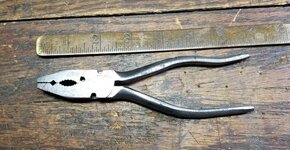
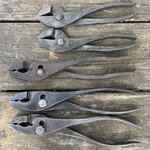
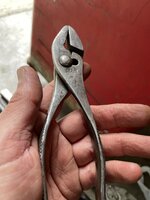
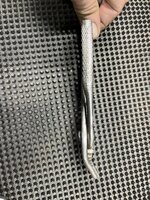
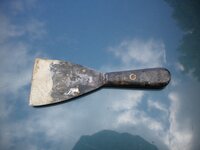
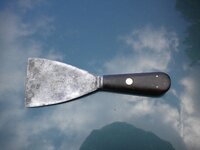
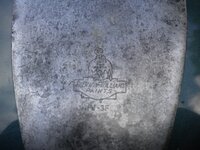
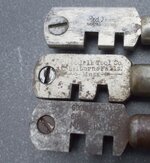
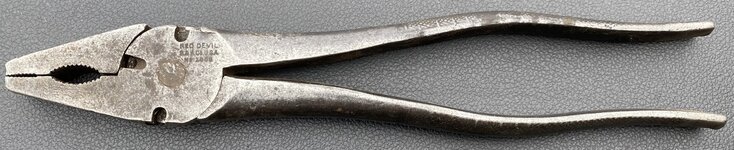
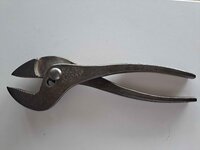
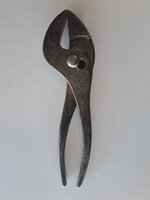
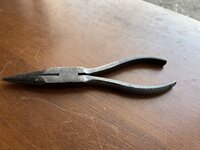
I wish I had contented myself with my typographic die-making fascination, because this...
129210 16JUL1872 (reissue 5502 29JUL1873)
143496 07OCT1873 (but the forging looks like “OCT7 79”, doesn’t it? which was also a Tuesday).
Finally 243812 05JUL1881 issued to F.M. Stevens.
...is a torturous DATAMP venture I wish I had not tried to unravel!
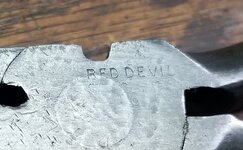
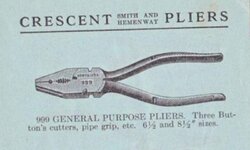
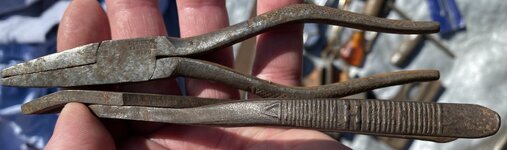
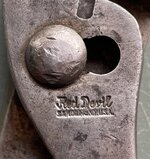
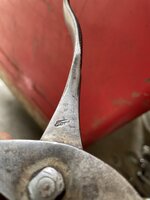
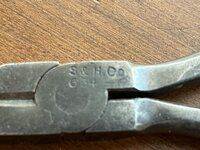
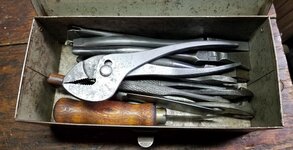
I'm going to transcribe the marking, so I don't have to keep scrolling up to the photo...
PAT JULY 16 REIS OCT 7 79 JULY 5 81
The "9" in "79" that should apparently be a "3" may actually be the
least of the issues.
If the "PAT JULY 16" marking signifies Capewell patent 129,210, granted July 16, 1872, where is the "72" signifying that it was granted in the year 1872?
What is the "REIS" (ostensibly reissue) marking signifying? If it's the action signified by the marking that immediately follows it ("OCT 7 79"), and DATAMP is postulating the "9" in "79" is wrong, and should be a "3" instead, the document granted on October 7, 1873 was a
patent (143,496), not a reissue of a patent. And in it, Capewell actually disclaims the prior patent (129,210).
As you pointed out, patent 129,210 was indeed reissued (RE: 5,502), but on July 29, 1873, which is not signified by any marking on the shank. If S&H was inclined to plaster a product with all relevant patent markings, and "REIS" signifies reissue, why would they not include a marking signifying the actual reissue? That absence, along with the October 7, 1873 (
not October 7, 1879) and patent (
not reissue) problems, should cast doubt on the "JULY 16" marking signifying 129,210, no?
The final marking seems most secure. Stevens' 243,812 was indeed granted on July 5, 1881. More positively yet, he was an assignor to Maltby, Curtiss, and Atwood. DATAMP makes no mention of Curtiss and Atwood, but the Maltby jibes.
That sent me back to the Capewell patents. He owned his first one and the reissue. However, he was an assignor to Maltby, Curtiss, and Atwood for the second (143,496 | 7 October 1873).
According to the bio of John Francis Hemenway in the 1900 edition of Appleton's Cyclopaeida of American Biographies, linked
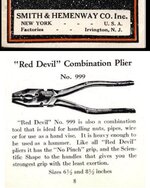
here, Smith & Hemenway acquired the "Maltby-Henley Company," among several others, in one fell swoop.
I'm assuming Maltby, Curtiss & Atwood was a brief forerunner.
So, it seems to add up, somehow, despite the oddities.
...as they don’t have S&H down as a mfgr for at least one of those patents
They don't have S&H down as a mfgr for
any of those patents. They are saying that all of them are associated with Maltby, Henley, & Co., but if you were reading the prior bit, you'll see that it looks like they bought out Maltby & Co, acquiring the rights and patents etc.


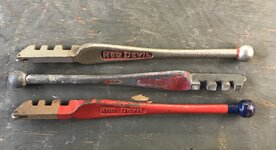
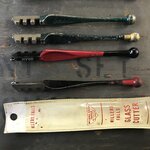



 (missed #89 in haste)