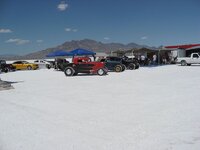
I'm back after braving Hurricane Irene. In the last 20 days I've been home a total of......2 days, so thanks everyone for being patient with me here! After Bonneville I went almost directly to Sao Paulo via NY for a couple of round trips. Then the third trip was scheduled out Saturday night, the exact time Irene was suppose to make landfall in the NY area so that was cancelled and I had to wait it out. Monday I did manage to find my way out on the first flight out to O'Hare. See, we really do lead a glamours life in commercial aviation.

Here's some more Bonneville material to continue:
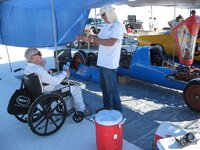
This is Fred Lobello on the left, age 89 and Lou Bingham, age 79 together. Fred first hit the salt in the 1940's and Lou began in 1950. Thats' over 60 years these two have know each other and they're still out there. The famous speed people these two have seen over the years out there is nothing short of amazing.
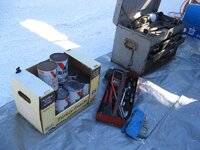
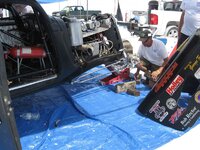
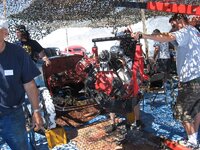
This was some of the vintage tools and oil they used on Fred's tanker.

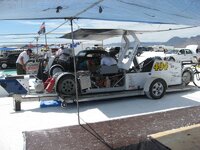
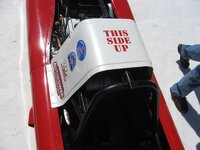
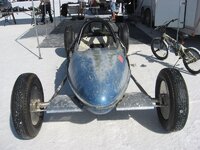
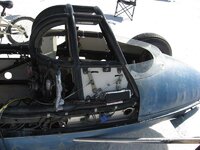
Fred's tanker under Randy's (back, left) watchful gaze. Driver Jacob, in black, is explaining to fellow racers how he's going to get the courage up to drive the car.

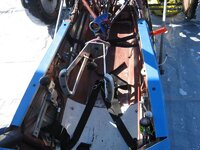
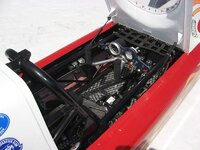
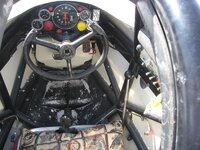
Jacob's cockpit.
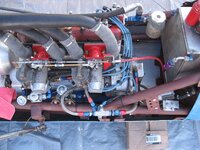
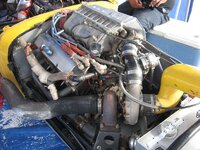
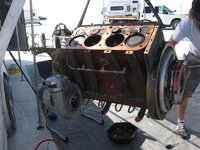
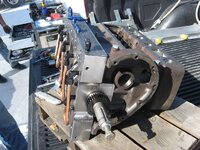
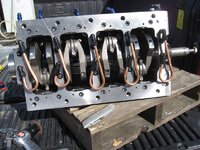
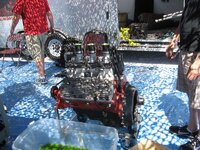
Right side of the engine...
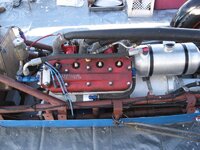
...left side...
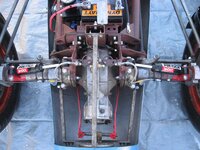
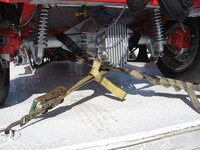
...rear suspension...
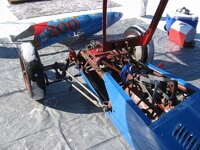
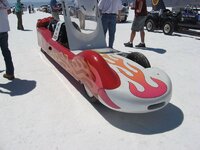
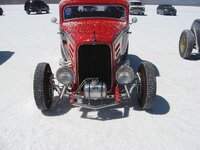
...pointy end...

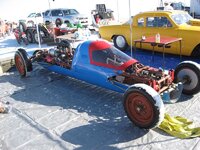

Jacob mentally rehearsing his driving check list; "pointy end forward, pointy end forward, pointy end........"

The trophy on the left is for the team with the fastest speed during Speed Week. It starts in the 1940's and has some legendary names engraved on it. Mine is not one of them....

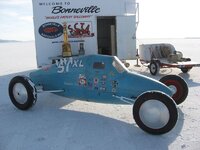
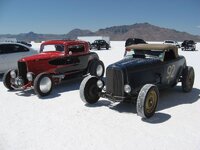
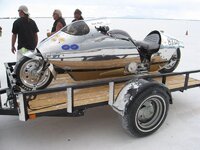
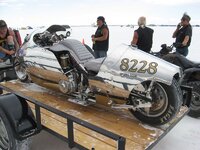
Fred Lobello's former tanker "Lady Bug" was featured at the driver's meeting. There's no one around yet because Lou and I were the first one's there so I could get some clean shots of "Lady Bug" like this one and ...

... this one...er, that's not right is it?

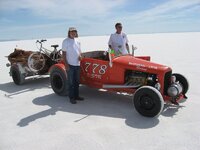
This is Bill Brutsman and Lou out near one of the courses (there were 4 courses of varying lengths). We were bringing supplies out to Bill. Bill volunteered to be a track observer which means...
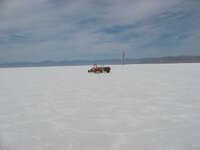
...he was a few miles down the course watching the cars running and in case a car had a problem he could radio that in to the starter.
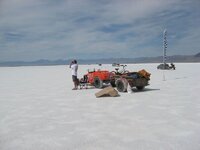
He also had to keep spectators off the course and insure the course was clear for each run. A thankless job, but the meet couldn't operate without the time and effort of these volunteers.
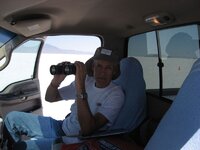
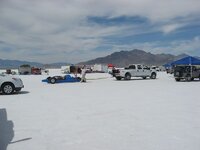
Part of Lou and my assignments was to act as "catch crew" for Roadster Club members cars. We were stationed a few miles down the #2 course at 4 1/2 miles. If the race car did a full run it went the full 5 miles, if it didn't do a full run and "turned out" early on the course, we could go either direction, up course or down course as necessary to reach it quickly. The binoculars were helpful watching the cars approach and making sure the car wasn't having a "mechanical event" dropping pieces/parts on the course. They also helped us to see and verify they got good, full deployment of their chutes or in some cases see if the car was on fire.
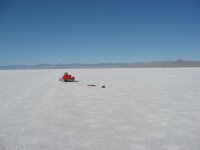
We would be the first to meet the car as it pulled off the course and ensure the driver could get out and then on some cars, we would remove part of the body work immediately as it was close to the exhaust system and could be a fire hazard to the body work. The push crew would drive up from the starting line to recover the car and tow it back to the pits. It might take the push crew a while to reach the race cars, so we were pre-positioned and could get there almost immediately if there was a problem.
More coming on this and other subjects...
Rested Thomas


 To me this is sad. If I was able at 18 or younger to go I would've been like a kid in a candy store, to say the least.