Exceller8
Well-known member
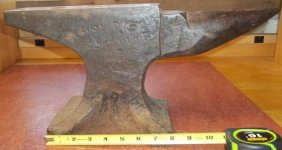
Exceller8 - That looks an awful lot like my Columbian anvil.

It sure does... They probably made it for Sears.


Exceller8 - That looks an awful lot like my Columbian anvil.
What are the weights on those?

Mine has a small hole in the top so I'm guessing it weighs slightly less than yours.

What are the weights on those?
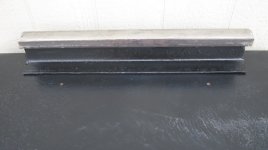
Mine weighs a bit over 8 lbs. too. I can't say for sure but the "hardy hole" appears to be original. It's pretty small though. Maybe it's a "hardly hole".Mine weighs just over 8 pounds.
8-3/4" L x 2-5/8" W x 3-3/4" H


I have absolutely no practical use for an anvil, but that 450 pounder is a thing of utter beauty.
There is always a use for an anvil. I just bought another piece of railroad track today. I think that makes 10-15 anvils now. 
I have absolutely no practical use for an anvil, but that 450 pounder is a thing of utter beauty.


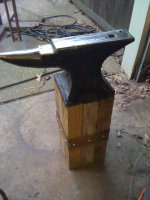
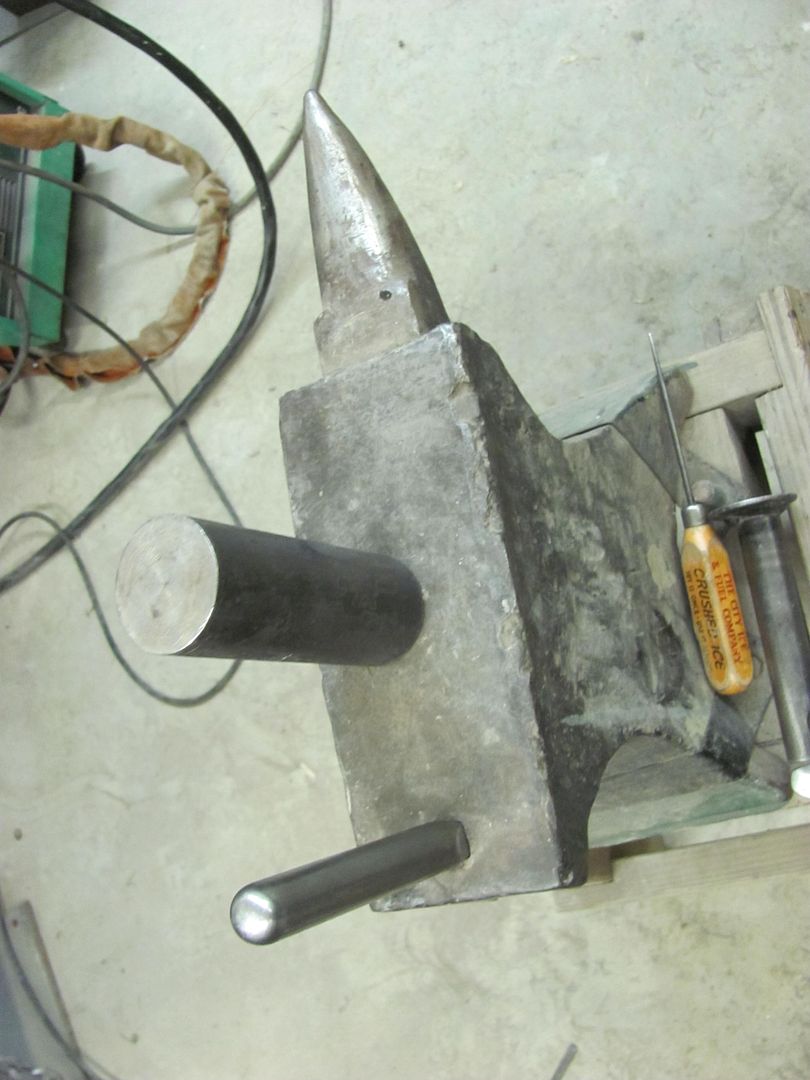
Bought this one a few years back.
Anvil by SportsCar Restoration Matt McGinn, on Flickr
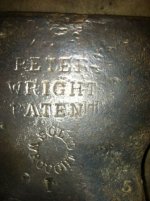
Don't know much about it. No markings on it other than this:
Anvil Close by SportsCar Restoration Matt McGinn, on Flickr
Its a bit beat up, but has a great ring when hit. The rebound is nice as well. I've used it little as an actual anvil.
Does it look familiar to anyone yearwise, manufacturer, etc?
I also have a nice railroad track anvil. That's at home, I gotta get it back to the shop soon. Its nice and small and portable.
 I can't believe how much I use my railroad anvil. Its a must have for around the shop.


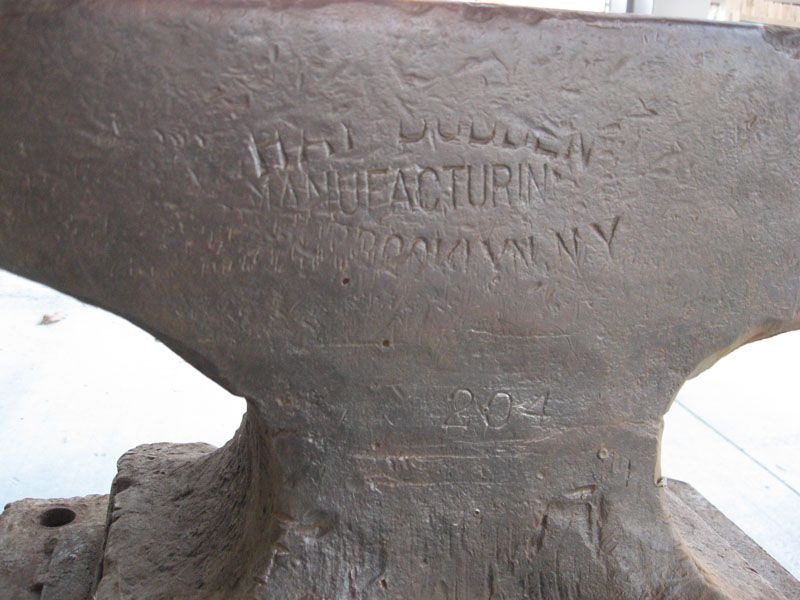

For those who might not have read about the old shop I restored in the Garage Galley section,, this anvil was found among all the old blacksmithing and other "material" left behind.
It's a Hay Budden made in 1917, 204 lbs.
Mr Johnson started the business as a blacksmith and also did welding repairs. The stand was made partially out of an old tractor rear end. Because it's round at the base I can "walk it" by myself anywhere I need to move it to. Other than cleaning off the old surface rust I'm not to sure what if anything to coat it with. Any suggestions?
Thomas from the Restored 1930's Auto Shop
http://www.garagejournal.com/forum/showthread.php?t=51567
It's a Hay Budden made in 1917, 204 lbs.http://www.garagejournal.com/forum/showthread.php?t=51567
Columbia guy called me back. He wants $400 for the anvil I offered $50 for. I told him to enjoy it, be sure to make up some lies about it, and show it to his friends. I just want something to work with, not invest in as art.
to be correct, an anvil should be mounted on a wooden base, to absorb the force.
204 isn't the weight in lbs. Anvil numbers are Cwt (hundredweights, which is 112lb). 1st digit is Cwt's, so the 2 means 224lb, the 2nd digit is for 1/2 cwts (56lb), which would be either a 1 or 0, in your case it's 0. 3rd digit is lbs, so your anvil is 2cwt (224lb) + 4lb for a total weight of 228lb. If you ever have it dismounted from the base put it on scale to check
The first number on an anvil (hundred weight) is 112 pounds (8 stone) the second number is the quarter hundred weight (2 stone) and the last number is in pounds. That is just what the man listed above. It might not make sense to you but then again, this was back in the days of stones, rods, fathoms and other strange (to us) measurements.
I think railroad track weighs about 90 pounds a foot.

Found this 100# FISHER half buried in the ground next to the rail road tracks behind my sons garage. It cleaned up very nice, don't have a current pic though.
My father gave me his the other day. It weighs about 127 lbs. according to the old sheep scale.
That's identical to the one my friend picked up, said 100 on the side, weighed 126lb. Does your's also have a *N* on it someplace? N is for Norris, so his a Fisher-Norris. Emblem on the is an eagle & an anchor.
and anchor. I had never noticed the anchor before so, thanks for that!