
You are using an out of date browser. It may not display this or other websites correctly.
You should upgrade or use an alternative browser.
You should upgrade or use an alternative browser.
Show us your handplanes
- Thread starter trainman1385
- Start date
Old tool guy
Well-known member
- Joined
- Apr 13, 2023
- Messages
- 3,641
Maybe it was a hot item at that time. Aluminum … the new wonder material.
hsvtoolfool
Well-known member
You think someone actually made a wooden pattern? I assumed they just used an orignal #192 to make a wax pattern, added some filler to the surfaces that must be machined, poured a lost-wax casting, and then machined to size.@hsvtoolfool ...I’m thinking maybe made up out of mahogany...
RTM
Well-known member
This is my assumption. Sometimes they don't add (much) filler, so things end up obviously smaller. Doesn't sound like it on his.I assumed they just used an orignal #192 to make a wax pattern, added some filler to the surfaces that must be machined, poured a lost-wax casting, and then machined to size.
@hsvtoolfool the No 192 came from the Rockford area . That area had a great number of pattern makers shops and foundries . Plus manufacturers of all sorts and the nut and bolt capital of the Midwest. In fact I was told that’s how they came up with the Rockford bolt grading system . I was a young tool and die maker when Rockford was in its hay day. I can see a coupe of fellas making the wood patterns . The work that was done by my pattern maker model makers buddies is incredible. In fact Bill made his own overhead valve flathead heads and other speed equipment
You didn't try to talk them down to $8?Barn sale ..... $10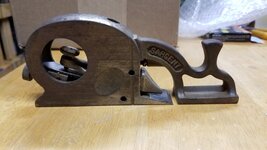
You didn't try to talk them down to $8?
They wanted $20 as I recall.
Had no idea what I was buying at the time. Later that week a friend stopped by my shop and informed me what a score I had made.
I've been offered $500 for it a few times but it's a keeper for now. I do use it once in a while.
Sargent ladybug plane. People pay hundreds of dollars for those.Barn sale ..... $10
What a deal. I would keep it too.They wanted $20 as I recall.
Had no idea what I was buying at the time. Later that week a friend stopped by my shop and informed me what a score I had made.
I've been offered $500 for it a few times but it's a keeper for now. I do use it once in a while.
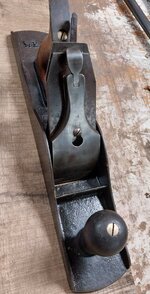
Speaking of Rockford. Here's a Rockford R 5 1/2 plane with a Lakeside iron sold through Montgomery Ward. They made good stuff until Stanley inevitably bought them out.@hsvtoolfool the No 192 came from the Rockford area .
Attachments

milkovich
Well-known member
Two No. 4 planes from 1902-1908 or so. A Stanley type 9 and a Sargent Type 3. Both of these came from tool lots where I wanted other tools, but I couldn't throw these away. I swear I'm trying NOT to be a collector, but these aren't really worth enough to deal with the hassle of selling them so they're shelf art till the next guy gets them at my estate sale. 

RTM
Well-known member
At least those are in nice shape, look ready to use. Most I find in the wild need serious help.Two No. 4 planes from 1902-1908 or so. A Stanley type 9 and a Sargent Type 3. Both of these came from tool lots where I wanted other tools, but I couldn't throw these away. I swear I'm trying NOT to be a collector, but these aren't really worth enough to deal with the hassle of selling them so they're shelf art till the next guy gets them at my estate sale.
milkovich
Well-known member
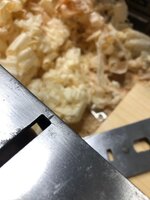
Here's the "before" picture of the lot I bid on, it was pretty hammered. Literally, it looked like someone had broken the tote with a hammer. The lever cap has two chips in it, and the mouth is cracked but it still leaves a beautiful finish on boards. I just have so many number 4, 5, and 7 planes at this point, I have to admit they're a collection.At least those are in nice shape, look ready to use. Most I find in the wild need serious help.

crguy
Well-known member
That's a huge mouth crack. I would have let that one die.Here's the "before" picture of the lot I bid on, it was pretty hammered. Literally, it looked like someone had broken the tote with a hammer. The lever cap has two chips in it, and the mouth is cracked but it still leaves a beautiful finish on boards. I just have so many number 4, 5, and 7 planes at this point, I have to admit they're a collection.
milkovich
Well-known member
The whole basket of tools was $8 or $15 and I'm not selling it so it was a great candidate to test out system 3 epoxy on the tote and the citric acid/washing soda rust dissolver. These mouth cracks don't really affect the utility of the tool though, just the value.That's a huge mouth crack. I would have let that one die.
How did the epoxy work for the tote? I have used wood glue with ok results. This jig for gluing the totes is pretty nice. I got it off ebay a few years ago.The whole basket of tools was $8 or $15 and I'm not selling it so it was a great candidate to test out system 3 epoxy on the tote and the citric acid/washing soda rust dissolver. These mouth cracks don't really affect the utility of the tool though, just the value.

Old tool guy
Well-known member
- Joined
- Apr 13, 2023
- Messages
- 3,641
Now there’s a candidate for 3d printing.How did the epoxy work for the tote? I have used wood glue with ok results. This jig for gluing the totes is pretty nice. I got it off ebay a few years ago.
Yeah, it was 3D printed. Even got a little wrench with it.Now there’s a candidate for 3d printing.
milkovich
Well-known member
It worked great, better than big box 2 part epoxy. I've glued them before too, but it has to be a clean break where you don't need to fill any gaps, I've also heard that the oil in rosewood will make glue less effective? I'm pretty gentle with planes so I haven't re-broken a glued tote.How did the epoxy work for the tote?

CRSINMICH
Well-known member
Not exactly a hand plane but almost.
While making a clock, I used a new-to-me tool - a shooting sander. It's meant to be used in a shooting board. It's one of those tools that are not really needed but when you have one it is a peach. If you look closely at the picture of the shooting sander in action you'll see that the stock being shot is very thin. I think the sander handled that much easier than a plane would have especially on end grain.
Attachments


That's cool. Pretty smart design. A plane might take the corner with it.Not exactly a hand plane but almost.While making a clock, I used a new-to-me tool - a shooting sander. It's meant to be used in a shooting board. It's one of those tools that are not really needed but when you have one it is a peach. If you look closely at the picture of the shooting sander in action you'll see that the stock being shot is very thin. I think the sander handled that much easier than a plane would have especially on end grain.
RTM
Well-known member
Saw that in their catalog, I have their shooting plane, think that would be a nice addition. Glad to hear field reportsNot exactly a hand plane but almost.While making a clock, I used a new-to-me tool - a shooting sander. It's meant to be used in a shooting board. It's one of those tools that are not really needed but when you have one it is a peach. If you look closely at the picture of the shooting sander in action you'll see that the stock being shot is very thin. I think the sander handled that much easier than a plane would have especially on end grain.
CRSINMICH
Well-known member
RTM: The sandpaper strips could be any grit of PSA sandpaper. If need be, end grain could be virtually polished. The black paper on the one I posted is very fine grit wet/dry paper held in place with double stick tape. I had to slightly alter the width of a thin brass plate. It worked!
milkovich
Well-known member
Here's a cool one I dug up. A type 11 (1910-1918 No. 7C. The iron is the 1909-12 type, but it's super worn down, maybe .75 of an inch left. Check out how used the sole is. There's a tiny chip on the cap iron, but otherwise this thing looks like it's been well cared for but USED. I can't bring myself to clean this much perfect patina off the plane for those shiny plane ebay dollars so I guess it's going on the shelf as another keeper


crguy
Well-known member
Nothing wrong with cleaning it up. Somebody must have done some paint work on it at one time with the paint in the corrugations.
Here’s my Type 1 Stanley No. 90 Bull Nose Rabbet Plane. The type 1 has the Traut’s “PAT’D 8-3-97” patent on the cutter. Stanley began manufacturing the rabbet plane in 1898. It has the S forge marks.
Attachments


Pretty cool. Similar design to the English bull nose planes except the cool adjustable mouth.Here’s my Type 1 Stanley No. 90 Bull Nose Rabbet Plane. The type 1 has the Traut’s “PAT’D 8-3-97” patent on the cutter. Stanley began manufacturing the rabbet plane in 1898. It has the S forge marks.
CRSINMICH
Well-known member
Fred: I have a much newer version which I use regularly. That top sliding section which adjusts the mouth can also be removed and then plane can be used as a chisel plane.
Justus Traut's patent of August 1897 is for the dimples on the side of the plane body. He described them as a "concavity... elongated and substantially elliptical in shape". Who knew that you could get a patent for dimples?
Justus Traut's patent of August 1897 is for the dimples on the side of the plane body. He described them as a "concavity... elongated and substantially elliptical in shape". Who knew that you could get a patent for dimples?
Attachments

Last edited:
Old tool guy
Well-known member
- Joined
- Apr 13, 2023
- Messages
- 3,641
Kirk Douglas.. Who knew that you could get a patent for dimples?
Told my uncle recently I was going to get rid of my old 4" Craftsman jointer because it takes up too much space and I never use it. I said I was just going to pick up a couple hand planes for the rare occasion I need to do that (and of course, they're also much more satisfying). He told me to drop the jointer off at his house and he'd give me a couple of his hand planes.
Turns out they were my grandfathers. Very cool.
This one turned out to be a type 10 (1907 -- 1909) no. 7 with the corrugated sole. He's still looking for the iron, cap iron and lever plate before I head to ebay. (If anybody has some parts kicking around, let me know)


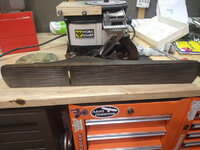
This one was complete, and I got it cutting fairly well with just a quick trip to the sharpener. I was going to flatten the sole when I noticed a stamp on the side. Proper last name, incorrect first initial (to be my grandpa's). Turns out it was my great grandfathers. A no. 5 type 4, from 1874 to 1884. I hit it with some evapo-rust, some oil on all the fasteners, and some renaissance wax everywhere I could get it. I still plan on getting a slightly better fit for the frog/sole and maybe flatten the sole a bit, but right now with a sharp iron, she cuts great. Not sure if I want to fix the tote or not. I like the wear on the break, but it would be nicer to use with it intact.
I even know of some buildings that my great grandpa helped build 100+ years ago, so there's a good chance he was using this old girl when he built them.
Very satisfying to use an ancestor's 150ish year old tool, and know it still works just as well as it did for him.
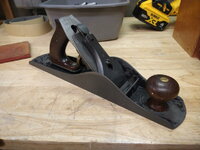

Turns out they were my grandfathers. Very cool.
This one turned out to be a type 10 (1907 -- 1909) no. 7 with the corrugated sole. He's still looking for the iron, cap iron and lever plate before I head to ebay. (If anybody has some parts kicking around, let me know)
This one was complete, and I got it cutting fairly well with just a quick trip to the sharpener. I was going to flatten the sole when I noticed a stamp on the side. Proper last name, incorrect first initial (to be my grandpa's). Turns out it was my great grandfathers. A no. 5 type 4, from 1874 to 1884. I hit it with some evapo-rust, some oil on all the fasteners, and some renaissance wax everywhere I could get it. I still plan on getting a slightly better fit for the frog/sole and maybe flatten the sole a bit, but right now with a sharp iron, she cuts great. Not sure if I want to fix the tote or not. I like the wear on the break, but it would be nicer to use with it intact.
I even know of some buildings that my great grandpa helped build 100+ years ago, so there's a good chance he was using this old girl when he built them.
Very satisfying to use an ancestor's 150ish year old tool, and know it still works just as well as it did for him.
Beerhippie
Well-known member
I picked this little rabbet plane up last spring, as part of a $15 purchase:
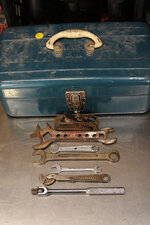
I stuck it on a shelf and forgot about it until yesterday when I was looking for something else (I wonder what that was) and decided it was a good rainy-Sunday project.
I gave it a good hour-and-a-half buzz bath with a hot Sodium citrate solution in the big ultrasonic at the brewery (in a plastic tub so I don't risk contaminating the cleaner).

It's a Stanley!

Logo was used from '48 to present. More towards the present, I reckon.
I flattened the sole on some diamond flat stones, then got to flattening the back of the iron:
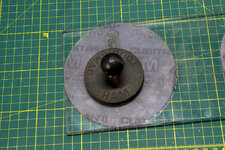
That Ram Mount magnetic base is the perfect tool for holding a plane iron while flattening it.
Now to get the iron edge back to perpendicular to the tang. It's about 1/16" out, so I need to hog off a fair amount of very hard tool steel. I have a nice roller-guide for sharpening irons and chisels on a flat stone, but my coarsest Diasharp is the Extra Coarse or about 220 grit. That'll take a goodly while.
But I do have diamond paddles for my Wicked Edge system, going from 50-2,200 grit. What I don't have is the $200 adapter for sharpening chisels and irons--and won't have one in the foreseeable future.
Can I figure out how to use the guide system I have with the skinny WE paddles?

I guess so! That's about 95% done on the 50 grit paddle.
Progressing through successively finer grits, it becomes painfully obvious that I need to pay attention to what I'm doing instead of watching YT viddies!
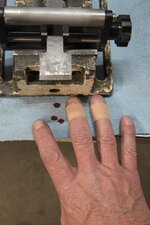
I got the iron to where I like 'em:

25* primary w/30* secondary bevel, honed to 2,200 grit and finished with green stropping compound.
Most of the paint hadn't survived the rust--though the sodium citrate and ultrasound didn't seem to hurt it any--so I stripped the rest off (I'm sure this plane is too new for it to be Japanned) and shot a couple of coats of high-gloss black Rusto onto it, then cured it in the oven for an hour @ 250F:

I have no idea how to adjust the iron on this--I'm not even sure I have it right-side-up. I'm used to knobs and levers. The apparently adjustable throat seems to be a sham, as the cap is pivoted off the adjustable front part. No way this can be used as a chisel plane.
TFL--
I stuck it on a shelf and forgot about it until yesterday when I was looking for something else (I wonder what that was) and decided it was a good rainy-Sunday project.
I gave it a good hour-and-a-half buzz bath with a hot Sodium citrate solution in the big ultrasonic at the brewery (in a plastic tub so I don't risk contaminating the cleaner).
It's a Stanley!
Logo was used from '48 to present. More towards the present, I reckon.
I flattened the sole on some diamond flat stones, then got to flattening the back of the iron:
That Ram Mount magnetic base is the perfect tool for holding a plane iron while flattening it.
Now to get the iron edge back to perpendicular to the tang. It's about 1/16" out, so I need to hog off a fair amount of very hard tool steel. I have a nice roller-guide for sharpening irons and chisels on a flat stone, but my coarsest Diasharp is the Extra Coarse or about 220 grit. That'll take a goodly while.
But I do have diamond paddles for my Wicked Edge system, going from 50-2,200 grit. What I don't have is the $200 adapter for sharpening chisels and irons--and won't have one in the foreseeable future.
Can I figure out how to use the guide system I have with the skinny WE paddles?
I guess so! That's about 95% done on the 50 grit paddle.
Progressing through successively finer grits, it becomes painfully obvious that I need to pay attention to what I'm doing instead of watching YT viddies!
I got the iron to where I like 'em:
25* primary w/30* secondary bevel, honed to 2,200 grit and finished with green stropping compound.
Most of the paint hadn't survived the rust--though the sodium citrate and ultrasound didn't seem to hurt it any--so I stripped the rest off (I'm sure this plane is too new for it to be Japanned) and shot a couple of coats of high-gloss black Rusto onto it, then cured it in the oven for an hour @ 250F:
I have no idea how to adjust the iron on this--I'm not even sure I have it right-side-up. I'm used to knobs and levers. The apparently adjustable throat seems to be a sham, as the cap is pivoted off the adjustable front part. No way this can be used as a chisel plane.
TFL--
Last edited:
Beerhippie
Well-known member
Well, I've figured out that this is a Stanley No. 75 "Bullnose" bevel-down plane, made up into the '80s.
So I do have the blade mounted properly, which may not really matter: http://tinyshopww.blogspot.com/2020/02/stanley-75-bullnose-rabbet-plane.html as it seems like this is pretty much a toy. Maybe I can tune it up to get it working a little, but for now it's a paperweight.
So I do have the blade mounted properly, which may not really matter: http://tinyshopww.blogspot.com/2020/02/stanley-75-bullnose-rabbet-plane.html as it seems like this is pretty much a toy. Maybe I can tune it up to get it working a little, but for now it's a paperweight.
RTM
Well-known member
I have both a Stanley and a Millers Falls, and based on the poor hand feel on this, it is not a favorite user. I have several others higher up in the chain. But, when they are part of a pkg deal for almost free, you take them.
Beerhippie
Well-known member
My feelings exactly!I have both a Stanley and a Millers Falls, and based on the poor hand feel on this, it is not a favorite user. I have several others higher up in the chain. But, when they are part of a pkg deal for almost free, you take them.
I'm tuning it up some right now--flattening things that should be, but weren't, flat, like the cap and the surface of the base where the iron rests.
I also found a picture of an NOS one on the 'bay and realized I hadn't masked it properly, so I'm fixin' that, too.
Last edited:
Hi CRSINMICH. I am very familiar with the Stanley 90 having used a very sharp Sweetheart version for years. This Type 1 with the earliest patent date (and not the 3-13-1900 one) and no model number on the casting, I thought was unique. While many people collect the newer versions, or Sweethearts, etc., I tend to collect/use the earliest Stanley types I find since you rarely see them any more. This one can be easily sharpened and become my primary one now too.Fred: I have a much newer version which I use regularly. That top sliding section which adjusts the mouth can also be removed and then plane can be used as a chisel plane.
Beerhippie
Well-known member
Well, I've been havin' a hell of a good time sitting here tuning up this plane while reading all the reviews and comments on the interwebby about what a total POS it is! At least, I didn't waste much $$ on it, and probably can't hurt it any!
I first wanted to clean the paint off the surfaces that shouldn't be painted, and decided to get them half-*** flat and square (something they never were before) while I was at. I found the ideal "use case" for the FILE EZE I picked up this spring, too!

The FILE EZE really helps control the side-to-side angle of the file. The body castings are such soft CI that I pretty much let the weight of the file do the work.
Next step was tuning up the iron cap. Unlike the body castings, this thing is hard. The file just skidded off it. Cast steel? Whatever, it was poorly cast, with the bottom surface looking like a raw sand-casting (which it was). I cleaned that up on diamond stones:

Then I brought the front of the cap to square with the body of it and somewhat sharp so chips don't get stuck under it:

I flatted and trued (half-***, anyway) the front of the base where the iron rests:
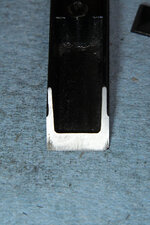
again, with the file and squared by the seat of my pants.

Mo' betta! Still a POS that was designed to cause the user pain, but maybe, just maybe, I can fiddle with the iron enough to pull just one nice curl... later.
I first wanted to clean the paint off the surfaces that shouldn't be painted, and decided to get them half-*** flat and square (something they never were before) while I was at. I found the ideal "use case" for the FILE EZE I picked up this spring, too!
The FILE EZE really helps control the side-to-side angle of the file. The body castings are such soft CI that I pretty much let the weight of the file do the work.
Next step was tuning up the iron cap. Unlike the body castings, this thing is hard. The file just skidded off it. Cast steel? Whatever, it was poorly cast, with the bottom surface looking like a raw sand-casting (which it was). I cleaned that up on diamond stones:
Then I brought the front of the cap to square with the body of it and somewhat sharp so chips don't get stuck under it:
I flatted and trued (half-***, anyway) the front of the base where the iron rests:
again, with the file and squared by the seat of my pants.
Mo' betta! Still a POS that was designed to cause the user pain, but maybe, just maybe, I can fiddle with the iron enough to pull just one nice curl... later.
bmwrd0
Well-known member
I picked up this old girl the other day
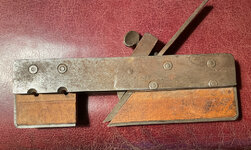
I had a Stanley #80 in the back of my mind when I picked it up, but, as you all can guess, this wasn't that. But it is a nice plane and well made, as I am assuming it is hand made. No marks whatsoever.


I had a Stanley #80 in the back of my mind when I picked it up, but, as you all can guess, this wasn't that. But it is a nice plane and well made, as I am assuming it is hand made. No marks whatsoever.
crguy
Well-known member
Looks like it was modified at some time for a deeper and possibly narrower cut. Pretty rough.
Modern Garage
Well-known member
I don't see any size reference. The iron looks really thick, or is the plane small?
I'm not familiar with plane history like some here and I think it's an intriguing design with metal wrapped wood. Any guess as to the missing screws in the front sole or is that part of the "looks like it was modified"?
Joe
I'm not familiar with plane history like some here and I think it's an intriguing design with metal wrapped wood. Any guess as to the missing screws in the front sole or is that part of the "looks like it was modified"?
Joe