To avoid these ads, REGISTER NOW!

Show us your sewing projects!

To avoid these ads, REGISTER NOW!

kerrynzl

Well-known member
Joined
Nov 8, 2013
Messages
5,054
Location
Tauranga, New Zealand
Thanks Kerry, that's how I did half the seams on my seats, a top sewn felled seam I think it's called? I don't think I'll have any trouble with that thickness, especially with polyester fabric instead of vinyl for binding tape.
When you suggest I "push" the binding on corners I'm guessing you mean to compress it so as to have a little extra material to stretch around the extended radius when I fold it over the outside of the corner, right?
Joe
Yes that is why you push to allow a compound stretch.
A Top sew is a Fell seam, but a true Fell seam is done from underneath. [used mainly in Canvas and Clothing]

The first seam is called a "Run" , so you have what is known as a "run and fell" [a common joining method]
Top sewing has better appearance than fell sewing.

One of the last car carpet jobs I did, I got hold of a carpet overlocker [or carpet binding machine] and did the carpet in 3 pieces. Tunnel and 2 foot wells.
Then I overlocked the foot wells, and after that I top sewed the footwell pieces to the tunnel [there was a binding edge along the joins that looked really good]
It looked very similar to Wilton carpets in old British limousines.

The Carpet overlocker was owned by one of my mum's friends [she would make floor mats to sell at craft fairs]


---------------------------------------------------------------------------------------------------------------------------------------------------------------------------------------

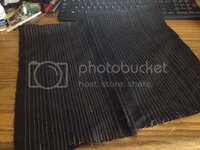
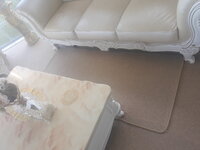
When I had the carpet replaced in my house, I kept all the offcuts.
I trimmed them all to rectangle shapes [carefully cutting along the warp and weft] and radiusing all the corners so they sit flat.

Then I borrowed Jean's overlocker and bound them with matching coloured wool. [in NZ all our carpet is 100% wool]

These old machines are painfully slow , but it was a fun exercise. There was about 36 linear yards of binding at I got 10 mats from all the offcuts [including 3 quite large mats]

1.jpg

2-jpg.1707243
2.jpg

4.jpg

5.jpg

I fixed the brakes on her car as a big "thank-you" for lending me her overlocker
 
Last edited:

Modern Garage

Well-known member
Joined
Mar 26, 2015
Messages
583
Location
Southern Minnesota
Beautiful mats. I have a few things to do before I start practicing, but I'll let you know how I do.
At first glance I thought that you had an interesting tile pattern on your patio, but then realized it was non-skid tape applied on the step areas. I still like the pattern though...
Joe
 

kerrynzl

Well-known member
Joined
Nov 8, 2013
Messages
5,054
Location
Tauranga, New Zealand
Beautiful mats. I have a few things to do before I start practicing, but I'll let you know how I do.
At first glance I thought that you had an interesting tile pattern on your patio, but then realized it was non-skid tape applied on the step areas. I still like the pattern though...
Joe

Yeah , I took some of those mats outside to photograph them.
Those tiles are really slippery when they're wet so I stuck some non-skid tape on them.

Just keep practicing ,everytime you do something do your best to improve your skills.[like welding]
Get a cheap "hot knife" to cut fabrics [this saves buying an overlocking machine]
plus it is good for ropes etc when splicing.
 

jerrydorm81422

New member
Joined
Aug 5, 2022
Messages
2
It's like anything else, practice makes perfect. When I first looked into sewing ripstop / silnylon, I found a ton of light/fast hikers messing with it and spreading a lot of FUD about how difficult it was to work with. Coincidentally most of that was from folks selling products they'd sewn with that material, to other hikers.

Id does have a tendency not to feed correctly. The foot pulls the lower layer but the top layer doesn't stay aligned well. I learned to hold the fabric before and after the needle under some light tension, then feed it thru at the machine's pace. After that it was easy.

And I also spent a lot of time at the beginning just sewing seam after seam in some fabric scraps. Most of a spool of thread just running practice. One piece looked like a gaudy pinstriped suitcloth.

stitchery06_zps58612397.jpg


The bit above about holding purses reminds me of one of the more amusing aspects of sewing. It's walking into a fabric or craft store for something and surprising the sales staff again and again by knowing what I'm after and where it is located in the store. They look at you like you are an alien. Or an invader. I take extra delight in dragging my knuckles as much as possible on such visits. Really confuses people. 'No, I'm not looking for my wife, I'm looking for some canvas duck cloth in a green shade.' was a favorite. Then there was the time I went in around halloween with some very specific fabrics in mind, had the bolts under my arm and was standing at the wall of zippers and buttons, looking for something particular. The staff were actually whispering about me.

[can't seem to find my hammock pix]

found'em

hammock01_zpswlhtbpyp.jpg hammock02_zpscblyyw2p.jpg hammock03_zpserz9veje.jpg hammock09_zpsajwvtkp9.jpg


8" dobsonian telescope cover, with integral stuff-sack. The money I saved on this alone paid for the sewing machine.

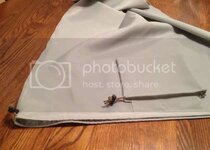
cover10_zps124920dd.jpg cover08_zpscf69c0f6.jpg cover09_zps9823c3dc.jpg
good job!
 

F-22

Well-known member
Joined
Jan 23, 2022
Messages
1,830
Update regarding the leather jacket I poseted here days ago.
Ended up taking it to a local leather tailor I found out about. 35€ for the entire new lining and new pocket linings. 35€ for the "pockets". It looks good enough for me, but she just had some issues with getting the right leather colour.

803D26A6-B725-49FD-84F9-07CE376E234D.jpegDBE8D116-F36E-4AEB-8235-F6483B9131E2.jpeg7BC74793-E9BB-47DD-9713-82141040FAE7.jpeg


And here is the jacket next to the same model jacket I bought brand new a few years ago (I think it was around 500€).
That one has a winter lining, and this one is more of a summer type now.

C9B7C8A8-B5E9-4B9A-9E8F-744139596E0B.jpeg
 

F-22

Well-known member
Joined
Jan 23, 2022
Messages
1,830
Yes, she had to take it all apart to replace the lining anyway. I'm a bit bummed the leather color and grain is off, but it does not stand out too much either...
 

MBfreak

MEMBER EMERITUS
Joined
Dec 10, 2010
Messages
2,301
Location
Linkoping , Sweden
My mother was a farm girl, born 1907. She was the youngest of three sisters. My grandmother and great grandmother raised the three girls. They were well off, but made most everything on the farm.
When I grew up ( born 1946) my mother made all clothes for me and my two brothers, until we were 12. Shoes excluded.
About the only food my mother refused to clean, cook or eat was rabbit. During WW1 all food, except rabbits, was rationed and despite growing up on a big farm it was impossible to even sneak off with a piglet or a hare. "I was forced to eat rabbit 4 times a week for 7 years"

She raised us well

Ola
 
Last edited:

Bad Mojo

Well-known member
Joined
Sep 2, 2012
Messages
113
Question to everyone who has jumped into the sewing pool. I have been accruing a list of various sewing projects and I am getting ready to purchase a machine. I am seeing plenty of used machines come up for sale with a handful of industrial machines as well. Also happy to consider new if that is a better option. The projects are mostly covers for tools and I would also like to repair a couple articles of clothes in the future. I am not seeing sewing as being a phase, but something I will try to incorporate more into projects. Should I just go ahead and jump to an industrial machine or is there a smaller non-industrial machines I should start on. I have always tried to buy tools and machines that allow me to grow into them and I am seeing if that is something as well. Lastly, I am happy to pay a premium for turn key or minimized setup and trouble shooting.

Thoughts? Any resources I should be looking at?
 

lilredex

Well-known member
Joined
Apr 29, 2006
Messages
5,944
Location
Toronto
I bought a table top Brother sewing machine about fifty years ago and it has served me adequately in repairing/hemming jeans etc. Did make a couple of jean jackets way back. Those kind of machines often show up at garage sales, make sure it is a free arm model, so much more versatile.
 

kerrynzl

Well-known member
Joined
Nov 8, 2013
Messages
5,054
Location
Tauranga, New Zealand
Question to everyone who has jumped into the sewing pool. I have been accruing a list of various sewing projects and I am getting ready to purchase a machine. I am seeing plenty of used machines come up for sale with a handful of industrial machines as well. Also happy to consider new if that is a better option. The projects are mostly covers for tools and I would also like to repair a couple articles of clothes in the future. I am not seeing sewing as being a phase, but something I will try to incorporate more into projects. Should I just go ahead and jump to an industrial machine or is there a smaller non-industrial machines I should start on. I have always tried to buy tools and machines that allow me to grow into them and I am seeing if that is something as well. Lastly, I am happy to pay a premium for turn key or minimized setup and trouble shooting.

Thoughts? Any resources I should be looking at?

It depends on what work you intend to do.

My first machine I ever sewed on was an old Adler walking foot [in 1977] , I personally can't stand "Home sewing machines" but bought 2 for my wife [who never uses them] and these are easy to store out of sight.

If you get an industrial machine, don't get a "flat sew"machine that clothing factories used [these are too brutal in the speed for a novice] But you can swap the motors on them.

If you're only doing household sewing, [clothing , curtains, pillows etc] a home sewing machine is sufficient.
But if you want to do leather, upholstery , marine, awnings, tarpaulins, tents etc etc get and industrial walking foot.
A walking foot can also do lightweight sewing [with skills acquired] and is best for repair jobs.

Machine of choice is German "Durkopp Adler", then any Japanese machine made by Juki Heavy Industries [Juki, Brother, Consew etc]
I have very little experience with USA Singer [except the heavy leather dinosaur} so I cannot comment.


The whole sewing/textile industry is changing......... Glues, Tapes, and Welding is slowly creeping in
If you are going to play around with PVC's etc , I would recommend a hot-air welder and a silicone roller.

I just hemmed up the bottom of nice coat for my wife using iron on double sided tape [a new skill for me]
 

Bob Heine

ALLIANCE MEMBER
Joined
Oct 24, 2009
Messages
10,703
Location
Boca Raton, Florida
I have always tried to buy tools and machines that allow me to grow into them and I am seeing if that is something as well. Lastly, I am happy to pay a premium for turn key or minimized setup and trouble shooting.

Thoughts? Any resources I should be looking at?
@Bad Mojo, my advice is worth something less than 2¢ so listen to others before you decide what to buy and how much to spend. If you want do fancy stitches or buttonholes, one of the modern machines is the way to go. They have smartphone-like interfaces and you push buttons to make the machine do the job for you. If you want to do straight stitches through leather or heavy denim, I would recommend an old fashioned Singer 15-91 machine. I have one and have used it to make boat covers and some simple upholstery work. Unlike the majority of older machines, the 15-91 has a gear drive rather than a belt and pulley system. The gear drive lets you to sew through some pretty heavy stuff. There's a YouTube video showing one stitching 12 layers of denim. It shows up if you search for: "Layers of denim through 15-91 singer" (I can't post a link directly to the video).
 

Bad Mojo

Well-known member
Joined
Sep 2, 2012
Messages
113
I bought a table top Brother sewing machine about fifty years ago and it has served me adequately in repairing/hemming jeans etc. Did make a couple of jean jackets way back. Those kind of machines often show up at garage sales, make sure it is a free arm model, so much more versatile.
I just had to look up what free arm means, but that is good to know about.
It depends on what work you intend to do.

My first machine I ever sewed on was an old Adler walking foot [in 1977] , I personally can't stand "Home sewing machines" but bought 2 for my wife [who never uses them] and these are easy to store out of sight.

If you get an industrial machine, don't get a "flat sew"machine that clothing factories used [these are too brutal in the speed for a novice] But you can swap the motors on them.

If you're only doing household sewing, [clothing , curtains, pillows etc] a home sewing machine is sufficient.
But if you want to do leather, upholstery , marine, awnings, tarpaulins, tents etc etc get and industrial walking foot.
A walking foot can also do lightweight sewing [with skills acquired] and is best for repair jobs.

Machine of choice is German "Durkopp Adler", then any Japanese machine made by Juki Heavy Industries [Juki, Brother, Consew etc]
I have very little experience with USA Singer [except the heavy leather dinosaur} so I cannot comment.


The whole sewing/textile industry is changing......... Glues, Tapes, and Welding is slowly creeping in
If you are going to play around with PVC's etc , I would recommend a hot-air welder and a silicone roller.

I just hemmed up the bottom of nice coat for my wife using iron on double sided tape [a new skill for me]
You mentioned walking foot, which have seen mentioned several times in descriptions. All that is a foot that holds down the material and then helps feed it forward? Is there any reason not to get a walk foot machine. It seems like a good thing.

I have seen the mention of speed before. I assume that it is in regards to how fast material can be feed through the machine and how fast the machine is stitching. So the the whole point for servo drives on some machines is to be able to really control how fast the machine moves through the material.

That is a super interesting point and good to know about the changing ways stuff is being held together.
@Bad Mojo, my advice is worth something less than 2¢ so listen to others before you decide what to buy and how much to spend. If you want do fancy stitches or buttonholes, one of the modern machines is the way to go. They have smartphone-like interfaces and you push buttons to make the machine do the job for you. If you want to do straight stitches through leather or heavy denim, I would recommend an old fashioned Singer 15-91 machine. I have one and have used it to make boat covers and some simple upholstery work. Unlike the majority of older machines, the 15-91 has a gear drive rather than a belt and pulley system. The gear drive lets you to sew through some pretty heavy stuff. There's a YouTube video showing one stitching 12 layers of denim. It shows up if you search for: "Layers of denim through 15-91 singer" (I can't post a link directly to the video).
I couldn't agree more, and I am glad this forum exist and that there is a place to ask some questions.

You mentioned straight stitch, but I have also seen zig-zag and other ones mentioned. I assume there are more types as well, and they each have their place. Do machines allow different types of stitches or do you get specific machines for specific stitch types?

In regards to your comment about how much technology I want in my machine at this point I lean towards less buttons and screens and a more manual experience as I am learning. At some point I could see adding machines with those features, but right now I know I need to get some skill and terminology under my belt before I jump into the deep end.

Lastly thank you everyone who has been answering questions. It has been helpful and insightful.
 

WoodsTruck

Well-known member
Joined
Jan 12, 2013
Messages
1,019
I ended up buying a Consew 99 in 2010 since it had a walking foot/bed, forward/reverse, straight stitch and zig-zag and a knee lift. The guy I bought it from replaced the clutch motor with a servo motor which was more preferred for me. It seems like it is a medium duty machine I guess as it will handle a mid-weight thread which holds bulky items better.

The clutch motor engages the motor when you press on the "go" pedal and the motor can be quite noisy. The servo motor only runs when the "go" pedal is activated so it is silent until spoken to. The knee lift of a commercial machine over the rear lever of a home owner machine (or at least the ones I'm used to) is very nice so you can use both hands to position your material while you raise/lower the foot and the lever doesn't inadvertently lifted if the material bunches up under it. There are two variations on the walking foot as well, as far as I know. One will have the foot walk forward on each forward stitch to help feed the material and the other has a mirror "foot" in the table with matches the foot motion so each portion reaches forward and grabs the material and feeds it into the target zone for the needle. Reverse is kind of obvious, but I have seen old Singers that didn't have it. I also wanted zig-zag so I could tack off things. The downside to this option is the wide foot which allows for the lateral travel of the needle. This keeps me from sewing welting or doing a narrow stitch along a zipper. Trade offs.

I have a binder attachment for adding 3/4" or 1" wide ribbon to the edge of a piece of material which is a nice way to finish an edge or add protection/strength. I also made a hemmer attachment to roll a consistent edge over to stitch. These are mounted on a swing arm so I can kick them out of the immediate way for making corners and stuff, then realign it and continue with the binding/hemming.
 

Bob Heine

ALLIANCE MEMBER
Joined
Oct 24, 2009
Messages
10,703
Location
Boca Raton, Florida
You mentioned straight stitch, but I have also seen zig-zag and other ones mentioned. I assume there are more types as well, and they each have their place. Do machines allow different types of stitches or do you get specific machines for specific stitch types?

In regards to your comment about how much technology I want in my machine at this point I lean towards less buttons and screens and a more manual experience as I am learning. At some point I could see adding machines with those features, but right now I know I need to get some skill and terminology under my belt before I jump into the deep end.
@Bad Mojo, I like mechanical stuff and for me sewing machines fall into the Holy Cow end of the spectrum. Singer made attachments that do amazing things, including zig-zag stitches. As a kid, watching some of the sewing machine attachments entertained me for hours (pretty sure I was on some kind of spectrum). Here's a zig-zag attachment that works on a 15-91:
Zig-Zag Attachment.jpg
Because Singer made so many sewing machines back in the day, you can still buy all kinds of repair parts and attachments. This box of attachments is for sale for $40 and is described as "Vintage Singer Low Shank Attachment Box 160977, for 306 and other Low Shank Models- 9 Pieces including Shelled Seams Foot Hemmer."
Singer Attachments.jpg
Don't be surprised if you run across a rabbit while exploring this gigantic hole.
 

harley jim

Well-known member
Joined
Dec 6, 2013
Messages
11,385
Location
Cleveland Tn..........out in the sticks
Bad Mojo
I have an older Pfaff industrial machine that works great for what I do, the thing I would change on it would be to put a servo motor on it. The amount of control you have is phenomenal. When you dont do this every day I can get in trouble very quick with the speed thing! Just my less than two cents.
 

kerrynzl

Well-known member
Joined
Nov 8, 2013
Messages
5,054
Location
Tauranga, New Zealand
You mentioned walking foot, which have seen mentioned several times in descriptions. All that is a foot that holds down the material and then helps feed it forward? Is there any reason not to get a walk foot machine. It seems like a good thing.

I have seen the mention of speed before. I assume that it is in regards to how fast material can be feed through the machine and how fast the machine is stitching. So the the whole point for servo drives on some machines is to be able to really control how fast the machine moves through the material.

That is a super interesting point and good to know about the changing ways stuff is being held together.

Go back to my post on Aug 2 [#313] there is a video about walking foot machines.

On a flat sewing machine the presser foot is like a "Ski" so you need to have reasonably good skills [feel] feeding the fabric , especially when sewing on a bias.

Most industrial machines [the cheap ones GJ'ers buy] only have a pedal operated clutch motor, that has a brake on the heel.
It is all or nothing, so a skilled machinist will tap the foot pedal to "flywheel" the position of the needle or limit the speed.

Usually there is only 2 different speed motors available [1300 and 2600 rpm] and the pulleys are fixed.
Most old 2nd hand clothing factory machines are the fast variety.

The heel brakes on them are amazing ! they can stop the machine within about 22° rotation from full speed.
I have been sewing on and off for 46 years and I've never ever came close to putting a needle in my finger [that is the domain of women gossiping in clothing factories]

If you can get your hands on a walking foot machine start with that. All you need is a straight stitch machine and a flat table,

Later if you want to venture into lightweight fabrics try and get a Home sewing overlocker [until then you can use a hot knife to cut]
 
Last edited:

Bad Mojo

Well-known member
Joined
Sep 2, 2012
Messages
113
I ended up buying a Consew 99 in 2010 since it had a walking foot/bed, forward/reverse, straight stitch and zig-zag and a knee lift. The guy I bought it from replaced the clutch motor with a servo motor which was more preferred for me. It seems like it is a medium duty machine I guess as it will handle a mid-weight thread which holds bulky items better.

The clutch motor engages the motor when you press on the "go" pedal and the motor can be quite noisy. The servo motor only runs when the "go" pedal is activated so it is silent until spoken to. The knee lift of a commercial machine over the rear lever of a home owner machine (or at least the ones I'm used to) is very nice so you can use both hands to position your material while you raise/lower the foot and the lever doesn't inadvertently lifted if the material bunches up under it. There are two variations on the walking foot as well, as far as I know. One will have the foot walk forward on each forward stitch to help feed the material and the other has a mirror "foot" in the table with matches the foot motion so each portion reaches forward and grabs the material and feeds it into the target zone for the needle. Reverse is kind of obvious, but I have seen old Singers that didn't have it. I also wanted zig-zag so I could tack off things. The downside to this option is the wide foot which allows for the lateral travel of the needle. This keeps me from sewing welting or doing a narrow stitch along a zipper. Trade offs.

I have a binder attachment for adding 3/4" or 1" wide ribbon to the edge of a piece of material which is a nice way to finish an edge or add protection/strength. I also made a hemmer attachment to roll a consistent edge over to stitch. These are mounted on a swing arm so I can kick them out of the immediate way for making corners and stuff, then realign it and continue with the binding/hemming.
There were some great nuggets of information there. And thank you for taking the time to explain the servo situation.
@Bad Mojo, I like mechanical stuff and for me sewing machines fall into the Holy Cow end of the spectrum. Singer made attachments that do amazing things, including zig-zag stitches. As a kid, watching some of the sewing machine attachments entertained me for hours (pretty sure I was on some kind of spectrum). Here's a zig-zag attachment that works on a 15-91:

Because Singer made so many sewing machines back in the day, you can still buy all kinds of repair parts and attachments. This box of attachments is for sale for $40 and is described as "Vintage Singer Low Shank Attachment Box 160977, for 306 and other Low Shank Models- 9 Pieces including Shelled Seams Foot Hemmer."

Don't be surprised if you run across a rabbit while exploring this gigantic hole.
I love the mechanical stuff as well and this only makes me think about carbs or injection pumps on diesels. The level of control over how everything works together is baffling to me.

Thats great to know that there are attachments and support for the older machines.

I have chased some already and I am glad I started asking questions because I wasn't sure which path I wanted to take. Everyone in this thread has been a huge help. I also see myself using that line if you don't mind in the future.
Bad Mojo
I have an older Pfaff industrial machine that works great for what I do, the thing I would change on it would be to put a servo motor on it. The amount of control you have is phenomenal. When you dont do this every day I can get in trouble very quick with the speed thing! Just my less than two cents.
That makes complete sense. And while I want to think I will do this often I know there will be some pauses while doing other projects and knowing I can walk up to a machine and be successful is huge.
Go back to my post on Aug 2 [#313] there is a video about walking foot machines.

On a flat sewing machine the presser foot is like a "Ski" so you need to have reasonably good skills [feel] feeding the fabric , especially when sewing on a bias.

Most industrial machines [the cheap ones GJ'ers buy] only have a pedal operated clutch motor, that has a brake on the heel.
It is all or nothing, so a skilled machinist will tap the foot pedal to "flywheel" the position of the needle or limit the speed.

Usually there is only 2 different speed motors available [1300 and 2600 rpm] and the pulleys are fixed.
Most old 2nd hand clothing factory machines are the fast variety.

The heel brakes on them are amazing ! they can stop the machine within about 22° rotation from full speed.
I have been sewing on and off for 46 years and I've never ever came close to putting a needle in my finger [that is the domain of women gossiping in clothing factories]

If you can get your hands on a walking foot machine start with that. All you need is a straight stitch machine and a flat table,

Later if you want to venture into lightweight fabrics try and get a Home sewing overlocker [until then you can use a hot knife to cut]
That video was very helpful and I subscribed to that channel and I think I finally got my suggested videos to understand what I am after now.

The more sewing machines and sewing in general has been explained my brain is just making all these connections between machining and automotive concepts and it has only made this only more interesting.

I look at the needle moving the same way I look at a table saw blade running. Know where it is and sometimes you need to get your fingers close, but no need to get careless.


Thank you everyone, I think I am more focused on the features of the machine that I want to go after trying to find used.

 
To avoid these ads, REGISTER NOW!

kerrynzl

Well-known member
Joined
Nov 8, 2013
Messages
5,054
Location
Tauranga, New Zealand
There were some great nuggets of information there. And thank you for taking the time to explain the servo situation.

I love the mechanical stuff as well and this only makes me think about carbs or injection pumps on diesels. The level of control over how everything works together is baffling to me.

Thats great to know that there are attachments and support for the older machines.

I have chased some already and I am glad I started asking questions because I wasn't sure which path I wanted to take. Everyone in this thread has been a huge help. I also see myself using that line if you don't mind in the future.

That makes complete sense. And while I want to think I will do this often I know there will be some pauses while doing other projects and knowing I can walk up to a machine and be successful is huge.

That video was very helpful and I subscribed to that channel and I think I finally got my suggested videos to understand what I am after now.

The more sewing machines and sewing in general has been explained my brain is just making all these connections between machining and automotive concepts and it has only made this only more interesting.

I look at the needle moving the same way I look at a table saw blade running. Know where it is and sometimes you need to get your fingers close, but no need to get careless.


Thank you everyone, I think I am more focused on the features of the machine that I want to go after trying to find used.

Like I said , I've never put a needle through any skin ever.... But the presser foot on a walking foot machine has given me a few warnings without any consequences.

You don't need any ZigZag stitch , chain stitch or anything fancy.
All you need is one that reverses, alters stitch length,alters pressure and sews a straight stitch

Get a walking foot and another 2 spare presser feet and needle feet.
You grind the needle foot in a "V" on the RH side, and also cut the presser foot so it has a similar shape.[one pair]

Then do the same again the opposite side for the other pair

Then use these as a piping foot [LH] and for sewing "bulk ropes"[RH] for awning tracks.

You really don't need a piping foot with a tunnel to make the piping
I usually make my piping with the foot cut for bulk ropes [piping is just a small section bulk rope]

Usually when you buy a walking foot machine they usually come with these ^^^^ [somebody in the past has already dicked with it]


Outlawmws

Well-known member
Joined
Aug 9, 2011
Messages
39,081
Location
The Badlands
I beg to differ on never needing a Zig Zag. I made a tent out of wool blankets, Wool will tear out in use with a straight stitch. It needs to be able to spread the load, and a Zig Zag can accomplish that. I'm sure other more delicate or less robust fabrics may have similar issues.

If I could have gotten the Baby lock to work right (timing issues) I would have used that, but the Zig Zag worked fine.
 

kerrynzl

Well-known member
Joined
Nov 8, 2013
Messages
5,054
Location
Tauranga, New Zealand
I beg to differ on never needing a Zig Zag. I made a tent out of wool blankets, Wool will tear out in use with a straight stitch. It needs to be able to spread the load, and a Zig Zag can accomplish that. I'm sure other more delicate or less robust fabrics may have similar issues.

If I could have gotten the Baby lock to work right (timing issues) I would have used that, but the Zig Zag worked fine.

What!!!!!!!!!!!!!!!!!

Are you suggesting that @Bad Mojo buys another machine so he can use it for inappropriate products. [which making a tent from wool blankets is]
If he wants to make a proper tent ,he should use canvas for larger tents or nylon for hiker tents.

We could all spend $1000's on different machines for different one off jobs as long as we can justify the expense.

Joining wool blankets is easy with a long stitch length walking foot. You do a 3/4" run , then a fell seam approx 1/2" over.
If the wool blankets are a synthetic blend [most are] , you cut it with a hot knife.

To sew them together without stretching I usually use scotch tape [cellotape] to stabilized them. Then tear off the tape through the perforated holes later.

I would rather spend $$$ on a hot knife than an extra zig-zag stitch sewing machine. It would be more practical.

hot knife.PNG
 

Outlawmws

Well-known member
Joined
Aug 9, 2011
Messages
39,081
Location
The Badlands
Wow, that is a bit of an over the top response for an observation - I never said anything about what you should recommend, read my post again.

As to your insulting comments of my choice of tent materials - Why? Millions have lived and died in wool tents, both in the African and Arabian deserts, and in and around Mongolia. At least a million still do in Mongolia... I think they know more about tent making for extreme weather than Coleman, or even the US army.

You didn't ask, but I spent most of a year researching for this particular car top tent replacement. None of the canvas material was usable, even the wood platform had to be made new. I used the hardware - that was it.

Why wool? Canvas is heavy and durable it's not warm at all unless you line it double layer like the old US army arctic tents. Rip stop? its light -and even colder, even double lined.

Taking a page from the above "primitive" peoples, I decided to give wool a try. The easiest source of wool was army blankets, I bought new ones.

The top is doubled, wool inside and coated rip stop nylon on top. The sides have plastic tarps cut to size that can be clipped to the outside edges of the top. good for most any rain.

I've used this tent for the past 5 years, and never slept more comfortably - I'm sensitive to cold air, it kills my sinuses. in all of my old tents, I had to wear a bandanna mask and a knit cap or by the end of a week I'd likely have bleeding sinuses. Since I started using this tent, no issues, and I don't need the bandanna to keep from ******, sore, and aching sinuses.

The wool breathe as neither canvas nor rip stop will, and does not get musty like canvas can in storage. It does not collect condensation from my breathing, so no more "frozen icicles" (literally) inside when its really cold.

For me it works great. Will it take a beating like canvas? No, but I don't beat my gear.

So a suggestion; You have a great deal of knowledge, I respect that. But maybe you should consider asking a few questions whan something new to you come up, instead of making pronouncements from that great knowledge base. People can learn from asking questions when they hear of something outside their experience.
 

kerrynzl

Well-known member
Joined
Nov 8, 2013
Messages
5,054
Location
Tauranga, New Zealand
Wow, that is a bit of an over the top response for an observation - I never said anything about what you should recommend, read my post again.

As to your insulting comments of my choice of tent materials - Why? Millions have lived and died in wool tents, both in the African and Arabian deserts, and in and around Mongolia. At least a million still do in Mongolia... I think they know more about tent making for extreme weather than Coleman, or even the US army.

You didn't ask, but I spent most of a year researching for this particular car top tent replacement. None of the canvas material was usable, even the wood platform had to be made new. I used the hardware - that was it.

Why wool? Canvas is heavy and durable it's not warm at all unless you line it double layer like the old US army arctic tents. Rip stop? its light -and even colder, even double lined.

Taking a page from the above "primitive" peoples, I decided to give wool a try. The easiest source of wool was army blankets, I bought new ones.

The top is doubled, wool inside and coated rip stop nylon on top. The sides have plastic tarps cut to size that can be clipped to the outside edges of the top. good for most any rain.

I've used this tent for the past 5 years, and never slept more comfortably - I'm sensitive to cold air, it kills my sinuses. in all of my old tents, I had to wear a bandanna mask and a knit cap or by the end of a week I'd likely have bleeding sinuses. Since I started using this tent, no issues, and I don't need the bandanna to keep from ******, sore, and aching sinuses.

The wool breathe as neither canvas nor rip stop will, and does not get musty like canvas can in storage. It does not collect condensation from my breathing, so no more "frozen icicles" (literally) inside when its really cold.t

For me it works great. Will it take a beating like canvas? No, but I don't beat my gear.

So a suggestion; You have a great deal of knowledge, I respect that. But maybe you should consider asking a few questions whan something new to you come up, instead of making pronouncements from that great knowledge base. People can learn from asking questions when they hear of something outside their experience.

I didn't mean to insult you in anyway! If this was misinterpreted then I apologize.

I am trying to give @Bad Mojo sound advice spending the minimum $$$ possible for maximum results. [And not send him down the wrong path]

I am very experienced in the Tent making arena [from Hikers tents up to Circus tents] so from my experience/perspective wool blankets is inappropriate these days

Back in the early 80's I switched over from Upholstery to Tentmaking [Canvas goods etc] because that's where the money was.
We got into military contracts. [These military contracts put me into a new freehold house when I was 22]

One contract was for 10,000 nylon 1 man camo tents [ these had to be flammable so the army could burn them if needed]
We also did 3000 canvas "frame tents" for the army.

I've done pole tents, pole marquees, caravan annexes , awning etc etc.

I threw the whole business away in 1985 after helping develop H/F welding for production purposes. 20 year later I got asked back to help design and oversee the production of this [below]
Apart from some detail sewing the whole setup was a tension structure of welded PVC [so not really a sewing project]

I had to fly to "Monte-Casino" Johannesburg SA to help put the damn thing up.

circus tent.PNG

This was designed and cut out with a CNC plotter and then took 10 workers 6 weeks [24 hours/day 7/days week] to weld it together.

I have also been Guilty myself of using inappropriate materials myself. [I don't recommend this unless experienced]
I once fully trimmed a Fairlane in Leopard skin [Cheetah skin] Blankets in Tuck'n'roll [seats, door cards, dash, parcel tray, kick panels]
It was the epitome of bad taste but looked really good [the total cost was about $30 to me]

I also re-trimmed my younger brother's English Mk 2 Zephyr in Day-Glo Orange [used on safety jacket etc] This was my brother's "piss wagon" to go drinking/cruising with the boys
The problem was the Day-glo reflected on their faces and they all got nausea when inside it. [not good when drunk]


If you need any advice or help with Tents etc feel free to pm me.
 

Modern Garage

Well-known member
Joined
Mar 26, 2015
Messages
583
Location
Southern Minnesota
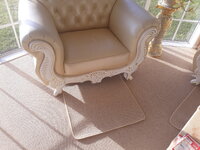
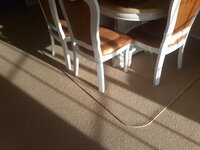
A little project update. I had asked for advice a while back about carpet binding for a car project and here's the result. Far from perfect but good enough to be stepped on.
I'm going to look at a walking foot machine next week. Up to now I've been using a 50's era White that will sew thru plywood but thick or tacky material is a bit frustrating. I'm going to sew a new roof for this car and a walking foot and wider stitch length would make that easier.
Joe
 

Attachments

  • 0515231423.jpg
    0515231423.jpg
    907.5 KB · Views: 48
  • 0515231424.jpg
    0515231424.jpg
    763.4 KB · Views: 45

Modern Garage

Well-known member
Joined
Mar 26, 2015
Messages
583
Location
Southern Minnesota
No, sew the binding on the top edge of the carpet, about 3/8" in from the edge, roll it over to the back and sew again from the top just inside of the edge of the binding. This second stitch catches the binding underneath and is invisible in the carpet nap.
Joe
 

vpd66

Well-known member
Joined
Mar 1, 2010
Messages
709
Location
Central Wisconsin
A little project update. I had asked for advice a while back about carpet binding for a car project and here's the result. Far from perfect but good enough to be stepped on.
I'm going to look at a walking foot machine next week. Up to now I've been using a 50's era White that will sew thru plywood but thick or tacky material is a bit frustrating. I'm going to sew a new roof for this car and a walking foot and wider stitch length would make that easier.
Joe
Walking foot machines can be found on Craigslist or FB marketplace in your area. You have to know the difference between a standard industrial sewing machine and a walking foot machine. There are a lot of people selling industrial machines and don't understand what a triple feed walking foot sewing machine is. Your best bet is to just look for certain model machines. Consew 206 RB-1 through 5 is a very common walking foot machine and the most common to find parts for. The are a lot of "clone" machines out there and most of them are pretty good machines too. Once you find one you will really enjoy it.
 

slodat

ALLIANCE MEMBER
Joined
Feb 6, 2010
Messages
3,679
Location
Central-ish, WA
I much prefer the horizontal hook machines like the Consew 255. If you’d like your mats to lay flat, you can buy a product called snap back. Glue carpet to the snap back, then hand bind the edge the same way - sewing the top in the ditch. The bottom of the snap back is a rubbery sorta thing. Keeps them from sliding around. It’s available at upholstery supply houses.
 

DGersic

Well-known member
Joined
Mar 12, 2017
Messages
6,258
Location
DeKalb, IL
A little project update. I had asked for advice a while back about carpet binding for a car project and here's the result. Far from perfect but good enough to be stepped on.
I'm going to look at a walking foot machine next week. Up to now I've been using a 50's era White that will sew thru plywood but thick or tacky material is a bit frustrating. I'm going to sew a new roof for this car and a walking foot and wider stitch length would make that easier.
Joe

Are you looking at vintage or new?

If new, the Sailrite zig zag stitch model is best. The straight only model isn’t quite as versatile. After that, the other Chinese clones are all about the same. All are quite serviceable.
 

DGersic

Well-known member
Joined
Mar 12, 2017
Messages
6,258
Location
DeKalb, IL
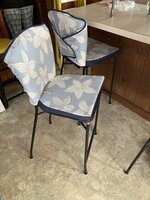
I finally got the seat covers installed on the barstools at our beach cottage.

IMG_2576.jpegIMG_2577.jpeg

For having no idea what I was doing when I started, and picking up in the middle of someone else’s design, making it actually work and completing it, I’m happy with the results.
 

vpd66

Well-known member
Joined
Mar 1, 2010
Messages
709
Location
Central Wisconsin
I much prefer the horizontal hook machines like the Consew 255. If you’d like your mats to lay flat, you can buy a product called snap back. Glue carpet to the snap back, then hand bind the edge the same way - sewing the top in the ditch. The bottom of the snap back is a rubbery sorta thing. Keeps them from sliding around. It’s available at upholstery supply houses.
I find it funny you mention that you like horizontal hook machines. I started with a Singer 111W155 that is a horizontal hook machine. I upgraded to A Nakajima 280L (Same machine has a Juki DNU-241H) which is a vertical hook machine and love it. I find it much easier to change bobbins with the vertical hook machine. Also the vertical hook machines I've run and own don't seem to be has finicky about holding on to the threads when you start sewing. Just curious, what do you prefer about horizontal hook machines?
 

Modern Garage

Well-known member
Joined
Mar 26, 2015
Messages
583
Location
Southern Minnesota
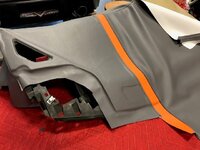
Sometimes you can surprise yourself by not knowing what you can and can't do.
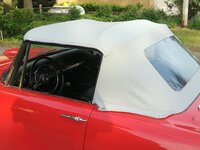
I didn't buy a better sewing machine (long rant that won't appear here) but I still had a convertible top that needed to be made, so I ignored the fact that I shouldn't be able to and I just did.
Maybe would have been easier or quicker with a better machine but it's done and I'm happy with it. Learning that self-adhesive Velcro will gum up a needle in about three inches and soaking all my Velcro in a basin of acetone to remove the sticky back was probably more hassle than accommodating my little old sewing machine but that's something else I learned.
I'm still on the watch for a walking foot machine but I can wait until a ridiculous deal presents itself - this is only a hobby.
Joe
 

Attachments

  • 0531231858a.jpg
    0531231858a.jpg
    725.3 KB · Views: 31
  • 0531231858b.jpg
    0531231858b.jpg
    643.6 KB · Views: 33
  • 0531231858.jpg
    0531231858.jpg
    1 MB · Views: 69

vpd66

Well-known member
Joined
Mar 1, 2010
Messages
709
Location
Central Wisconsin
Sometimes you can surprise yourself by not knowing what you can and can't do.
I didn't buy a better sewing machine (long rant that won't appear here) but I still had a convertible top that needed to be made, so I ignored the fact that I shouldn't be able to and I just did.
Maybe would have been easier or quicker with a better machine but it's done and I'm happy with it. Learning that self-adhesive Velcro will gum up a needle in about three inches and soaking all my Velcro in a basin of acetone to remove the sticky back was probably more hassle than accommodating my little old sewing machine but that's something else I learned.
I'm still on the watch for a walking foot machine but I can wait until a ridiculous deal presents itself - this is only a hobby.
Joe
Nice job! Once you find a deal on a walking foot machine you will see how much better they sew heavier materials. I too learned about the adhesive on Velcro. I now buy non adhesive backed Velcro. Stay persistent on your search for a walking foot machine. When deals pop up then don't last long!
 

IndyGarage

Well-known member
Joined
Apr 29, 2010
Messages
9,669
Location
Indy
A couple weeks ago I picked up a couple new sewing machines. Been looking for a double needle machine and a guy had a Pfaff 1246 - double needle walking foot - and also a 1245 - single needle walking foot - on Craigslist - the newer models. No stands or motors. The price was right, so I bought them both.

I will install the 1245 in the base I have my 145 in right now. I think it's a straight drop in. It's a slight upgrade because I think it will handle a bit thicker material and it has the bigger bobbin, which is useful on thicker thread.

The 1246 will need a new stand and a new servo motor.

Once I get situated and make sure they work OK, I will sell off the Pfaff 145 walking foot, without a stand or motor.
 

Yarz

Well-known member
Joined
Sep 11, 2013
Messages
121
Location
Tarentum PA
I made several kid-sized 3-man waterballoon launchers for an upcoming party out of old jeans and ratchet straps:
DSCF0604.JPG

DSCF0606.JPG

And after getting used to the machine, I made a backrest cover for my golf cart:
DSCF0608.JPG
DSCF0609.JPG

None of it is anywhere close to perfect, but don't think it's terrible for being the first time touching a sewing machine since middle school.
 

draco_1967

Well-known member
Joined
Jan 3, 2021
Messages
205
Location
Utah
This thread needs reviving!
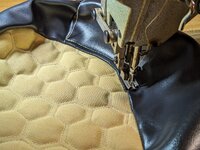
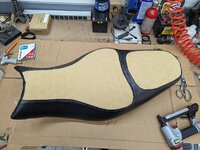
I just finished a new seat cover for one of my motorcycles. This is the 5th seat cover I've done, and it is way better than any of the previous. I picked up a Nakajima 180L walking foot machine, and it made a huge difference when working with the heavier materials. The servo motor and auto-up/down feature were a big part of that too.
The seat surface is Sunbrella canvas in "wheat." I'm hoping it will help prevent hot **** when I hop on the bike after it's been sitting in the sun.
LK9bz9f1SM90PvXmX4HwE69iG1LD1qRuOhM5tFEPxeJPS=w800.jpg
vwCGrUNz-2uhVwGs7GujuftTH6P2Xy0alnwbJ0TzhOYvF=w800.jpg
yv__9bMucQVurZ4CeLfGfRwUH-sAev8jwEQDTYotw2Fv1=w800.jpg
 
To avoid these ads, REGISTER NOW!
Top Bottom