d42jeep
Well-known member
I’ve run across some of the ignition wrenches with just numbers but I mostly just have E and G series Duro sets.
-Don
7 wrench E series set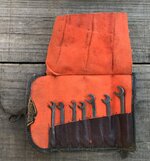

G series sets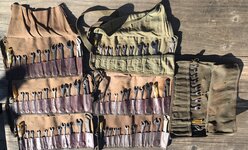
-Don
7 wrench E series set
G series sets

No. Plenty of E series wrenches are black oxide, too. And I have had some of both through the years where it's hard to tell if they were black oxide and worn off or just plain dark steel. There are some G series that appear to be japanned. Don showed one above. They actually smack of postwar to me, as I have mentioned many times before, here and on G503.com, only because I have postwar wrenches from several mfgrs that have that heavier black finish. For me it only adds to the late war deduction. EDIT: Also adding to the deduction, as mentioned many times before, are the pouches. I don't think I have ever had or seen E series show up in canvas. Only G, and that was a very late (April 1945) Ord Dept spec change. Maybe Don or UNAIU or someone could double check my own analysis from years ago on that. /EDIT.My g series are black oxide finished, could that be the difference?
What part? To be honest, I didn't expect me posting a few innocuous 800 series ignition wrenches that I collect like curiosities, almost out of boredom with collecting E's and G's for so many years, to prompt a review of E's and G's, but there is zero doubt they're both wartime, and not much doubt about the sequence, since they go from 1761-69 in the 1935 catalog to E-61 to E-69 in the 1938, 1939, and 1940 catalogs, and then to 61-69, no prefix, in 1947. Note again that you won't find the G stamped DOEs and DBEs in the prewar catalogs or the 1947 catalog, either, as far as I recall, but there is little to no doubt they are also wartime, and probably late war.^ curiouser and curioser.
I'm assuming you mean to help nail down the 800 series production?would be real nice to have an Indestro catalog covering at least a bit of 1937-1948

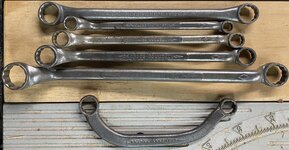
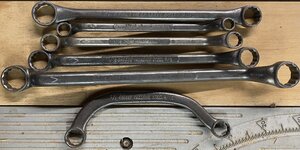
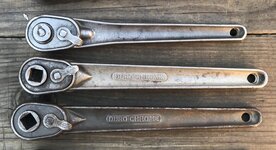
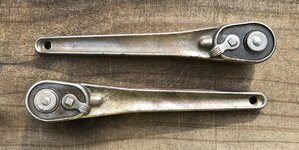
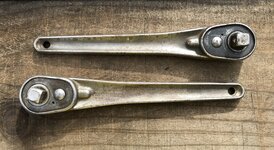
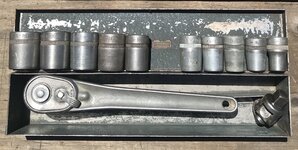
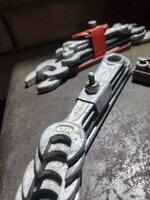
You are putting together a nice set. I love the pliers and the wrenches. Your going to make me go dig through my stuffI'm probably the only one in the world collecting these 800 series versions of the wartime Duro ignition wrenches, but I probably have enough to put a couple sets together by now. And I never leave the pliers behind. These CHROMIUM VANADIUM are not branded, but I am thinking Duro.
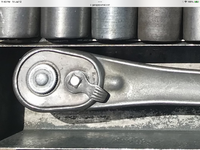

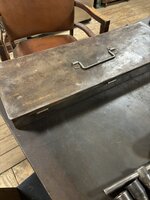
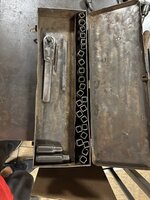
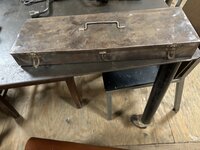
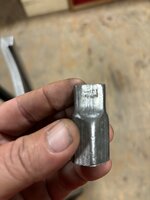
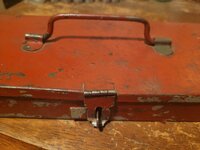
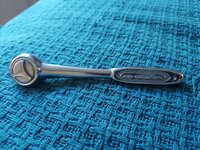
Ok duro indestro guys. Take a look at this farm fresh set. No markings on box or sockets. Only the rachet is marked. Sockets look very wrong for the box to me. Does the box look like anything for which your familiar?


The bottom boxes, are they duro?Those sockets are earlier than ones I collect. All of my early and wartime Indestro and Duro 1/2” drive boxes have rounded corners. Four.cycle may have more information on the really early Indestro tools.
-Don


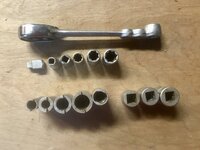
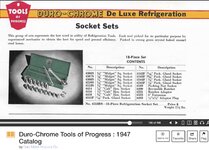
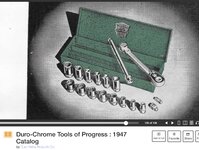


I think your box might be for a D-I set.Ok duro indestro guys. Take a look at this farm fresh set. No markings on box or sockets. Only the rachet is marked. Sockets look very wrong for the box to me. Does the box look like anything for which your familiar?

One day your going to get tired of looking at that cross country set and I’ll be there to helpThe squared corner boxes are probably postwar

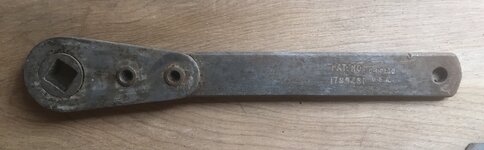
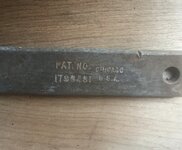
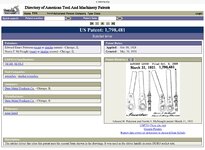
It’s going to need some more cleaning.
Is that because you have them all already?"The ratchets like yours are getting a little hard to find"......


I’m always quite careful with Cadmium. Here it is cleaned up and working.Don't eat that cadmium.
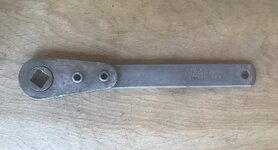
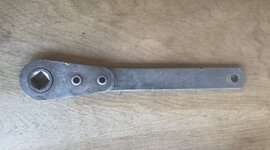

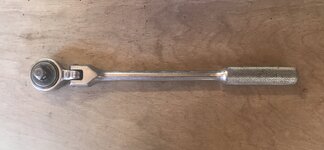
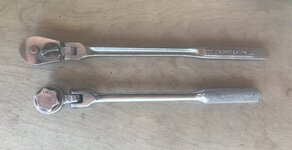 -Don
-Don
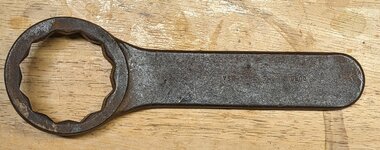

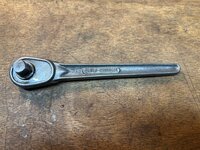
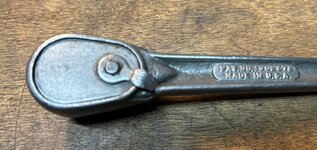
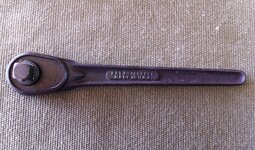
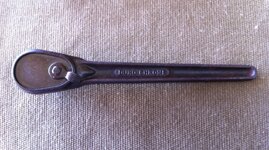 -Don
-DonAppreciate the info! Yeah it was a total rust bucket, so that’s gotta be the issue I would think. I’ll look into the ATF thing.Was it really rusty before going in the Evapo rust?
If it was rusty before I’d assume rust inside, and maybe try hot ATF. Reheat periodically and just let soak. In my view heat cycles are far far better than penetrants on their own.
If you guess it’s grease and such rather than rust, I’d try the acetone first. I’d be tempted to start with acetone anyways. Lots of people swear by acetone+atf