To avoid these ads, REGISTER NOW!

SK socket interior finish question. (pics)

OP
S

scott4

Well-known member
Joined
Aug 5, 2011
Messages
387
Look at post 4423 Tools from the old world

Thanks for that interesting exchange. Here it is for posterity, with the non relevant parts redacted but in order.

Hi guys I have a funny one with Facom's customer service, I wrote them an e-mail because from the size 18 and up the inside of their sockets seems coated with a mat silver matérial, brittle and easy to remove. When you remove an extension you always see some small flakes falling dawn, I wonder what it was, not chrome definitely.
When you remove it you see shiny chrome just the same as 17 sockets and smallers.

Facom told me it was a paint to protect steel because they didn't chrome plate the inside of their sockets as it was useless :shocking:
It's really strange because what's under this "paint" looks really like chrome and it would be normal, I wonder if that guy knew what he was talking about...?

Member "Chreese" posted once that his Stahlwille 3/4" sockets are also painted silver inside, because they can´t plate the inside or something like that. Maybe the chrome you see is nickel ?

Concerning Facom coating, it might be just nickel in the inside, but the guy told me it was naked steel...

Unfortunately the inside is polished (nickel), too bad :( I would have loved to paint the inside of my sockets, it would have been nice, with the thickness of the paint I would have had a complete collection of half size sockets, 10,5 14,5 17,5 ... :lol_hitti
 
To avoid these ads, REGISTER NOW!

slipjointed

Well-known member
Joined
May 31, 2011
Messages
665
Interior finish should be a mixture of oily dirt and other substances from USING the tools on DIRTY engines.:bounce:
Yes, I like my tools to be shiny out of the box but, I try to quickly use them on something dirty to lose that new tool look.

There does seem to be inconsistent machining inside the sockets as far as smoothness and depth. Will it affect operation though?

If you want sockets that are well finished on the inside, buy Gearwrench. They are some of the nicest finished sockets I have ever seen. They are even broached the same depth across the size range.

For the guys that were thinking of getting the Armstrong 15-299 set, save your money and just buy Craftsman. The Armstrong sockets are the same as Cratsman down to that double stake retention cut out on the female square drive. The Maxx ratchet is nice but, its 60 tooth action is the same as Gearwrench, or the Craftsman thin profile without the quick release. The Armstrong maxx does have a nicer handle though. the only thing you really gain from the Armstrong set aside from the nice blue blow molded case, are the knurled extensions.:wtf:

I'm sorry, but there's a HUGE difference between Armstrong and Craftsman as far as finish goes, which seems to be the concern of this thread.

The Craftsman sockets are nickel plated, and no special treatment is done to the inside after forging... which is why you always see all of that mill scale scudge inside brand new Craftsman sockets, and the peeling chrome that comes with it. Then, they are plated with some specialized nickel alloy and coated with an anti-corrosive, but no chrome.

The armstrong sockets are sandblasted internally after forging and before outside polishing, to remove the scale and oxidation before plating. Then they are given a TRUE chrome finish, unlike the Craftsman sockets.


Metallurgically, I'm sure they're pretty much identical. Finish wise, not even close.


To those saying that it's impossible to plate the inside of a socket, that's completely untrue. What they're really saying, is that it's too expensive to properly clean the inside before plating, so they take a shortcut to save money.


All that said, if you look at what's included inside the Armstrong 15-299, and then price out the equivalent Craftsman set, including the thin profile ratchet and a universal joint and extensions, as well as complete deep and shallow, metric and sae 3/8 drive sets, you're pretty much in the same ballpark price wise.
 

pipsters

Well-known member
Joined
Sep 1, 2010
Messages
4,899
Location
USA
From my research putting chroming over the top of nickel is almost entirely a cosmetic procedure, it doesn't add much additional protection. I poked around on plating forums and that is the conclusion I came up with. Far too much emphasis is placed on it IMO.

"Chrome" actually refers to chromium, the element.

Far more emphasis should be placed on the production of the tool and plating process, here is an article explaining Danaher's old chroming process.

http://docs.google.com/viewer?a=v&q...&sig=AHIEtbTamUd1dUz-90feVV0bm5hvE0OIfw&pli=1

If you read it, starting on page 7, you can see that the process involves several steps and how extending the cycling period will make parts that come out with the chrome layer not fully adhering to the tools. It's possible slipjoint is right, or maybe that when they run an Armstrong batch they run them first then run the Craftsman stuff on the later batches which is why some Craftsman sockets come with flaking chrome.

Either way prep and the process is far more important than if the pieces come with chromium or nickel on them. Also of note, nickel plated home furnishings are typically much more money than the regular chromium plated ones. Personally, I like the purplish look of my nickel Craftsman sockets. I also like the old school look of the older sockets, similar to what Hazet does, but I also believe Nickel is actually outlawed in Europe so they do things differently over there.
 
Last edited:

slipjointed

Well-known member
Joined
May 31, 2011
Messages
665
Not according to this thread from this summer.

It even has a pic showing a Craftsman and an Armstrong socket and they sure look identical to me.

I started that thread, and it was the start of my quest to see what I could find out about the finishing process and the durability of plating on various brands of tools.

On top of that, I have 15 years of experience having parts plated, and I can spot the metal a part is plated with from across the room, literally.


My opinion is based on every recent production SK and Craftsman socket I've ever personally inspected (quite a few, not just a couple sets), as well as an article that specifically named Craftsman's exclusive nickel-only plating, and a phone call to Armstrong tool application support that confirmed they do indeed blast the inside of the sockets and use a proper 3-stage chrome process.

I wish I still had sockets here to compare, the difference is plain as night and day on sockets I've handled. The Craftsman sockets were dull gray with bird **** looking insides, and the Armstrong were bright silver with absolutely spotless insides.

There are some exceptions... for instance, if you look at Craftsman sockets above 1", you'll notice they have significantly different color plating. If they "all have the same plating", how could that be possible?


I can say, that in the Craftsman line, the plating looks like it came from an entirely different line once you go large enough in sockets. There's nothing to say that smaller or less common size sockets may share plating processes also.

All I can say, is that the majority of Craftsman and Armstrong sockets I've personally compared, were nowhere near looking similar. That includes ones that I've personally owned, as well as several full toolboxes at work.


The only real question that remains for me is if Armstrong has swtiched to nickel plating and I was looking at old sockets... that seems rather impossible as all the sockets I've viewed were of somewhat recent purchase, and included laser engraving.

The only real way to put it completely to bed for me, would be to obtain recent production sockets of all sizes from both brands, and do a photo comparison where the lighting was correct to show the plating color difference. It isn't that hard to angle the camera so the photo's refectivity doesn't show the difference. I have to say, in the picture you reposted, the plating color doesn't look identical to me. It's really hard to say with the way the lighting is in the photo.


Any time I hear someone say "well, they looked the same to me", I cringe. A snickers bar and a piece of dog **** look the same. A harbor freight made in india combo wrench and a Snap-on, look the same to some people.

Chrome and nickel plating "look the same" to some people. In fact, that's what Danaher was counting on when they decided to cheap out and go with plain nickel, as mentioned below, is only slightly more useful than spraypaint.

From my research putting chroming over the top of nickel is almost entirely a cosmetic procedure, it doesn't add much additional protection. I poked around on plating forums and that is the conclusion I came up with. Far too much emphasis is placed on it IMO.

That's not true at all.

Chromium is specifically used as a wear resistant coating inside valve seats, ball bearing races, etc.

It is significantly harder than Nickel, in fact it is significantly harder than most metals, which is why it makes a great wear resistant coating, which is also why it makes a great coating for tools.

Nickel plating is not very durable, IMO nickel plated tools might as well be spraypainted. It's corrosion resistant, but has very little to no abrasion resistance. Properly done Chrome also forms a cohesive coating, so it's got less porosity and less propensity to plating failure and premature corrosion.
 
Last edited:
OP
S

scott4

Well-known member
Joined
Aug 5, 2011
Messages
387
Chromium is specifically used as a wear resistant coating inside valve seats, ball bearing races, etc.

It is significantly harder than Nickel, in fact it is significantly harder than most metals, which is why it makes a great wear resistant coating, which is also why it makes a great coating for tools.

Nickel plating is not very durable, IMO nickel plated tools might as well be spraypainted. It's corrosion resistant, but has very little to no abrasion resistance. Properly done Chrome also forms a cohesive coating, so it's got less porosity and less propensity to plating failure and premature corrosion.


I wanted to check this out.

Surface engineering for corrosion and wear resistance By Joseph R. Davis.
QlXbZ.jpg

Page 145
 

pipsters

Well-known member
Joined
Sep 1, 2010
Messages
4,899
Location
USA
Chromium is specifically used as a wear resistant coating inside valve seats, ball bearing races, etc.

It is significantly harder than Nickel, in fact it is significantly harder than most metals, which is why it makes a great wear resistant coating, which is also why it makes a great coating for tools.

Nickel plating is not very durable, IMO nickel plated tools might as well be spraypainted. It's corrosion resistant, but has very little to no abrasion resistance. Properly done Chrome also forms a cohesive coating, so it's got less porosity and less propensity to plating failure and premature corrosion.

You are way off base. There are two types of plating processes, hard plating and decorative plating. Hard plating isn't used for shiny sockets, its an industrial process that is used to plate hydraulic cylinders, gun barrels etc.

Decorative chrome is used on sockets, and nickel plate or nickel+chromiun is generally used. The layer of chromium is so small it provides mostly a cosmetic effect for all intents and purposes.

Decorative Chrome Plating
Decorative chrome plating is sometimes called nickel-chrome plating because it always involves electroplating nickel onto the object before plating the chrome (it sometimes also involves electroplating copper onto the object before the nickel, too). The nickel plating provides the smoothness, much of the corrosion resistance, and most of the reflectivity. The chrome plating is exceptionally thin, measured in millionths of an inch rather than in thousandths.

When you look at a decorative chrome plated surface, such as a chrome plated wheel or truck bumper, most of what you are seeing is actually the effects of the nickel plating. The chrome adds a bluish cast (compared to the somewhat yellowish cast of nickel), protects the nickel against tarnish, minimizes scratching, and symbiotically contributes to corrosion resistance. But the point is, without the brilliant leveled nickel undercoating, you would not have a reflective, decorative surface.

http://www.finishing.com/faqs/chrome.html
 
OP
S

scott4

Well-known member
Joined
Aug 5, 2011
Messages
387
Trivalent Chromium Replacements for Hexavalent Chromium Plating

Chromium Plating Overview
The most common hexavalent chromium-bearing solutions include decorative and hard chromium, aluminum conversion coating, bright dipping of copper and copper alloys, chromic acid anodizing, and chromate conversion coatings on cadmium, zinc, silver and copper. This Technology Profile is for the use of trivalent chromium processes as replacements for decorative and hard hexavalent chromium processes.

Decorative Chromium
Decorative chromium plating provides a durable coating with a pleasing appearance and is usually deposited in a thickness range of 0.002 to 0.020 mils. It is most often applied over a bright nickelplated deposit, which is usually deposited on substrates such as steel, aluminum, plastic, copper alloys and zinc die casting. Decorative chromium plating typically ranges from 0.005 mils to 0.01 mils in thickness. Common items with decorative chrome include appliances, jewelry, plastic knobs, hardware, hand tools, and automotive trim.

Hard Chromium
When chromium is applied for any other purpose, or when appearance is a lesser feature, the process is commonly referred to as hard chromium plating, or functional chromium plating. Hard chromium plating typically ranges from 0.1 to 10 mils thickness. Common applications of functional plating include: hydraulic cylinders and rods, crankshafts, printing plates/rolls, pistons for internal combustion engines, molds for plastic and fiberglass parts manufacture, and cutting tools. Functional chromium is commonly specified for rebuilding worn parts such as rolls, molding dies, cylinder liners, and crankshafts.

I'm reading about the electroplating process in ASM Metals Handbook Vol. 5: Surface Engineering, and It would seem that any interior paint would be done after a number of baths, steps, etc. Thats not raw untreated metal.

This discussion turn on durability on chrome/nickel is an informative turn, and useful when looking at Cman.
 
Last edited:

pipsters

Well-known member
Joined
Sep 1, 2010
Messages
4,899
Location
USA
Is there some kind of peculiar chrome plating used on pistons and/or cylinder walls of small engines?

Typically nikasil which is a nickel plating with a very small amount of silicon in it. Nickel is a very durable hard metal, contrary to what is posted above.
 

justanengineer

Well-known member
Joined
Apr 5, 2011
Messages
7,722
Location
Motor City
Ahhh...the "experts" on this site.

Nickel vs chrome short answer - two completely different finishes. Good luck finding a true nickel plated tool from a box store or truck anymore, I cant and I do prefer it over chrome hands down. **** chrome vs good chrome...every company makes both. Thank EPA, OSHA, and the existance of "business" degrees for the poor quality of many manufacturing processes.

If you have to worry about the inside of a socket rusting or the appearance of it, you need to actually use your tools more.
 

pipsters

Well-known member
Joined
Sep 1, 2010
Messages
4,899
Location
USA
Ahhh...the "experts" on this site.

Nickel vs chrome short answer - two completely different finishes. Good luck finding a true nickel plated tool from a box store or truck anymore, I cant and I do prefer it over chrome hands down. **** chrome vs good chrome...every company makes both. Thank EPA, OSHA, and the existance of "business" degrees for the poor quality of many manufacturing processes.

If you have to worry about the inside of a socket rusting or the appearance of it, you need to actually use your tools more.
I think you'll find you being an expert in the chroming process we are all ears. Why not go into detail about the process? When you say true "nickel plated" what do you mean? What is the difference with what is done today as you say there isn't a true nickel plated tool out there any more.

Chromium on top, you being an expert, what effect does that have in light of the stuff posted above? The website we are finding this info, is it correct?

Also what is the difference between the shiny chrome and dull matte looking chrome, say on this older socket?

T-001-CRAFTSMAN-SOCKET-V-13-16-X-1-2.jpg
 

Fedwrench

ALLIANCE MEMBER
Joined
Dec 9, 2007
Messages
14,951
Location
Valley of the sun
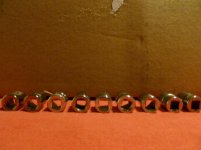
Crappy pictures but, here lies a 14 mm socket from in alphabetical order from Armstrong, Craftsman, Mac (supershort type), Matco, Napa (Gearwrench), Proto, SK, Snap on, and Williams. Judge for yourselves which is prettiest :lol:
 

Attachments

  • P1000200.jpg
    P1000200.jpg
    24.8 KB · Views: 60
  • P1000198.jpg
    P1000198.jpg
    35.4 KB · Views: 63
  • P1000197.jpg
    P1000197.jpg
    28.9 KB · Views: 51

Skin

Well-known member
Joined
Feb 24, 2010
Messages
11,713
Location
Boston
Of the big USA companies MAC [and by extension Proto] and Cornwell have the best bright chrome in my opinion. SO has darkened quite a bit, not quite to Craftsman/Armstrong levels but it has lost some of its silver luster.

Certain taiwan manufacturers are right up there as well in the pretty finish department, especially on the interior.
 
Last edited:

sk farmer

Well-known member
Joined
Mar 4, 2009
Messages
5,556
Location
nd
Crappy pictures but, here lies a 14 mm socket from in alphabetical order from Armstrong, Craftsman, Mac (supershort type), Matco, Napa (Gearwrench), Proto, SK, Snap on, and Williams. Judge for yourselves which is prettiest :lol:

sk of course!:pimpflash
 

superautobacs

Well-known member
Joined
Oct 31, 2008
Messages
3,997
Location
Vancouver, BC
Of the big USA companies MAC [and by extension Proto] and Cornwell have the best bright chrome in my opinion. SO has darkened quite a bit, not quite to Craftsman/Armstrong levels but it has lost some of its silver luster.

Certain taiwan manufacturers are right up there as well in the pretty finish department, especially on the interior.

That's because SO has shifted from using hexavalent chrome to trivalent chrome plating process. That's why the newer SO stuff doesn't look the same as the older ones (darker versus the brighter whitish/blueish chrome).

Perhaps Danaher (Apex) has also started implementing the same shift in their plating process, wholly or partially....perhaps even brand dependent.

There isn't any global regulation against the use of hexavalent chrome in the hand tool industry, but that could change in the future. When that time comes, hopefully hand tool manufacturers have had enough R&D time to make trivalent chrome plating as bright and durable.
 

jwilsonw

New member
Joined
Oct 15, 2014
Messages
4
The pictures from the original poster are now dead. I just got in a set of new SK sockets (1959) from Amazon. The first set had a 3/4 inch socket instead of the 18mm. So I had Amazon send out a replacement set and I will send back the first set. However upon closer inspection, I noticed several cosmetic issues with the SK sockets. I am not sure if they are the same as the issues the original poster detailed. So I waited for the second set of sockets to arrive so that I could compare both sets. Both sets have the same cosmetic issues. Additionally I am not sure if the cosmetic issues in the long run could become other issues.

Many people in this thread and others have said "Why do you care what they look like?" However, I would point out that none of the pictures of the sockets in the SK catalog or the pictures on retail sites like Amazon, have the same blemishes that I am seeing. This is confusing for the customer, and a bit misleading. If the sockets are suppose to look this way from whatever finishing processes they use, why do they not have pictures of the sockets having the same blemishes or at least have some kind of disclaimer that the finishing process can cause x, y, and z and not to be concerned.

To be fair the chrome on the outside of the sockets appears to be flawless. I am only seeing issues at the lip of the socket and on the inside. This might be due to some kind of painting or other process, but again I am not sure what that process is or if it is an issue.

In another GJ thread this poster says that there is paint in one socket but the sockets seem to look much better than mine in general

This poster says there was some anti corrosion paint on the outside of the sockets. Is that what I am seeing on mine? He got it off with some steel wool but I just paid $154 for a new socket set, why should i have to do anything with the sockets?


View media item 68753
View media item 68754
View media item 68755
View media item 68756
View media item 68757
 
Last edited:

T45

Well-known member
Joined
Nov 20, 2014
Messages
3,250
I just paid $154 for a new socket set, why should i have to do anything with the sockets?

Lazy american middle management is your answer...

:Violent:

SK is decent gear but its oversold in terms of quality.


They are a budget brand for all intents and purposes and they have to cut corners (and have done for years) in order to stay afloat. Don't begrudge them -- just understand that's what you are getting with SK tools.

They are good and solid tools, but they don't take pride in their work.

They also like to make excuses for it...as you've probably noticed.

If you want quality buy snap-on, or many other brands...proto, wright etc
 

Skin

Well-known member
Joined
Feb 24, 2010
Messages
11,713
Location
Boston
Its paint, if it bothers you use thinner otherwise it comes off with use. You bought tools not jewelry.


If you want quality buy snap-on, or many other brands...proto, wright etc

They all paint their sockets too.
 
To avoid these ads, REGISTER NOW!

PJNJ

Well-known member
Joined
Sep 20, 2013
Messages
1,047
Location
Iowa
I bought two full sets (metric and SAE plus ratchets, etc.) in the green blow molded cases last year - a 1/4 set and a 3/8. What you're seeing is ANTI-CORROSION PAINT.. I had the same on mine. Paint thinner, steel wool and USE OF THE SOCKETS gets the paint off.

The paint has come off more than than a few of mine already. Guess how?:dunno:

Spots of paint on the outside of the sockets or on the rim of the sockets doesn't bother me at all. If they were missing chrome or were rusty that would have bothered me.

Oh and most of my sockets, ratchets, extensions, and wrenches which include SK, Cman, Armstrong, Wright, Gearwrench, and Snap On, etc. have scratches and wear. I guess I better throw them out and start over. :lol_hitti
:beer:
 

LXCam

ALLIANCE MEMBER
Joined
Apr 23, 2013
Messages
19,090
Location
AZ
Ah jiminy crickets, another one??!!. Dude just return those and go buy some snappy and please feel free to wait another 3 years before post #2.
 

derosa

Well-known member
Joined
Oct 19, 2010
Messages
1,078
Location
Oceanside, NY
They are a budget brand for all intents and purposes and they have to cut corners (and have done for years) in order to stay afloat. Don't begrudge them -- just understand that's what you are getting with SK tools.

They are good and solid tools, but they don't take pride in their work.

They also like to make excuses for it...as you've probably noticed.

If you want quality buy snap-on, or many other brands...proto, wright etc
My metric run of wrights have different levels of finish on the inside at the bottom (the broach?), some are finished deeper then others and a couple there isn't even a finish to the bottom. They also sit at different levels on the rail because the detentes were put in at inconsistent depths. I assume its just a lack of pride :dunno: or maybe a functional tool that still works perfect as is despite the insignificant imperfections :lol_hitti
 

T45

Well-known member
Joined
Nov 20, 2014
Messages
3,250
....some are finished deeper then others and a couple there isn't even a finish to the bottom. They also sit at different levels on the rail because the detentes were put in at inconsistent depths. I assume its just a lack of pride :dunno: or maybe a functional tool that still works perfect as is despite the insignificant imperfections :lol_hitti

why do you buy/keep tools like this?

nothing I own has these problems...:thumbup:

I don't own wright but they are stocked locally brick and mortar.


edit: I will add...includes brands from all pricepoints and COOs, w/ different broach types, sizes and styles from 12pt to 6pt, short to deep, broached in several depths...chrome, impact, industrial finish...
 
Last edited:

jwilsonw

New member
Joined
Oct 15, 2014
Messages
4
I bought two full sets (metric and SAE plus ratchets, etc.) in the green blow molded cases last year - a 1/4 set and a 3/8. What you're seeing is ANTI-CORROSION PAINT.. I had the same on mine. Paint thinner, steel wool and USE OF THE SOCKETS gets the paint off.

The paint has come off more than than a few of mine already. Guess how?:dunno:

Spots of paint on the outside of the sockets or on the rim of the sockets doesn't bother me at all. If they were missing chrome or were rusty that would have bothered me.

Thank you for the confirmation that this was the anti-corrosion paint. That was the answer that I was looking for. It is nice to know the use of the socket over time will remove the extra paint.

Again, since there is no notice to the customer that there might be some paint on the outside of the socket that will naturally go away over time, the customer is confused in terms of what is going on just by looking at the socket.
 

jwilsonw

New member
Joined
Oct 15, 2014
Messages
4
Ah jiminy crickets, another one??!!. Dude just return those and go buy some snappy and please feel free to wait another 3 years before post #2.

I hope your other 5,634 posts are more on topic than the one above.
 

PJNJ

Well-known member
Joined
Sep 20, 2013
Messages
1,047
Location
Iowa
Thank you for the confirmation that this was the anti-corrosion paint. That was the answer that I was looking for. It is nice to know the use of the socket over time will remove the extra paint.

Again, since there is no notice to the customer that there might be some paint on the outside of the socket that will naturally go away over time, the customer is confused in terms of what is going on just by looking at the socket.

To avoid confusion in the future, you should avoid SK, et al. and only buy from the big box stores - their very "knowledgeable" in-store sales associates and customer service desk associates will be able to "answer" all of your questions and allay any confusion you may have about their tools. :bounce:

:beer:
 

Loscaldazar

Well-known member
Joined
Feb 23, 2013
Messages
2,385
The pictures from the original poster are now dead. I just got in a set of new SK sockets (1959) from Amazon. The first set had a 3/4 inch socket instead of the 18mm. So I had Amazon send out a replacement set and I will send back the first set. However upon closer inspection, I noticed several cosmetic issues with the SK sockets. I am not sure if they are the same as the issues the original poster detailed. So I waited for the second set of sockets to arrive so that I could compare both sets. Both sets have the same cosmetic issues. Additionally I am not sure if the cosmetic issues in the long run could become other issues.

Many people in this thread and others have said "Why do you care what they look like?" However, I would point out that none of the pictures of the sockets in the SK catalog or the pictures on retail sites like Amazon, have the same blemishes that I am seeing. This is confusing for the customer, and a bit misleading. If the sockets are suppose to look this way from whatever finishing processes they use, why do they not have pictures of the sockets having the same blemishes or at least have some kind of disclaimer that the finishing process can cause x, y, and z and not to be concerned.

To be fair the chrome on the outside of the sockets appears to be flawless. I am only seeing issues at the lip of the socket and on the inside. This might be due to some kind of painting or other process, but again I am not sure what that process is or if it is an issue.

I have this post bookmarked for a reason....for an explanation of what this is....
http://www.garagejournal.com/forum/showpost.php?p=5413833&postcount=12

And in response to other people who claim the paint is cutting corners or them not taking pride in their work....
http://www.garagejournal.com/forum/showthread.php?t=346083

Proto has the same "issues" (non issues) as well as Armstrong USA, Wright, Mac, Matco, and I've heard reports Snap On has also added the interior painting process to their sockets too. It's frickin paint.

Also note, as I've state many times, notice how the OP didn't mention inconsistent interior finish (e.g. some are painted, others are not)? As time goes on, the socket sets will come with a higher and higher percentage of painted interior sockets until all socket sets are this way. This is what happens when you make a switch in production and don't change part numbers. With a small change like adding an anti-corrision paint, who really cares.

Take paint thinner to them or use them.
 

mudflap

Well-known member
Joined
Sep 25, 2011
Messages
1,279
Location
cincinnati,ohio
I have to admit...i didnt read this whole thing...But i happen to have a new set of Carlyle Metric deeps that i picked up at NAPA yesterday sitting here....and i took the 14mm and walked over to the kitchen counter and held it under the light so i could see down in there before i realized what i was doing.....lol The tool polishers on here got me.......
 
Last edited:

67King

Well-known member
Joined
Nov 14, 2014
Messages
561
Location
Friendsville, TN (Knoxville area)
And in response to other people who claim the paint is cutting corners or them not taking pride in their work....
http://www.garagejournal.com/forum/showthread.php?t=346083

I don't know what it is about SK that brings out the hate, but the way it does is absolutely mind boggling. And like you, when I compare my SK tools to the brands their critics claim are better, I can't find anything different in what they let out the door (all my sockets are SK, but the wrenches are every bit as well made as the Wrights I have, chrome is better than Williams, etc. The Proto pliers I have are kind of meh, but compared to the Knipex I primarily use, most are). Do people expect Ford to have Rolls Royce appointments, while claiming that Chevy does?
 

cbracer

Well-known member
Joined
Feb 27, 2012
Messages
637
Location
Costa Mesa, CA
I guess everyone has their opinions, but there's no need to be harsh to people. Some people want to use rusted tools because they think that makes them a better mechanic. Some places they work don't allow rusted tools. Whatever.

The fact is, SK is one of the worst in terms of quality of their finish inside the sockets. Sure the outside is perfect, as it is with most US company's sockets. But the inside is bad. Does it affect performance, not really, though you might get a little rust. The reason they paint the inside is because the chrome process doesn't coat the inside very well, and so they paint them to avoid corrosion / rust. It's more noticeable on 12pt than 6pt. And larger sockets because they don't want to chrome larger areas. I compared a bunch years ago and found Proto was about the best. Not perfect, but better than SK, better than Armstrong, Craftsman and for the money far cheaper on Zoro with coupons than Snap-On, Mac, etc ever would be. If you want tools with a nice finish go with Nepros for #1, then Ko-Ken #2. Otherwise get a high quality Taiwan tool and they will be the most consistent finishes you've ever seen. Note many US companies don't care about tool finishing and many of their non sockets & wrenches are made by other companies, like Proto pliers aren't made by Proto likely Western Forge or Facom. It's not easy getting good stuff unless you want to over pay for it, which most of us don't.
 

Sanny81

Well-known member
Joined
Feb 26, 2015
Messages
558
Location
New Jersey
Until I joined this forum I never knew people inspected the finish inside of a socket....I even owned an SK set and didn't notice the paint for months! Like others have said it's just paint it will wear off with use. You can remove the paint from each socket with some paint thinner but that seems like a colossal waste of time.
 

L.Cheapo

Well-known member
Joined
Oct 23, 2014
Messages
5,879
The paint wouldn't bother me. A 3/4" socket instead of a 19mm would bother me. Yes, I know they're only a couple thousandths off, but thats the kind of thing I'd expect from Uncle Mao's Dollar Store on a $9 socket set, not a $150 US made set.
 

SantaAna12

Well-known member
Joined
Mar 1, 2012
Messages
1,091
To the OP: It is your decision to make. Do not make it based on opinions of others with high post counts. It is yours to make.

FWIW: If half the set......or two or three....come with paint and the others do not? The question is raised as to why. IMO it is a valid point.

FWIW: That some are still using the "old stock" excuse? REALLY? REALLY?

I want to restate this for myself mostly: I bought my first SK set when I was 16 after saving for days while I pumped gas. Pumped gas when windows were done, and oil was checked. Tires if you requested. I still have it. I would not sell it.
I recently bought the SK 3767 and a set of SK impact extensions.
I have switched to buying Koken sockets due to my experience with SK day 2014.

It is what it is.


This has been my experience, and I could care less what others that respond with "tool polisher" are coming from.

I agree with the post that says we should hold SK to a high expectation.

It is my hope that SK is profitable and growing into the future.
 

M6erfan

Well-known member
Joined
Dec 6, 2014
Messages
10,170
Location
'Merica!
I bet the SK sockets don't look like this :

No. No they don't...

For all those that keep hounding the SK critics, I'm one of them (SK critic). The set I bought a year or so ago not only had the paint issue (which didnt really bother me) but off center broaching on about 10%, shallow to non existing ball detents in about 40%, and bad chrome on about 30% of the sockets.

I also got a 1/4" socket set from Wright a couple of years ago where about 70% of the sockets where missing the ball detents all together.

Hey, **** happens. But it's our hard earned $ and we can spend it (or not) however we choose.

Yeah, yeah, I know...They're tools, not jewelry.

I've decided to spend my money elsewhere on brands that I know from experience have none of the issues pointed out above.

Carry on...
 

PJNJ

Well-known member
Joined
Sep 20, 2013
Messages
1,047
Location
Iowa
I bet the SK sockets don't look like this :

Mine don't - they have scratches and wear on them. Tools are only "purdy" when I first get them. Then they get used - I keep them clean and the moving parts lubed.:lol:

Oh and Kudos for being the first (after the thread was resurrected) to bring up another tool co. as being better. Only took a few posts. Let the bashing begin anew!:rocker:

:3gears:
 
To avoid these ads, REGISTER NOW!
Top Bottom