
You are using an out of date browser. It may not display this or other websites correctly.
You should upgrade or use an alternative browser.
You should upgrade or use an alternative browser.
Smart Meters…
- Thread starter smokey0810
- Start date
Everyone is different. TOU has saved us a ton! We do keep a pretty good eye on our usage. When primetime hits, A/C goes off if we're using it. We try to minimize its use anyway.
The only reason you're saving a ton is because you apparently choose to live like cave men from 4 pm to 8 pm. I don't want to live without electricity during the main time of day I am home every day.
It would be 80+ degrees in my house by 8 pm if I turned off the A/C from 4 pm to 8 pm every weekday. Why have modern amenities like A/C if we can't even use them? I already keep the temperature at 78 degrees until 5 pm on the days I go to the office so on those days it would be well over 80 degrees by 8 pm with minimal, or no A/C from 6 am until 8 pm.
I would have to wait to start cooking dinner until 8 pm and I would be ravenously hungry by the time I was done cooking. It is also not good to eat at 8:30 pm when I go to bed by 9:15 pm when I have to be in the office the next day. The reality is I would probably go out and buy some fast food, or eat junk food because I wouldn't have the discipline to wait until 8:30 pm to eat dinner. I would have to be darn sure to wash all of my clothes on the weekend since I couldn't start the laundry at 8 pm and have it dry and put away before bedtime.
My TV uses 400 watts so no watching any TV in the evening anymore. (Not a bad thing I guess.) I could get a new TV, but the one I would buy is the LG G4 OLED 55" and it costs over $2,000 with tax. The LG takes under 100 watts. No using any corded electric tools instead of watching TV because that would use expensive electricity.
No one says you have to live like a cave man. Also, no one says YOU have to sign up for TOU.
In our situation, it works fine. Were not living like cave men, we're not waiting until 9:00pm to cook dinner or use tools or watch TV.
This may freak you out as well.... We've been on the So Cal Edison Summer Discount Plan for many years. They attach a remote control device on each of our two A/C units that lets them do intermittent shutdowns form June 1 thru October 1. In return, they give you a monthly discount based on A/C tonnage. It was great when we were both working as we weren't home during the day. It worked great when my wife retired 20 years before I did - windows open and natural air flow. It still works great with both of us retired. Shutoffs are rare and usually not long. We tend not to use the A/C that much anyway.
Summer Discount Plan for Homes
Enroll in the Summer Discount Plan to save on energy costs by allowing temporary A/C cycling during high-demand periods.
 www.sce.com
You can take advantage of savings or not. We choose to take advantage.
We're not suffering , deprived of anything, sitting in the dark, or sweltering in blazing heat.
BUT... We are saving $$$.
reader2580
Well-known member
If you’re not cutting your electricity usage during the peak period then how are you saving money? I estimate that probably 50% of my electricity usage is during the peak period in the summer.You can take advantage of savings or not. We choose to take advantage.
We're not suffering , deprived of anything, sitting in the dark, or sweltering in blazing heat.
BUT... We are saving $$$.
The state of Minnesota has mandated that no electricity come from fossil fuels starting in 2040. It is a virtual certainty that the state will require TOU for residential customers at some point.
I have A/C control from my electric utility. It ***** because I end up with no A/C for three to four hours during the hottest part of the day. It was a lot better when they used radio control and only cut your A/C for 40 minutes per hour. One third of controlled customers could use their A/C at any one time. Now, nobody on the new system can use their A/C during the control period.
The cost savings comes from the lower off-peak usage. We don't live like hermits but, I guess we do lower our usage but nothing drastic - I'd say the A/C is the biggest component but it's not a burden on us at all. We'll do laundry earlier or later. Being retired, it really doesn't matter. Downstairs keeps relatively cool. At 9:00pm in the summer I'll typically turn on the A/C for a couple of hours and bring the upstairs down for overnight. No need to cool it all day long as we're not using it. It works for us. If it were really necessary, we'd have no problem running A/C in primetime - it's pretty easy to avoid though - at least for us at this stage.If you’re not cutting your electricity usage during the peak period then how are you saving money? I estimate that probably 50% of my electricity usage is during the peak period in the summer.
The state of Minnesota has mandated that no electricity come from fossil fuels starting in 2040. It is a virtual certainty that the state will require TOU for residential customers at some point.
I have A/C control from my electric utility. It ***** because I end up with no A/C for three to four hours during the hottest part of the day. It was a lot better when they used radio control and only cut your A/C for 40 minutes per hour. One third of controlled customers could use their A/C at any one time. Now, nobody on the new system can use their A/C during the control period.
Our program used to limit outages to 60 minutes as I recall and no more than once per day. They've gradually expanded those windows and, the outages have increased in frequency. It rarely affects us.
I'd be pretty certain that 2040 date will be extended. I've mentioned many times that it's good that they "plant a flag" so there is a goal to strive for. As that deadline gets closer, technology will either make it achievable or reality will force an extension. But, without a target, there would be no incentive to make progress.
this is really odd. I opted into TOU and I also have a 450W plasma. but I don't not use it when power is expensive. I also have AC and don't not use it during peak hours.The only reason you're saving a ton is because you apparently choose to live like cave men from 4 pm to 8 pm. I don't want to live without electricity during the main time of day I am home every day.
It would be 80+ degrees in my house by 8 pm if I turned off the A/C from 4 pm to 8 pm every weekday. Why have modern amenities like A/C if we can't even use them? I already keep the temperature at 78 degrees until 5 pm on the days I go to the office so on those days it would be well over 80 degrees by 8 pm with minimal, or no A/C from 6 am until 8 pm.
I would have to wait to start cooking dinner until 8 pm and I would be ravenously hungry by the time I was done cooking. It is also not good to eat at 8:30 pm when I go to bed by 9:15 pm when I have to be in the office the next day. The reality is I would probably go out and buy some fast food, or eat junk food because I wouldn't have the discipline to wait until 8:30 pm to eat dinner. I would have to be darn sure to wash all of my clothes on the weekend since I couldn't start the laundry at 8 pm and have it dry and put away before bedtime.
My TV uses 400 watts so no watching any TV in the evening anymore. (Not a bad thing I guess.) I could get a new TV, but the one I would buy is the LG G4 OLED 55" and it costs over $2,000 with tax. The LG takes under 100 watts. No using any corded electric tools instead of watching TV because that would use expensive electricity.
amusingly enough, my GAS stove makes my kitchen hotAF, so I try not to use it when it's in the 90s. 57k BTU rated input, and my AC is only 24k. now add in barely holding temp when it's 95F and sunny and guess what I'm not gonna run?
but cooking in my electric oven or boiling water in the kettle on-peak? SURE THING. because the amount of kWh it actually takes to cook a meal for 3-4 people is laughably low.
what I DO do is try to move my AVERAGES. like i'll TRY to run the dryer off peak. but the dryer is a giant heater that makes my house warmer, which makes me need more AC, so I don't like running it when it's super hot out anyways.
or if I know it's gonna be a scorcher, maybe i'll set the AC back early, to get a head start on the heat. might even save a few cents, too.
but if i'm hot, i'll run the AC. if i'm hungry, I'll eat. if I need clothes now, I'll wear dry clothes! if my fridge needs to defrost, by George, i'll leave it plugged in!
oh no! paying what things actually cost! i want my usage subsidized!So you work all day, fight traffic to get home and from 4 PM to 9 PM you pay $.61 per kWh!

btw, you're not fighting traffic, you ARE traffic.
as the kind of customer who WOULD consider signing up for a DER plan, i would NOT sign up for that one.If you’re not cutting your electricity usage during the peak period then how are you saving money? I estimate that probably 50% of my electricity usage is during the peak period in the summer.
The state of Minnesota has mandated that no electricity come from fossil fuels starting in 2040. It is a virtual certainty that the state will require TOU for residential customers at some point.
I have A/C control from my electric utility. It ***** because I end up with no A/C for three to four hours during the hottest part of the day. It was a lot better when they used radio control and only cut your A/C for 40 minutes per hour. One third of controlled customers could use their A/C at any one time. Now, nobody on the new system can use their A/C during the control period.
So you have to change your life style, just so you EV Fan Boys have enough juice to charge up? No thanksthis is really odd. I opted into TOU and I also have a 450W plasma. but I don't not use it when power is expensive. I also have AC and don't not use it during peak hours.
amusingly enough, my GAS stove makes my kitchen hotAF, so I try not to use it when it's in the 90s. 57k BTU rated input, and my AC is only 24k. now add in barely holding temp when it's 95F and sunny and guess what I'm not gonna run?
but cooking in my electric oven or boiling water in the kettle on-peak? SURE THING. because the amount of kWh it actually takes to cook a meal for 3-4 people is laughably low.
what I DO do is try to move my AVERAGES. like i'll TRY to run the dryer off peak. but the dryer is a giant heater that makes my house warmer, which makes me need more AC, so I don't like running it when it's super hot out anyways.
or if I know it's gonna be a scorcher, maybe i'll set the AC back early, to get a head start on the heat. might even save a few cents, too.
but if i'm hot, i'll run the AC. if i'm hungry, I'll eat. if I need clothes now, I'll wear dry clothes! if my fridge needs to defrost, by George, i'll leave it plugged in!
oh no! paying what things actually cost! i want my usage subsidized!
btw, you're not fighting traffic, you ARE traffic.
as the kind of customer who WOULD consider signing up for a DER plan, i would NOT sign up for that one.
i didn't HAVE to do anything. I do save 10% annually with TOU, and I drive a v8.So you have to change your life style, just so you EV Fan Boys have enough juice to charge up? No thanks
reader2580
Well-known member
I hope you realize that any half way smart EV owner charges late at night, especially if they have a rate plan that charges less late at night.So you have to change your life style, just so you EV Fan Boys have enough juice to charge up? No thanks
ArcReactorKC
Well-known member
They sure as hell made us do it here.No one says you have to live like a cave man. Also, no one says YOU have to sign up for TOU.
In our situation, it works fine. Were not living like cave men, we're not waiting until 9:00pm to cook dinner or use tools or watch TV.
This may freak you out as well.... We've been on the So Cal Edison Summer Discount Plan for many years. They attach a remote control device on each of our two A/C units that lets them do intermittent shutdowns form June 1 thru October 1. In return, they give you a monthly discount based on A/C tonnage. It was great when we were both working as we weren't home during the day. It worked great when my wife retired 20 years before I did - windows open and natural air flow. It still works great with both of us retired. Shutoffs are rare and usually not long. We tend not to use the A/C that much anyway.
Summer Discount Plan for Homes
Enroll in the Summer Discount Plan to save on energy costs by allowing temporary A/C cycling during high-demand periods.
You can take advantage of savings or not. We choose to take advantage.
We're not suffering , deprived of anything, sitting in the dark, or sweltering in blazing heat.
BUT... We are saving $$$.
Like I've said previously our bill has skyrocketed. There is absolutely nothing I can do to reduce our usage during "peak hours" so I'm stuck with a much higher bill.
reader2580
Well-known member
I guess I won't need to replace my central A/C when it eventually fails as there isn't much point to having it if I can only run it when I am not home. Late afternoons and early evenings are the time of day when the temperature is the highest and A/C is most needed.this is really odd. I opted into TOU and I also have a 450W plasma. but I don't not use it when power is expensive. I also have AC and don't not use it during peak hours.
you could put in grid batteries...They sure as hell made us do it here.
Like I've said previously our bill has skyrocketed. There is absolutely nothing I can do to reduce our usage during "peak hours" so I'm stuck with a much higher bill.
I guess I won't need to replace my central A/C when it eventually fails as there isn't much point to having it if I can only run it when I am not home. Late afternoons and early evenings are the time of day when the temperature is the highest and A/C is most needed.

I guess you won't know because you won't be using it.
have you considered buying a propane fridge to cool your head? you can put it outside and run out when you're feeling hot.
ArcReactorKC
Well-known member
So I need to make a very large investment purchase?you could put in grid batteries...
I guess you won't know because you won't be using it.
have you considered buying a propane fridge to cool your head? you can put it outside and run out when you're feeling hot.
You were saying nobody was forced to TOU and now you are telling me I need to build a battery bank for my service?
wyliesdiesels
Well-known member
TOU is being pushed on residential customers by Profit gouge and execute here in cali, voluntary for now. eventually it will be mandatory as Profit Graft and Extort lusts after greater profits while dealing with lawsuits for fires and gas explosions they caused.
if you're gonna say AH stuff like "i guess I won't replace my AC when it dies" (but you clearly use it or you wouldn't know if it died) well, some say life is like a sewer. what you get out of it depends on what you put into it.
step one would be operating with good data. i have 15 minute historical data going back a year+. I have a thermostat that'll let me download runtime data, and kill-a-watting small appliances prior to switching to TOU gave me the data to make the decision.
you could also try something like a way more efficient AC unit. my unit is a joke, efficiency wise, newer units deliver more cooling for substantially less power. for example, mine's 24k btu, 1 amp fan, 12 amp compressor. most units are <1 amp fan, 10 amp compressor. substantially more efficient, and that's just the entry level stuff.
or a window unit for whatever room you want to be more comfortable, doing the whole house may not be worth it.
but anyways. you should be able to do the math to figure out if scheduling the AC to run while your gone will save money over running it on peaker power for less time is worth it. if you heat soak your house all day then want it cool fast but don't want to pay for that, good luck.Have you considered NOT being ******* on the Internet, or are you an ******* in real life too?
Quite a few people have said the answer to saving money with peak power rates is not to run your A/C during the peak period. What good is having A/C only during the day when I am not at home? I leave for work at 6 am and get home around 4:45 pm. The hours I am home are mostly during the peak period when many posters are saying not to run my A/C.
I set my A/C quite a bit higher during the day when I am not home. I don't know if it ever runs during that period.
step one would be operating with good data. i have 15 minute historical data going back a year+. I have a thermostat that'll let me download runtime data, and kill-a-watting small appliances prior to switching to TOU gave me the data to make the decision.
you could also try something like a way more efficient AC unit. my unit is a joke, efficiency wise, newer units deliver more cooling for substantially less power. for example, mine's 24k btu, 1 amp fan, 12 amp compressor. most units are <1 amp fan, 10 amp compressor. substantially more efficient, and that's just the entry level stuff.
or a window unit for whatever room you want to be more comfortable, doing the whole house may not be worth it.
it's pretty crazy that they can be guilty of 80+ felonies with no consequences. they seem to want to push customers to stop using their services. aren't oligopolies great?TOU is being pushed on residential customers by Profit gouge and execute here in cali, voluntary for now. eventually it will be mandatory as Profit Graft and Extort lusts after greater profits while dealing with lawsuits for fires and gas explosions they caused.
reader2580
Well-known member
If I went with what everybody here is recommending I wouldn't be using my A/C since it gets the most use during the peak electricity usage period. Pre-cooling doesn't work for me. The electricity utility program I am on pre-cools the house for 90 minutes at two degrees below the set point and then sets the temperature at four degrees above the set point. The house gets to the higher set point by the time the utility sets my temperature back to normal. The proposed peak period is five hours and it would be at least 80 degrees at the end of the five hours with no A/C.if you're gonna say AH stuff like "i guess I won't replace my AC when it dies" (but you clearly use it or you wouldn't know if it died) well, some say life is like a sewer. what you get out of it depends on what you put into it.
It wouldn't make financial sense to replace my A/C before I needed to. My parents spent $20,000 last summer to replace their A/C and furnace with state of the art high efficiency units with all the bells and whistles. I think they overpaid, but they didn't ask me. I could buy a lot of electricity for that amount of money.
I have air sealed my house with spray foam plus replaced the rotted windows. The A/C unit and furnace is nine years old. My electricity usage is significantly less than my neighbors per the electric utility. I've been considering geothermal in the future, but then that means I can't heat the house in the winter during that five hour window. I have solar, but that isn't enough to totally cover my needs by 8 pm, and I would get zero solar during the peak period for most of the winter.
that sounds like a wierd-a$$ plan if they'd be allowed to cut your primary heat to zero. or really out of date.If I went with what everybody here is recommending I wouldn't be using my A/C since it gets the most use during the peak electricity usage period. Pre-cooling doesn't work for me. The electricity utility program I am on pre-cools the house for 90 minutes at two degrees below the set point and then sets the temperature at four degrees above the set point. The house gets to the higher set point by the time the utility sets my temperature back to normal. The proposed peak period is five hours and it would be at least 80 degrees at the end of the five hours with no A/C.
It wouldn't make financial sense to replace my A/C before I needed to. My parents spent $20,000 last summer to replace their A/C and furnace with state of the art high efficiency units with all the bells and whistles. I think they overpaid, but they didn't ask me. I could buy a lot of electricity for that amount of money.
I have air sealed my house with spray foam plus replaced the rotted windows. The A/C unit and furnace is nine years old. My electricity usage is significantly less than my neighbors per the electric utility. I've been considering geothermal in the future, but then that means I can't heat the house in the winter during that five hour window. I have solar, but that isn't enough to totally cover my needs by 8 pm, and I would get zero solar during the peak period for most of the winter.
Geo is a hard one to justify based on the install costs (well drilling + grouting or tilling an acre of two of loops).
there ARE relatively cheap thermal storage options these days. either air-2-water heat pump + a big (1kgal) storage tank (i've seen this with off-grid + wood boiler), thermal wax (phase change in the operating temp range of the heat pump), or just hot bricks (not heat pump friendly).
idk if you've posted the plan/rates but how many kWh of storage would you need for 5 hours? then you could let them control charging the pack instead of not running your AC.
there was a company that sold thermal ice storage systems with 5 ton compressors, but they appear to have gone under. I would've been all over that.
reader2580
Well-known member
I would be allowed to use as much electricity as I want to heat my house, but at peak rates. If it doesn't make sense to air condition with electricity at peak rates it hardly makes sense to use electricity at peak rates for heating.that sounds like a wierd-a$$ plan if they'd be allowed to cut your primary heat to zero. or really out of date.
My parent's church installed a thermal ice system in the late 80s to make ice during the night to use for cooling during the day. It was used about a dozen years before it was turned off due to expensive repairs required. The A/C system was replaced again in 2000 when a very large social hall and meeting room building was added to the church, A new A/C plant serves both buildings.
I think the IP got sold, there's a new website with the same pictures:I would be allowed to use as much electricity as I want to heat my house, but at peak rates. If it doesn't make sense to air condition with electricity at peak rates it hardly makes sense to use electricity at peak rates for heating.
My parent's church installed a thermal ice system in the late 80s to make ice during the night to use for cooling during the day. It was used about a dozen years before it was turned off due to expensive repairs required. The A/C system was replaced again in 2000 when a very large social hall and meeting room building was added to the church, A new A/C plant serves both buildings.

How It Works | Thule Energy Storage
Thule Energy Storage carries the Ice Bear™ line of products to homes and businesses. Learn more about how they work here.
www.thuleenergystorage.com
Apparently, even not fully completed, it was generating 278MW, so Al Gore would probably approve of the likely, rebuilding of it."Storm destroys the world's largest floating Solar Panel Farm"
Maybe when it's fully completed and the reservoir completely covered, storm wind will be less of an issue.

Okay, back to the original question. I do not get the aversion to smart meters. So, instead of your electric company reading your usage remotely, you want a meter reader on your property every month? Where he could get bit by your dog, step in a hole, break his leg, trip over an extension cord, fall in your pool, look in your windows, see your weed plants? All stuff that could lead to an expensive legal or medical bill? And as for why an analog meter is more expensive, it costs real money to read meters. I used to do it for a small town. Small town. 400 electric meters. 230 water meters. It took 2 guys 3 full 8 hour days to get it done. 48 man hours every month to read 400 electric and 230 water meters. Now this was decades ago, so those guys make $30 an hour now? So $1440 every month in salary. For only 400 electric and 230 water meters. And then it took the girl in the office another full day to enter all the values and print the bills. Another $240. So every month, this small town would be paying $1700 just to read and process the meters. Not to mention the gas we used driving around, the starts and stops, the locked fences, the dogs to dodge. The wacky guy who pulls the gun every month. Let me tell you, reading a water meter in Febuary under a foot of snow is no fun.
Oh, and then disconnects had to be made in person. Some poor guy just doing his job shows up to turn your power off while your kids cry because the won't have lights that night or running water. It has a real emotional cost too. And the wacky guy pulls his gun again.
Nope, not me. Anything to eliminate that job, I'm in.
Oh, and then disconnects had to be made in person. Some poor guy just doing his job shows up to turn your power off while your kids cry because the won't have lights that night or running water. It has a real emotional cost too. And the wacky guy pulls his gun again.
Nope, not me. Anything to eliminate that job, I'm in.
Okay, back to the original question. I do not get the aversion to smart meters. So, instead of your electric company reading your usage remotely, you want a meter reader on your property every month? Where he could get bit by your dog, step in a hole, break his leg, trip over an extension cord, fall in your pool, look in your windows, see your weed plants? All stuff that could lead to an expensive legal or medical bill? And as for why an analog meter is more expensive, it costs real money to read meters. I used to do it for a small town. Small town. 400 electric meters. 230 water meters. It took 2 guys 3 full 8 hour days to get it done. 48 man hours every month to read 400 electric and 230 water meters. Now this was decades ago, so those guys make $30 an hour now? So $1440 every month in salary. For only 400 electric and 230 water meters. And then it took the girl in the office another full day to enter all the values and print the bills. Another $240. So every month, this small town would be paying $1700 just to read and process the meters. Not to mention the gas we used driving around, the starts and stops, the locked fences, the dogs to dodge. The wacky guy who pulls the gun every month. Let me tell you, reading a water meter in Febuary under a foot of snow is no fun.
Oh, and then disconnects had to be made in person. Some poor guy just doing his job shows up to turn your power off while your kids cry because the won't have lights that night or running water. It has a real emotional cost too. And the wacky guy pulls his gun again.
Nope, not me. Anything to eliminate that job, I'm in.

reader2580
Well-known member
There were analog meters that had the ability to be remotely read years before smart meters came out. Xcel Energy/NSP had remote read analog meters back in the 90s in my area.Okay, back to the original question. I do not get the aversion to smart meters. So, instead of your electric company reading your usage remotely, you want a meter reader on your property every month? Where he could get bit by your dog, step in a hole, break his leg, trip over an
4 FN 27
ALLIANCE MEMBER
Okay, back to the original question. I do not get the aversion to smart meters. So, instead of your electric company reading your usage remotely, you want a meter reader on your property every month? Where he could get bit by your dog, step in a hole, break his leg, trip over an extension cord, fall in your pool, look in your windows, see your weed plants? All stuff that could lead to an expensive legal or medical bill? And as for why an analog meter is more expensive, it costs real money to read meters. I used to do it for a small town. Small town. 400 electric meters. 230 water meters. It took 2 guys 3 full 8 hour days to get it done. 48 man hours every month to read 400 electric and 230 water meters. Now this was decades ago, so those guys make $30 an hour now? So $1440 every month in salary. For only 400 electric and 230 water meters. And then it took the girl in the office another full day to enter all the values and print the bills. Another $240. So every month, this small town would be paying $1700 just to read and process the meters. Not to mention the gas we used driving around, the starts and stops, the locked fences, the dogs to dodge. The wacky guy who pulls the gun every month. Let me tell you, reading a water meter in Febuary under a foot of snow is no fun.
Oh, and then disconnects had to be made in person. Some poor guy just doing his job shows up to turn your power off while your kids cry because the won't have lights that night or running water. It has a real emotional cost too. And the wacky guy pulls his gun again.
Nope, not me. Anything to eliminate that job, I'm in.
We've lived in this house for 15 years now and the shop was built 9 years ago...I have yet to see a Meter Reader on our property.
Now that is not to say our POCO (Excel) hasn't been here. Sure they have. They have replaced the Gas Meter on the house 3 times and the one on the Shop twice...why? Because we have Geothermal heat and hardly use any Gas compared to the average so they think something is wrong with the meter.
When confronting the Excel employees on why are they changing them we get the were just doing what we are told to do. Speak to a Manager or Customer Service you get the same answer...took a few dozen phone calls and I think that issue has been put to bed...time will tell. Wasteful.
The only thing pushing Smart Meters at this point is Time of Use Charges. Nothing more nothing less. My Wife and our CFO will be testifying at the upcoming hearings.
Copied from an article that breaks it down pretty simple:
How Does Time of Use Rates Work?
Time of use rates are not new to the Colorado Front Range – in fact, Fort Collins has been using this approach since 2018.As the name suggests, time of use rates means that instead of being billed the same rate for all the energy that you use, you’ll instead pay different rates for energy depending on what time of day you use energy. Xcel breaks this down into three different time slots.
Peak hours: The hours between 3-7 p.m. Monday through Friday are defined as peak hours. During those hours, you would be charged the most for the energy that you use compared to other times of the day.
Off-peak hours: Off-peak rates, when the price is the lowest, occur on weekdays from 7 p.m.-1 p.m. the next day, as well as weekends and holidays.
Shoulder hours: The time between 1 p.m. and 3 p.m. are known as shoulder hours. The price charged during this time period is not as expensive as peak times, but not as cheap as off-peak rates.
Beginning in January 2021, Xcel started installing smart electric meters on the homes of residential customers that were participating in the time of use trial. They will continue to roll out this program and install these new meters across Colorado; they expect to have all meters updated by December 2024.
Once a customer’s new smart meter is installed, they will automatically be switched over to time of use pricing. These smart meters will capture your electricity use data at more frequent intervals than a standard meter. Customers will not be charged for these new meters.
How will Time of Use Affect my Xcel Energy Bill?
Depending on your lifestyle, time of use rates could cause your Xcel energy bill to either go up or down. It depends on what time of day you decide to perform tasks such as doing laundry, cooking food or running your dishwasher. During peak hours of the day (3-7 p.m.) energy usage is more expensive. This is because around this time of day, energy use increases and is more expensive for the utility to produce or purchase. People usually come home from work and school within these peak hours and, as a result, their energy usage goes up. To avoid rising costs, you can save money by doing heavy energy usage activities like running the dishwasher, washing machine, or dryer outside of peak hours.
Last edited:
reader2580
Well-known member
Xcel Energy has used remote read meter since long before smart meters were really a thing.We've lived in this house for 15 years now and the shop was built 9 years ago...I have yet to see a Meter Reader on our property.
BigGarage
Well-known member
Have you considered NOT being ******* on the Internet, or are you an ******* in real life too?

FWIW, demand charges and TOU are two different things, and demand charges were around with analog meters, too.We've lived in this house for 15 years now and the shop was built 9 years ago...I have yet to see a Meter Reader on our property.
Now that is not to say our POCO (Excel) hasn't been here. Sure they have. They have replaced the Gas Meter on the house 3 times and the one on the Shop twice...why? Because we have Geothermal heat and hardly use any Gas compared to the average so they think something is wrong with the meter.
When confronting the Excel employees on why are they changing them we get the were just doing what we are told to do. Speak to a Manager or Customer Service you get the same answer...took a few dozen phone calls and I think that issue has been put to bed...time will tell. Wasteful.
The only thing pushing Smart Meters at this point is Time of Use Demand Charges. Nothing more nothing less. My Wife and our CFO will be testifying at the upcoming hearings.
Copied from an article that breaks it down pretty simple:
How Does Time of Use Rates Work?
Time of use rates are not new to the Colorado Front Range – in fact, Fort Collins has been using this approach since 2018.
As the name suggests, time of use rates means that instead of being billed the same rate for all the energy that you use, you’ll instead pay different rates for energy depending on what time of day you use energy. Xcel breaks this down into three different time slots.
Peak hours: The hours between 3-7 p.m. Monday through Friday are defined as peak hours. During those hours, you would be charged the most for the energy that you use compared to other times of the day.
Off-peak hours: Off-peak rates, when the price is the lowest, occur on weekdays from 7 p.m.-1 p.m. the next day, as well as weekends and holidays.
Shoulder hours: The time between 1 p.m. and 3 p.m. are known as shoulder hours. The price charged during this time period is not as expensive as peak times, but not as cheap as off-peak rates.
Beginning in January 2021, Xcel started installing smart electric meters on the homes of residential customers that were participating in the time of use trial. They will continue to roll out this program and install these new meters across Colorado; they expect to have all meters updated by December 2024.
Once a customer’s new smart meter is installed, they will automatically be switched over to time of use pricing. These smart meters will capture your electricity use data at more frequent intervals than a standard meter. Customers will not be charged for these new meters.
How will Time of Use Affect my Xcel Energy Bill?
Depending on your lifestyle, time of use rates could cause your Xcel energy bill to either go up or down. It depends on what time of day you decide to perform tasks such as doing laundry, cooking food or running your dishwasher. During peak hours of the day (3-7 p.m.) energy usage is more expensive. This is because around this time of day, energy use increases and is more expensive for the utility to produce or purchase. People usually come home from work and school within these peak hours and, as a result, their energy usage goes up. To avoid rising costs, you can save money by doing heavy energy usage activities like running the dishwasher, washing machine, or dryer outside of peak hours.
wyliesdiesels
Well-known member
as said above, TOU rates and demand charges are 2 completely different things.The only thing pushing Smart Meters at this point is Time of Use Demand Charges.
Demand charges can be figured out with a non-wireless smart meter aka logging meter. essentially just records the highest draw amount over a set interval usually 15mins.
TOU rates are varied rates depending on time of day. a wireless smart meter is needed for this so the usage at different times of the day can be reported
4 FN 27
ALLIANCE MEMBER
as said above, TOU rates and demand charges are 2 completely different things.
Demand charges can be figured out with a non-wireless smart meter aka logging meter. essentially just records the highest draw amount over a set interval usually 15mins.
TOU rates are varied rates depending on time of day. a wireless smart meter is needed for this so the usage at different times of the day can be reported
My mistake...I should have left out the word "Demand"...fixed it.
The utility company installed a smart meter at my house for decades, with no push for customers to switch to a time-of-use (TOU) plan.The only thing pushing Smart Meters at this point is Time of Use Charges. Nothing more nothing less. My Wife and our CFO will be testifying at the upcoming hearings.
With over 2 million customers, they no longer need to send personnel for meter readings.
I've done work for a utility where they had a non-smart meter option available for TOU customers. The problem was every time the schedule changed they had to send someone around to yank all the meters to have them reprogrammed back at the meter shop.
83VillageRepair
Well-known member
I would bet that remote disconnect is more of a driver than TOU rates but as more EV's come on line TOU will be forced to move charging to off peak. If not, the grid would need to be massively expanded.
reader2580
Well-known member
Why not simply offer lower late night rates to encourage charging EVs then? The higher peak rates are going to cost most customers a lot of extra money. Most people who work an 8 to 5 job are going to use close to 50% of their electricity during the peak hours.I would bet that remote disconnect is more of a driver than TOU rates but as more EV's come on line TOU will be forced to move charging to off peak. If not, the grid would need to be massively expanded.
i've seen numbers that distribution grid capacity (not the power plants but the power lines, etc) are on average 18-40% utilized.I would bet that remote disconnect is more of a driver than TOU rates but as more EV's come on line TOU will be forced to move charging to off peak. If not, the grid would need to be massively expanded.
so from a rate basing and a utility perspective, TOU is a win. the other option is we build a grid that can run all the heatpumps and EVs and waterheaters at 6pm when it's 110F outside, and everyone gets to subsidize a system that's massively underutilized.
It'd be like having a 5 car garage and having 4 empty bays, that you NEVER use.
that is done in some areas/by some utilities. or you can get a second meter on a free-standing garage and opt-in to TOU with it, then only charge your EV when it's cheap.Why not simply offer lower late night rates to encourage charging EVs then? The higher peak rates are going to cost most customers a lot of extra money. Most people who work an 8 to 5 job are going to use close to 50% of their electricity during the peak hours.
I think we're rapidly approaching the point where batteries at the end of the system make more sense than big grid upgrades, it's already happening in Vermont:

Vermont’s biggest utility dramatically expands home battery subsidies
Since 2015, Vermont's Green Mountain Power has helped a limited number of customers install home batteries each year. Now the program cap is gone.
 www.canarymedia.com
Jim_No_Garage
Well-known member
We had our meter swapped out to a Smart Meter last summer. JCP&L did a big slick ad campaign for it. What WASN'T mentioned in that campaign is that THEY needed to deploy SM technology before they can introduce us to it's friendly cousin TOU rates.
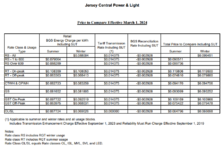
I grabbed the above from :
https://www.firstenergycorp.com/con...er Choice/Files/New Jersey/PriceToCompare.pdf
If I'm reading this correctly standard residential service steps up the rate over 600KWH per period. I don't have a power bill handy to see where we sit - I don't know how much energy we use here.
Cutting usage across the board is never a bad idea.
Cheers
Jim
I grabbed the above from :
https://www.firstenergycorp.com/con...er Choice/Files/New Jersey/PriceToCompare.pdf
If I'm reading this correctly standard residential service steps up the rate over 600KWH per period. I don't have a power bill handy to see where we sit - I don't know how much energy we use here.
Cutting usage across the board is never a bad idea.
Cheers
Jim
83VillageRepair
Well-known member
Still need to track TOU no matter what the rate structure isWhy not simply offer lower late night rates to encourage charging EVs then? The higher peak rates are going to cost most customers a lot of extra money. Most people who work an 8 to 5 job are going to use close to 50% of their electricity during the peak hours.
reader2580
Well-known member
My local utility offered a TOU plan for EVs at least five years before they installed Smart meters. I have no idea how they determined when electricity was used.Still need to track TOU no matter what the rate structure is
I would bet that remote disconnect is more of a driver than TOU rates but as more EV's come on line TOU will be forced to move charging to off peak. If not, the grid would need to be massively expanded.
Starting & stopping service and no longer needing to send someone around to read the meter are the biggest driving factors 100%.
We used to do TOU all the time with digital logging meters that had no control capability AND no communication back to any meter collector. Truck would drive around similar to how the water meters are read around here and get your data for the cycle.
there's not much left to cut on the residential side. light has never been cheaper than before ('member incandescents and CFLs?), furnaces are 95%+, AC are SEER2 10000, fridges use half the power they did 20 years ago. maybe some expensive insulation/window/air sealing upgrades, but other than that there's sitting in the dark?We had our meter swapped out to a Smart Meter last summer. JCP&L did a big slick ad campaign for it. What WASN'T mentioned in that campaign is that THEY needed to deploy SM technology before they can introduce us to it's friendly cousin TOU rates.
I grabbed the above from :
https://www.firstenergycorp.com/content/dam/customer/Customer Choice/Files/New Jersey/PriceToCompare.pdf
If I'm reading this correctly standard residential service steps up the rate over 600KWH per period. I don't have a power bill handy to see where we sit - I don't know how much energy we use here.
Cutting usage across the board is never a bad idea.
Cheers
Jim
a clock in the meter?My local utility offered a TOU plan for EVs at least five years before they installed Smart meters. I have no idea how they determined when electricity was used.
so from a rate basing and a utility perspective, TOU is a win.
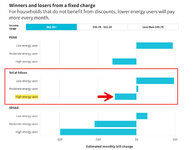
California just went to a fixed fee and lowered rates - which would actually encourage more usage. Every Californian will now have to pay a monthly flat fee
So a 'high energy user' will actually have to pay less each month because they are going to cut the cost per kWh
https://calmatters.org/housing/2024... be $24 for,will see fees of either $6 or $12.
Jim_No_Garage
Well-known member
You are correct - Probably anecdotal stuff without doing some serios local monitoring and chasing loads - similar to what Woody did in his installs.there's not much left to cut on the residential side. light has never been cheaper than before ('member incandescents and CFLs?), furnaces are 95%+, AC are SEER2 10000, fridges use half the power they did 20 years ago. maybe some expensive insulation/window/air sealing upgrades, but other than that there's sitting in the dark?
Plan B is adding solar and local storage - ala Tesla Wall but I'm not in this house for much longer. That's an option for the next house.
Jim
Last edited: