To avoid these ads, REGISTER NOW!

Sub-Panel in Garage-Adding 220v for Table Saw and Air Compressor

OP
M

Model A Fan

Well-known member
Joined
Dec 1, 2011
Messages
1,220
Location
NW Washington
A big benefit of running conduit underground as well is being able to get the trunch dug, lay the conduit then backfill. You can then deal with the wiring later. If you run it exposed underground, you have to leave the trench open until the wire is placed. The conduit also protects the wire in the long run
I thought I had to run it without conduit underground and anything aboveground needed conduit. So I can use conduit the whole way above and below ground?

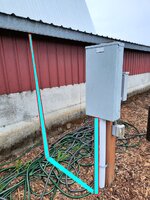
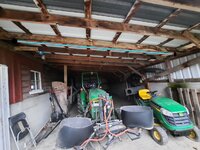
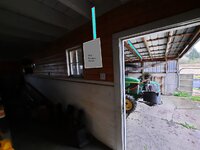
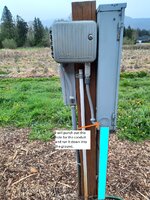
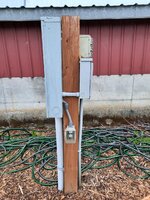
Here are some photos and I edited them with MS Paint for more clarity.
Barn 1.jpg
Barn 2.jpgBarn 3.jpgBarn 4.jpgBarn 5.jpgBarn 6.jpgBarn 7.jpgBarn 8.jpg
 
To avoid these ads, REGISTER NOW!

mike93lx

ALLIANCE MEMBER
Joined
Dec 9, 2013
Messages
37,501
Location
Richmond, VA
You can run conduit end to end. You must use it above ground. It is optional below. Just run it the whole way

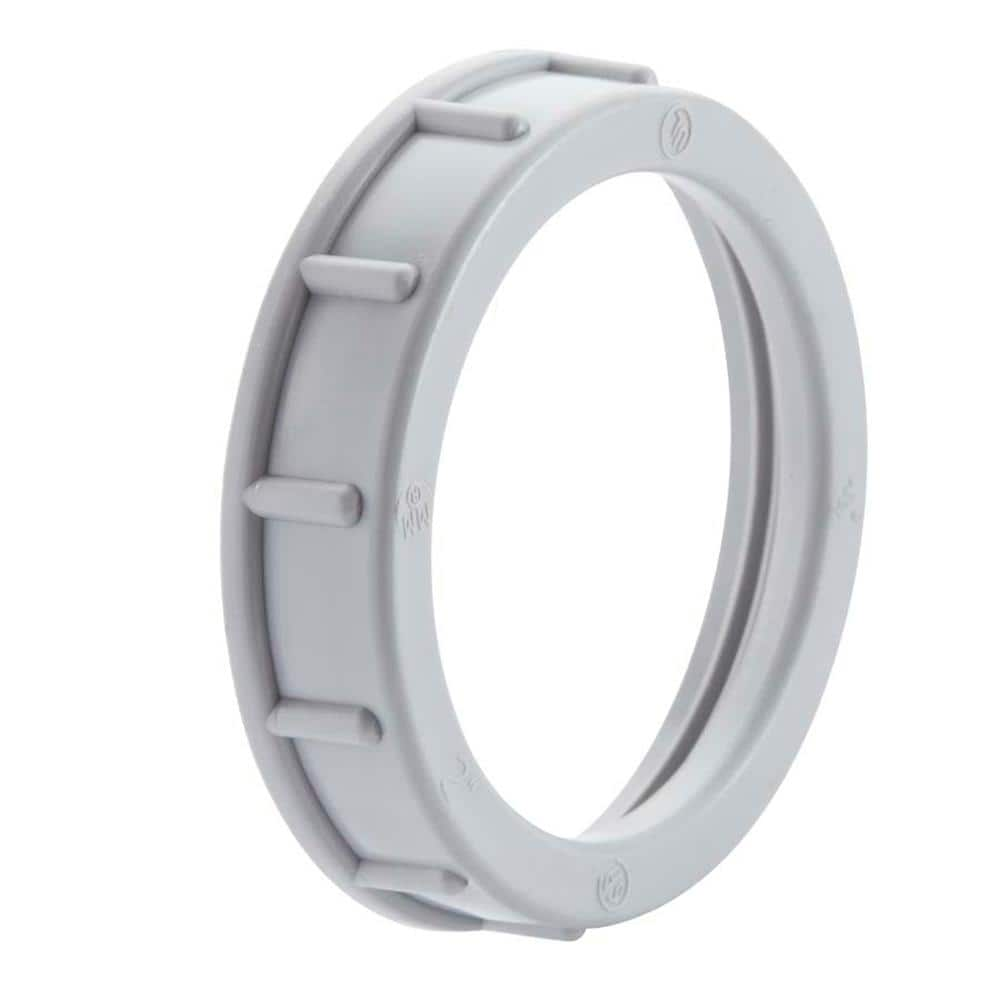
That run should be a piece of cake. Use LB's to make the tight 90's. You will need bushings on each end to protect the wire

Your friend has shared a link to a Home Depot product they think you would be interested in seeing:

Halex 1-1/2 in. Rigid Plastic Insulating Bushing (4-Pack)
SKU# 100164719

Buy a small spool of pull string. Tie a shopping bag to one end and **** it through with a shop vac. Have someone pulling and someone feeding.

Complete the conduit run before pulling any wire. Fully glued up, ready to go
 

Norcal

Well-known member
Joined
Mar 16, 2008
Messages
13,754
Why not just enter the bottom of the panel, much cleaner install.
 
OP
M

Model A Fan

Well-known member
Joined
Dec 1, 2011
Messages
1,220
Location
NW Washington
You can run conduit end to end. You must use it above ground. It is optional below. Just run it the whole way

That run should be a piece of cake. Use LB's to make the tight 90's. You will need bushings on each end to protect the wire

Your friend has shared a link to a Home Depot product they think you would be interested in seeing:

Halex 1-1/2 in. Rigid Plastic Insulating Bushing (4-Pack)
SKU# 100164719

Buy a small spool of pull string. Tie a shopping bag to one end and **** it through with a shop vac. Have someone pulling and someone feeding.

Complete the conduit run before pulling any wire. Fully glued up, ready to go
I was planning on picking up a fish tape, but a rope might suffice. Do I need to do a grounding rod for this sub-panel as well? The main breaker box outside has one already. I could only find one LB today, but those will work really well.
Why not just enter the bottom of the panel, much cleaner install.
The breaker panel does not have a large hole underneath available. They're all 1" or so. The side hole is the only that is big enough I believe. The main power line coming in is taking up the only big hole.

How do I locate the power cables underground coming from the meter? Should I call my power service and have them cut the power to the meter when I start digging? Do I call the "Call Before you Dig" phone number? I feel like I have to be an archeologist when I start digging...one thin layer at a time.

Also, I will have to use an 80A breaker since there are no 90A Eaton breakers available it seems. I think 80A will still provide plenty of power or should I hold out for 90A? Found a 90A Eaton breaker on eBay for $40. What a deal!
 
Last edited:

Norcal

Well-known member
Joined
Mar 16, 2008
Messages
13,754
I was planning on picking up a fish tape, but a rope might suffice. Do I need to do a grounding rod for this sub-panel as well? The main breaker box outside has one already. I could only find one LB today, but those will work really well.

The breaker panel does not have a large hole underneath available. They're all 1" or so. The side hole is the only that is big enough I believe. The main power line coming in is taking up the only big hole.

How do I locate the power cables underground coming from the meter? Should I call my power service and have them cut the power to the meter when I start digging? Do I call the "Call Before ayou Dig" phone number? I feel like I have to be an archeologist when I start digging...one thin layer at a time.

Also, I will have to use an 80A breaker since there are no 90A Eaton breakers available it seems. I think 80A will still provide plenty of power or should I hold out for 90A?
Get a holesaw for the desired conduit size, or get the Harbor Freight KO punches, 3d option is a rental yard.
 

mike93lx

ALLIANCE MEMBER
Joined
Dec 9, 2013
Messages
37,501
Location
Richmond, VA
Yes, a panel in a detached building needs two ground rods.

I'd pull with a rope before even thinking about a fish tape
 
OP
M

Model A Fan

Well-known member
Joined
Dec 1, 2011
Messages
1,220
Location
NW Washington
Get a holesaw for the desired conduit size, or get the Harbor Freight KO punches, 3d option is a rental yard.
Seems easy enough, I'll have to make sure I get the right size for the 1.5" conduit. Thank you.
Yes, a panel in a detached building needs two ground rods.

I'd pull with a rope before even thinking about a fish tape
So, where do the grounding rods go? Do they both go outside near the main breaker and I feed a separate grounding wire through for them (or two grounding wires?) from the ground bus bar back to the ground rod(s)? I'm confused on where/how the ground rods are supposed to be connected.

What I'm imagining is there is a 4 gauge grounding wire from the sub-panel to one of the grounding rods. Where does the other grounding wire connect into the system? Does the ground wire in the 2-2-2-4 get connected to the by way of 4 gauge wire as well? Thank you.
 
Last edited:

mike93lx

ALLIANCE MEMBER
Joined
Dec 9, 2013
Messages
37,501
Location
Richmond, VA
Seems easy enough, I'll have to make sure I get the right size for the 1.5" conduit. Thank you.

So, where do the grounding rods go? Do they both go outside near the main breaker and I feed a separate grounding wire through for them (or two grounding wires?) from the ground bus bar back to the ground rod(s)? I'm confused on where/how the ground rods are supposed to be connected.

What I'm imagining is there is a 4 gauge grounding wire from the sub-panel to one of the grounding rods. Where does the other grounding wire connect into the system? Does the ground wire in the 2-2-2-4 get connected to the by way of 4 gauge wire as well? Thank you.
2" hole saw should do it


The #4 ground wire that you pulled runs from the main to the sub's ground bar.

The new ground rods get installed somewhere near the sub, with a continuous piece of #6 copper connecting both rods to the ground bar in the sub.

Install them at least 6' apart and use acorn clamps to attach the wire. It's a good idea to get the acorns on the rob before you do too much beating on them as the end may mushroom enough to make it difficult or impossible to slide it on
 
Last edited:
OP
M

Model A Fan

Well-known member
Joined
Dec 1, 2011
Messages
1,220
Location
NW Washington
2" hole saw should do it


The #4 ground wire that you pulled runs from the main to the sub's ground bar.

The new ground rods get installed somewhere near the sub, with a continuous piece of #6 copper connecting both rods to the ground bar in the sub.

Install them at least 6' apart and use acorn clamps to attach the wire. It's a good idea to get the acorns on the rob before you do too much beating on them as the end may mushroom enough to make it difficult or impossible to slide it on
Can I run the grounding wires back through a different conduit back to the grounding rods outside the barn near the exterior wall of the lean-to? #6 copper in 1" conduit should suffice if this is appropriate?
 
Last edited:
OP
M

Model A Fan

Well-known member
Joined
Dec 1, 2011
Messages
1,220
Location
NW Washington
Yes, they are kept separate. Like a 1/2" conduit just to protect it until it is underground
Ok, so I looked up grounding rods...They're supposed to be 8' long?! How in the heck is someone supposed to drive that in? I read you can't bury it horizontally unless you hit bedrock, so...just grab my post driver and start driving it?

What I'm envisioning is the conduit extends into the ground, the grounding wire comes out underground and then connects to the grounding rods above ground (?) via the acorn clamp and then strings intact over to the second one which is a minimum of 6' from the first. If it doesn't attach above ground, I'm to understand the ground rod is fully buried, clamp, and grounding wire is fully buried too.

No angles less than a minimum of 45° when driving it into the ground as well, so somewhere between 45° and 90° will be the ideal angle.

This is going to be...interesting to say the least. I already have 40' of 1" conduit, so I'm just going to use that. Found it when cleaning the garage and throwing away garbage from the previous owner.
 

mike93lx

ALLIANCE MEMBER
Joined
Dec 9, 2013
Messages
37,501
Location
Richmond, VA
You can get driving bits for jackhammer and sds hammers, but otherwise, yeah, get a sledgehammer or post driver out.

If your soil is really Rocky, I'd probably have a third and an angle grinder on hand. If it won't go any farther, cut it off and start another 6' away. I had to do this at a buddy's barn in Massachusetts when the rod was about 6' down
 
OP
M

Model A Fan

Well-known member
Joined
Dec 1, 2011
Messages
1,220
Location
NW Washington
You can get driving bits for jackhammer and sds hammers, but otherwise, yeah, get a sledgehammer or post driver out.

If your soil is really Rocky, I'd probably have a third and an angle grinder on hand. If it won't go any farther, cut it off and start another 6' away. I had to do this at a buddy's barn in Massachusetts when the rod was about 6' down
That's my plan at this point. I'll muscle it into the ground. I've seen using water and driving it by hand as an option, but we will see what actually becomes the plan when I get to it.

What size rod do I need? There was 1/2" Copper-$19, 5/8" Copper-$21, 3/4" Copper-$51, and 5/8" galvanized-$18. I'm leaning toward that 5/8" copper for $21 but that's the price-to-size best value.
 

mike93lx

ALLIANCE MEMBER
Joined
Dec 9, 2013
Messages
37,501
Location
Richmond, VA
That's my plan at this point. I'll muscle it into the ground. I've seen using water and driving it by hand as an option, but we will see what actually becomes the plan when I get to it.

What size rod do I need? There was 1/2" Copper-$19, 5/8" Copper-$21, 3/4" Copper-$51, and 5/8" galvanized-$18. I'm leaning toward that 5/8" copper for $21 but that's the price-to-size best value.
My understanding is either 5/8 minimum or you can go 1/2 if it is "listed".

IMO, just do the 5/8
 
OP
M

Model A Fan

Well-known member
Joined
Dec 1, 2011
Messages
1,220
Location
NW Washington
On the rod
OK, thank you. I am guessing it will say "Suitable for up-to XYZ amperage" or something along that line.

Also, if I plan to only run 15A and 20A lighting/outlets in the shop off my small 6-space original sub-panel, can I just use 12/3 as the feeder from the 90A panel and a 20A two-pole or would I be better off running a 10/3 and a 30A 2-pole? The run is probably under 60' total indoors. Only reason I'd do it this way is because everything is already mounted/wired.
 

mike93lx

ALLIANCE MEMBER
Joined
Dec 9, 2013
Messages
37,501
Location
Richmond, VA
OK, thank you. I am guessing it will say "Suitable for up-to XYZ amperage" or something along that line.

Also, if I plan to only run 15A and 20A lighting/outlets in the shop off my small 6-space original sub-panel, can I just use 12/3 as the feeder from the 90A panel and a 20A two-pole or would I be better off running a 10/3 and a 30A 2-pole? The run is probably under 60' total indoors. Only reason I'd do it this way is because everything is already mounted/wired.
Nah, just "listed".

If you ever plan to actually draw 20a (welder), then I would use 10,but otherwise, 12 is fine, IMO.

60 feet is shorter than the runs in many houses
 
OP
M

Model A Fan

Well-known member
Joined
Dec 1, 2011
Messages
1,220
Location
NW Washington
Nah, just "listed".

If you ever plan to actually draw 20a (welder), then I would use 10,but otherwise, 12 is fine, IMO.

60 feet is shorter than the runs in many houses
I'll be using the new 100A (90A in reality) for any welders, saws, air compressors, etc. All the 110V stuff that is currently installed and operating will be on the small panel. Additions to the 110V stuff like new lighting circuits and outlets will come out of the new panel I'm installing. I figured I'd keep it simple for the old stuff and just power it off the old panel its already connected to, and anything new will come off the new panel.

Again, thank you for your continued help, I appreciate the concise and prompt help to my beginner/uninitiated questions.
 

wyliesdiesels

Well-known member
Joined
Aug 14, 2012
Messages
20,004
Location
Modesto, CA
OK, thank you. I am guessing it will say "Suitable for up-to XYZ amperage" or something along that line.

Also, if I plan to only run 15A and 20A lighting/outlets in the shop off my small 6-space original sub-panel, can I just use 12/3 as the feeder from the 90A panel and a 20A two-pole or would I be better off running a 10/3 and a 30A 2-pole? The run is probably under 60' total indoors. Only reason I'd do it this way is because everything is already mounted/wired.
nope

there is no amperage rating on ground rods
 
To avoid these ads, REGISTER NOW!
OP
M

Model A Fan

Well-known member
Joined
Dec 1, 2011
Messages
1,220
Location
NW Washington
nope

there is no amperage rating on ground rods
So I now have two 5/8" grounding rods and 50' of #6 bare copper grounding wire. I was advised it doesn't need to be in conduit in the off chance it becomes "energized" it will toast the conduit. This was good news since I didn't want to feed that stiff stuff through the conduit 😅 . I think I'm ready to begin finally! Its been a long time compiling parts and more importantly, knowledge.

I have been delayed getting started due to a baby and managing my acreage and recovering from flooding. Hopefully I can begin working on this and get it knocked out! Thank you all for the help over the past three pages and two-ish months! :bow::pimpflash:thumbup:
 
OP
M

Model A Fan

Well-known member
Joined
Dec 1, 2011
Messages
1,220
Location
NW Washington
It doesn't need conduit but I would reconsider who you get advice from....
Do you mind elaborating? I was happy I wasn't going to have to pull it through 1" conduit I discovered in my garage while cleaning it out a while back...I found "woven" #6 which seemed like it would be easier to pull, but it was $1.50/foot compared to the $42 for a 50' spool and I need 50' for my project.
 

mike93lx

ALLIANCE MEMBER
Joined
Dec 9, 2013
Messages
37,501
Location
Richmond, VA
Do you mind elaborating? I was happy I wasn't going to have to pull it through 1" conduit I discovered in my garage while cleaning it out a while back...I found "woven" #6 which seemed like it would be easier to pull, but it was $1.50/foot compared to the $42 for a 50' spool and I need 50' for my project.
Not requiring Conduit has nothing to do with what would happen when it is "energized". That's a silly reason.

I have used conduit to get it to ground level, for some protection and appearance. 1/2 is good for this
 

PCustoms

Well-known member
Joined
Jul 23, 2011
Messages
22,747
Location
VT
Do you mind elaborating? I was happy I wasn't going to have to pull it through 1" conduit I discovered in my garage while cleaning it out a while back...I found "woven" #6 which seemed like it would be easier to pull, but it was $1.50/foot compared to the $42 for a 50' spool and I need 50' for my project.
Ground wire needs to be solid copper and a continuous length (no splices).

It can be in conduit (some situations may require it, would have to look though).

Stating "...doesn't need to be in conduit in the off chance it becomes "energized" it will toast the conduit." show a lack of understanding about code requirements and electricity, and may lead to bad advice.
 
OP
M

Model A Fan

Well-known member
Joined
Dec 1, 2011
Messages
1,220
Location
NW Washington
Not requiring Conduit has nothing to do with what would happen when it is "energized". That's a silly reason.

I have used conduit to get it to ground level, for some protection and appearance. 1/2 is good for this
When I was imagining how you described the ground wire coming out of the conduit; does the conduit go into the dirt and the ground wire is buried as it travels to the ground rods? I'm envisioning a buried ground wire and buried ground rods for this and I just want to make sure I'm interpreting your instructions properly.

I'll likely use an LB at the 90 degree bends where the conduit goes so I can pull/push the wire easier since it is in fact a solid wire and very stiff. I'll place the first ground rod where the conduit terminates at/in and another 6' away along the wall. I was just please without needing conduit because it is less money and no pulling of the stiff wire, so an easier job. Since $50 won't kill the project, I'll just pony up for the conduit.

The #6 ground wire will connect to the ground bus bar in the sub-panel if I'm not mistaken? Since there are separate neutral and ground bus bars, it will be the ground bus bar (thinking out loud kind of here).
 

mike93lx

ALLIANCE MEMBER
Joined
Dec 9, 2013
Messages
37,501
Location
Richmond, VA
When I was imagining how you described the ground wire coming out of the conduit; does the conduit go into the dirt and the ground wire is buried as it travels to the ground rods? I'm envisioning a buried ground wire and buried ground rods for this and I just want to make sure I'm interpreting your instructions properly.

I'll likely use an LB at the 90 degree bends where the conduit goes so I can pull/push the wire easier since it is in fact a solid wire and very stiff. I'll place the first ground rod where the conduit terminates at/in and another 6' away along the wall. I was just please without needing conduit because it is less money and no pulling of the stiff wire, so an easier job. Since $50 won't kill the project, I'll just pony up for the conduit.

The #6 ground wire will connect to the ground bus bar in the sub-panel if I'm not mistaken? Since there are separate neutral and ground bus bars, it will be the ground bus bar (thinking out loud kind of here).
Yes, just end the conduit underground and continue the wire run.

Yes, it terminates on the ground bar
 
OP
M

Model A Fan

Well-known member
Joined
Dec 1, 2011
Messages
1,220
Location
NW Washington
Yes, just end the conduit underground and continue the wire run.

Yes, it terminates on the ground bar
Do I need another grounding wire and ground rods for the smaller secondary sub-panel (the one that is already installed and pictured earlier in the thread)? Or would the 12/3 or 10/3 wire I run from the new sub-panel to that old smaller sub-panel cover that by virtue of the ground wire going back to the 90A panel which is in turn connected to the ground rods? Sorry, I hope that isn't too convoluted.
 

mike93lx

ALLIANCE MEMBER
Joined
Dec 9, 2013
Messages
37,501
Location
Richmond, VA
Do I need another grounding wire and ground rods for the smaller secondary sub-panel (the one that is already installed and pictured earlier in the thread)? Or would the 12/3 or 10/3 wire I run from the new sub-panel to that old smaller sub-panel cover that by virtue of the ground wire going back to the 90A panel which is in turn connected to the ground rods? Sorry, I hope that isn't too convoluted.
You need two rods for the structure. Just make sure both have the neutral bar isolated.
 

pattenp

Well-known member
Joined
Jun 4, 2008
Messages
10,175
Location
Virginia - USA
Ground wire needs to be solid copper and a continuous length (no splices).

It can be in conduit (some situations may require it, would have to look though).

Stating "...doesn't need to be in conduit in the off chance it becomes "energized" it will toast the conduit." show a lack of understanding about code requirements and electricity, and may lead to bad advice.
Above bolded is incorrect. See NEC 250.62 and 250.64(C)
 
OP
M

Model A Fan

Well-known member
Joined
Dec 1, 2011
Messages
1,220
Location
NW Washington
Ground wire needs to be solid copper and a continuous length (no splices).

It can be in conduit (some situations may require it, would have to look though).

Stating "...doesn't need to be in conduit in the off chance it becomes "energized" it will toast the conduit." show a lack of understanding about code requirements and electricity, and may lead to bad advice.
OK, I guess that statement is incorrect as after reading the NEC codes cited below, I see I can use several types of conduit. The cable armor sounds like a good choice too. Would there be any reason to use it over the Sched 40 I plan on getting?
You need two rods for the structure. Just make sure both have the neutral bar isolated.
Yep, I will connect a neutral bus and ground bus independently in each sub-panel.
Above bolded is incorrect. See NEC 250.62 and 250.64(C)
Thank you for the code citation.
 

mike93lx

ALLIANCE MEMBER
Joined
Dec 9, 2013
Messages
37,501
Location
Richmond, VA
Yep, I will connect a neutral bus and ground bus independently in each sub-panel.
That's not what I was highlighting and the distinction is important

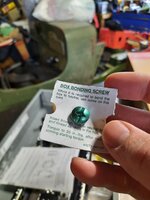
The neutral bar needs to be isolated from the ground bar, and thus, the enclosure. There will be a green bonding screw that must be removed and the neutral bar has to be the one that is mounted to plastic. The ground bar mounts to the enclosure.
 
OP
M

Model A Fan

Well-known member
Joined
Dec 1, 2011
Messages
1,220
Location
NW Washington
That's not what I was highlighting and the distinction is important

The neutral bar needs to be isolated from the ground bar, and thus, the enclosure. There will be a green bonding screw that must be removed and the neutral bar has to be the one that is mounted to plastic. The ground bar mounts to the enclosure.
I was just stating that I will have a neutral bus and ground bus for each sub-panel and then mounted properly in each sub-panel. If I'm not mistaken, the green bonding screws are not mounted in the panel already. I honestly think some of my assumptions/guessing will be alleviated if I were to open the box and look. I haven't done that yet since I've been trying to gather supplies and learn first before opening anything. The neutral bus bar will be mounted on a plastic "spacer" of sorts. This black plastic behind the neutral bars is what I'm assuming you're referring to. Then the ground bar I purchased separately gets mounted into the pre-drilled holes in the metal back of the box.

The "Plug on Neutral" looks like the screw head is where the neutral wire gets attached as it is built in and then the ground mounted separately. Sorry for the large and uncropped photo.
neutral bar pic.png
 
OP
M

Model A Fan

Well-known member
Joined
Dec 1, 2011
Messages
1,220
Location
NW Washington
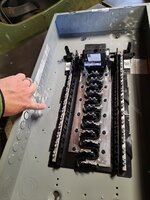
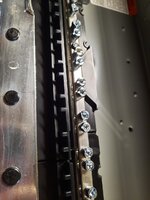
I opened the box up last night and here are some photos.

The grounding bus bar will go in the holes I'm pointing to (23 slot I believe is what I purchased). Then my 6 gauge grounding wire gets screwed to the grounding bar and then sent outside via conduit to the grounding rods. The neutrals all connect to the vertical neutral bus bars that run parallel vertically on both sides of the box.
box1.jpg


This is an overall view of the box.
Box 2.jpg

You can see the plastic that everything is mounted to. Does this plastic "isolate" the box from the neutral bar that runs vertically?

Box 3.jpg

Neutral bus bar built into the box.

Box 4.jpg

Grounding screw not mounted when opened.

Box 5.jpg
 

mike93lx

ALLIANCE MEMBER
Joined
Dec 9, 2013
Messages
37,501
Location
Richmond, VA
Yup, looks good.

Make sure each neutral lands in its own hole. They can't be doubled up

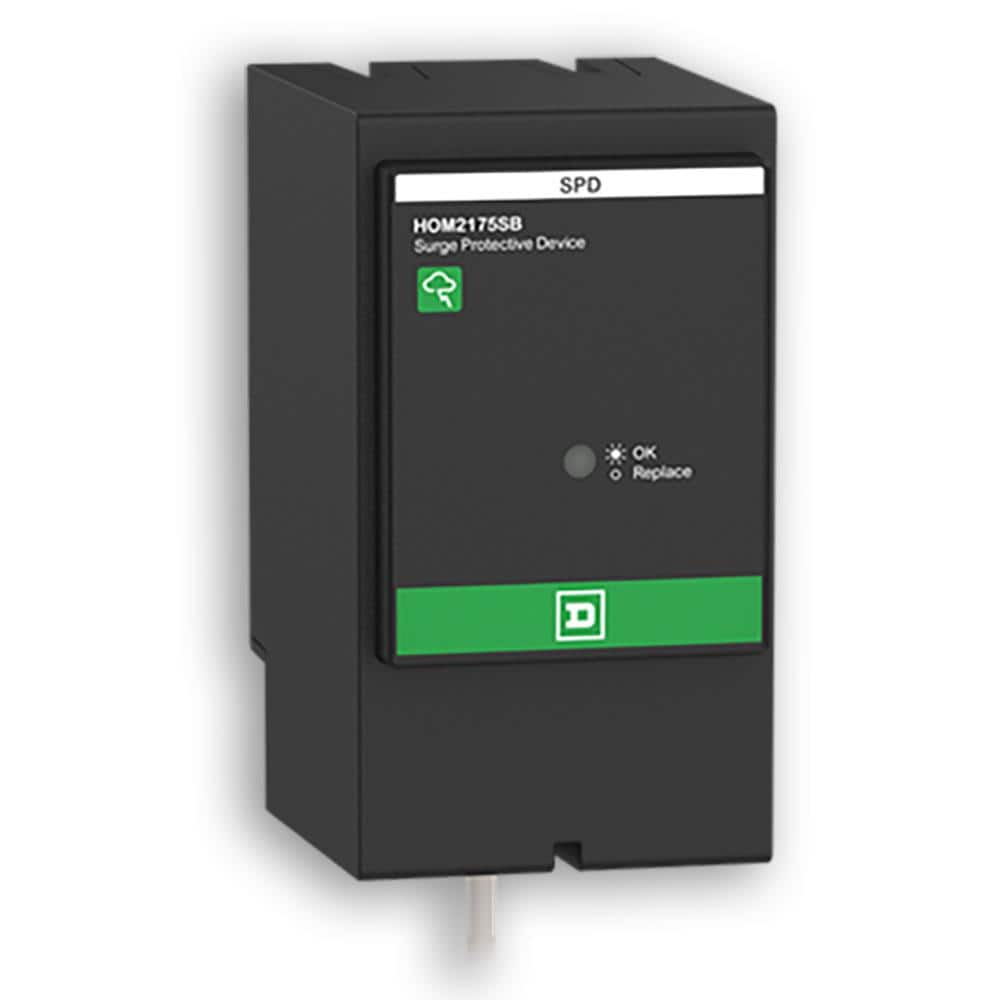
If you want surge protection, now is the best time to do it (if you can find them in stock anywhere). I have two in each of my homeline panels and one in a siemens subpanel.

This is what I used in the homeline. I bought them on ebay for much less


Square D Homeline 22.5 kA 2-Pole SurgeBreaker Surge Protective Device
SKU# 100182531
 
OP
M

Model A Fan

Well-known member
Joined
Dec 1, 2011
Messages
1,220
Location
NW Washington
Yup, looks good.

Make sure each neutral lands in its own hole. They can't be doubled up

If you want surge protection, now is the best time to do it (if you can find them in stock anywhere). I have two in each of my homeline panels and one in a siemens subpanel.

This is what I used in the homeline. I bought them on ebay for much less


Square D Homeline 22.5 kA 2-Pole SurgeBreaker Surge Protective Device
SKU# 100182531
I've been considering one of those, but as you said, supplies are limited. Do they need to be wired before you wire anything else? If I don't have much expensive equipment, is it even worth it? $75 table saw, $400 air compressor, $500 Unisaw. Not a whole lot that's super valuable, but I don't want to have to replace it. Can they be installed AFTER the fact? (y)
 

mike93lx

ALLIANCE MEMBER
Joined
Dec 9, 2013
Messages
37,501
Location
Richmond, VA
I've been considering one of those, but as you said, supplies are limited. Do they need to be wired before you wire anything else? If I don't have much expensive equipment, is it even worth it? $75 table saw, $400 air compressor, $500 Unisaw. Not a whole lot that's super valuable, but I don't want to have to replace it. Can they be installed AFTER the fact? (y)
Absolutely can be installed any time. They just recommend putting them as close to the main as possible, so not having to move stuff after the fact is nice.

Chances are, you will never need it. It's like any other insurance. You have to decide if the cost is worth it for you

Like everything, pricing has gone full stupid. I bought 4 for 25 each just last June. Now they are all $80+
 
OP
M

Model A Fan

Well-known member
Joined
Dec 1, 2011
Messages
1,220
Location
NW Washington
Absolutely can be installed any time. They just recommend putting them as close to the main as possible, so not having to move stuff after the fact is nice.

Chances are, you will never need it. It's like any other insurance. You have to decide if the cost is worth it for you

Like everything, pricing has gone full stupid. I bought 4 for 25 each just last June. Now they are all $80+
Yeah, on eBay they're $80+. When available in store, they're $65 at my local Home Depot. Can I leave a double gap at the top and install one later or do I need to install the surge protector and breakers without gaps? Hopefully I've explained/phrased this properly.
 

mike93lx

ALLIANCE MEMBER
Joined
Dec 9, 2013
Messages
37,501
Location
Richmond, VA
Yeah, on eBay they're $80+. When available in store, they're $65 at my local Home Depot. Can I leave a double gap at the top and install one later or do I need to install the surge protector and breakers without gaps? Hopefully I've explained/phrased this properly.
I am not aware of any prohibition for leaving the spots open as long as you leave the covers in tact.

That said, for a simple.panel, I would probably omit it and put a 240 breaker there. If you get a surge, move that one breaker.
 
To avoid these ads, REGISTER NOW!
Top Bottom