four.cycle
Well-known member
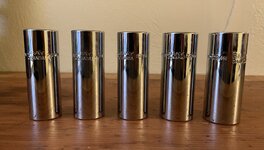
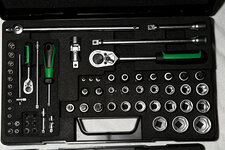
^ pretty fabulous there, Dave.A Stahlwille set with metric sockets from 8 to 30mm.



^ pretty fabulous there, Dave.A Stahlwille set with metric sockets from 8 to 30mm.
The Sliding T and the Breaker Bar / Swivel handle are very different tools.I wonder why they put in both the breaker bad and the T handle in such sets. The T handle is still used a lot here in Europe, but it just seems a bit excessive to include both in a set cause they are kind of able to do the same thing for the most part. The breaker bar is maybe a bit more versatile even. Probably just tradition...
That case is huge. Must say I like the rounded metal Hazet ones more (or the Unior brand also has very nice rounded cases, just with plastic hinges - though the seem to work and also protect the metal when you put it on the ground).
Space available is the big argument for 3/8” drive.I remember asking Dad at some time in the 60's why he didn't use his SO 1/2" drive sockets and ratchet anymore, and he said that he preferred the CMan 3/8" drive due to space constraints.
He bought the SO sockets and ratchet set during or right after WW2 as I recall, and he didn't trust the steel. Sadly, the set disappeared in the 80's during a move.

Another use for a sliding T-bar is pure-torque applications (as when tapping a hole).What a Sliding T can do, that no other tool does as well, is to spin a fastener off very quickly, or vice versa. Having undertaken a good deal of assembly work in the defence industry, I wouldn’t be without one.
I’m with you, notwithstanding Dave455’s good points about the different uses of different handle styles.I wonder why they put in both the breaker bad and the T handle in such sets. The T handle is still used a lot here in Europe, but it just seems a bit excessive to include both in a set cause they are kind of able to do the same thing for the most part. The breaker bar is maybe a bit more versatile even. Probably just tradition...
Yes, you are correct in this regard.Another use for a sliding T-bar is pure-torque applications (as when tapping a hole).
I find myself needing that option, or at least strongly preferring it, often enough to wonder how Americans get along without a sliding T-bar. I suppose an impact driver does the job in some cases (with no feel or subtlety, though).
I think the quick-spinning function of a sliding T-bar has been deprecated somewhat by the arrival of high-torque ratchets. There are no doubt cases where someone might still prefer a sliding T (especially if you’ve got the muscle memory for it), but I can see Americans generally preferring a strong ratchet handle.
For me, I have more use for pure torque than fast spinning. So I wish the sliding T-bars included in sets were longer. They’re always short, presumably to aid spinning (and because who cares when using it as a breaker bar with a length of pipe on the end).
I get the impression no-one in tool companies is giving these matters a lot of thought nowadays, though they clearly did when these products were first designed and became popular. But needs change with the times, and I’d like to see more originality in set contents in particular.
I think most manufacturers are completely out of touch with their customers, and how they use tools.I’m with you, notwithstanding Dave455’s good points about the different uses of different handle styles.
I also think (and maybe you don’t, from what I recall) that the standard ratchet in these sets should be longer.
Too much tradition, maybe.
A Sliding T can be used to loosen a fastener, but only if it is tightened to moderate torque. In 1/2” drive I’ll use a sliding T for this purpose up to about 16mm.
What a Sliding T can do, that no other tool does as well, is to spin a fastener off very quickly, or vice versa. Having undertaken a good deal of assembly work in the defence industry, I wouldn’t be without one.
Sometimes you need the Breaker Bar / Swivel handle for leverage. Sometimes even the 15 inch one included in the set is inadequate, and I tend to use 18 inch as standard.


I been thinking alot about this since I do some mobile work but not professionally and honestly the answer to this here is don’t do mobile work esp as a nonprofessionalAn “off road” enthusiast friend carries predominantly 3/8” drive, but carries just an 18” breaker bar in 1/2” drive, and about six sockets. That setup is never optimum for speed, but does the job. I carry a 1/2” breaker bar in most of my vehicles also.
Another option is to carry predominantly 1/2 “ drive, and supplement with a generous selection of 1/4” drive. This was common years ago, and I wonder if it will become more so as the range of 1/4” drive tools offered by the better manufacturers ever expands?


Unfortunately, for a lot of folks, mobile work is just a fact of life.I been thinking alot about this since I do some mobile work but not professionally and honestly the answer to this here is don’t do mobile work esp as a nonprofessional
sometimes you do what you got to do and I came up with something that’s been working okay but honestly I haven’t done much car work in my life compared to most here
a full 3/8 set going way smaller and way bigger than 3/8 should be doing
add in 1/4 for low profile sockets only dont even bother with deep use 3/8 for deeps if you need deeps you prob got room for 3/8
add in XL double box wrenches in every size for whatever your using 1/2 for 16x 18 & 17 x 19 & 22 x 24. brake loose with the wrench and switch to a 3/8 socket
if your wanting to do it fast and efficient you need a full set. If your wanting to get away with a smaller mobile box then it’s going to take longer but you can do it if your smart but your going to figure it out yourself since no one wants to talk about small mobile mechanics kits it hurts there brains
have a totally separate kit for 1/2 and only bring it if your doing suspension work
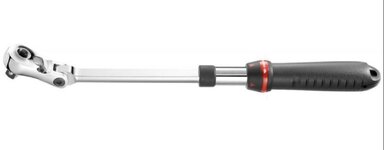
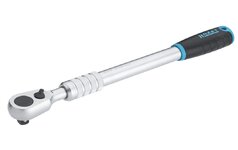
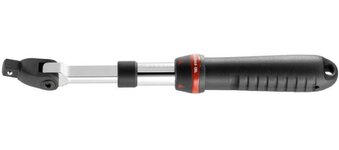
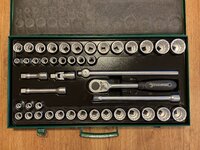
Very nice!If I had to choose only one set per drive size (all Stahlwille):
I'd possibly have to add a set of deep 1/4" sockets as there are no comprehensive 1/4" Stahlwille metric sets as sadly there is no metric equivalent of the imperial 40aD/30/7QR.
Maybe a pure TORX set could be added:
There are also pure Allen (INBUS, called INHEX by Stahlwille) sets or specific socket sets, some missing additional sockets have been included, like the odd 13 mm Allen (INBUS) socket, there are also Ribe-CV and XZN (no pic readily available, sorry):

I agree but those tools last extremely long if not severly abused.Very nice!
I have always admired those comprehensive sets by Stahlwille!
Unfortunately, all those specialist sockets tended to make those sets costly. Even when I was getting a good trade discount on Stahlwille they were pricey.
Very nice!
I have always admired those comprehensive sets by Stahlwille!
Unfortunately, all those specialist sockets tended to make those sets costly. Even when I was getting a good trade discount on Stahlwille they were pricey.
Yes, sadly the steel cases are rare.@Dave455:
That's a great set worth every Cent or Penny. Sadly those amazing steel cases have become rare.
The single-component hard plastic grip similar to the original DRALL (not the latter DRALL+ which is 2-component) is no longer available as spare part but it is much more robust then the two 2-component versions which followed.
The spare parts for the rachtet mechanism itself are still the same (5120 spare part set).
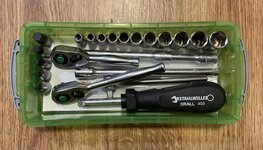

Yes, they’re a lot cheaper in the U.K. or Europe.In general, I would love to have some of the Stahlwille and Wera tool sets.
Maybe they are more common and reasonably priced in Europe (or parts of Europe), but here in the US they are indeed way too expensive and can/do rival tool truck prices (without the benefits of a tool truck).
I believe the “Rotator” ratchet was originally a Facom design. They offer them in three drive sizes, as well as quick release, and even a bit driver version, which I own. Facom are, of course, owned by SBD so no surprise there is a Stanley version.The most amazing 3/8" ratchet I know is indeed a reversible Stanley Rotator ratchet with rotating grip, it looks like a regular ratchet but the grip can be rotated in BOTH directions while the socket will still rotate only in the preset direction, so for each angular degree you rotate the handle in any direction the socket rotates in the same direction, there is no "dead" return.
Edited to add name and correct to 3/8", don't know if there's a 1/2" version.
Inadvertently made a 2nd post instead of editing the previous one. Sorry.

Facom is quite popular here, at least in certain circles. The designs were always innovative and the quality quite high.I didn't know that. Facom is quite popular here but, like Beta,I don't know their tools well. There is also Berner which is merely a serial-private-labeler like Würth though Würth operates some manufacturing, IIRC some screws but I don't know the details.
Has someone any idea about the mechanism?
Too bad we can't access a high power X-ray scanner.
@Dave455:
Nice boxes.
The old DRALL 400 grip is great, it still features the rear female 1/4" at the end of the grip, the two newer 2-component grips cover the end of the overmolded steel part. Typical example of one of those Stahlwille negative improvements.
Most Stahlwille steel boxes are no longer available. I don't like any of the new plastic boxes. There were several generation of steel boxes and the older ones with steel hinges and steel fasteners were the best.
The flat boxes with the leather imitation handle made of steel are probably remaining stock items and steel boxes will mostly only be used for 3/4" and 1" sets (as catalog 1" set can reach about 30 kg or close to 60 lbs. and with some additiional accessories you can add another 10 kg (about 20 lbs.) which makes the box very heavy.
There used to be very robust long narrow black steel boxes for high-end torque wrenches but many Manoskop come now in plastic cases or a just a telescopic plastic tube.
Some foam inserts from current plastic cases can be forced in older metal cases.
A few metal cases are listed in the catalog page 166 of 399 of the PDF, the printout page is 164 (English Stahlwille catalog, easy to find "CATALOGUE 2020/2021 Professional tool solutions").
I'd like to find out how to machine those foam inserts but haven't tried it yet, I suppose some high-speeds above 10000 RPM and very sharp end mills are required.

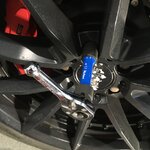
Put your jack handle over that beastI've got a very compact Koken 1/2" drive ratchet, highly portable but man is it hard to undo a wheel bolt
Very interesting! Yes, that’s essentially the design.This patent might be relevant for the rotator ratchet.
US5058463A - Ratchet wrench with dual-rotating constant drive handle - Google Patents
A ratchet wrench having a handle through which a rotatable shaft extends. A bevel gear is coupled to one end of the shaft for rotation by the shaft about an input drive axis. A pair of concentrically aligned ring gears are coupled to the bevel gear for counter rotation of the ring gears, by the...patents.google.com
It was assigned to the Stanley Works in 2002. Stanley entered a purchase agreement for FACOM in 2005.
Yes, Heyco very much exist!I feel so stupid: Just discovered that Heyco still exists and there are lots of tools stamped "Germany", AFAIK such marking on the tool itself implies that it is made in Germany, unlike those lame "Designed in Germany" or "German Quality".


Some of their tools are made at the Heyco plant in Ireland, even though they say Germany.Just discovered that Heyco still exists and there are lots of tools stamped "Germany", AFAIK such marking on the tool itself implies that it is made in Germany, unlike those lame "Designed in Germany" or "German Quality".
I have a question.
I find 1/2” drive tools clumsy. But the sockets aren’t objectionable. Why aren’t there any 1/2” drives in 3/8” bodies? Or are there? I’d be far more interested in such a tool. I have b sockets in sizes only available in 1/2” drive.
I was never sure of the origins of Stahlwille boxes.Hyeyco possibly finishing in Germany? I don't know.
Stahlwille operates a forging plant in some Eastern European country but the "semi-finished" parts (Rohlinge in German, ébauches in French, I've forgotten the English word though) are further processed in Germany. There are promotional explanation panels showing the different manufacturing steps with real parts (wrenches).
As long as the value added in Germay is high enough it is legally considered as "Made in Germany", similar rules are applied by other countries but details vary.
I remember some small machines sent as kit to Europe which were quickly assembled (less than an hour or so) to optimize custom duties and taxes, was probably illegal but didn't get noticed it. Was a market leader in its domain, not a small company. Was surprised that they even dared to talk about.
@Dave455:
Great steel box. Some time ago there were still some steel box manufacturerin Germany but I've no idea if it's still the... case.
There is also a German company manufacturing Pelican-like cases but I can never remember the name, good quality at reasonable prices (Made in Germany).
IMO here a lot could be manufactured at competitives prices if there were less bureaucracy, including idiotic standards, useless safety requirements, certifications, etc. Also permits to drive forklifts or to use hydraulic cranes (excepted tiny ones), etc.
Sadly "Make Europe (or Switzerland) Weak or Tiny" again will apply. The tool market has drastically changed over the last decades.
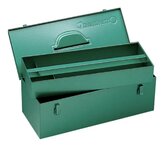
BTW I'd really like to know which paint Stahlwille uses for the large steel cases, very resistant against scratches.
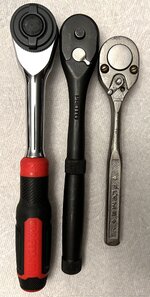
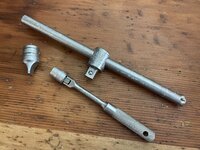
I've posted some pics showing a classic Stahlwille 435 3/8" 30 teeth ratchet where the original 3/8" male square drive rotating part (pinion) has simply be replaced by a 1/2" male square drive rotating part usually intended for a specific torque wrench ratchet head. It can also be replaced by a rotating part for 5/16" bits.
It's the last ratchet of the pic.
Personally, as already mentioned it, I mostly use 1/4" and 1/2". 3/8" is nice to have but I'd always recommend to get very good 1/4" and 1/2" sets but of course mileages very widely vary. 3/4" when required and 1" really when there is no other solution as 1" tools are surprisingly heavy. For higher torques I try to use impact sockets instead of regular ones. I also use 1/2" and 3/4" mechanical Manoskop torque wrenches to losen bolts and nuts, there's no issue as long as the torque is not higher than the highest preset value and if ever required they can be repaired. I just like the long handles. T-Handles are a must have for "symmetrical" work but I rarely use them. Planetary gears are sort of cumbersome (?) to use, heavy and bulky, in addition you need a way to counter-react the torque. Ratchet adapters like the 563 (3/4") as well as the smaller ones (3/8" and 1/2") allow high torques but require quit some space.
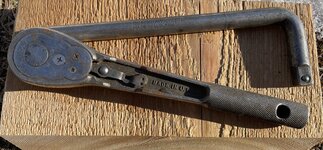
There various commercially available compact 1/2" ratchets but I only know the homebrewed one below. It's even possible to make DYI Manoskop with torque ranges not listed in the catalog but as the CE will be missing you can't use it for regulated work even if it is calibrated fully according to ISO.



 !
!