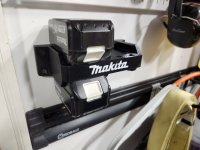
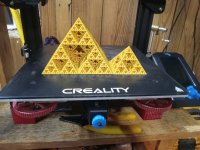
@larry4406 no no no... D cell batteries?... C cell batteries... I haven't seen a use for them in twenty years. I print the screw tops... Then attach 3D printed labels on top. AA AAA...
Printing two AAA containers right now 3 hour print. On my CR10... That would have taken 14 hours...
I'm in 3D printer heaven.
With all my blink cameras... it feels like I go through 40 AA each month... I have very nice Rechargeable Lithium for those.Hell since switching to lithium rechargeable AAA (constant 1.5v output) I'm just using adapters for even AA.


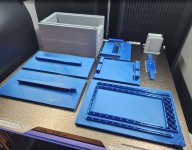
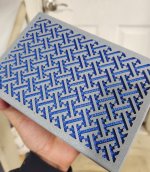
Wife asked for a gift card puzzle box for one of her bosses, my ******* is unable to just print a normal basic one that's done in a couple hours
So here is a more "simple" version that reportedly only takes 17 steps to solve. At least with the bigger build plate on the Bambu H2 I was able to put it all on a single build plate:
Model at:
If you're interested there are a lot more similar style puzzle boxes by the same person
15 hour print, 666 grams of material, in this case across 2 filaments and a support material


Kind of sketchy? Nah, just the right amount of sketch.Has anyone see this dryer? Seems pretty cheap, but looks kind of sketchy to be honest. I debated making my own high temp dryer by putting a PID and a solid state relay in a toaster oven, but these guys have already done it. Of course I found this after ordering a Sovol SH03 which seems okay, but it doesn't get hot enough for some engineering filaments.
https://west3d.com/products/west3d-...R-WZExIZla16LZIWy5ZTY7X8MdjgtQDT_9ln-tkkh3ZR2
It looks rather nice. But it's big. I have the Sunlu single. It's small enough to fit in the space allotted on the bench, and allow me to cut 22 foot stock in half.Has anyone see this dryer? Seems pretty cheap, but looks kind of sketchy to be honest. I debated making my own high temp dryer by putting a PID and a solid state relay in a toaster oven, but these guys have already done it. Of course I found this after ordering a Sovol SH03 which seems okay, but it doesn't get hot enough for some engineering filaments.
https://west3d.com/products/west3d-...R-WZExIZla16LZIWy5ZTY7X8MdjgtQDT_9ln-tkkh3ZR2
Nothing yet, but I just got a printer that will allow me to print such filaments. I want to be able to print just about everything.Kind of sketchy? Nah, just the right amount of sketch.
What filaments are you running that need to be dried above 70C?

I have always used aquanet for pla or petg, even small abs partsEarlier this week I had a piece of glass pull right from the surface of my Carborundum glass plate after a PLA print. I know you should always use a release agent for PETG but I had read and heard that it was unnecessary with PLA. I now use a release agent for all materials on my glass beds and I have 2 others, so I just flip this one and use the smooth bottom now, but I do have a PEI plate arriving tomorrow. Should I use a release agent for PLA and PETG on a PEI plate?
![]()
I was a bit leary of putting a sharp corner that close into the build plate corner at the front/near the door....I might have been right about that:
In the app you're able to skip parts midprint so that part got skipped, the rest of the parts look good from what I can see. I'll reorient the parts around to try and leave the front corners of the bedplate more open before I upload the print profile back to Makerworld where it came from. Hopefully some finished pictures of it tonight
Pump or spray can?I have always used aquanet for pla or petg, even small abs parts
Should I use a release agent for PLA and PETG on a PEI plate?
I used to use a spray can ... Worked well. Nothing is better than "Stop Touching Your Build Plate" or you will get hairy prints and go blind.Pump or spray can?
That's why I have three pei plates for my 5M Pro.Aquanet is shellac.
I don't use any release agent on pei. Just let it cool and everything just pops right off.
Spray canPump or spray can?
Thanks.Spray can
A quick way to get the plate to cool is to put it on your stone or quartz countertop. They'll **** the heat out of it quickly and you'll hear your parts releasing
No issues with thermal shock?A quick way to get the plate to cool is to put it on your stone or quartz countertop. They'll **** the heat out of it quickly and you'll hear your parts releasing
I the two weeks I have been printing, no.No issues with thermal shock?
Wonder if the print sheet material matters for that method.... in my imagination a glass print plate wouldn't take too kindly to that, while a metal plate probably wouldn't care. I'm also thinking about my cooking sheet pans that will twist out of flat when they get heated up in the oven, but go back to flat once cooled down again.I the two weeks I have been printing, no.
![]()

I'm no rocket surgeon, but I'd bet a dollar that a build plate in full contact with a room temp stone counter will **** heat out faster than putting it on a shelf in the fridge or freezerI've been known to put my build plates in the fridge or freezer to get a print of really quickly!
I'm using pei coated steel...is printing on glass still a thing?Wonder if the print sheet material matters for that method.... in my imagination a glass print plate wouldn't take too kindly to that, while a metal plate probably wouldn't care. I'm also thinking about my cooking sheet pans that will twist out of flat when they get heated up in the oven, but go back to flat once cooled down again.![]()
Certain printers are what they were... If it was glass... It is glass. My cr10 is glass...I'm using pei coated steel...is printing on glass still a thing?
Does it lecture you on what it was like out there when it was young?Certain printers are what they were... If it was glass... It is glass. My cr10 is glass...
It was tighter... And flat.Does it lecture I you on what it was like out there when it was young?
I'm definitely not trying to argue or say my method is better than yours, but I have to disagree with that statement. The build plate probably only contacts the counter at a few very small points while most of it is actually insulated from the countertop by an air gap. In the freezer, then entire surface of the bottom side and most of the top side is exposed to really cold air, cooling it quickly. Plus, there's usually a breeze to keep nice cold air in contact with the plate. My freezer always seems to be blowing frosty air all over the place every time I open it.I'm no rocket surgeon, but I'd bet a dollar that a build plate in full contact with a room temp stone counter will **** heat out faster than putting it on a shelf in the fridge or freezer
Not trying to argue either. This is how friendly bets startI'm definitely not trying to argue or say my method is better than yours, but I have to disagree with that statement. The build plate probably only contacts the counter at a few very small points while most of it is actually insulated from the countertop by an air gap. In the freezer, then entire surface of the bottom side and most of the top side is exposed to really cold air, cooling it quickly. Plus, there's usually a breeze to keep nice cold air in contact with the plate. My freezer always seems to be blowing frosty air all over the place every time I open it.
I was a bit leary of putting a sharp corner that close into the build plate corner at the front/near the door....I might have been right about that:
In the app you're able to skip parts midprint so that part got skipped, the rest of the parts look good from what I can see. I'll reorient the parts around to try and leave the front corners of the bedplate more open before I upload the print profile back to Makerworld where it came from. Hopefully some finished pictures of it tonight