OP
Private Lugnutz
Well-known member
Thanks for the tip. I have Edelmann wrenches and a very cool flaring kit, but I don't think of them as E.E. & Co.

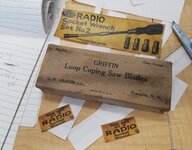
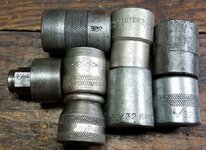
Tom, moving this here so as not to derail the Duro-Indestro thread.One more and I'll have a 31/32" socket collection!


Yeah, I had no idea E. Edelmann & Co. were so diverse. There's not much of it here on GJ, which might explain why there's no thread. Don's timing light with original literature has been posted on the 'Ephemera' thread before. I posted my unusual flaring tool on the 'Refrigeration' thread, linked here, and a pressed steel DOE wrench, with graduations by /8ths for a 3" rule stamped in it, posted on the 'Auto-Kit' thread, linked here. And @leg17 has posted a to-die-for tappet wrench set, in original pouch, in the 'Tappet Wrenches' thread, linked here, where he also mentions that they're still in business with Plews. Other than those items - and now this No. 21, and of course your entry in the A-Z Mfgrs Index, I don't see anything else in a search by name....looks like they started making all kinds of stuff.

Those are a nice, and interesting, little collection. I've seen plenty of Masonry Pins, but not ones with cement maker's names on them.Curator's Corner #10: Masonry Pins
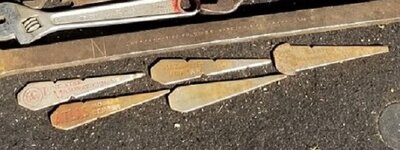
The Acquisitions Dept was pawing around in a bucket of rusty tools at the flea on Sunday - dozens of long iron chisels and funny looking caulkers and things like that that looked like they were buried or left out in the rain for years, when he pulled out a weird wedge. He thought it was a drift pin at first, but it was too thin, and notched. When he asked permission from the vendor to dump the whole bucket out on the adjacent vacant table, he found a few more.
Everything was coated in rust, but he could read some of the markings. The seller didn't know what they were and neither did he or his pal Joe, one of the rusty tool vultures who descended on the table, but he guessed, correctly, that they were bricklayer's line pins, for keeping foundations and walls straight, level, and square. They are pointy and thin for inserting into fresh mortar between bricks or blocks, wrapping a string around them, and stretching.
They cleaned up nicely, providing the topic for one of our most unexpected and enjoyable Curator's Corners.
Based on some research, we think they're all vintage, and some of them at least as old as the rusty tools. The Curator is not sure what he's going to do with them, but we're intrigued with the advertising, especially those "Nazareth Mortar" and "Atlas Mortar Cement" pins.
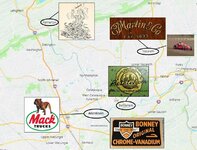
Page 1 of this thread is Jersey Shore proud, but we were born and raised in Carbon county, PA, at the foot of one of the Blue Ridge Mountains, near the Lehigh gap, just north of Allentown, and there is plenty of content on this thread and others here on the Vintage Tools Discussion board about our old stomping grounds, including this map.
See that open area between Palmerton and Allentown, and between 476 (the Northeast Extension of the PA Turnpike) to the west and Rt 33 to the east? That area, northern Lehigh county, was world-famous for its Portland (invented and namesaked in England) cement.
Quarries and cement mills dotted the entire area, their large, complex pulverizers and kilns rising up and spreading dust for miles around were some of the landmarks of our youth. Whitehall, Egypt, Northampton (home of two Atlas Portland Cement Company plants), Bath, Cementon (originally, the town of Siegfried's Ferry), and Nazareth were the epicenter of cement production in the entire U.S. before 1900 and for many years after due to geology and one smart, shrewd dude named Saylor. In fact, the very first Portland cement plant in the U.S. was his, the Coplay (pronounced Kah-plea) Cement Company in Coplay, PA. In its heyday, well up through WWII, thirteen plants producing nearly half of all Portland cement made in the U.S. were operating in that part of Lehigh county. The other half of US production was being produced in New York (that "Century" pin is from Rochester), between Buffalo and Syracuse, and a few smaller plants in Ohio, Michigan, Indiana, Utah, California, Arkansas, S.D., and Texas.
Much has changed since then, and that Lone Star Cement pin came a long way to get here! Today there are 100+ mills in 34 states, and, according to Wiki, Pennsylvania is not even in the top 5: "In 2013, the five leading cement-producing states, in descending order, were: Texas, California, Missouri, Florida, and Alabama."
Further Reading:

History of the Portland Cement Industry in the United States
books.google.com
The Lehigh Valley Cement Industry
America's portland cement industry began in the Lehigh Valley. The rich deposit of limestone known as the Jacksonburg Formation arcs through the valley from Berks County, Pennsylvania, to Warren County, New Jersey, and today it still provides the raw material for the Lehigh district's famous...books.google.comCement industry in the United States - Wikipedia
en.wikipedia.org

Yup. They still make the pins, sans names. The advertising was the attraction. The catalogs from these early cement companies, in the late 1800's and the early 1900's, are very interesting in that they all provide photographs of grand and famous buildings constructed here in the US with their cement. And, of course, no history of cement is complete without a mention and photograph of Smeaton's Eddystone Lighthouse!I've seen plenty of Masonry Pins, but not ones with cement maker's names on them.


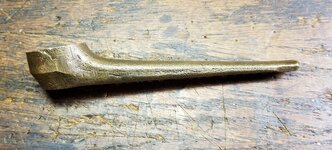


Or a small hatch door handle. Barely hand sized hereIt's the door handle to the barge's bridge.

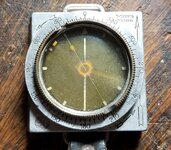


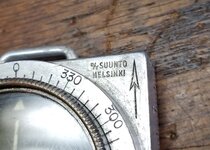
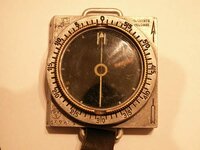
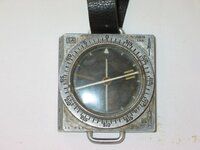
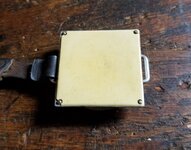
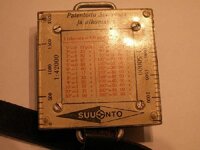

Which I imagine, at twice the size of this model, were not worn on the wrist!Now that I've seen the cm scale on the side, that's about half the size of the Suunto staff compasses we used in USFS.

Thanks, Outlaw.Very nice find, and on my watch for list...
Thanks, Jock, A compliment of the highest order.A very nice compass, and your sense of taste is confirmed by your purchase!
 ) But, still, that's a lot of throw-ins!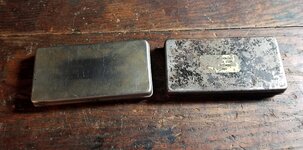
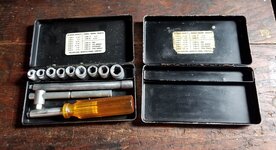
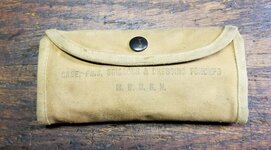
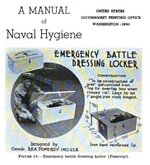
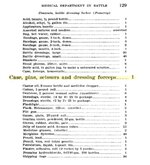
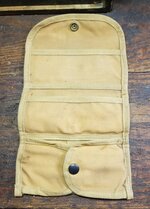


Ha, well isn't it funny how answers to mysteries crop up by chance! I was just looking at a strong iron box at a Church, and wondering what what it was originally made for.. It looks exactly like it was a 'Pomeroy Box'.!The USN Medical Dept (technically, "M.D. U.S.N.") medic's kit (technically, "CASE, PINS, SCISSORS & DRESSING FORCEPS")...
...was probably issued to a number of units and applications, but it was neat to discover that it was part of the contents of a ship-board so-called "Pomeroy locker". These battle dressing lockers were located at various easily accessible stations around many ships.

I know before I even mention it that using a Matt Blast made reproduction label is anathema to the overall Lugzsonian vibe, but using some of that "cleverness, trickiness, and sleight-of-hand, if not some outright magic" to make a new label look period correct shouldn't be too blasphemous as long as you're not trying to pass it off as original for monetary gain...Here at the Lugzsonian we have zero qualms about performing some feat of cleverness, trickiness, and sleight-of-hand, if not some outright magic, when necessary to preserve, restore, or prestorve our specimens for exhibit.As we stood there staring at the remnants of the label on the top of the lid of the metallic wartime Phila. Mfg. Co. USN 1108-1 midget set case, we wished we could transfer it to the denuded lid of the set we already own, but alas, it would take some real defiance of physics.
Report back!Will have a closer look when I'm inside there next.
Au contraire, mon frere! We prefer to re-create (and then age and distress) labels and decals ourselves, in-house, if we can, though. You must have missed that about our philosophy in the past.I know before I even mention it that using a Matt Blast made reproduction label is anathema to the overall Lugzsonian vibe,

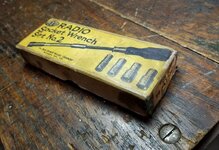
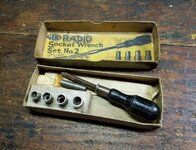



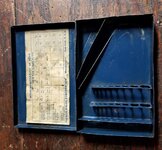
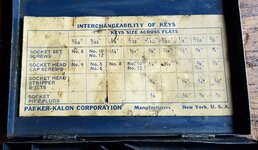


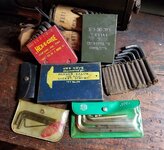

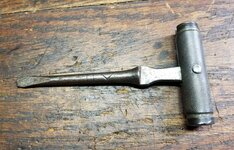
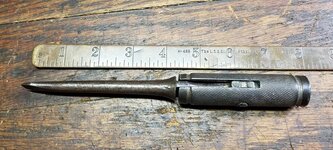
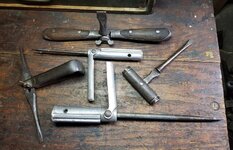
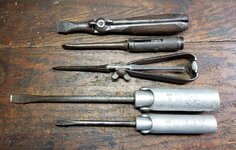
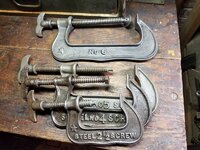
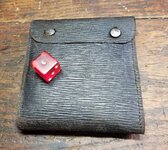
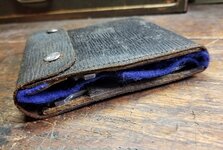


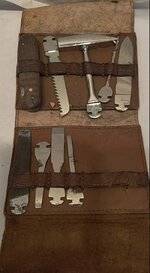
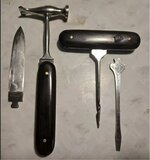
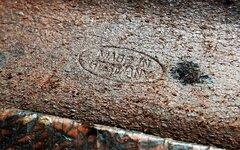


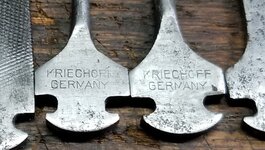





Cool! We should've figured you'd have one. We love things like this. Part Bond, part MacGyver, part Mister Fix-It, they'd be perfect for camping, the glove box, or the apocalypse!I just posted my "Bonsa" set HERE