^ I'm not sure I am following you above.
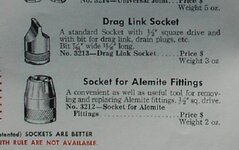
Put plainly, Walden was pissed off that their midwest reps, the Jonas Brothers (snerk), had stolen their ideas for cold-broached sockets and passed them to American Grinder. They sued, and basically lost.
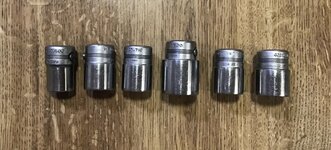
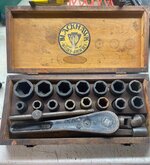
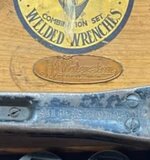
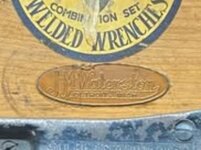
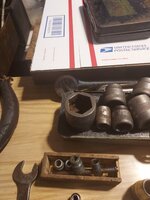
I don't see how you're tying any of that to this early Blackhawk No. 6 set. How early is uncertain without seeing the sockets. But there is nothing unusual about any of the tools as far as I can tell. The early extension was made of square steel stock, not round. The early sliding tee had a hexagonal head with pinched stops.
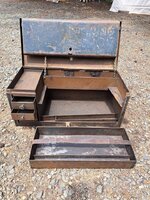
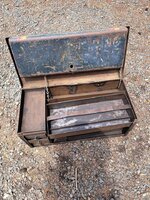
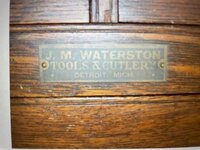
If you are trying to imply that the wooden box itself is actually a Walden product, and the Jonas Bros were playing so fast-and-loose with their client/former client, that they were putting American Grinder "Blackhawk" tools inside Walden boxes without Walden knowing it - that would be a dastardly trick and a pretty cool find, but...
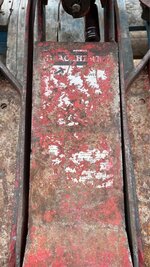
The marking on what I am assuming is the clasp on the box reads "PAT. APR 23 1918". The Barnes patent you attached (1,381,900), for a "Swivel Handle", an accessory of sort for extensions and ratchets, assigned to Walden, and actually showing Frederick Walden's well-known early loop handled ratchet (928,719 / 1909) in the patent diagram, was granted on June 21, 1921. I see that it was filed on April 23, 1918, the same date on that clasp, but I think that may be just a very weird coincidence.
It wasn't standard procedure to mark the application filing date of any patent on anything, first of all. Hypothetically, even if it was the date the patent was awarded, not the date they applied, putting the date of a patent for a "Swivel Handle" on a set box clasp is more than a little odd.

 I'd always just assumed they were making/supplying tools upto around the 70's or 80's. Didn't realise all tools of theirs were pre 60's.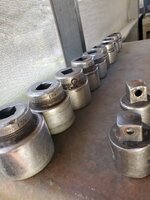


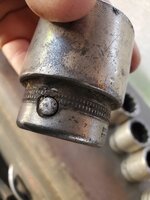


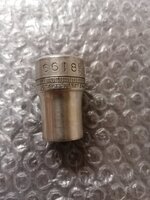
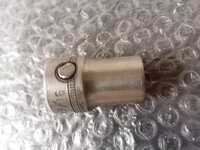














![20250828_171316[1].JPG](https://www.garagejournal.com/forum/data/attachments/2239/2239368-46027a1701472dc86caa221cf2d21dc0.jpg "20250828_171316[1].JPG")
