I've been a longtime lurker here and decided that rather than document this on my own site (which I will probably never get around to) I would start posting my progress here.
The Basics:
I don't have an actual garage. The way zoning laws work in the Tokyo region may be of interest, so I will try and summarize it. A plot of land is zoned with a ratio of two basic percentages like, 50/100, 50/150 or in rare cases and commercial area's 60/200 or 75/300. The first figure is the percentage of footprint that your home is allowed to take up, and the second is the total floorspace that your home can have in relation to that plot. So if you have 70m2 plot of land within a 50/150 zone, you can build a house with a 35m2 footprint and no more than 105m2 of usable floor space. A garage does not apply to this floorspace ratio, but does apply to the footprint (which is the far greater constraint) and so other than seriously wealthy people who can afford massive amounts of land, you will find most parking in Tokyo (if you are lucky enough to even have it) is fully exposed.
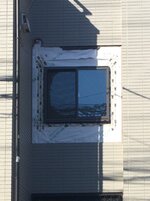
I will add that there are a few more interesting building constraints due to the density and traditions here. This has to do with access to light and the street setback profile. If you ever come and visit Tokyo you will see a lot of very odd angles to the rooflines of homes and buildings. This is not (well mostly not) due to different architectural tastes, but the fact that there are 3 dimensional constraints that encroach your parcel. From the far side of any street you border on, an 80% slope plane angles towards your parcel. The smaller the street (4m wide is still common) the more this cuts into your airspace. Additionally, all your neighbors have a similar setback, but this starts at a point 20 meters vertically from the property line. Keep in mind, it is really uncommon to have a regularly shaped parcel, you are almost always dealing with crazy polygons.
Lastly, shadow projections have to be considered. Even after you have chopped your building area into some multifaceted crystal like space, you have to do projections calculated on the winter solstice to see where the shadow of your home is cast on your neighbor's property. You are not allowed to keep their windows in shade for more than 3-5 hours, or cover too much of their property.
Because of this, you can't just easily build on top of a first floor garage since you will hit all the other vertical constraints and not be able to use the limited (and most valuable) living space you have been allocated. Due to these constraints it is unusual to get all of the floorspace percentage you are allowed even without a garage.
New Construction:
For very cultural reasons, the Japanese tend to rebuild their homes very often. A 20 year old home will actually depress the cost of a property because the removal costs are factored in. There is basically a no value to an existing structure beyond a certain age, and anything over 20-25 years is typically destroyed prior to putting land up for sale. New building over here is extremely modularized and a very highly interesting digression of itself. But I will refrain from that subject for now. I just want to say that they build things very strong over here, but there is little incentive to build them to last. It is understandable why in this context, but it changes the way everything is done, and it impacts all aspects of DIY and 'home improvement' projects.
I'm lucky:
Because I was well prepared to recognise the zoning laws and location factors, I was able to recognize our luck when the perfect house became available. Having an inexplicable 60%/200% zoning where every other plot is 50/150 and with the street on the northern border where shadow casting isn't a factor, the actual building area was really optimized. The train line still clearly marked on the maps which depressed interest in it had actually been relocated underground a few weeks prior. They are replacing the old tracks with a long park, leading to a major train station 3 minutes away on foot. And a 23 year old building still existed on the property, which was an annoyance to the majority of people (who could afford the plot) as they would most certainly destroy in order to replace it with modern house.
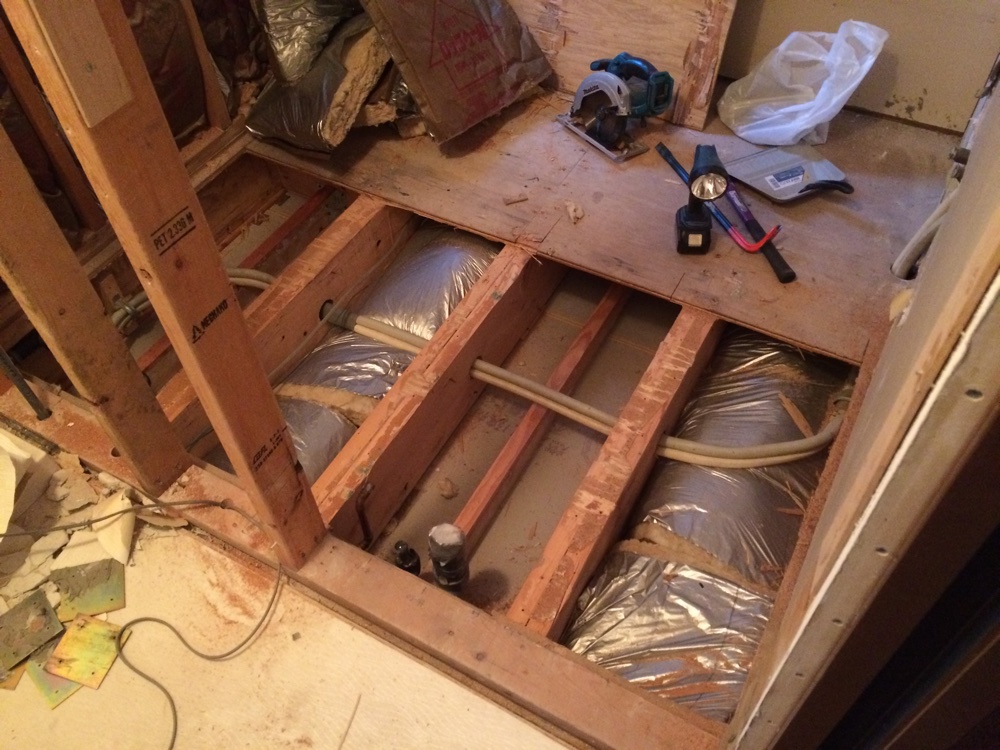
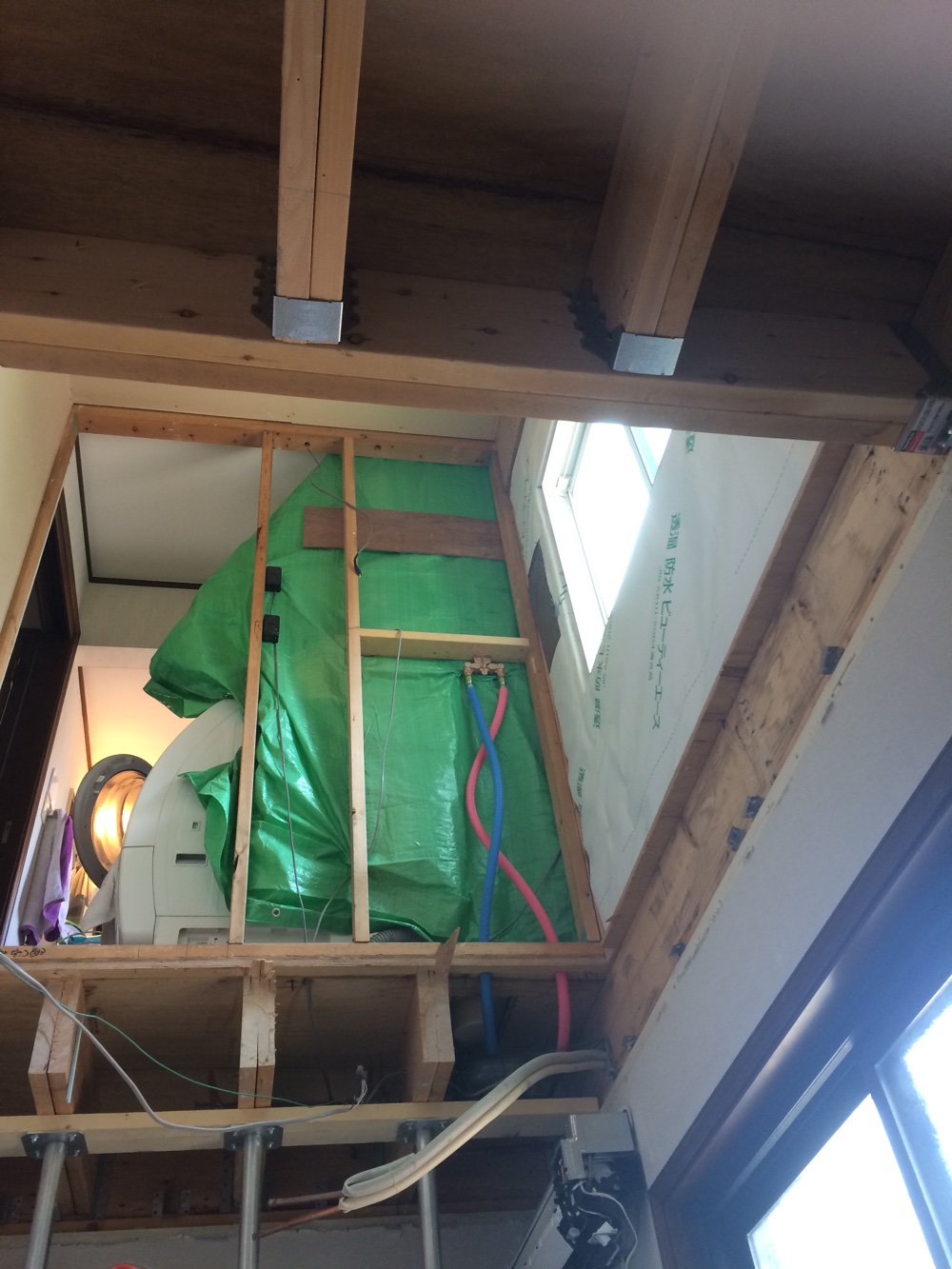
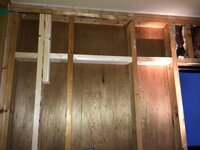
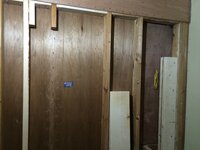
But the building was the best point to me, as it was very unusual here in Japan. Built by Mitsui (part of the Mitsubishi Group) it used western "2x4" construction using imported Canadian and US SFP wood and sheetrock walls. This is a very different method than typically used here, and offers many advantages over traditional Japanese construction when it comes to remodeling and improvements.
It was way over our budget, I don't even want to get into how much it cost, but the numbers worked out and I think it will be something we will be proud of taking the chance on.
What this will be about:
So now you have some of the scope, I want to share some of the improvements I have already made, and my struggles building a functional 'shop' despite the lack of an actual garage, extreme space limitations and other constraints that will be hard to believe and make any westerner cry.
The Basics:
I don't have an actual garage. The way zoning laws work in the Tokyo region may be of interest, so I will try and summarize it. A plot of land is zoned with a ratio of two basic percentages like, 50/100, 50/150 or in rare cases and commercial area's 60/200 or 75/300. The first figure is the percentage of footprint that your home is allowed to take up, and the second is the total floorspace that your home can have in relation to that plot. So if you have 70m2 plot of land within a 50/150 zone, you can build a house with a 35m2 footprint and no more than 105m2 of usable floor space. A garage does not apply to this floorspace ratio, but does apply to the footprint (which is the far greater constraint) and so other than seriously wealthy people who can afford massive amounts of land, you will find most parking in Tokyo (if you are lucky enough to even have it) is fully exposed.
I will add that there are a few more interesting building constraints due to the density and traditions here. This has to do with access to light and the street setback profile. If you ever come and visit Tokyo you will see a lot of very odd angles to the rooflines of homes and buildings. This is not (well mostly not) due to different architectural tastes, but the fact that there are 3 dimensional constraints that encroach your parcel. From the far side of any street you border on, an 80% slope plane angles towards your parcel. The smaller the street (4m wide is still common) the more this cuts into your airspace. Additionally, all your neighbors have a similar setback, but this starts at a point 20 meters vertically from the property line. Keep in mind, it is really uncommon to have a regularly shaped parcel, you are almost always dealing with crazy polygons.
Lastly, shadow projections have to be considered. Even after you have chopped your building area into some multifaceted crystal like space, you have to do projections calculated on the winter solstice to see where the shadow of your home is cast on your neighbor's property. You are not allowed to keep their windows in shade for more than 3-5 hours, or cover too much of their property.
Because of this, you can't just easily build on top of a first floor garage since you will hit all the other vertical constraints and not be able to use the limited (and most valuable) living space you have been allocated. Due to these constraints it is unusual to get all of the floorspace percentage you are allowed even without a garage.
New Construction:
For very cultural reasons, the Japanese tend to rebuild their homes very often. A 20 year old home will actually depress the cost of a property because the removal costs are factored in. There is basically a no value to an existing structure beyond a certain age, and anything over 20-25 years is typically destroyed prior to putting land up for sale. New building over here is extremely modularized and a very highly interesting digression of itself. But I will refrain from that subject for now. I just want to say that they build things very strong over here, but there is little incentive to build them to last. It is understandable why in this context, but it changes the way everything is done, and it impacts all aspects of DIY and 'home improvement' projects.
I'm lucky:
Because I was well prepared to recognise the zoning laws and location factors, I was able to recognize our luck when the perfect house became available. Having an inexplicable 60%/200% zoning where every other plot is 50/150 and with the street on the northern border where shadow casting isn't a factor, the actual building area was really optimized. The train line still clearly marked on the maps which depressed interest in it had actually been relocated underground a few weeks prior. They are replacing the old tracks with a long park, leading to a major train station 3 minutes away on foot. And a 23 year old building still existed on the property, which was an annoyance to the majority of people (who could afford the plot) as they would most certainly destroy in order to replace it with modern house.
But the building was the best point to me, as it was very unusual here in Japan. Built by Mitsui (part of the Mitsubishi Group) it used western "2x4" construction using imported Canadian and US SFP wood and sheetrock walls. This is a very different method than typically used here, and offers many advantages over traditional Japanese construction when it comes to remodeling and improvements.
It was way over our budget, I don't even want to get into how much it cost, but the numbers worked out and I think it will be something we will be proud of taking the chance on.
What this will be about:
So now you have some of the scope, I want to share some of the improvements I have already made, and my struggles building a functional 'shop' despite the lack of an actual garage, extreme space limitations and other constraints that will be hard to believe and make any westerner cry.