Shocking limitations
As a break from the Unit Bath (and to give me some time to clean it up for the glamor shots) let me talk a bit about electrical power over here. One of the more frustrating and unusual aspects of Japan is that it uses an incompatible power system with every other country in the world. Not satisfied with that level of iconoclasm, they decided to even be incompatible with themselves, creating two separate power grid standards. The Japanese typically divide the country into East/West, but when you look at it on a normal map, it seems way more North/South in my opinion. Historically the two power centers of Japan were Edo (the usurper, now known as Tokyo 東京 these Kanji literally meaning East-Capital, dominated by Samurai and the Shogun) and Kyoto (the original Imperial seat, in Kanji 京都 meaning Capital-City.)
It seems we’re already abroad the
Tangent Train, so lets see what’s at the first stop…
This feud between power centers seems to have acted like a magnet pulling the compass needle of the Japanese consciousness out of whack. In Japanese maps, the convention of orienting North to be
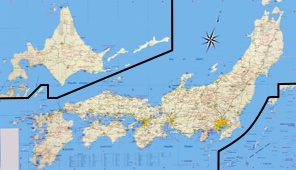
up is regularly ignored. They might put a North indicator somewhere, but they tend to make maps that appeal to their artistic sensibilities or trying to fit into the space they have. The culture is perfectly fine with North being in any ****** direction that fits best in the space provided which can get you very lost very quickly (speaking from experience.) In college our Japanese teacher spent 30 minutes confusing the hell out of everyone by drawing the map of Japan completely horizontally and asking us to name places. This is commonly done to some degree or another over here, below is typical representation, Hokkaido and North be damed.
Property is traditionally handed down to the eldest son of a family, and because of high inheritance taxes one is often forced to subdivide the property to pay for them. This practice has led to a completely chaotic, drunken spiderweb of property lines where the choice parts of a parcel was retained and odd bits sold off. Land is in such limited supply that every sliver is utilized. These impossible plots result in tiny houses called Kyosho Jutaku, which are abundant all over Tokyo. And this leads to our next stop on this crazy train,
street addresses.
The Japanese, having no real rivals for Japaneseiness, tend to compete with themselves. So when it came time to create a system of issuing addresses they decided that first come, first served made sense. A predefined sequential system with odd numbers on one side and even on the other would never work when property lines look like an iPhone screen recently acquainted with the sidewalk. This results in a system where addresses correspond to when things were built and properties subdivided, not where they are actually located. Sometimes they don't even bother to change the address when splitting the parcel, with several houses using the same number.
Oh, and those streets are typically nameless, as only the biggest thoroughfares are ever named or numbered. Instead of naming their streets they instead
number the 'blocks' the bigger streets circumscribe, which are then subdivided again by smaller block numbers and finally the pseudo-randomly distributed addresses. Until computer navigation, the only reliable way to find someone's house was to go to the nearest police box (located everywhere) and have them give you detailed directions (a service they still admirably provide without complaint.) And if that doesn’t blow you away, get this, car navigation systems have phone number to address mapping built in. Seriously, you can put someone’s home number or a business line into the Nav and get a route to their door.
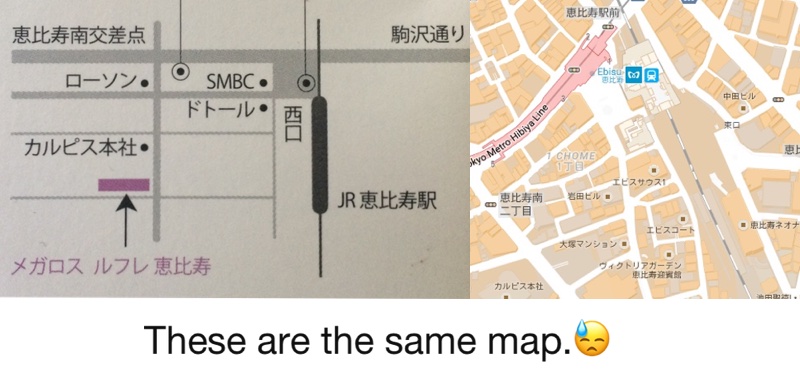
As a side effect of this chaotic address system, every business is expected to provide a sort of stylized map to their location, which again, sacrifices accuracy for a sort of
Japanese interpretation of where something is. They use big thick lines and a few thinner ones, everything stripped of any curvature or detail, forced into a rectilinearity that only exists in the fever dreams of its creator. A couple of 24 hour convenience stores or the local police box are sometimes scattered in to give a rough ability to triangulate, but any relation or representation to North is often left out, replaced by the stilted geometry of the local train tracks to orient you. Here's the first thing I grabbed off my wife’s desk.
Oooh, we’ve arrived at the next station!
Navigating in Japan is more than strange maps and nonsensical addresses. This may be apocryphal, but because the Samurai in Edo wanted to be able to draw their swords as rapidly as possible to confront an opponent facing them, all pedestrian traffic in the Tokyo area flows opposite of the US. So when Westerners visit bustling Tokyo, they often end up standing on the wrong side of escalators and walking the wrong way into the stream of pedestrian traffic flow. This is further complicated by involuntary behaviors we rarely are conscious of. An American would automatically avoid colliding with someone by dodging to the right, but Japanese here naturally dart to their left creating a crazy harmonic feedback loop of syncopated lateral lunges culminating in a confused Japanese person wondering why, despite their best efforts, you intentionally ran into them. Whenever I return to the US I do the same thing for a few days before I get my bearings back. You might think that this pedestrian convention is because Japanese drive on the wrong side of the road (like the Brits), but in Western Japan, they walk on the opposite side like in the US. This region was once dominated by the merchant classes who, it is told, wanted to keep the valuables held in their right Kimono sleeves away from the oncoming flow of potential sneak thieves.
Anyway, despite going far, far off into the weeds, our little train has now returned us to the departure point, Japanese electrical service.
As I was saying, the country is split between 50Hz power in the East (North) and 60Hz generation in the West (South.) These two primary grids are linked by three frequency conversion stations that allow power transfer between them, but all residential power conforms to the grid it is attached to. Standard residential voltage is 100 volts. Not 110, 115 or 120 but an actual 100 volts. In Tokyo and some of the other larger markets, a 200v single phase 3-wire system has been implemented that has 2 100v legs and a common neutral, so higher power heat exchangers (details later) and induction ranges are becoming more common, but not yet widespread across all of Japan.
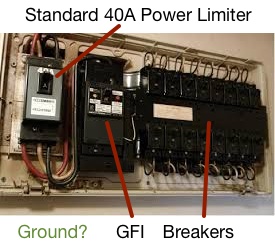
So, strange voltage, 50Hz power some places 60Hz in others, that's all you are dealing with right? No, this is Japan, it can always differentiate itself further. You see, when they started modernizing their wiring (much more recently than you might expect) they adopted a very good safety mechanism in a very limited way. Sharp eyed visitors to Japan might notice that, although they use standard NEMA 1 two prong outlets (like the US) they are typically non-polarized and lack any ground. The reason for this is that, at the electrical entry point there are two protection devices. The primary one is an oversized Ground Fault Interrupter for the
entire service. That means if something trips the single GFI, all the power to your house goes out. By implementing it this way, all the legacy ungrounded/unpolarized wiring could be protected at the lowest cost. But since everything is GFI protected there little incentive to implement grounded outlets (except in a few places like the laundry hookup or the toilet outlets which are typically wired to a pathetic little grounding stake about a foot in length somewhere in the yard.)
Obviously, GFI protection is a proven and worthwhile way to provide safe power, but I would have preferred circuit-by-circuit protection (and a decent grounding path, I'm old fashioned that way) so that a misbehaving appliance doesn't force me to binary search through my breakers in total darkness while trying to isolate what is responsible for knocking me offline. I’m also concerned that my shop tools, TIG welder, etc. is going to shut off some critical system or CAM process mid-stream. I guess UPS’s on most of my key electronics makes sense anyway. But, let me get to the other device at the service entry I mentioned which they call a 'Power Limiter.'
The Power Limiter is just a big circuit breaker, but it's
owned by the power company. It is connected just before the GFI and your baseline electricity charge is calculated on the basis of this breaker’s capacity, so you can request the size based on your requirements. Maybe you have a tiny apartment and use gas appliances, why not save a few bucks every month and get a smaller one? Seems reasonable, right? In the US people get by fine an old house without the 200A service required in new construction, a 100A or 150A panel works fine for most people, right?
What if I were to tell you that in Japan a 20A service is standard for most apartments and 40A for detached houses. But, you can just pay for a larger service right? It might be expensive, but if you want 200A you can just pay the fees, right? Unfortunately, at least here in Tokyo, the
maximum residential Power Limiter you can get from the power company is
60A… I'm serious, that's it.
So, suffice to say, high amperage equipment is going to require additional attention. And like the single point of failure GFI, a 60A breaker can take the whole house offline by using the wrong tool when your wife is making some tea.


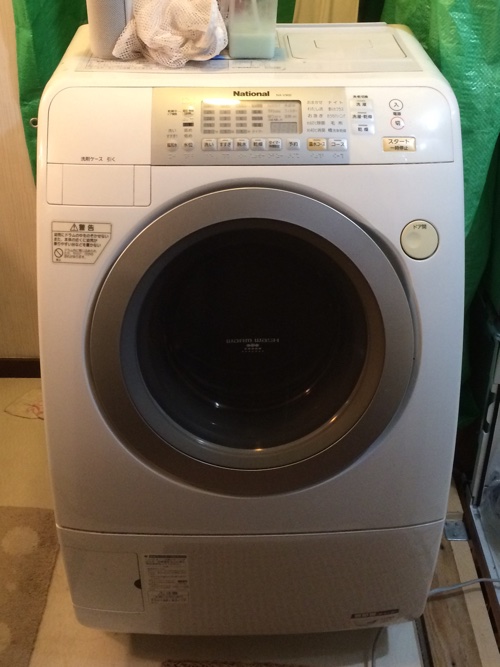
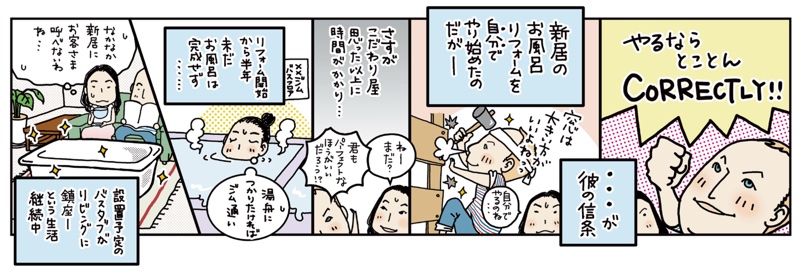

 Shame it would never work here....

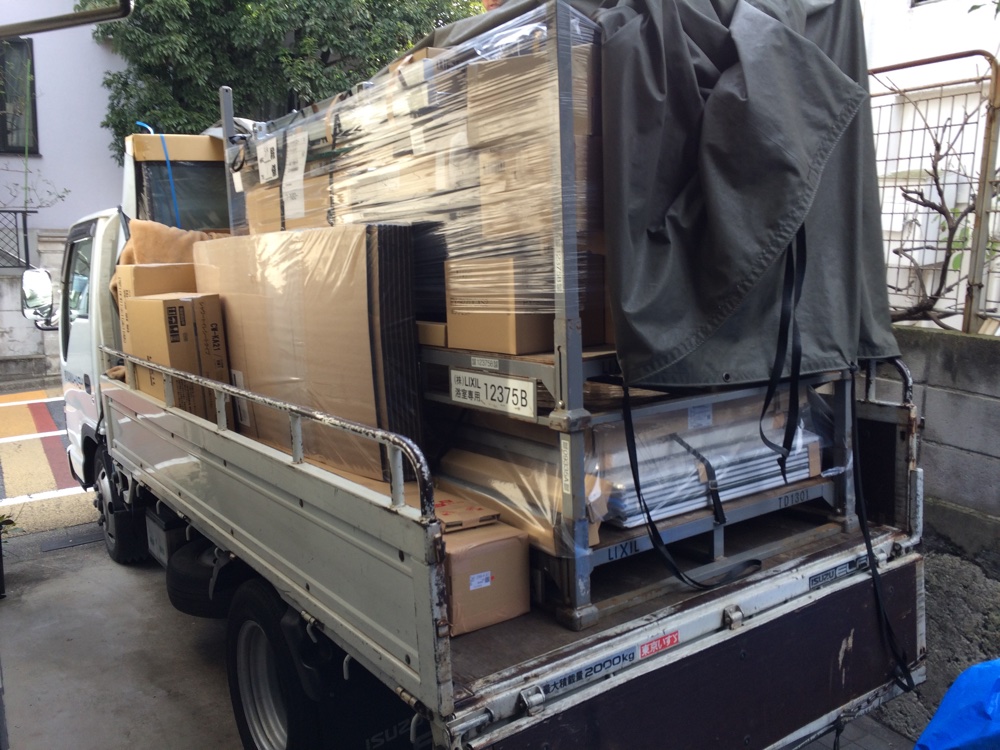
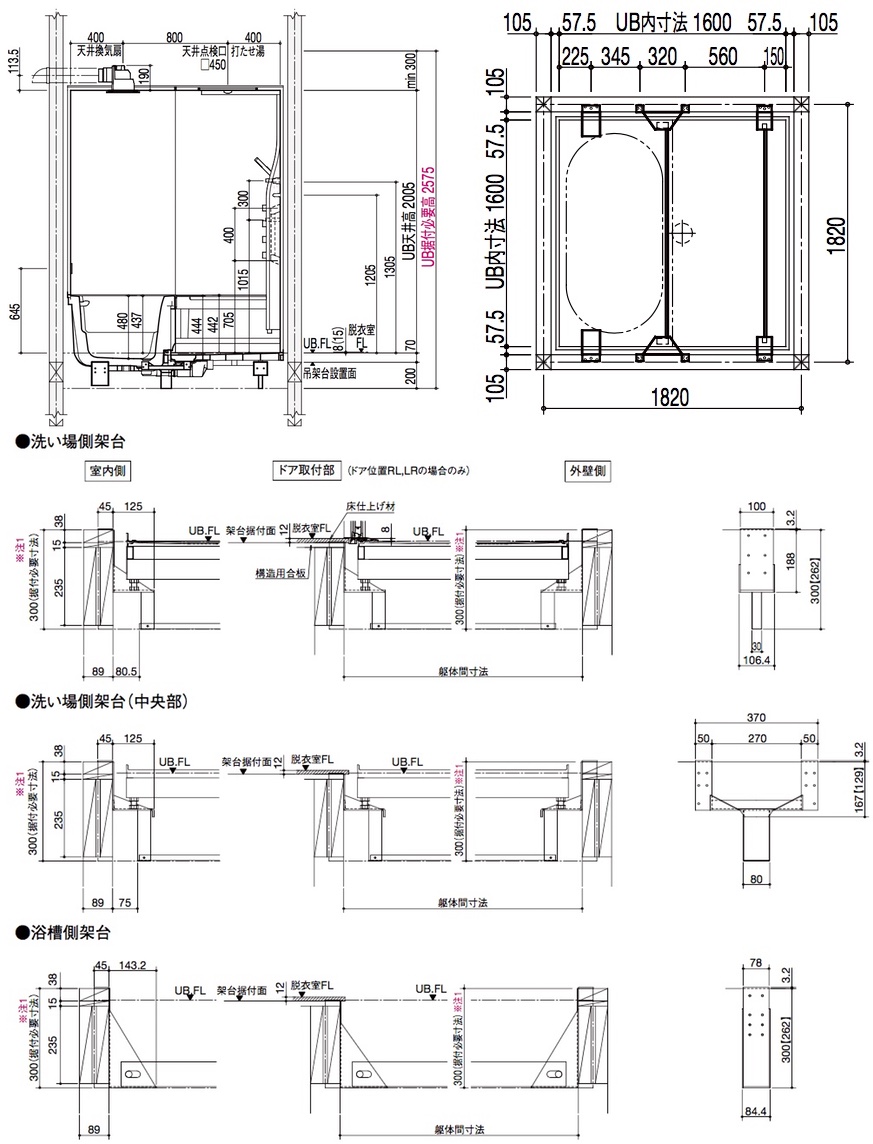
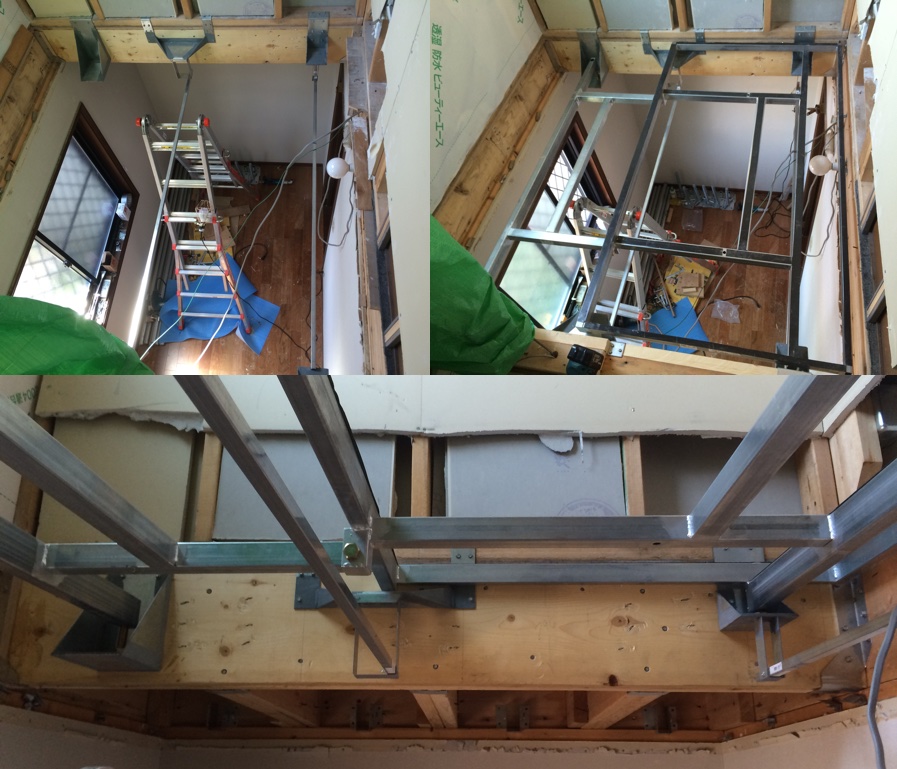
 You can see the circular dependancies there. I was used to dealing with those as a programmer though, the trick is to pin the variable that is easiest to change and don’t iterate past your limits.