That's right, but it's practically the same, right?
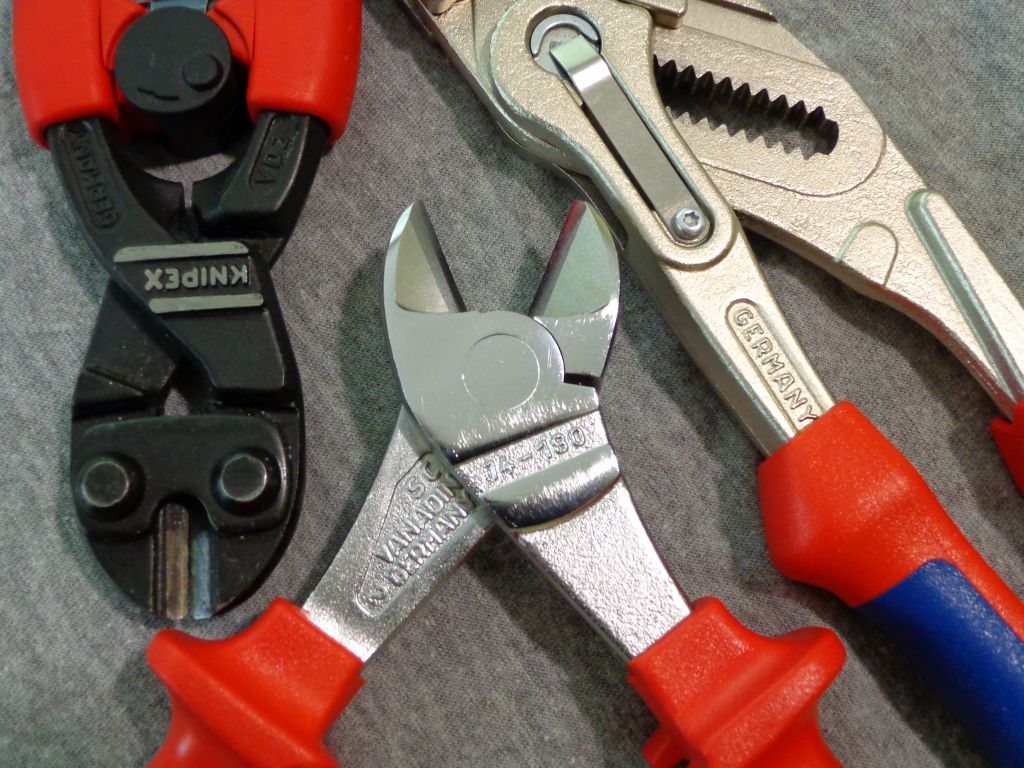
It means that the pliers are made in Germany.
Or am I wrong?
I do not take it to be the same thing, at all.
'Germany' implies that it may be made in Germany, 'Made in Germany' explicitly states it is.
'Germany' intends that we the consumer will infer that it is made in Germany, 'Made in Germany' explicitly states it is.
Deliberate ambiguity to avoid the truth.
It also seems a means of provisioning the option to have the item made offshore (i.e. china/east...) at some point, while maintaining a continuity in the presentation; i.e. a deception that the item is the same as always.
It seems to me a tactic on the part of manufacturers who just use 'Germany', to avoid having to categorically state the COO. These manufacturers are no longer to be trusted (to my way of seeing it anyway).
One step further in the deliberate ambiguity marketing strategy , is not to state anywhere on the item or even packaging where it is made; Bessey are guilty of this - 12 KR clamps bought recently have absolutely no COO indication anywhere.
It is a reasonable assertion, that most would rather buy a tool made in Germany, than one made in china/most of the east. So if a tool is stamped Made in Germany, that is a positive selling point. For a manufacturer to make a tool in Germany and not take advantage of increasing the sales appeal, does not present any obvious plausible explanation.
Using just 'Germany' alludes to the COO, it is in similar vein to other goods that are emblazoned with 'european design', 'designed in Germany' etc.; just a way of partially masking the negative perception of where it is actually made.
It is where it is made that really counts. Germany and other countries in the west, have engineering traditions.





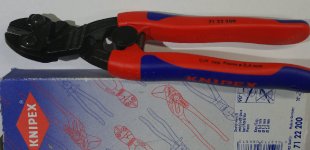
 Bending copper will be no problem "my office desk " looks like the machine on top of the page:




 .
.