Qualitytools
Well-known member
^Nice write up, thanks for sharing!


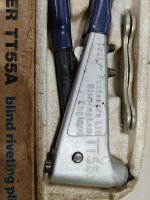
^^ Looked up 'Tucker Fasteners' of Birmingham England.

Factory closed. Company now owned by Stanley
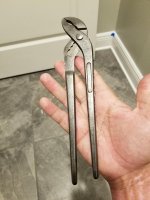
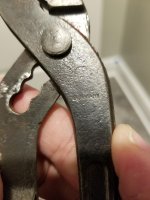
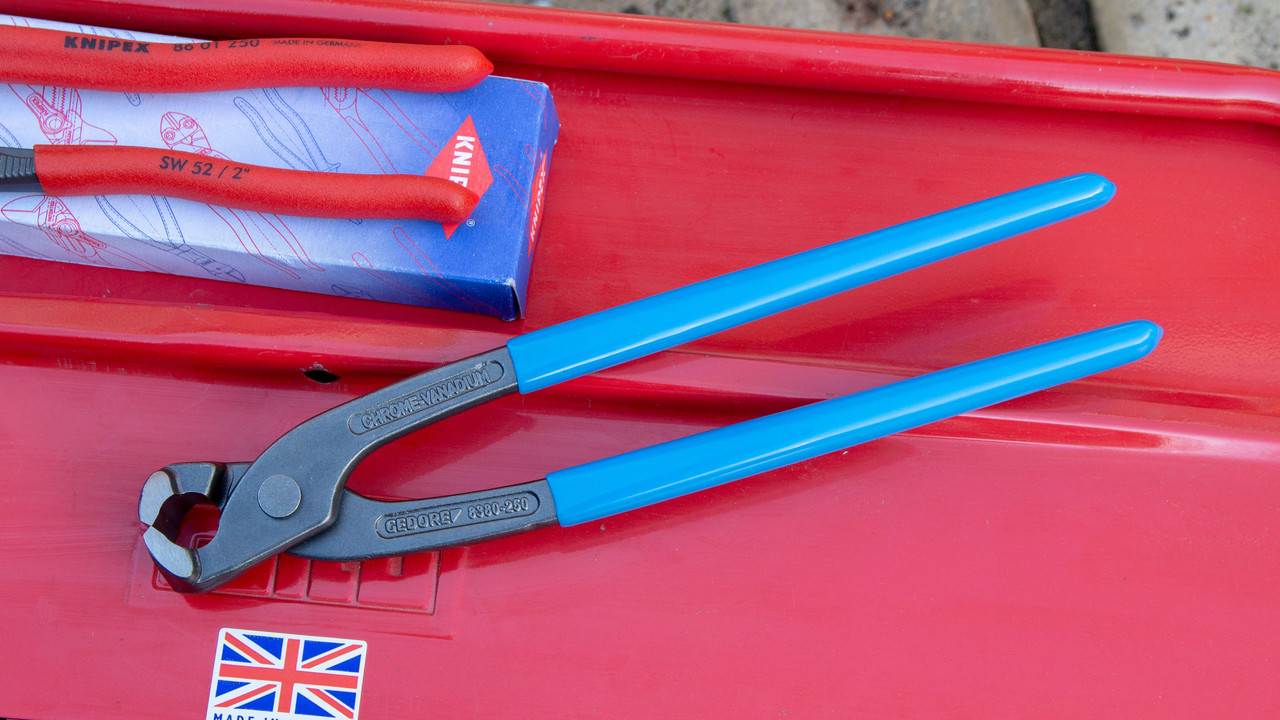
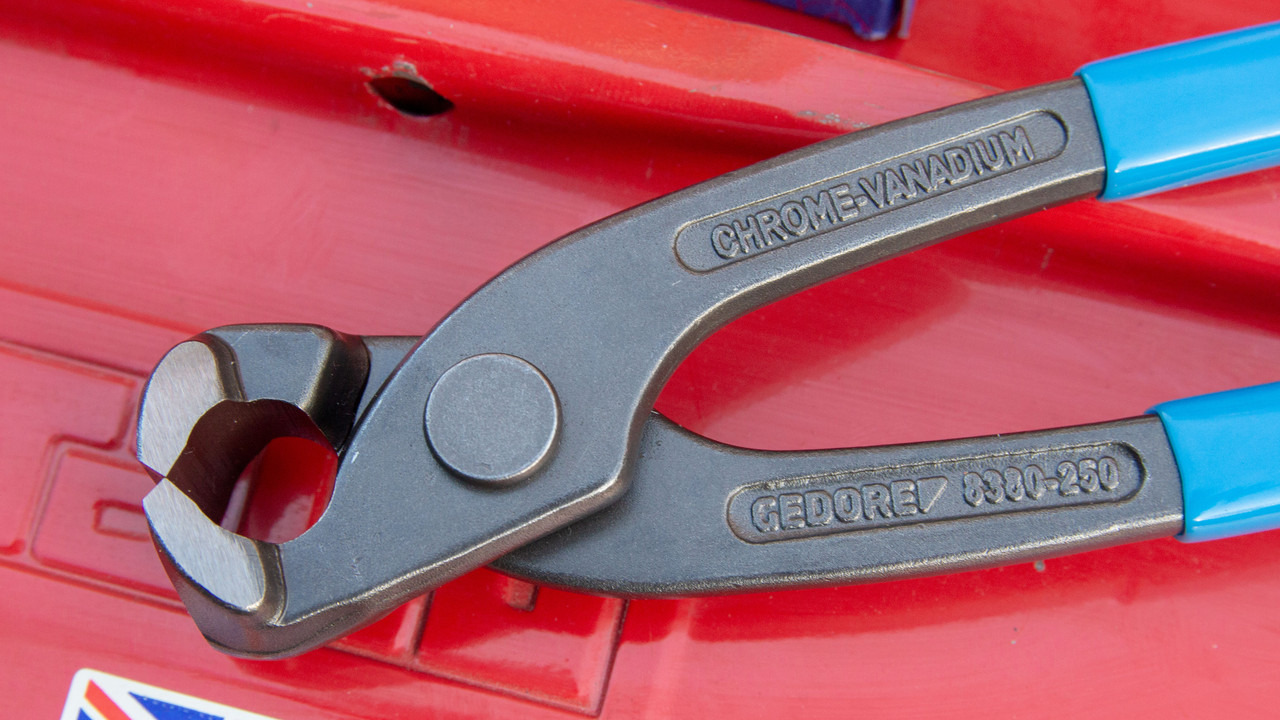
Hi. here what i bought today, small tools haul. Proto snips and ratcheting wrench, measuring tape, and blind riveting pliers. Did anyone knows Tucker riveting pliers, seems look old tool for me
Sent from my LG-US998 using The Garage Journal mobile app
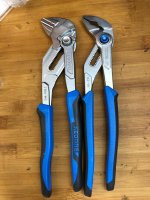
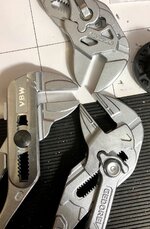
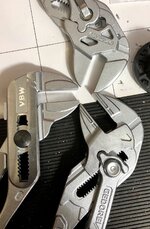
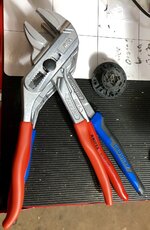
Note also that when the handles are maximally spread apart from each other, the cam in the Gedore rotates a little further along it's cutout than the Knipex, and just prior to hitting the maximum spread point the upper cam jumps in to push the jaws of the plier back towards together by a really tiny but noticeable amount. So as you spread the handles the Gedore's jaws get wider and wider, but then contract by a millimeter once at their furthest point away from each other; almost a kind of "backlash".
This would be easier to demonstrate in a video, but here's a simple picture of the two pliers with their handles spread open as far as they go. Note the position of the two cam protrusions with respect to their cutouts.
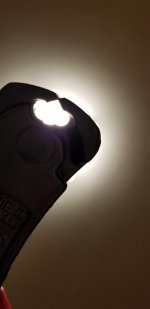
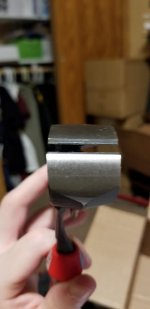
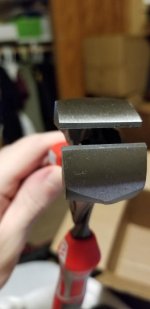
Another pair of pliers from KC BF was the NWS PowerSlot End Cutter, that came with misaligned jaws which caused chips at their respective edges.
Kukko 129-1-B-1.
It's a BMW dedicated ball-joint separator.
Care to elaborate on the significance of this from a functionality standpoint? I'm not understand the importance during use, when the handles get squeezed together.


I don't think cutting edges not meeting exactly to a point are necessarily a flaw when it comes to "power" type nippers/cutters with V-shaped cutting edges. They certainly aren't flush-cutting pliers.
I have those NWS pliers and noticed that the surface coating wore off pretty quickly. If it's the same thing that you're experiencing I wouldn't worry about it as it still easily cuts through SS hose clamps/bands (which is what I use them for). I have some really old Klein high leverage diagnoal cutters (like 230mm long ones) that still cut really well and those cutting edges don't meet to a point either.
I suppose this backlash won't really be all that significant during use, the one annoying bit about their functionality would be having to ensure perfect alignment each time you would adjust these pliers. As for the cam alignment, that's more of an observation on the design in comparison to the Knipex. I don't know whether this might be a weak point down the road.
Also I forgot to mention that both pliers were really smooth in adjustment along their toothed track. On the whole both appear to be very good tools and maybe a future revision of the Gedore could make some improvements to their design which would put them ahead of the OG Knipex. For another example, the Wiha pliers wrench is arguably an improvement on the Knipex design because it is faster to use (kind of like the Knipex Alligator in comparison to the Cobra, which I tend to prefer for some usage cases). Market competition is a wonderful thing
Well to begin with, these nippers have a manufacturing defect and should not have passed QC inspection. At best these should've been b-stock and these chips and the cutter misalignment are simply not what I paid for when I purchased a brand new pair. The chips will also get worse with use, when I suspect the edge of one side will eventually carve in to the bevel of the other side. And while they're not meant to be flush cutters, I expect that a proper pair would still cut cleaner than the one I received.

Just curious...When you say "cut cleaner", are you comparing it against another end cutter that you have? If so, care to show us the difference in the finish with the material being cut?
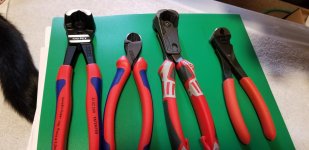
So the best way to illustrate what I mean is to do the good old paper test. Here are the competitors:

Note that the Knipex end cutter on the left is a heavy duty beast with comparatively very beefy and not particularly sharp jaws. Yet, as you can see below, it has no problems with cutting through the paper. Neither does the VBW end cutter, nor the ringer of the group, the Knipex box-joint dykes I threw in for the heck of it. The NWS, on the other hand, only dented the paper, ineffectively spreading out its force over an uneven & broken edge.

Now of course this test isn't reflective of the normal usage for these cutters, but it hints at the flaws the NWS would have with cutting other materials. Namely, it won't cut them cleanly through along a single consistent edge, you'll get an uneven crushing action. It would probably be able to split a nail without much of a problem, but I doubt that you'd get a clean and complete cut with, say, stranded wire.
Those are nice and take a lot of abuse!
Although the Gedore has slightly less side to side play, it's default arrangement (no pressure applied) has the jaws more than a millimeter off (as seen below):

As for who has the widest opening, here they are at the maximum setting with handles together. Knipex has maybe a fraction of a millimeter on the Gedore, but they're basically identical:
What really compromises the functionality and appeal of Gedore's implementation is an odd arrangement at the cam and spring loaded adjustment mechanism. Below you can see that while the Knipex has basically a mirror of the front button attached to the spring lever on its backside, the Gedore has these two small vertical extensions of the button which are visible from the backside. These require the Gedore to have the handles pressed together to allow for the button to align with the vertical slots for the bumps, else the button may not be depressed.
Not exactly. If the handles are pressed together all the way, the button cannot be depressed. Basically it has to be at a certain in-between range. I think the idea is that you can slide it up and down, and then when you open or close the handles all the way the button locks down. I'm not sure that's a huge improvement, but it's the functional difference.
That makes sense, thanks for the explanation! Unfortunately this functional difference still clashes with how I originally learned to use this type of design with the Knipex, so it'll take a bit to get used to.


Can anyone recommend a moderately priced 3/8" torque wrench? Preferably not made in China. I've been looking at the Tohnichi QL-MH and newer Wera models. Something with a range of ~ 10-50Nm is about right. Both the Tohnichi and Wera seem very nice, but are also a little pricey. I will not use frequently, but want something that will hold up over many years.
Also, based off a Youtube review, it appears the Wera torque wrenches are made in Taiwan (versus the UK for their older models). Does anyone know who makes these for Wera?
Thanks,
Eric


After my father passed around 8 years ago, this little folding knife was one of the things I chose from the items he kept in a bedside table drawer. I walked to the neighborhood hardware store and asked if they had the blade that was in it, and the owner went in the back and after a while brought out this box, saying it was the last one they had. I doubt it cost more than $20 for the hundred blades. Out of curiosity I just looked online for them, and they are much more expensive now and I can't find any that say they are made in England.
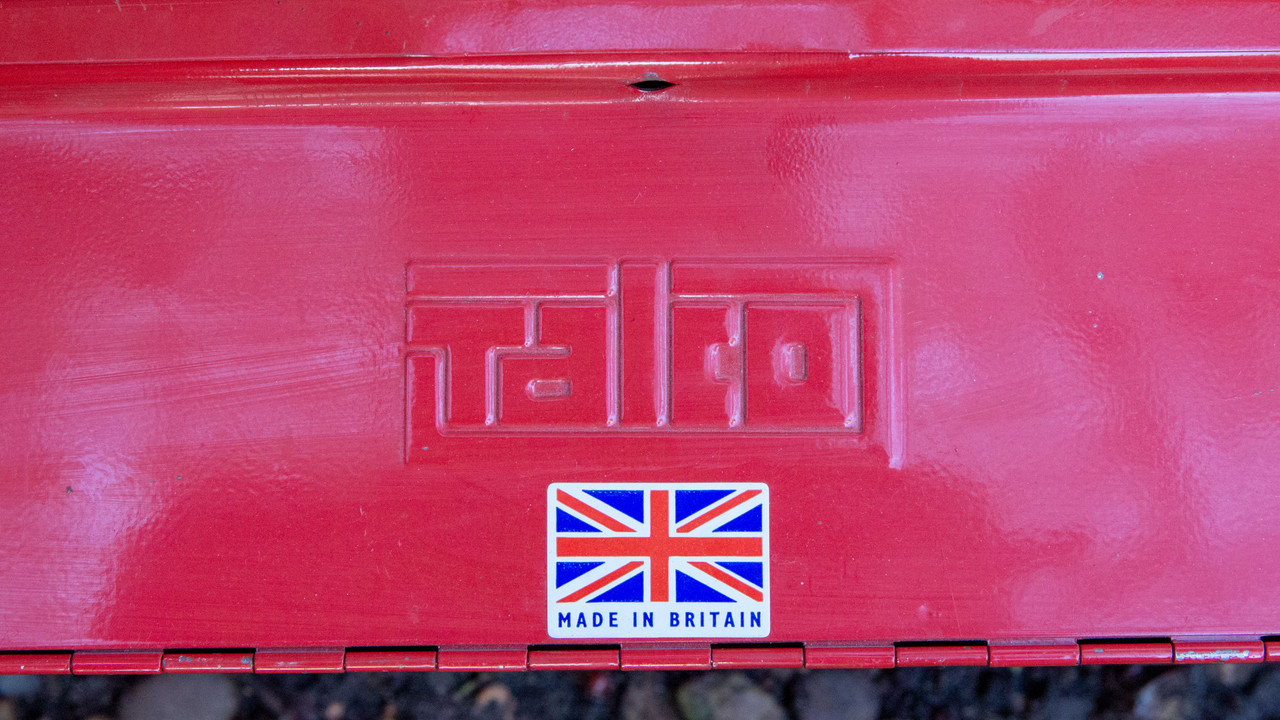
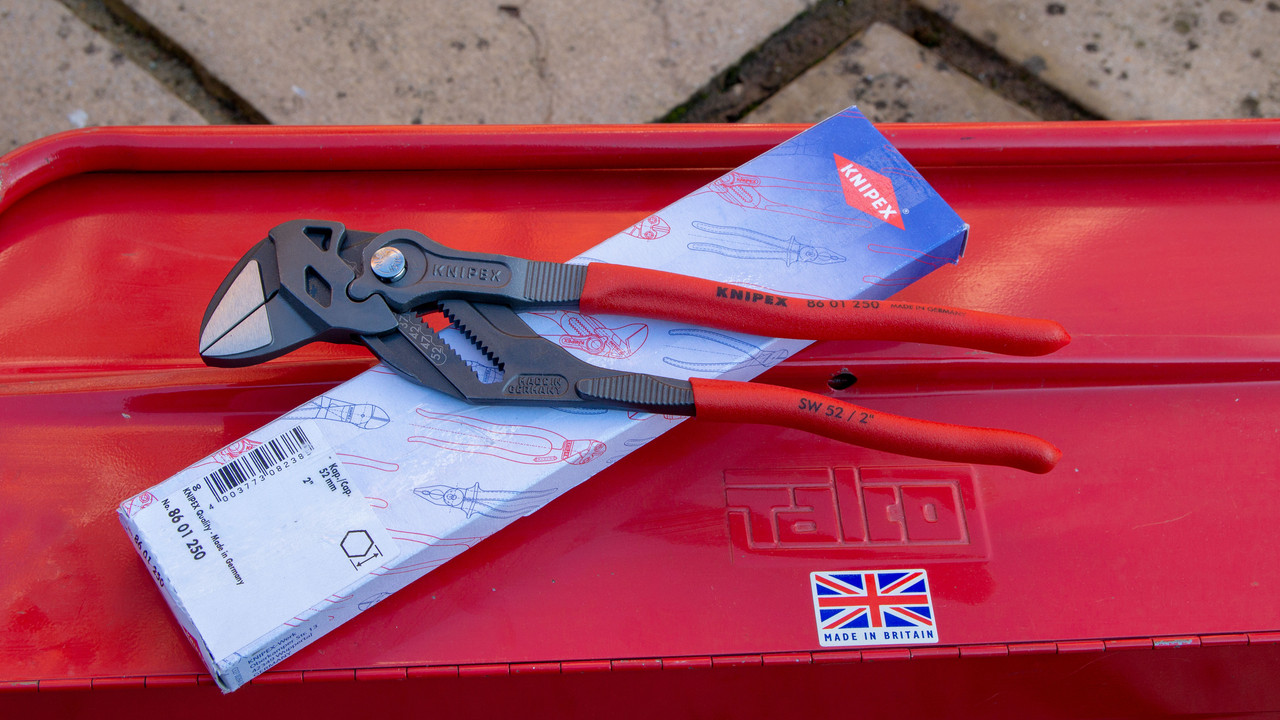
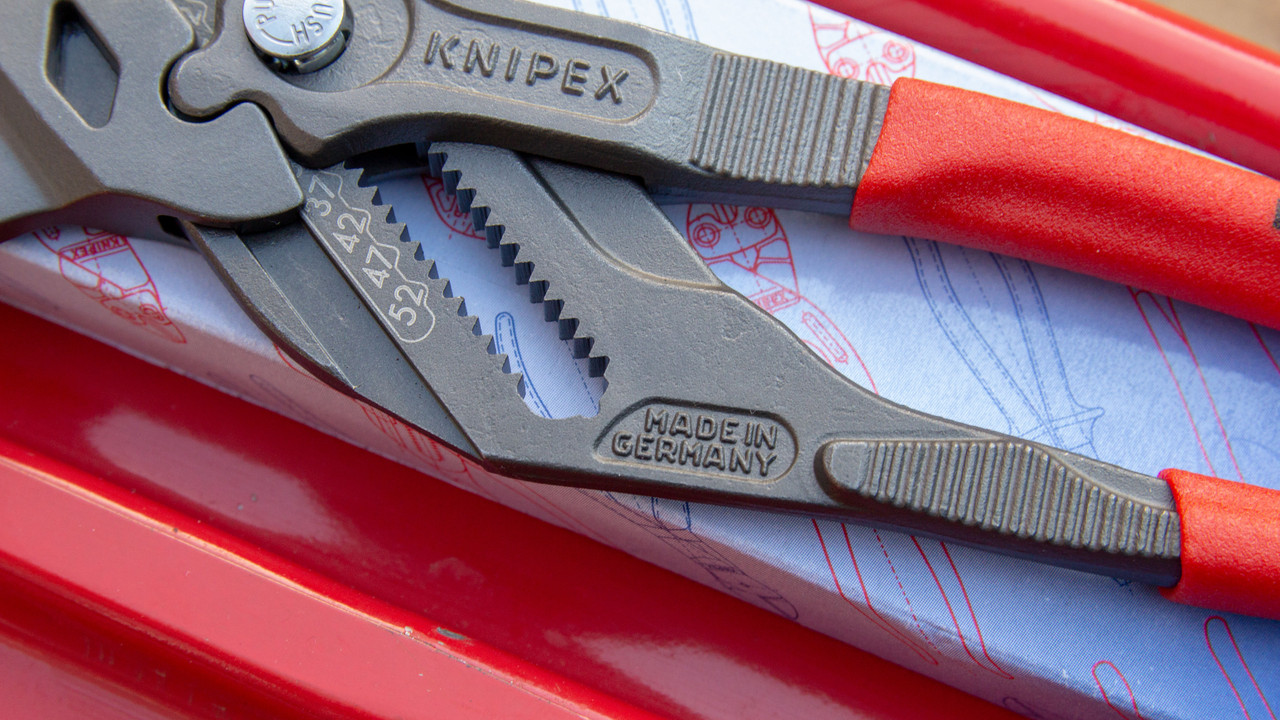
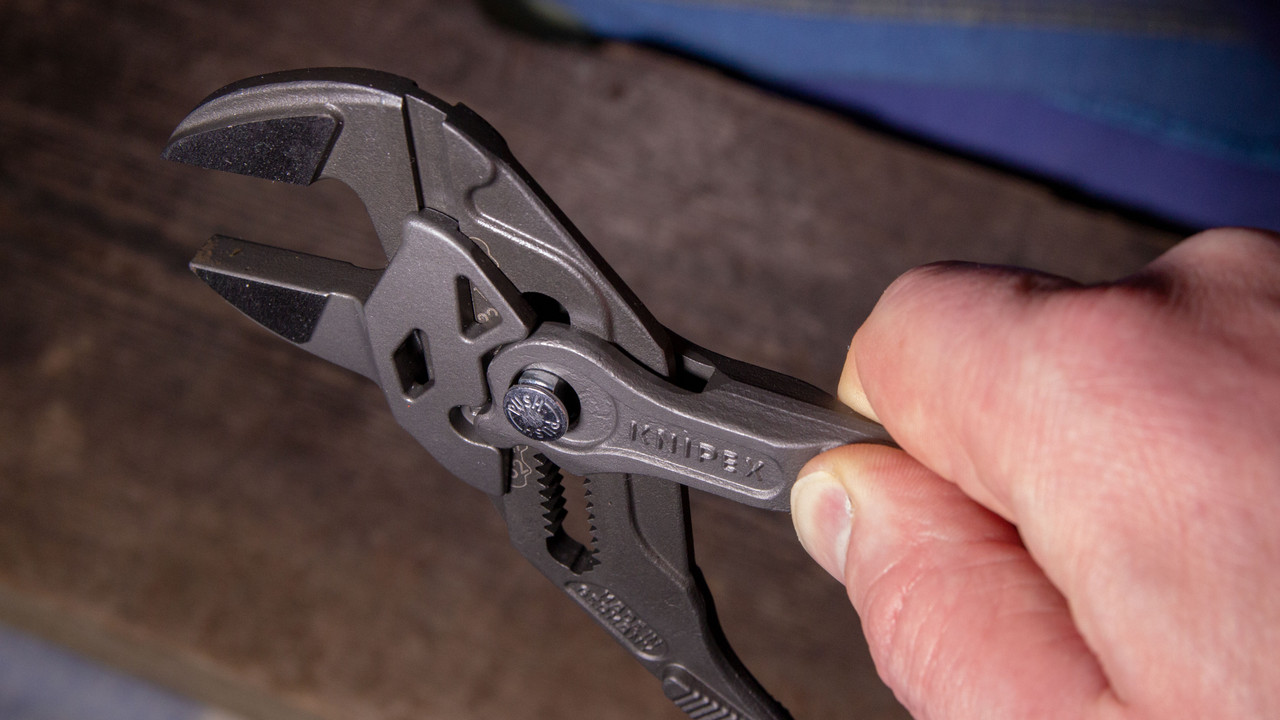
On the new design of the Knipex pliers wrench:
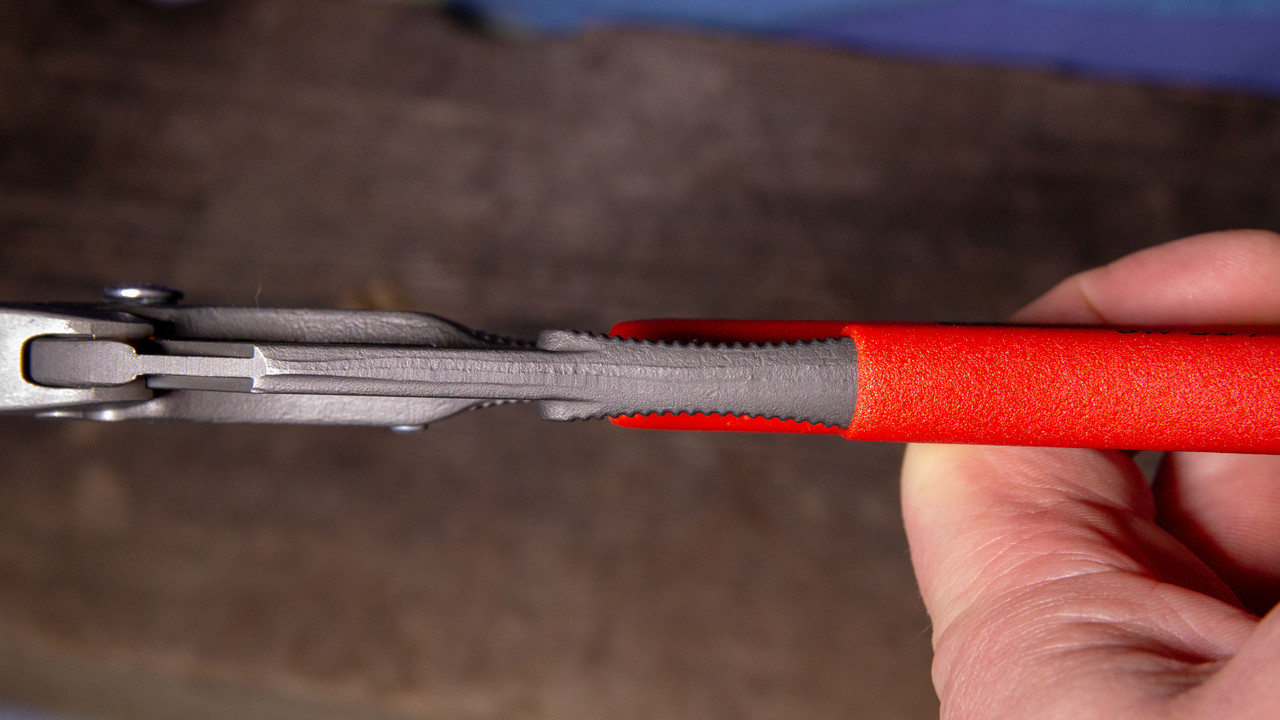
Do the grooves on the handles above the grips serve a purpose? Other than to perhaps retain the grips? they look cool for sure but that seems like a lot of extra manufacturing and Knipex seems to be more function than form.
After my father passed around 8 years ago, this little folding knife was one of the things I chose from the items he kept in a bedside table drawer. I walked to the neighborhood hardware store and asked if they had the blade that was in it, and the owner went in the back and after a while brought out this box, saying it was the last one they had. I doubt it cost more than $20 for the hundred blades. Out of curiosity I just looked online for them, and they are much more expensive now and I can't find any that say they are made in England.]
So the best way to illustrate what I mean is to do the good old paper test. Here are the competitors:
Note that the Knipex end cutter on the left is a heavy duty beast with comparatively very beefy and not particularly sharp jaws. Yet, as you can see below, it has no problems with cutting through the paper. Neither does the VBW end cutter, nor the ringer of the group, the Knipex box-joint dykes I threw in for the heck of it. The NWS, on the other hand, only dented the paper, ineffectively spreading out its force over an uneven & broken edge.
Now of course this test isn't reflective of the normal usage for these cutters, but it hints at the flaws the NWS would have with cutting other materials. Namely, it won't cut them cleanly through along a single consistent edge, you'll get an uneven crushing action. It would probably be able to split a nail without much of a problem, but I doubt that you'd get a clean and complete cut with, say, stranded wire.
Short term gains are good, but may not be so in the long run.Do you know if there are other tools dedicated to BMW and made by Kukko?
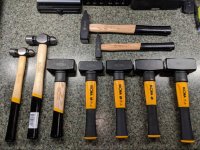


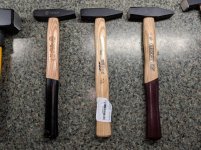


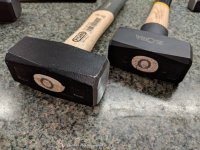
Swann Morton also offer their own craft knife blades of comparable size to the old Stanley Slimknife. The fitting is different so you will need a new handle, but worth it!
Kukko 129-1-B-1.
It's a BMW dedicated ball-joint separator.
At work, I have the Gedore and Knipex version of the large cable cutters. They're identical to each other. I assume same COO on them. They're described as being Germany...
The Gedore ones even had a picture with blue handles, but when I bought them and they arrived, it was actually the red knipex handles.
Very close to buying a facom 440 or Stahlwille 13/9 metric spanner set but was checking out other brands on Amazon and came across 'Heyco' which I hadn't heard of before. Seems like they mostly provide tool kits for German cars.
Not sure if they are just using old images but their 'new tools' sold by Heyco are marked 'West Germany.' Somebody needs to tell them about the wall.