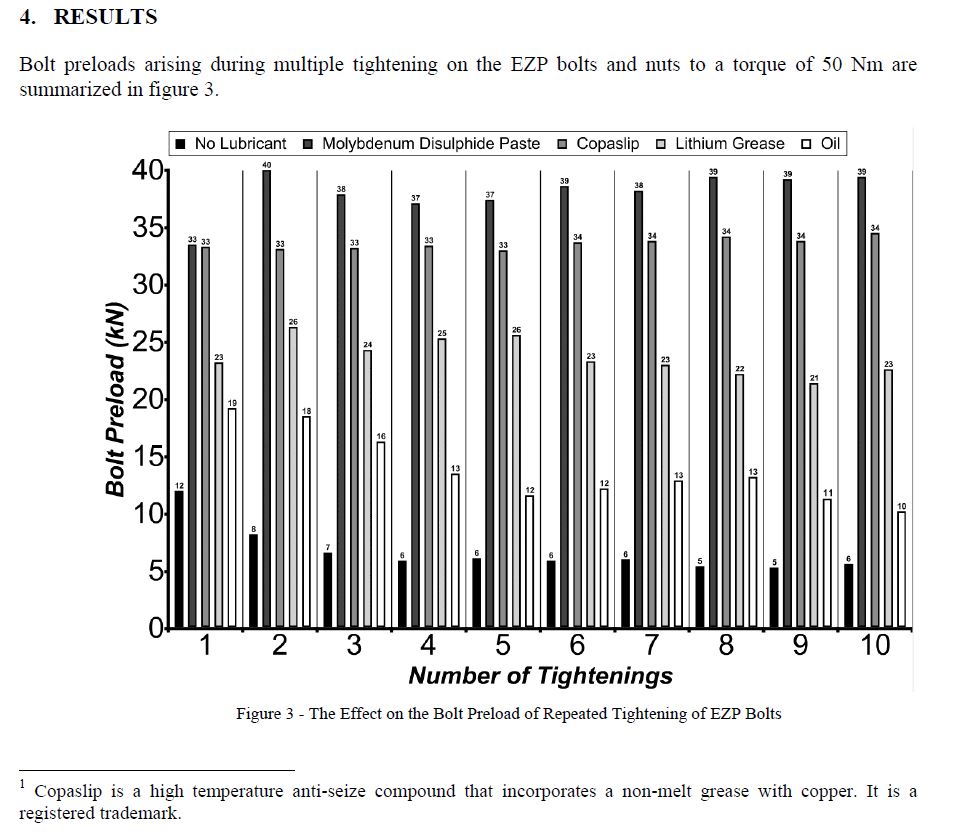
There is substantial difference between the friction coefficient between a new bolt and a weathered bolt.
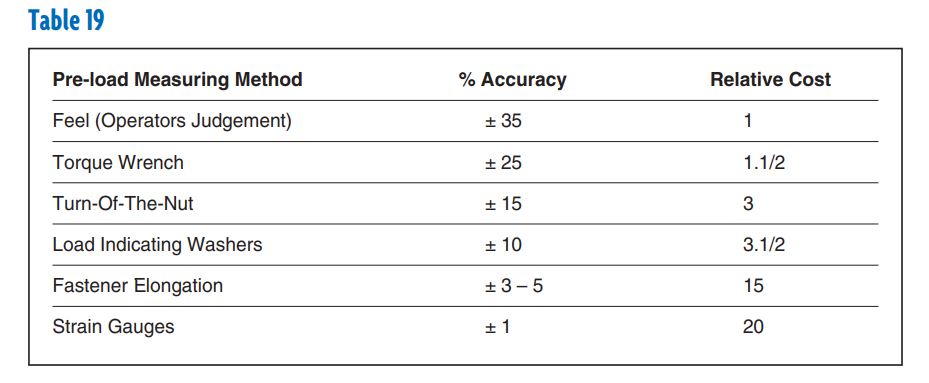
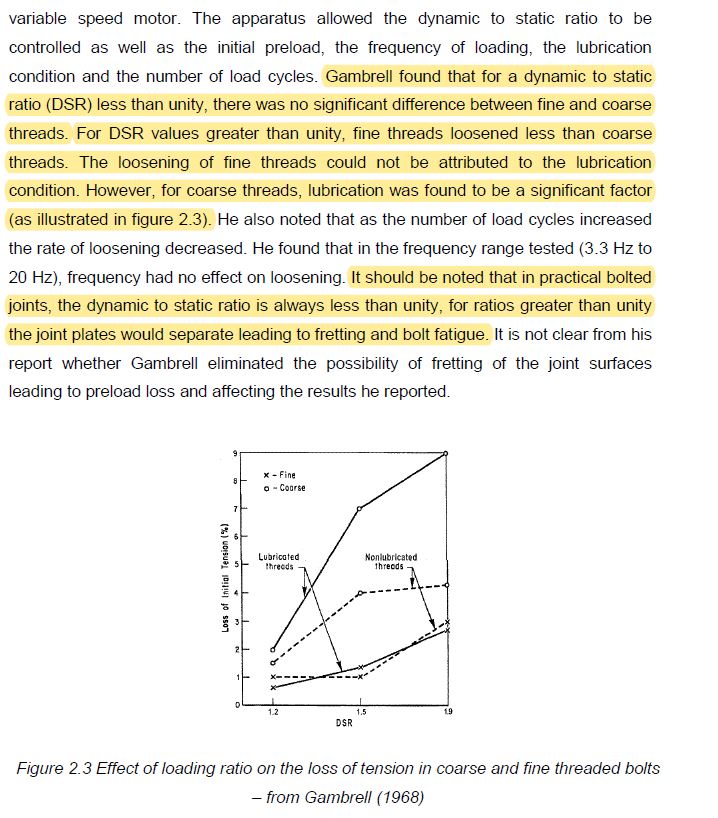
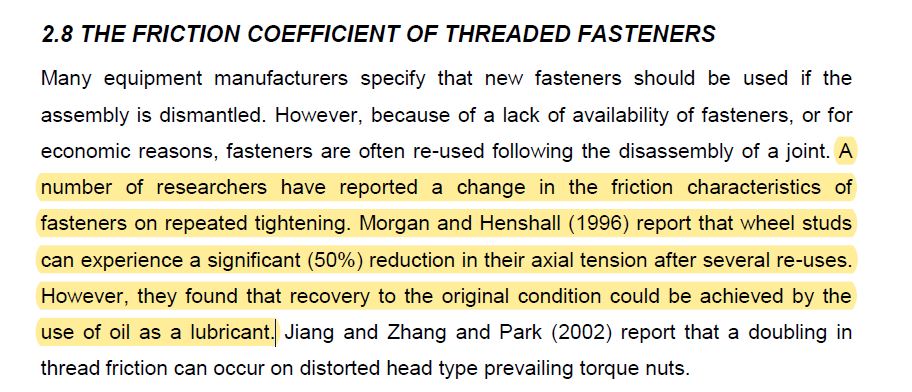
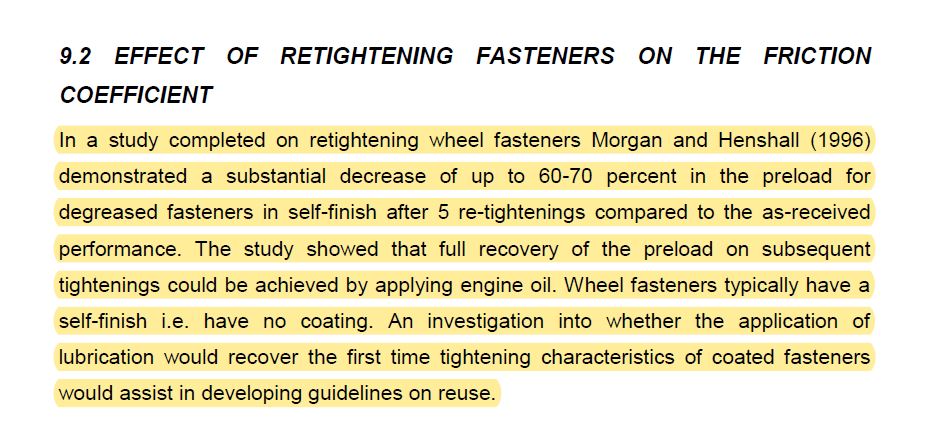
When working on cars for example, if you plan to reuse a bolt, its important to know that the torque spec you are using has to be adjusted based on the condition of the bolt.
This video shows pretty clearly just how much some light rust can affect tension (the ultimate end goal):
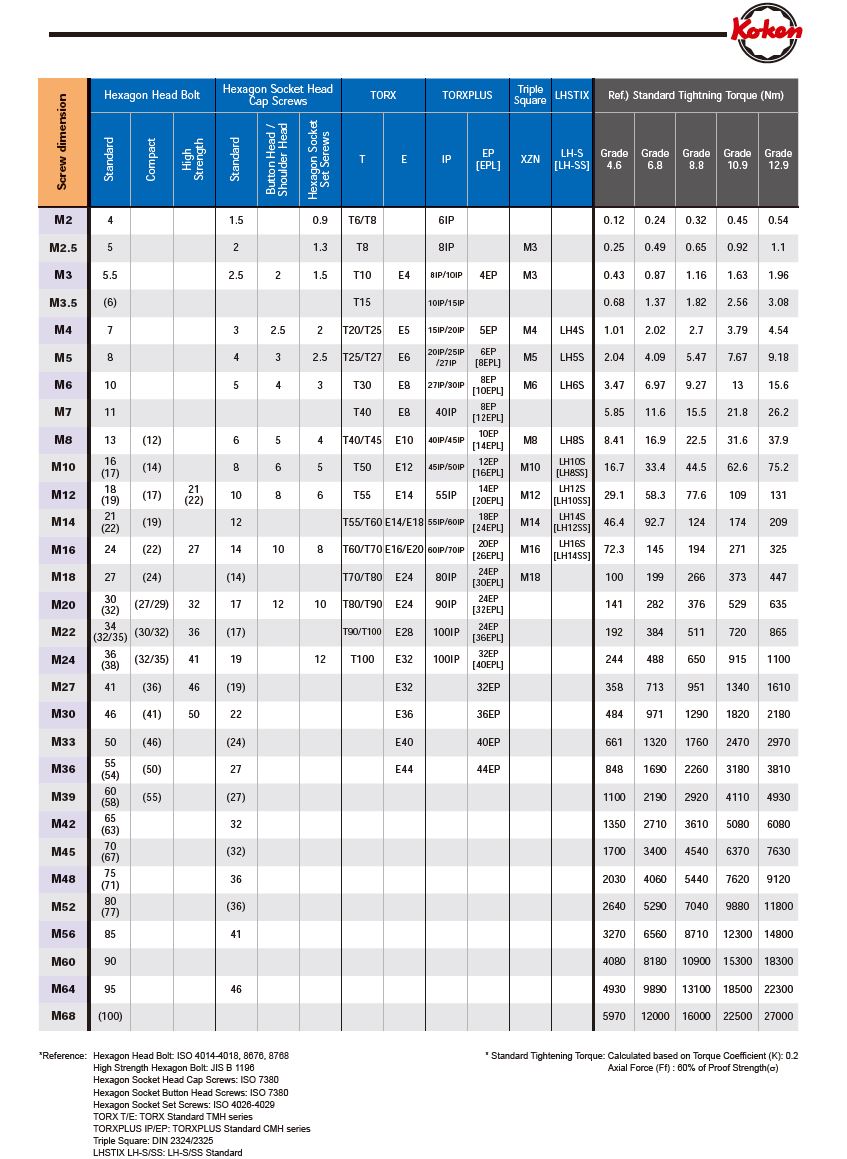
I've come to a personal conclusion that the best approach is to use heavy grease (anti-seize) and use a 0.7 factor against the recommended torque spec.
Ajax bolting (bolt MFG) recommends this conversion factor:
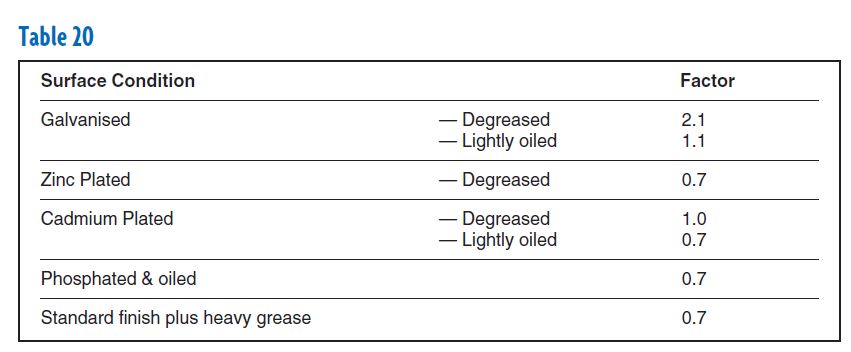
https://rtstools.com/wp-content/uploads/2020/10/ajax-handbook.pdf
Basically use the recommended torque from here (multiplied by 0.7):
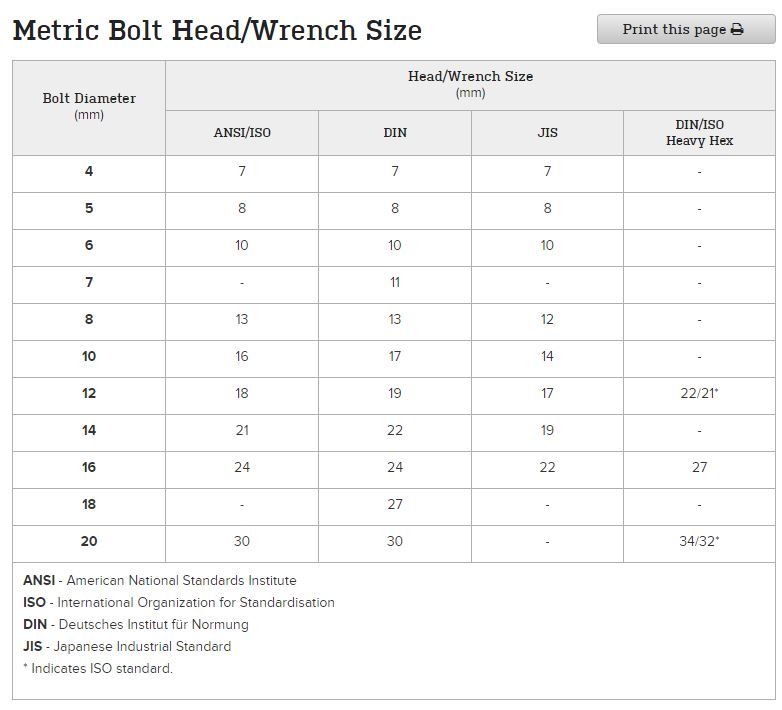
If working with standard hex bolts, use this chart to convert head size to bolt diameter (otherwise pull bolt and measure threaded part with digital caliper):
Apart from the ugga dugga; what kind of philosophy do you guys subscribe too?
When working on cars for example, if you plan to reuse a bolt, its important to know that the torque spec you are using has to be adjusted based on the condition of the bolt.
This video shows pretty clearly just how much some light rust can affect tension (the ultimate end goal):
I've come to a personal conclusion that the best approach is to use heavy grease (anti-seize) and use a 0.7 factor against the recommended torque spec.
Ajax bolting (bolt MFG) recommends this conversion factor:
https://rtstools.com/wp-content/uploads/2020/10/ajax-handbook.pdf
Basically use the recommended torque from here (multiplied by 0.7):
If working with standard hex bolts, use this chart to convert head size to bolt diameter (otherwise pull bolt and measure threaded part with digital caliper):
Apart from the ugga dugga; what kind of philosophy do you guys subscribe too?