

You are using an out of date browser. It may not display this or other websites correctly.
You should upgrade or use an alternative browser.
You should upgrade or use an alternative browser.
Vise Info Thread
- Thread starter FMC1959
- Start date
davethorik
Well-known member
that Moody vise has a lot of similarities to Simplex vises. not 100% a copy but dang close.
edit: i see Moody Tools is based in Cranston, RI.
the original Simplex vises were made in Woonsocket, RI. perhaps they private labeled.


edit: i see Moody Tools is based in Cranston, RI.
the original Simplex vises were made in Woonsocket, RI. perhaps they private labeled.
Last edited:
KMScott
Well-known member
I agree Dave. The Collar on the Moody is not original, Simplex copied Parker's design. Good find, Thanks for sharing.that Moody vise has a lot of similarities to Simplex vises. not 100% a copy but dang close.
edit: i see Moody Tools is based in Cranston, RI.
the original Simplex vises were made in Woonsocket, RI. perhaps they private labeled.
KMScott
Well-known member
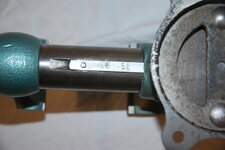
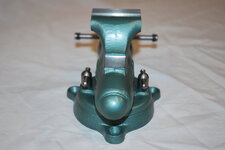
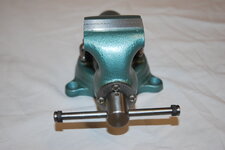
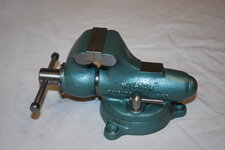
Wilton 820. 2" jaws that opens to 2" and weights 9 lbs. This one I restored several years ago.
Attachments
-
 Dans 2 inch 02-2013 (4).JPG553.6 KB · Views: 23
 -
 Baby 2 inch vise (9).JPG1.1 MB · Views: 20
 -
 Baby 2 inch vise (8).JPG1 MB · Views: 14
 -
 Baby 2 inch vise (7).JPG976.9 KB · Views: 13
 -
 Baby 2 inch vise (6).JPG844.3 KB · Views: 13
 -
 Baby 2 inch vise (5).JPG968.8 KB · Views: 13
 -
 Baby 2 inch vise (4).JPG967.6 KB · Views: 18
 -
 Baby 2 inch vise (3).JPG1.1 MB · Views: 19
 -
 Baby 2 inch vise (2).JPG1,012.5 KB · Views: 36
KMScott
Well-known member
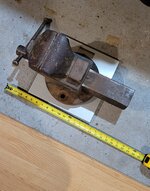
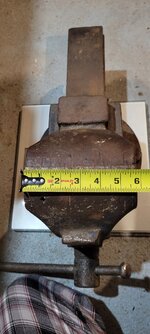
Dolex model L. 6" jaws that opens to 7-1/2" and weights 80 lbs. Built in France.
Attachments


d9gdon
Well-known member
That Dolex is one I have never seen.
KMScott
Well-known member




KMScott
Well-known member
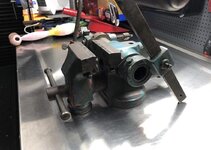
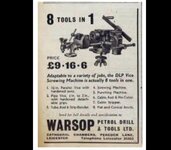
Check out the DLP. The everything vice.That Dolex is one I have never seen.
d9gdon
Well-known member
Yep, that is one busy tool there. Very unique.
royce
Well-known member
That would be a fun one to test drive, just to see how it all functions.Check out the DLP. The everything vice.
KMScott
Well-known member


KMScott
Well-known member

KMScott
Well-known member

KMScott
Well-known member
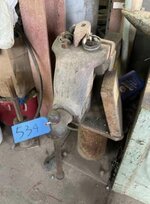
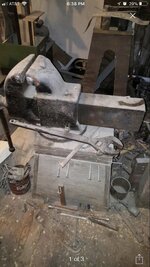
Rock Island # 68. 8-3/8" jaws that opens to 14" and yes weights 345 lbs.
Attachments



KMScott
Well-known member


KMScott
Well-known member


davethorik
Well-known member
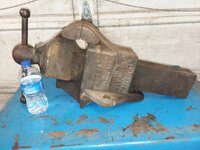
Parker no. 69F
6" jaws, opens 9.5", weight 130 lbs.
note: single bolt collar, most 6"+ Parkers have 2 bolt collars.


6" jaws, opens 9.5", weight 130 lbs.
note: single bolt collar, most 6"+ Parkers have 2 bolt collars.
mnev
Active member
<<DELETED>>
Last edited:
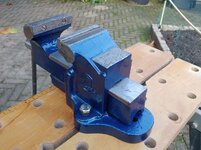
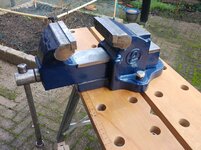
I was looking on the internet for references to this Hansa no. 2 I bought. Did not find any, but I did find the GJ Vise Spreadsheet, so I decided to share this vise with you.
Not sure about the COO, I bought it secondhand in the Netherlands. I repainted it to this blue hamertone shown, the original color was also a dark shade of blue.
Jaw width: 10 cm (~4"), weight: 7.8 kg (17.2 lbs), jaw opening width: 11cm (~4 1/4").
Not sure about the COO, I bought it secondhand in the Netherlands. I repainted it to this blue hamertone shown, the original color was also a dark shade of blue.
Jaw width: 10 cm (~4"), weight: 7.8 kg (17.2 lbs), jaw opening width: 11cm (~4 1/4").
Attachments


CRSINMICH
Well-known member
BARRETT VISE from November 1885 issue of American Engineer and two patents from 1891 for J.O. Barrett. The June patent was assigned to Meadville Vise Co. and to J.S. & Co. Look closely at the J.S. & Co. Vise. Apparently it was made in Y.N. Yew Nork?
Attachments


Fierljeppen
Well-known member
- Joined
- Jan 26, 2018
- Messages
- 1,159
This "unknown to me" combination vise is currently listed on an auction.
It's clearly a Dart Patent vise derivative and looks American made, but by whom? Is the circle-X a clue to the manufacturer?

It's clearly a Dart Patent vise derivative and looks American made, but by whom? Is the circle-X a clue to the manufacturer?
KMScott
Well-known member
That’s a new one for me. Those jaws are unique and only seen on a couple vises Like a Bugatti. I’ll ask the FB group.This "unknown to me" combination vise is currently listed on an auction.
It's clearly a Dart Patent vise derivative and looks American made, but by whom? Is the circle-X a clue to the manufacturer?
Edit, A Facebook member sent this catalog page showing the same style of jaws made by Parker. Maybe Parker made it as a private label.
Attachments

Last edited:
KMScott
Well-known member
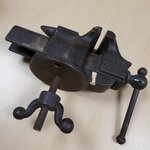
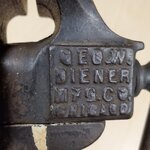
George Diener Mfg. Co. Chicago - 2"
Quote from owner. Most of the history of the company relates to old fire extinguishers and blowtorches.
Quote from owner. Most of the history of the company relates to old fire extinguishers and blowtorches.
Attachments




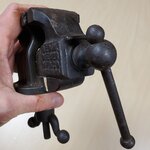
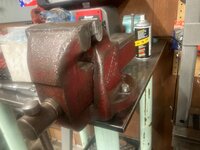
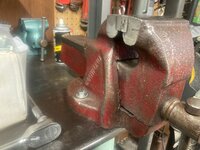
Looks a lot like my Crawford vise. Also made in Canada. The nut is also cast as part of the body on mine.FMC - Henry vises were made in London, Ontario. Their brand was called Craftools. So it was "Made in Canada". Typically that is part of the wording on the other side of the fixed tower. Lots of influence from England in Canadian vises. Another interesting fact is that the nut on these vises were part of the main casting. There is no pin holding in a dovetail nut on these vises. Here is a photo of a Henry 3 I refurbished back in January showing the bottom and a side view showing "Made in Canada".
Attachments

KMScott
Well-known member


KMScott
Well-known member
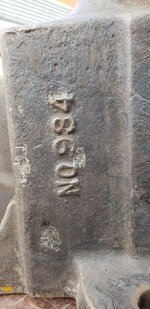
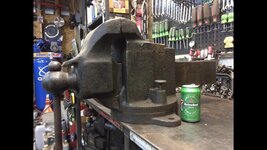
Reed 934. 6" jaws on this combination vise that weights 176 lbs. The casting has a mistake, instead of a 3 they put a S instead in the mold.
Attachments




KMScott
Well-known member

Dave600
Well-known member
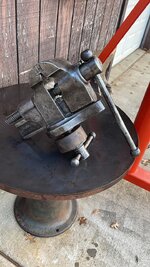
Woodstock, Ontario (where Crawford is) is only 30 miles east from London, Ontario where Henry vises were made. The designs of the two makes me think that Henry might have been contracted by Crawford to make their vises. Nut part of the fixed tower, curve in the back of the fixed jaw tower, bulkiness of metal behind the fixed jaw, design of the base. (I have no documentation to prove that !)Looks a lot like my Crawford vise. Also made in Canada. The nut is also cast as part of the body on mine.
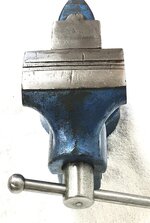
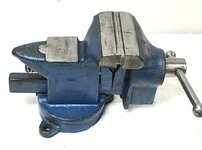
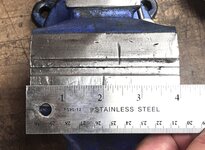
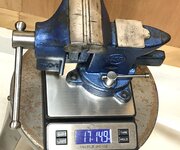
JSB 1504 vise from Japan. You rarely see these with the original pipe jaws. 18 lbs. 4” jaws. Opens 3 1/2”.
Attachments
-
 549E9316-075D-4C41-BB69-4EE246363DEC.jpeg826.3 KB · Views: 24
 -
 00637DD0-E720-490F-82B6-3CE4EF450111.jpeg559.7 KB · Views: 15
 -
 8622D3F9-1A18-4DE6-824D-9883A894BFCF.jpeg470.7 KB · Views: 7
 -
 FF458E4E-27C5-4D0D-80FD-F59860CEBA60.jpeg568.9 KB · Views: 6
 -
 86B22DCC-FB3F-4107-85E6-9A4F26641FB3.jpeg726.9 KB · Views: 12
KMScott
Well-known member
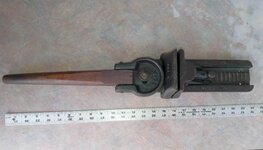
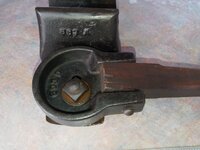
Prentiss Yankee # 603. 3-1/2" jaws on this woodworking vise that weights 11 lbs
Attachments
-
 Prentiss 603-3.jpg658.7 KB · Views: 11
 -
 Prentiss 603-1.jpg748.6 KB · Views: 9
 -
 Prentiss 603-2.jpg517.6 KB · Views: 8
 -
 Prentiss 603-7.jpg575.5 KB · Views: 7
 -
 Prentiss 603-6.jpg527.6 KB · Views: 5
 -
 Prentiss 603-5.jpg759.4 KB · Views: 2
 -
 Prentiss 603-4.jpg609.9 KB · Views: 5
 -
 Prentiss 603-8.jpg52.1 KB · Views: 11
RTM
Well-known member
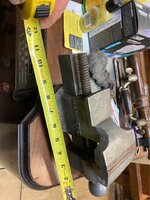
Here is one, not mine. "Nice vintage aluminum vise made by Adams co. Dubuque, Iowa 3” missing original rod for handle." Marked Hawkeye. Not seen specifically in the spreadsheet as Hawkeye, and don't see a number on the vise to compare to sheet. I don't honestly know if its Aluminum, but that is what the seller says. A google search of GJ didn't bring up Hawkeye.



KMScott
Well-known member
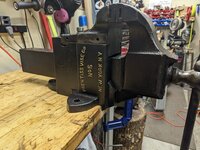
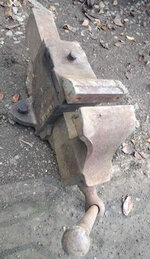
Prentiss #5. 6" swivel jaw that opens to 9" and weights 146 lbs.
Attachments


KMScott
Well-known member
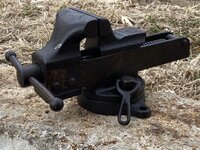
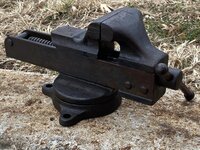
Hollands? 2 or 2-1/2" jaws. Anyone have a catalog page on this guy. Thanks in advance.
Attachments


Sasquatch912
Well-known member
Project farm just did a review on some vises
master Zoda
Well-known member
- Joined
- May 31, 2014
- Messages
- 165
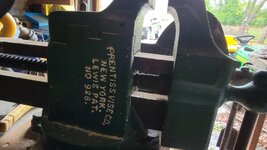
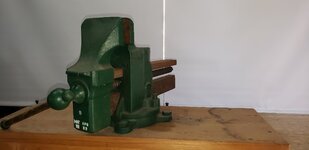
My old prentis 926. It is missing a few bits the lever for the swivel base and the knob for the swivel jaw that is frozen anyway. This was a freebie. I really don't know much about it. 41/2" jaws weight is around 65lbs I think.


CRSINMICH
Well-known member
Zoda: Here's a picture of a Prentiss Lewis Patent vise from a 1910 catalogue. It's not exactly like yours but close enough. No. 926 looks like it might be a woodworker/patternmaker/coachmaker version. BTW, the vise spreadsheet doesn't have a listing for Prentiss 926 so it would be a great addition.
EDIT: 1897 Lewis catalogue wood worker's picture added for comparison. Notice that it's No.26. It's very likely that the specs for your vise are similar if not identical.
EDIT: 1897 Lewis catalogue wood worker's picture added for comparison. Notice that it's No.26. It's very likely that the specs for your vise are similar if not identical.
Attachments


Last edited:
master Zoda
Well-known member
- Joined
- May 31, 2014
- Messages
- 165
Very cool thank you. Unless it is just artistic license the only differences I see are the markings and mine definitely never had removable jaws.Zoda: Here's a picture of a Prentiss Lewis Patent vise from a 1910 catalogue. It's not exactly like yours but close enough. No. 926 looks like it might be a woodworker/patternmaker/coachmaker version. BTW, the vise spreadsheet doesn't have a listing for Prentiss 926 so it would be a great addition.
EDIT: 1897 Lewis catalogue wood worker's picture added for comparison. Notice that it's No.26. It's very likely that the specs for your vise are similar if not identical.
master Zoda
Well-known member
- Joined
- May 31, 2014
- Messages
- 165
How do I get to the spreadsheet? I see people talking about it but I have never seen it.Zoda: Here's a picture of a Prentiss Lewis Patent vise from a 1910 catalogue. It's not exactly like yours but close enough. No. 926 looks like it might be a woodworker/patternmaker/coachmaker version. BTW, the vise spreadsheet doesn't have a listing for Prentiss 926 so it would be a great addition.
EDIT: 1897 Lewis catalogue wood worker's picture added for comparison. Notice that it's No.26. It's very likely that the specs for your vise are similar if not identical.
CRSINMICH
Well-known member
master Zoda
Well-known member
- Joined
- May 31, 2014
- Messages
- 165
I don't see either of these on the spreadsheet.
Fulton 5190 2-7/8" wide jaws opens 2-5/8" weight 9-3/4lbs
Starrett 014 4" wide jaws opens 4" weight 23lbs

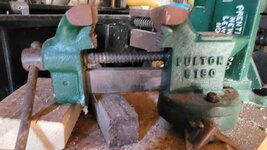


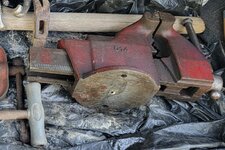
Fulton 5190 2-7/8" wide jaws opens 2-5/8" weight 9-3/4lbs
Starrett 014 4" wide jaws opens 4" weight 23lbs
Last edited: