DavidB
Well-known member
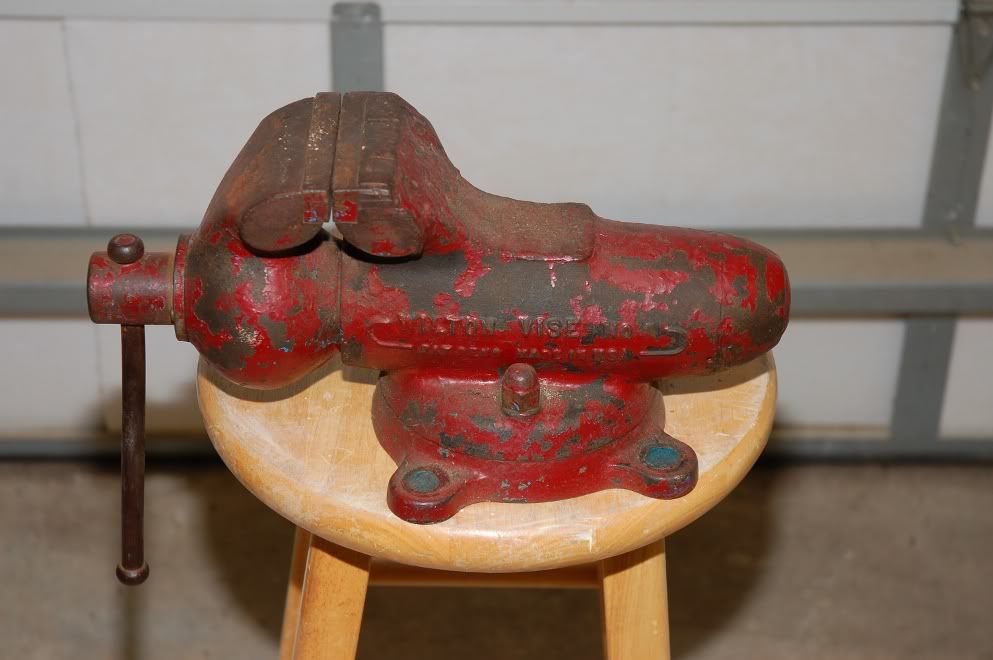
I picked up a Wilton No. 4 today from the flea market and disassembled it tonight. It has 4" wide jaws and weighs about 36 lbs if you're interested. Anyways, I thought I'd post the steps for taking one completely apart for others out there. I know there was a similar thread a while back but two are better than one.
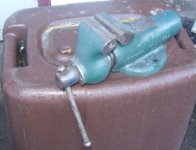
Here's the vise.
Step 1
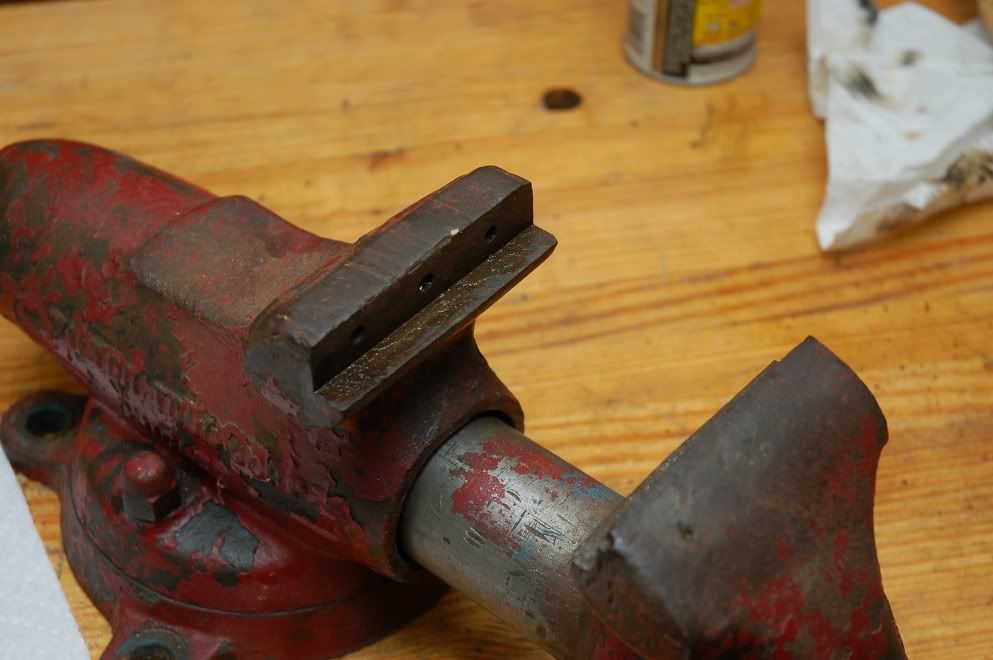
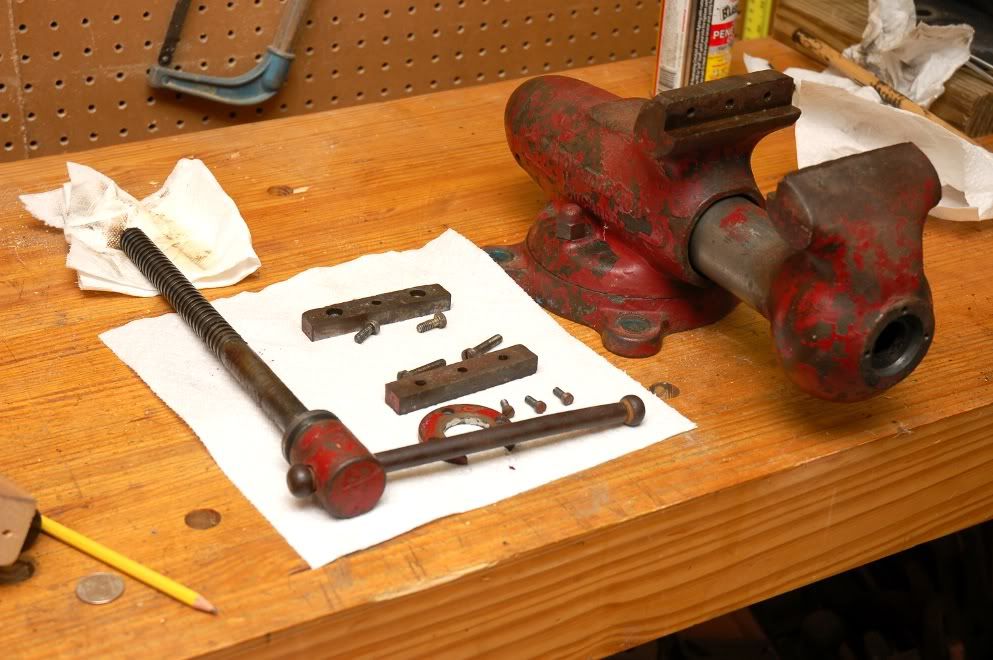
The first step is to remove the jaw pads. If the screws are really stuck in there then spray them with your favorite penetrant. It's also helpful to remove the dynamic (moving) jaw from the body of the vise so you can hold them vertically. With the screws in the vertical position you can put more force on the screws and tap the screwdriver with a hammer if needed. Once you've removed the pads it should look like this.
Step 2
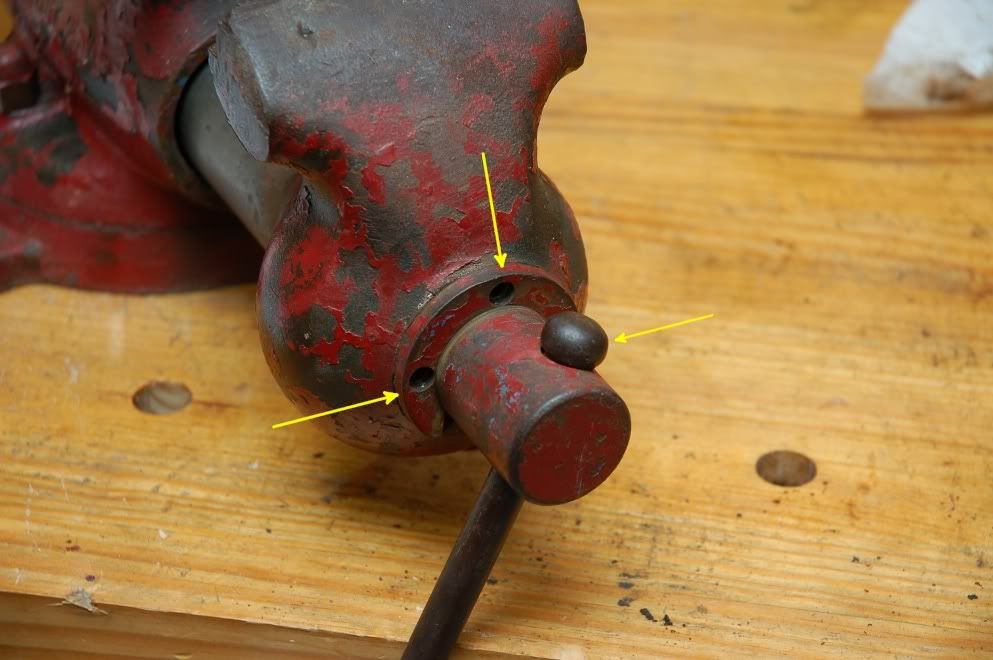
The next step is to remove the three screws that hold the screw retaining plate on.
Step 3
With the retaining plate out of the way you can remove the lead screw and set it off to the side.
Step 4
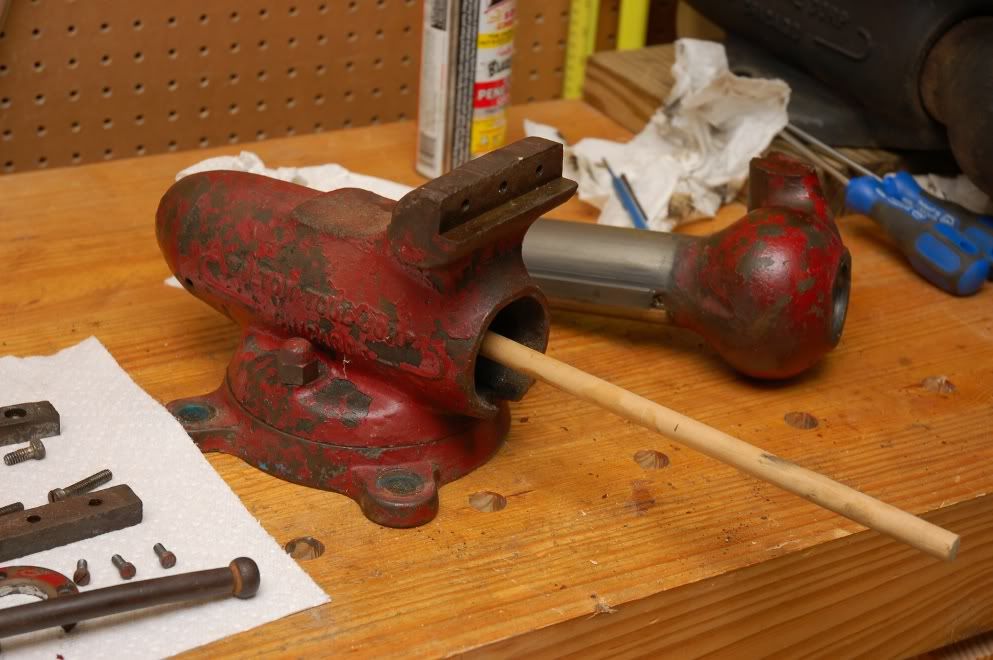
Next, remove the dynamic jaw by pulling it out of the front of the vise. It can be heavy on the larger models so don't drop it. If the dust cover is still in place on the back of the vise remove it now. It can be removed by inserting a wooden dowel through the nut inside of the vise body. Tap on the end of the dowel to slowly remove the cover. Once again, some penatrant may be helpful if it's stubborn.
Step 5
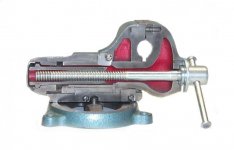
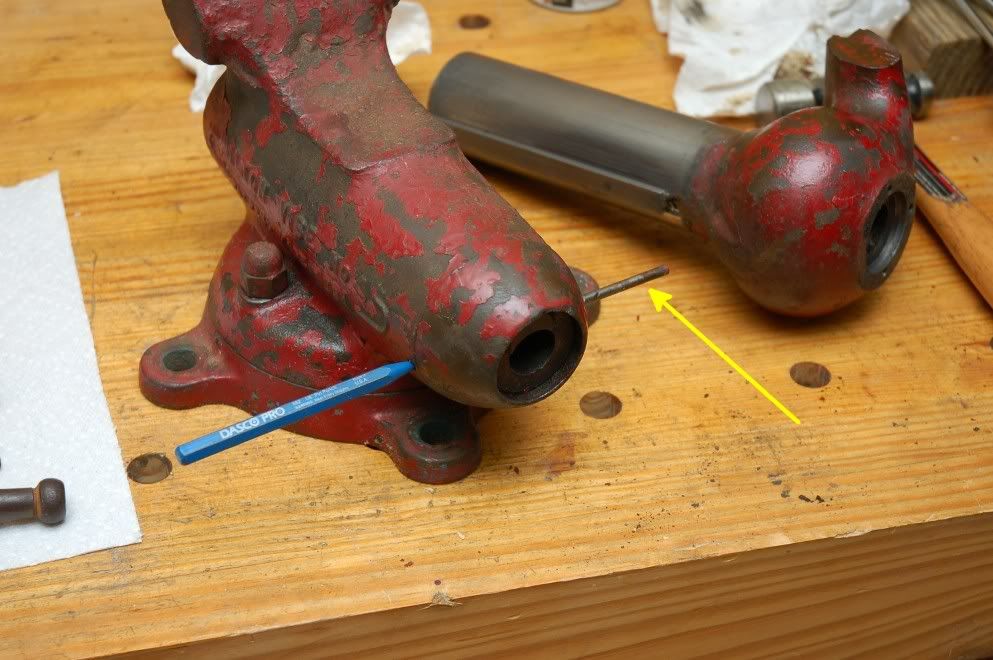
With the dust cover removed you can now see the back of the nut. While I'm calling it a nut, it's more of a tube with threads on the inside. It is held in the vise by one or two cross pins or on my larger model two machine screws (one on each side). If you have screws, it's easy to tell the difference because there is no way the heads of the screws can pass through the body. If you don't have screws, then find out if you have one or two pins. Use a punch or nail with a flat end to drive the pin in a little bit. Did the pin move out on the other side? If so, then you probably have one pin. Drive the pin through the body as shown in the picture. In my case my punch was not long enough, so I put a small nail in between the pin and the punch. If the pin didn't move on the other side then you probably have two pins. Try to drive one pin in until the other pops out and then drive the remaining pin backwards out of it's side of the vise. The pins may not completely line up so while you may be able to push one pin with the other you may not be able to completely drive it out. Once you get a little of the pin out you can grab it with pliers if need be.
Depending on the vise you may be able to see the pins when looking through the back of the vise. If you're uncertain, viewing from the back, line a ruler up with the top of the holes on the sides to see if the pins should run through the opening where the lead screw goes. If you have pins, you should be able to run a piece of wire in one hole and out the other side to make sure nothing is in there. No matter what style is used, go slow and don't force it.
Step 6
If you look into the body from the front you can see the nut.
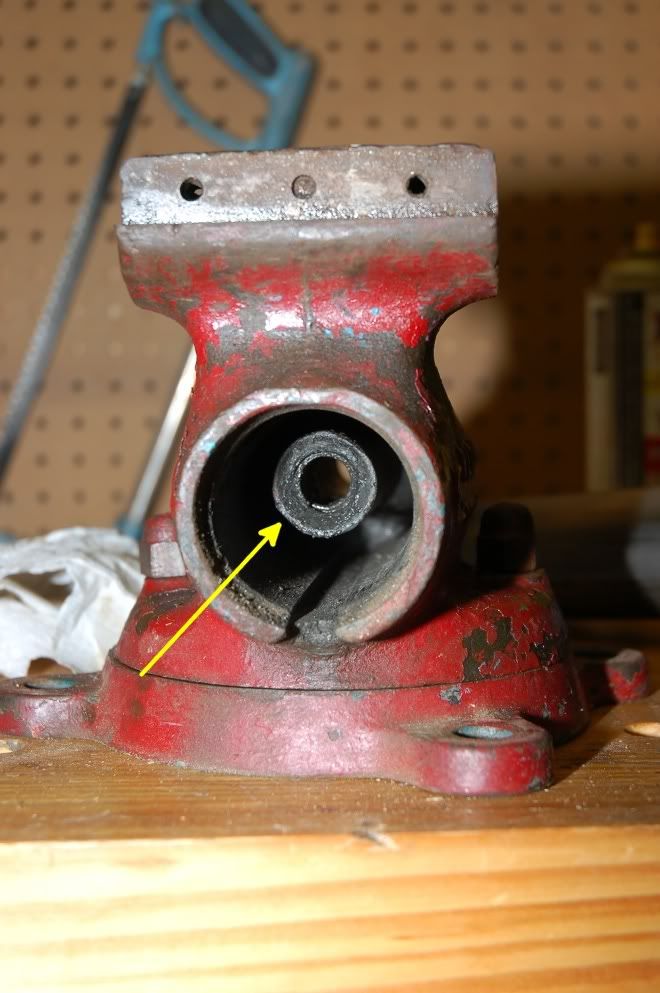
Use another block of wood and a hammer to drive the nut out through the back of the vise body.
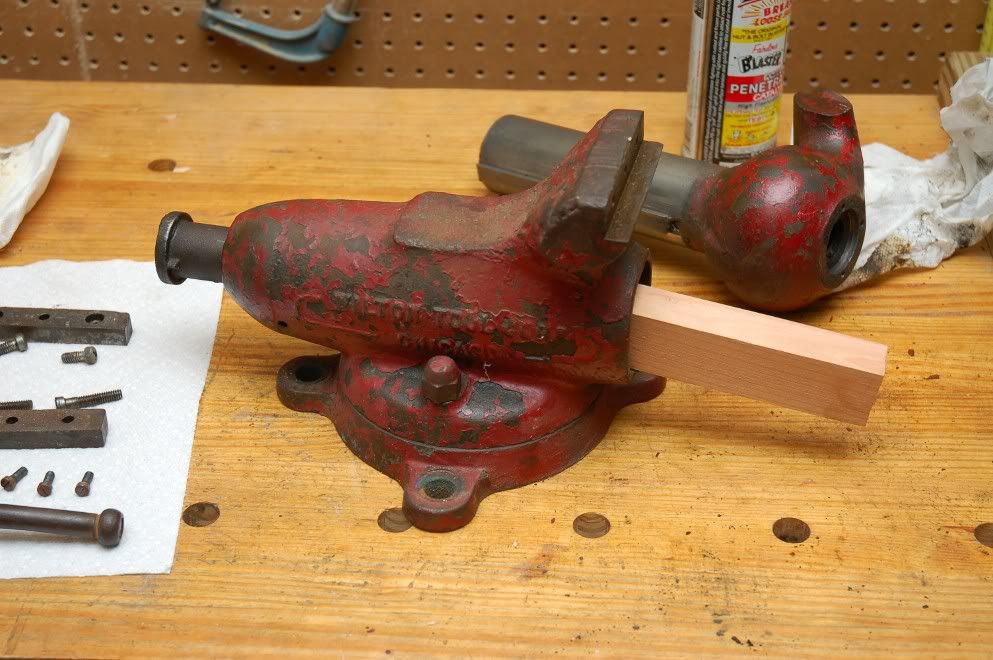
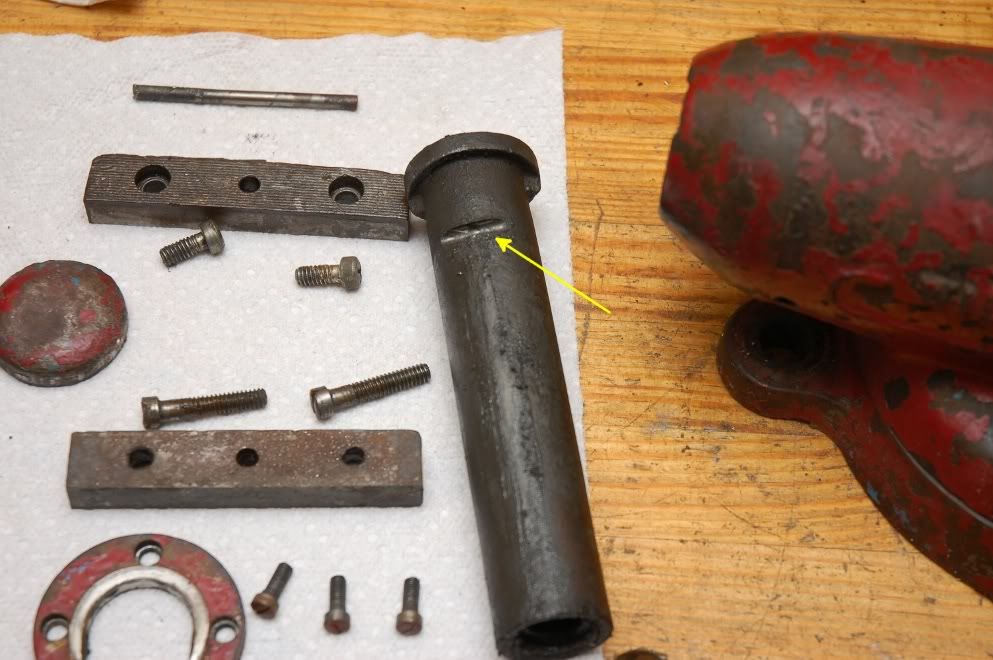
Once you've removed the nut, note that there is a slot on that the cross pin passes through. This slot should face down and must be oriented correctly when you reinstall the nut. On my larger Wilton there are two dimples on the sides of the nut for the machine screws to go into.
Step 7
Depending on whether your model has a swivel base you may not need to perform this last step. To remove the swivel base, simply remove the two nuts that are used to lock the vise down.
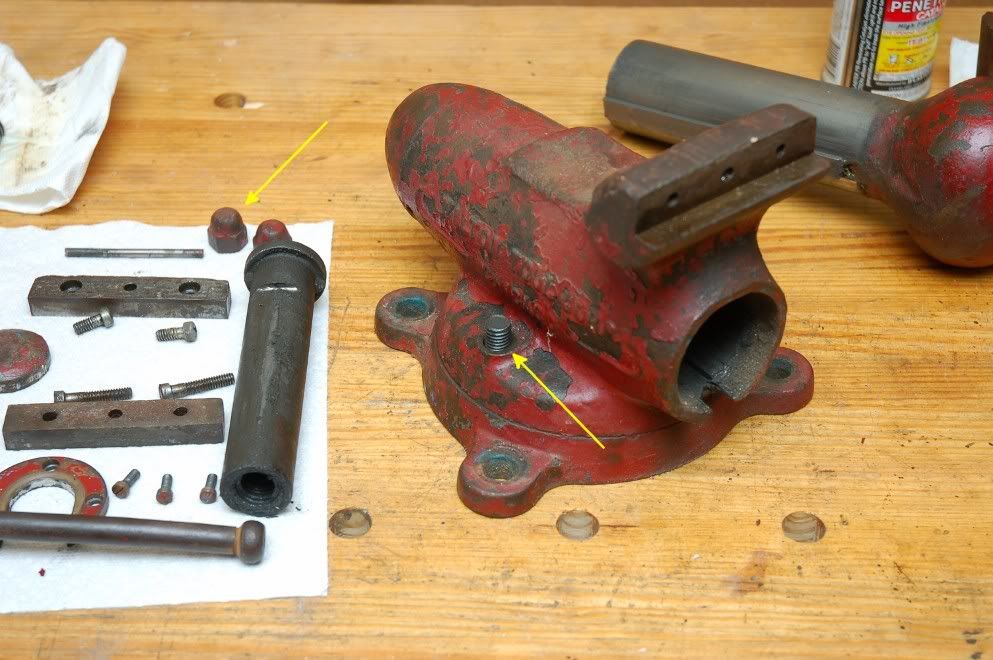
Congrats, your vise is now fully disassembled.
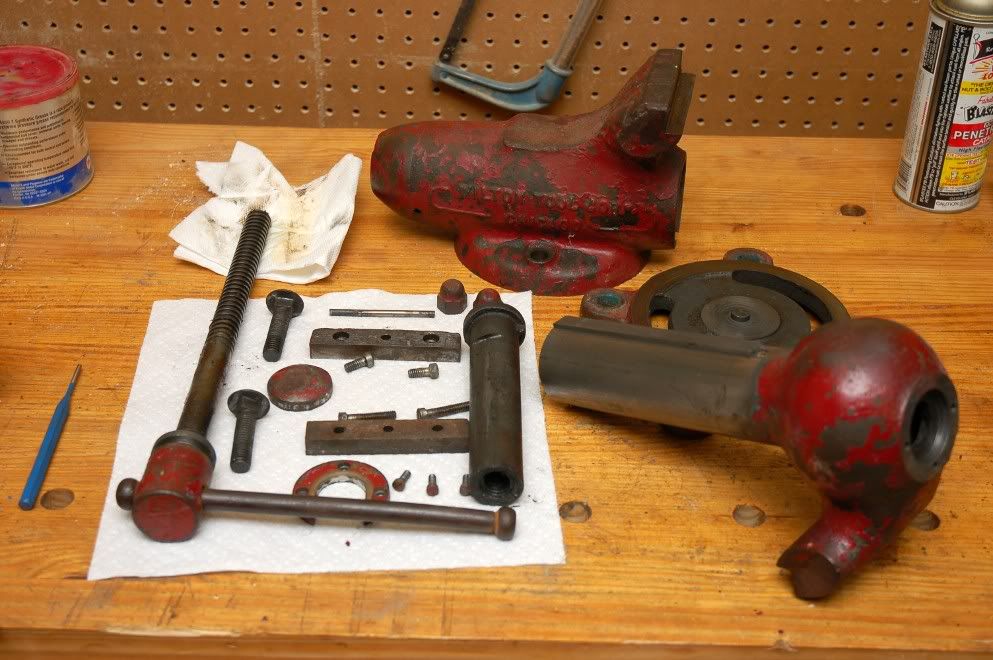
Assembly is the reverse of the disassembly process. On some Wiltons, a date is stamped on the end of the bottom flat on the dynamic jaw. There's none on this one but there is one on my other wilton vise. Depending on what's written, this date is either when the vise was made or when the warranty expires. While it's apart be sure to degunk the sliding surfaces and lead screw. Then apply some grease or antiseize compound to these surfaces and the swivel base if you have one.
Hopefully, this will help you in your efforts to keep your vise in prime working condition!
David
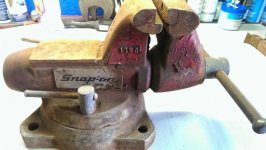
PS In case you're wondering about my other larger Wilton I reference several times, here it is.

Here's the vise.
Step 1
The first step is to remove the jaw pads. If the screws are really stuck in there then spray them with your favorite penetrant. It's also helpful to remove the dynamic (moving) jaw from the body of the vise so you can hold them vertically. With the screws in the vertical position you can put more force on the screws and tap the screwdriver with a hammer if needed. Once you've removed the pads it should look like this.
Step 2
The next step is to remove the three screws that hold the screw retaining plate on.
Step 3
With the retaining plate out of the way you can remove the lead screw and set it off to the side.
Step 4
Next, remove the dynamic jaw by pulling it out of the front of the vise. It can be heavy on the larger models so don't drop it. If the dust cover is still in place on the back of the vise remove it now. It can be removed by inserting a wooden dowel through the nut inside of the vise body. Tap on the end of the dowel to slowly remove the cover. Once again, some penatrant may be helpful if it's stubborn.
Step 5
With the dust cover removed you can now see the back of the nut. While I'm calling it a nut, it's more of a tube with threads on the inside. It is held in the vise by one or two cross pins or on my larger model two machine screws (one on each side). If you have screws, it's easy to tell the difference because there is no way the heads of the screws can pass through the body. If you don't have screws, then find out if you have one or two pins. Use a punch or nail with a flat end to drive the pin in a little bit. Did the pin move out on the other side? If so, then you probably have one pin. Drive the pin through the body as shown in the picture. In my case my punch was not long enough, so I put a small nail in between the pin and the punch. If the pin didn't move on the other side then you probably have two pins. Try to drive one pin in until the other pops out and then drive the remaining pin backwards out of it's side of the vise. The pins may not completely line up so while you may be able to push one pin with the other you may not be able to completely drive it out. Once you get a little of the pin out you can grab it with pliers if need be.
Depending on the vise you may be able to see the pins when looking through the back of the vise. If you're uncertain, viewing from the back, line a ruler up with the top of the holes on the sides to see if the pins should run through the opening where the lead screw goes. If you have pins, you should be able to run a piece of wire in one hole and out the other side to make sure nothing is in there. No matter what style is used, go slow and don't force it.
Step 6
If you look into the body from the front you can see the nut.
Use another block of wood and a hammer to drive the nut out through the back of the vise body.
Once you've removed the nut, note that there is a slot on that the cross pin passes through. This slot should face down and must be oriented correctly when you reinstall the nut. On my larger Wilton there are two dimples on the sides of the nut for the machine screws to go into.
Step 7
Depending on whether your model has a swivel base you may not need to perform this last step. To remove the swivel base, simply remove the two nuts that are used to lock the vise down.
Congrats, your vise is now fully disassembled.
Assembly is the reverse of the disassembly process. On some Wiltons, a date is stamped on the end of the bottom flat on the dynamic jaw. There's none on this one but there is one on my other wilton vise. Depending on what's written, this date is either when the vise was made or when the warranty expires. While it's apart be sure to degunk the sliding surfaces and lead screw. Then apply some grease or antiseize compound to these surfaces and the swivel base if you have one.
Hopefully, this will help you in your efforts to keep your vise in prime working condition!
David
PS In case you're wondering about my other larger Wilton I reference several times, here it is.
Last edited: