Bench Planes
There is a group of planes called Bench planes. Why? Because they are designed to be used on a woodworking bench, of course. Here is a class photo of the Stanley Bailey bench plane line.
Starting at the low end is the small #3. I omitted the 1 and 2 because they are collector items. Then there is the #4, #4 1/2, #5 1/4, #5, (forgot the #5 1/2), #6, #7, and the whopping big brother of all--the #8. Let's start with the #8. It is a jointer plane and its primary use is to true up edges of boards for glue ups (jointing). There is quite a size difference between the diminutive #3 and the massive #8.
Here is a picture of the #8 with its electric counterpart.
I like having both tools around so I can pick the one that is appropriate to the task. If I had to glue up a 6 foot maple tabletop, I would probably use the electric jointer because it is much faster. The handplane as jointer is good for low volume and for quiet. If you have a houseful of sleeping babies, your shop time is probably limited to quick sessions at night. In that case, the quiet handplane is your friend. The handplane also works best for narrow and short boards. The electric jointer raises the hair on my neck when it is in action. My cousin lost a part of his thumb in one. Those whirring blades are fast, sharp, and unforgiving. My dad called it the "beast of the shop." That is why I save mine for big, wide, long boards where my hands are safe.
So let's get this big boy #8 into action. Clamp your wood edge up on the bench and give it a good once over. Here is what I found.
This furring strip is a little twisty and has two knots in it. Here is the knot at the end of the board.
So what, you say, wood has knots. Yes it does, but handplane blades do not like knots. How would you like to go cruising along a soft board and encounter a hard knot? A knot is a great way to put a nick in your carefully sharpened blade. What to do? Get out your chisel and remove some of it. This is a glue up and a small void is not going to be a problem.
It is much easier to get a nick out of a 1/4" chisel than a 2 3/8" handplane blade. If you gouge out wood where it shows, just glue in a scrap or fill the tiny void with epoxy. It will give your project a handmade look.
With the board prepped, we are ready to plane. I set my blade slightly above the mouth so it does not cut. Then I slide the plane along and turn the adjuster wheel. Once I feel it bite, I am ready. Wispy shavings are the best. I start the plane at one end and hold it level to the table. In this case, it took short shavings because the board had a few high spots. I also hold the plane at a slight skew because it slices better. It is kinda like slicing tomatoes where a slicing action works better that a chopping action. About 5-10 degrees of skew is fine.
After a few passes, the plane begins to take full length shavings. But these are narrow because the board has a twist. I stop once it takes a full length and full width shaving. That was about six or eight passes for this board.
Here is the final shaving.
And here is the board sitting dead flat on the bench--ready for a glue up.
So that is Stanley's largest bench plane in action. These #8 planes are not very common and I find them a little large for my taste. I really prefer the slightly smaller #7 size. But handplanes are like pickups--too large is never a problem.
As a beginning woodworker, I searched for lumber with good edges and tried to glue it up without a jointer. As you can guess, my early projects were hit and miss. Once I learned about jointing with a handplane, my projects made an Olympic size jump in quality. Getting an electric jointer from my buddy, Dan just made some projects a little easier. A common woodworking project is making a dining table for the family. Don't be shy if you lack tools. Just pick up a jointer plane, #7 or #8, and build your project. It is easy and you will be proud of your tight joints.


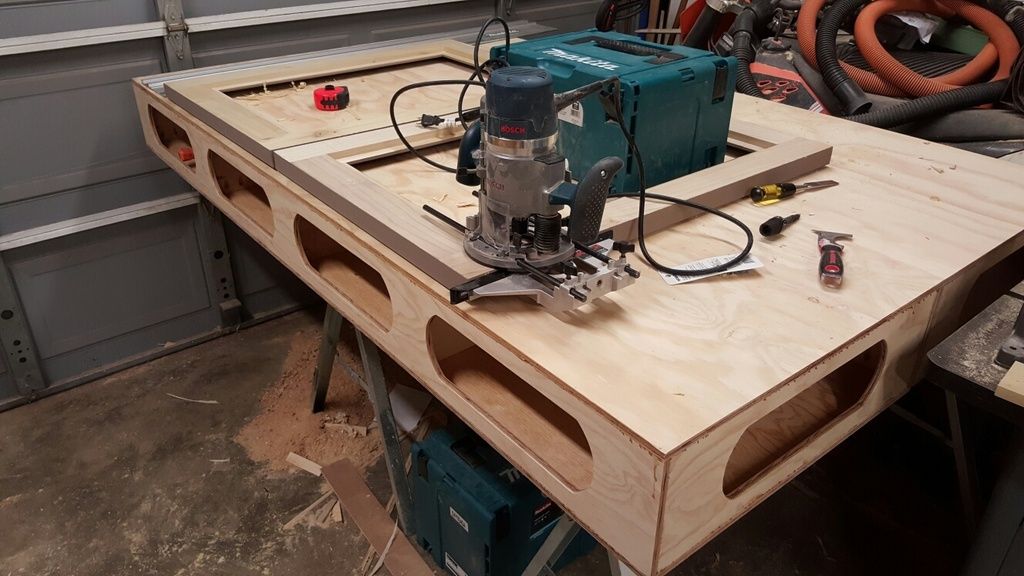
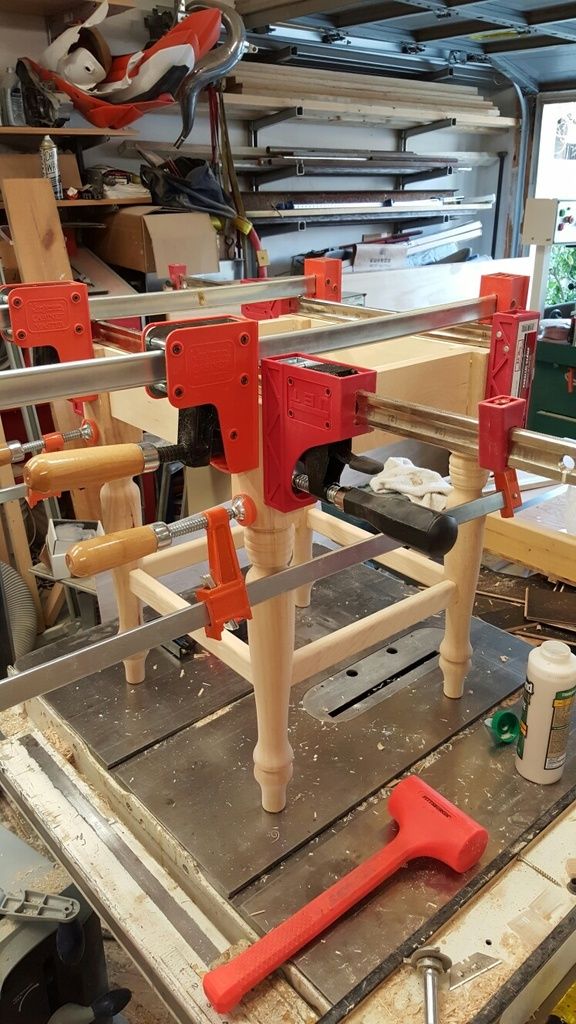







 I've upgraded to aftermarket blades in all of them and spent a ridiculous amount of time tuning them. Amazing what one can do with a hand plane!!!





 I'm waiting for a No. 7 and No. 3 to be delivered. They will be added to my No. 4 and No 5. Along with a low angle block plane and I think it will meet my hand planing needs - at least for now. Or, until I take the plunge and buy real planes like Jim's LN's. Nice planes Jim!