To avoid these ads, REGISTER NOW!

200a feed to dwelling, 4/0 max distance?

PCustoms

Well-known member
Joined
Jul 23, 2011
Messages
22,870
Location
VT
Trying to plan out fixing an issue with the feed to my house. House doesn't currently need 200a, but with the possibility of adding a detached off that panel, adding AC and future EV chargers I think it's best to buy once, cry once.

Can aluminum 4/0 support that load?

What distance?

Can I reduce neutral and ground?
 
Last edited:
To avoid these ads, REGISTER NOW!

alfredeneuman

Well-known member
Joined
Mar 3, 2011
Messages
4,580
Location
Fullerton, CA
It all depends on the length of the run and the expected load.
The feed to the house should be 3 wire. Grounding is done at the service.
 
OP
P

PCustoms

Well-known member
Joined
Jul 23, 2011
Messages
22,870
Location
VT
It all depends on the length of the run and the expected load.
The feed to the house should be 3 wire. Grounding is done at the service.

Meter/main will be close at the pole, 4 wire feed to the house unless I'm missing something.

So my question stands, can 4/0 support 200a to a dwelling, what is the max distance, and can the neutral and ground be reduced?
 
OP
P

PCustoms

Well-known member
Joined
Jul 23, 2011
Messages
22,870
Location
VT
and my prior statement still stands too (not the ground issue)
The ground can't be reduced in any case.

Apologies if I am the one being dense....

How far of a run can 4/0 aluminum support 200A?

I did a load calc years ago, I think the house is currently at 90A. But, I don't have any AC, EV or shop load currently...so I want to budget 200A service to the house panel, which is a distance, TBD, from where the pole and meter main will be located. If I can only go 100' and get 200A, then that dictates where the meter main can go.
 
OP
P

PCustoms

Well-known member
Joined
Jul 23, 2011
Messages
22,870
Location
VT
Why not put the meter main on the house? are you required to put it on a pole in the yard?
Not required, but it it reduces the distance that I'd run to a future shop and has the advantage that I can move the generator inlet away from the house (less noise).

Working on clearing and grading the yard right now, will sketch the layout later.
 
OP
P

PCustoms

Well-known member
Joined
Jul 23, 2011
Messages
22,870
Location
VT
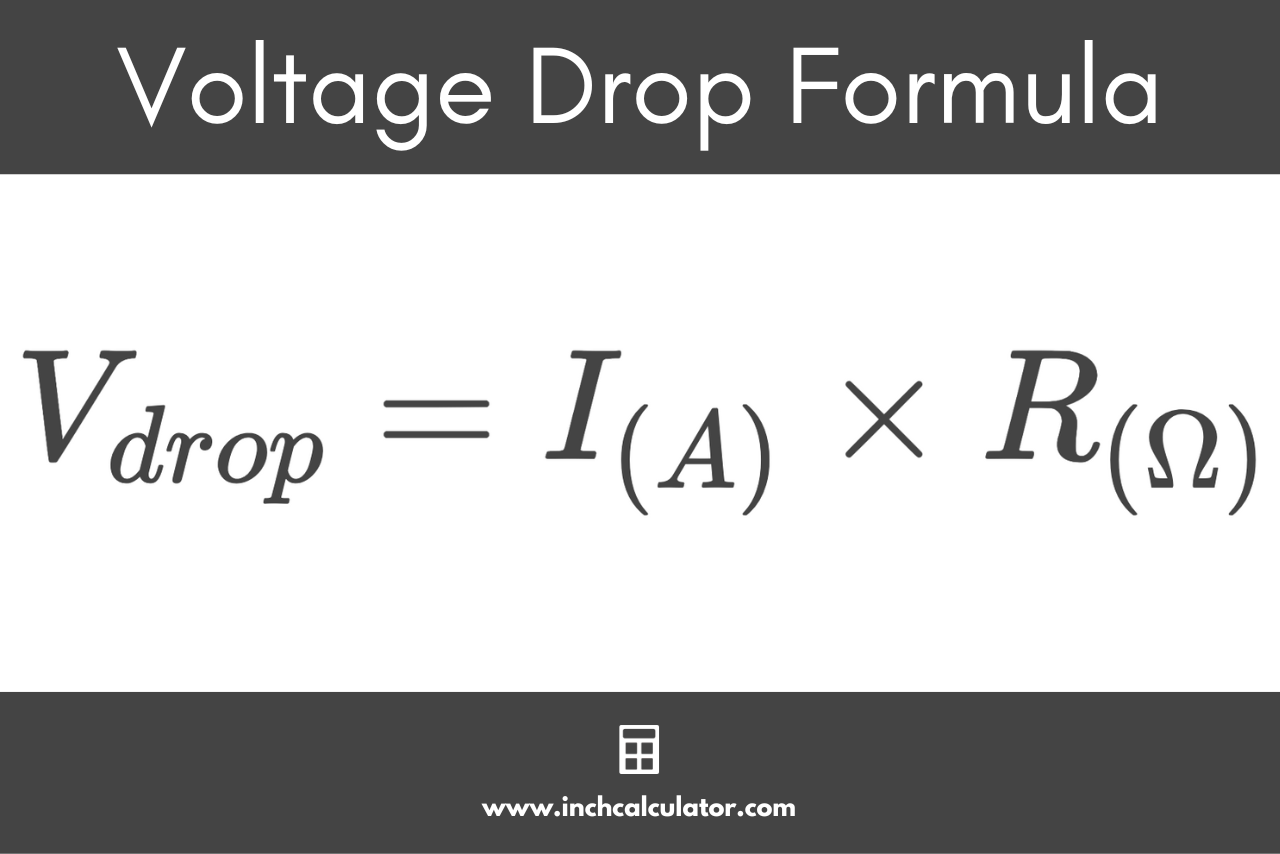
Calculators like this are why I am asking the question.

This one indicates 2.5% drop at 200', which will be no problem. Others indicate 250mcm is needed, or give results that 4/0 may not support 200a even at much shorter distances.
 

wyliesdiesels

Well-known member
Joined
Aug 14, 2012
Messages
20,014
Location
Modesto, CA
Not required, but it it reduces the distance that I'd run to a future shop and has the advantage that I can move the generator inlet away from the house (less noise).

Working on clearing and grading the yard right now, will sketch the layout later.
it would be better to have the meter main on the house. that way if you need to add circuits in the future its a lot easier
 
OP
P

PCustoms

Well-known member
Joined
Jul 23, 2011
Messages
22,870
Location
VT
it would be better to have the meter main on the house. that way if you need to add circuits in the future its a lot easier
I'm lost, why?

Meter main feeds the house panel as a sub. That panel has room to expand.

Meter main will also feed a 2nd sub in the detached shop.

The transformer is pretty much in the middle of the house and planned shop site.
 

Bert_

Well-known member
Joined
Dec 24, 2016
Messages
9,732
Location
NW Iowa
Meters mounted to the house is fine for stuff in town. It rarely makes sense if your buildings are more spread out
 

wyliesdiesels

Well-known member
Joined
Aug 14, 2012
Messages
20,014
Location
Modesto, CA
Calculators like this are why I am asking the question.

This one indicates 2.5% drop at 200', which will be no problem. Others indicate 250mcm is needed, or give results that 4/0 may not support 200a even at much shorter distances.
the voltage drop calculators online are not reliable. they all use different parameters which is why you get different results. some (like the southwire calculator) actually output larger wire sizes than is actually needed. hmmm i wonder why a wire manufacturer would do that?? 🤑 :pimpflash:pimpflash

i actually have the voltage drop math formula posted in #29 on the electrical FAQ sticky found in the link below. so you can calc it yourself


u2slow

Well-known member
Joined
Nov 20, 2011
Messages
3,590
Location
BC
I recommend the meter at the house also. The utility usually supplies the cable up to a certain distance within the upgrade fee. Also, if it's overhead, it's smaller cable; you only need the #4/0 to get from the weatherhead to the 200A panel. Next size up - 250kcmil is readily available also.
 

mm08822

Well-known member
Joined
Jan 13, 2012
Messages
5,931
Location
NJ
Calculators like this are why I am asking the question.

This one indicates 2.5% drop at 200', which will be no problem. Others indicate 250mcm is needed, or give results that 4/0 may not support 200a even at much shorter distances.
Since you have a meter/main, the house would be fed by a feeder from the pole and not service entrance conductors as defined by code definition.

The NEC allows for an exception for residential service entrance conductors. 4/0 Al is only good for 185A as a feeder but 200A as service entrance conductors. I've never seen a wire size calculator take that exception into account.

So the wire size calculator that returned 250mcm is correct. If you used 250mcm to the house from the pole, it would carry the full 200A @ 2% VD for 125'. The real question is do you need all that?

If you also added to that panel mentioned above and chose a 90A feeder to the garage, 2-2-4-6 AL would work for 130' @ 3% VD. (Total of 5% VD.) Again, do you need all that power?

Guestimate your worst-case simultaneous loads first for both house and garage first.
 

Bert_

Well-known member
Joined
Dec 24, 2016
Messages
9,732
Location
NW Iowa
Since you have a meter/main, the house would be fed by a feeder from the pole and not service entrance conductors as defined by code definition.

The NEC allows for an exception for residential service entrance conductors. 4/0 Al is only good for 185A as a feeder but 200A as service entrance conductors. I've never seen a wire size calculator take that exception into account.

So the wire size calculator that returned 250mcm is correct. If you used 250mcm to the house from the pole, it would carry the full 200A @ 2% VD for 125'. The real question is do you need all that?

If you also added to that panel mentioned above and chose a 90A feeder to the garage, 2-2-4-6 AL would work for 130' @ 3% VD. (Total of 5% VD.) Again, do you need all that power?

Guestimate your worst-case simultaneous loads first for both house and garage first.
If your load is 180a or less you can still use the 4/0. No 180A breakers so you can round up
 
To avoid these ads, REGISTER NOW!

alfredeneuman

Well-known member
Joined
Mar 3, 2011
Messages
4,580
Location
Fullerton, CA
I didn't see where it was definitively answered but NO you cannot reduce the neutral.
NEC 215.2 Grounded Conductor
"The grounded conductor shall not be smaller than that required by 250.122"

That means the neutral can't be smaller than the appropriate equipment ground for the feeder. In the case of a 200A circuit it would be a #4 aluminum or #6 copper.
 
Last edited:

ArcReactorKC

Well-known member
Joined
Jun 1, 2019
Messages
2,237
Location
Out in the county NE of KCMO
NEC 215.2 Grounded Conductor
"The grounded conductor shall not be smaller than that required by 250.122"

That means the neutral can't be smaller than the appropriate equipment ground for the feeder. In the case of a 200A circuit it would be a #4 aluminum or #6 copper.
220.61(A), “Basic Calculation”, states that a “feeder or service neutral load shall be the maximum unbalance of the load determined by this article [220]. The maximum unbalanced load shall be the maximum net calculated load between the neutral conductor and any one ungrounded conductor [hots]”. What this means is that the neutral conductor can’t be smaller than the unbalanced load that it could carry from the neutral to ungrounded conductors.


It also has to be sized to the available fault current. But that is a whole 'nother ball of wax.
 

alfredeneuman

Well-known member
Joined
Mar 3, 2011
Messages
4,580
Location
Fullerton, CA
What this means is that the neutral conductor can’t be smaller than the unbalanced load that it could carry from the neutral to ungrounded conductors.
If the load consisted of all line to line connections then there would be zero current on the neutral. If the line to neutral load was 50A then a #6 would handle it easily.
 

alfredeneuman

Well-known member
Joined
Mar 3, 2011
Messages
4,580
Location
Fullerton, CA
Correct, in what residence are all loads line to line?
We're not talking about a residence.
We're discussing a shop where the likelihood of a greater percentage of the loads will be L-L.
Anyhow it was just an example.
The circuit is the feeder, which combines all the circuits regardless of their individual neutral loads.
Line to neutral circuits from the different legs cancel each other out (subtractive vs additive)
A 50A unbalanced load isn't uncommon.
 

ArcReactorKC

Well-known member
Joined
Jun 1, 2019
Messages
2,237
Location
Out in the county NE of KCMO
We're not talking about a residence.
We're discussing a shop where the likelihood of a greater percentage of the loads will be L-L.
Anyhow it was just an example.
The circuit is the feeder, which combines all the circuits regardless of their individual neutral loads.
Line to neutral circuits from the different legs cancel each other out (subtractive vs additive)
A 50A unbalanced load isn't uncommon.
I don't know if you are a licensed/experienced electrician but regardless this was the first post.
I'm more than aware of how loads work. I literally own/operate a paralleling switchgear company.


Screenshot 2023-04-19 112056.png
 

mm08822

Well-known member
Joined
Jan 13, 2012
Messages
5,931
Location
NJ
I didn't see where it was definitively answered but NO you cannot reduce the neutral.
The neutral can be reduced with calculations performed to justify the smaller - examples are provided in NEC Informative Annex D. I don't think anyone is suggesting anything smaller than 2 sizes below the ungrounded conductor sizes. e.g. - 4/0 -> 2/0. The size reductions on this order are typical of manufactured cable assemblies, SEU, SER, MHF, etc.

The calculations assume all general loads are on one leg. With a panel buss alternating "phases" and the typical practice of contiguous stacking of cb's in a panel, it would be a rarity for all single phase loads to be on one leg.
220.61(A), “Basic Calculation”, states that a “feeder or service neutral load shall be the maximum unbalance of the load determined by this article [220]. The maximum unbalanced load shall be the maximum net calculated load between the neutral conductor and any one ungrounded conductor [hots]”. What this means is that the neutral conductor can’t be smaller than the unbalanced load that it could carry from the neutral to ungrounded conductors.


It also has to be sized to the available fault current. But that is a whole 'nother ball of wax.
Assuming the calculations mentioned above resulted in a very small neutral size, there is a minimum size required. It is the same size as the grounding conductor. There is no ball of wax as both neutral and grounding conductors are sized to provide an adequate fault path to trip OCP regardless of the fault mode.
 

mm08822

Well-known member
Joined
Jan 13, 2012
Messages
5,931
Location
NJ
If your load is 180a or less you can still use the 4/0. No 180A breakers so you can round up
Interestingly enough, at 180 Amp max load, 4/0 Al provides a 2% VD @ 125'. 250mcm AL only provides another 20 Amps for same VD/length.
 

alfredeneuman

Well-known member
Joined
Mar 3, 2011
Messages
4,580
Location
Fullerton, CA
I apologize for the mistake of the house to the outbuilding's feeder comment.
The rest is true though. What scenario do you picture where all the load will be on one leg?
The loads on the individual legs will largely cancel out the neutral current at the panel.
Remember, you said "NO you cannot reduce the neutral"
 
Last edited:

alfredeneuman

Well-known member
Joined
Mar 3, 2011
Messages
4,580
Location
Fullerton, CA
I don't know if you are a licensed/experienced electrician but regardless this was the first post.
I'm more than aware of how loads work. I literally own/operate a paralleling switchgear company.
I'm just a retired Electrical Contractor with 45+ years in the trade.
From the description of your position you should know better how loads work than this.
 
Last edited:
OP
P

PCustoms

Well-known member
Joined
Jul 23, 2011
Messages
22,870
Location
VT
Bumping thread. Current arial feed is at 90'. Add another 30' up the pole and 10' at the house end plus a generous fudge factor and it looks like I'd need 150' point to point for the longest possible run.
 
OP
P

PCustoms

Well-known member
Joined
Jul 23, 2011
Messages
22,870
Location
VT
Yes, as can mhf and some URD
That's what I thought.

Read back through the thread and am still confused about the neutral.

If I need 4/0, looks like buying individual cables saves me some $$.

If I need 4/0, 4/0, 2/0, 4 then MHF might be cheaper.
 

mike93lx

ALLIANCE MEMBER
Joined
Dec 9, 2013
Messages
37,561
Location
Richmond, VA
That's what I thought.

Read back through the thread and am still confused about the neutral.

If I need 4/0, looks like buying individual cables saves me some $$.

If I need 4/0, 4/0, 2/0, 4 then MHF might be cheaper.
There is effectively no chance of overload 2/0 neutral. You'd have to try like hell to and even then, it wouldn't be easy
 
OP
P

PCustoms

Well-known member
Joined
Jul 23, 2011
Messages
22,870
Location
VT
There is effectively no chance of overload 2/0 neutral. You'd have to try like hell to and even then, it wouldn't be easy
OK. So 4/0, 4/0, 2/0 from pole down to meter/main, then 4/0, 4/0, 2/0, 4 on to house.

Total run is less then 150'.

Buying individual XHHW-2 instead of URD and MHF seems to come out cheaper. Need to do this on a computer and not my phone as I take a beverage break though.
 
To avoid these ads, REGISTER NOW!
Top Bottom