To avoid these ads, REGISTER NOW!

redmondjp

Well-known member
Joined
Nov 25, 2014
Messages
2,318
Location
Redmond, WA
Thank you for that rock solid clarification

I am going to pursue this pump then as well as look for a large enough single phase motor to spin it

thx again


Just a caution - that pump could be in like-new condition, or it could need $xxxx in repairs (yes, that's four figures). You won't really know until you try to run it or tear it down for an inspection.

And you'll at least need to determine which model it is, so you can see how much motor you're going to need. With the 340 and 350, a single 5HP is all you need (spinning at the minimum pump speed). The 370 will need at least 7.5HP (you could use two belts to a 5HP motor on one side, and a single belt to a 2 or 3HP motor on the other side).
 
To avoid these ads, REGISTER NOW!

stevemorris6

Member
Joined
Jul 12, 2015
Messages
5
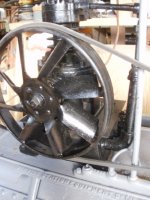
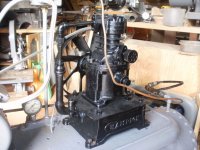
here's an old compressor I just picked up, no idea of the age
the tank hold pressure but the plumbing doesn't very well
the pump is a champion, compressor has "service station equipment co ltd Toronto Canada" cast into the drip tray
the tank is 1/4 thick steel riveted together
motor is a modern 1/2 hp tefc

the plumbing is going to get an overhaul, the pump runs fine
 

Attachments

  • 001.JPG
    001.JPG
    135.4 KB · Views: 158
  • 002.JPG
    002.JPG
    123.2 KB · Views: 110
  • 003.JPG
    003.JPG
    144.2 KB · Views: 124
  • 004.JPG
    004.JPG
    138.7 KB · Views: 107

stevemorris6

Member
Joined
Jul 12, 2015
Messages
5
and some questions
ive had the old beast holding at 110 psi for 4 hours, no visible leaks
there is a safety relief valve, its stamped 175, so I assume 175 psi, its in great condition

a couple of questions:

I want to change the crankcase oil, what should I use

the pressure switch has a small relief valve that's actuated when the motor shuts off, but its tied into the tank line and bleeds off the entire system, surely it should just bleed off the cylinder head to ease startup and there should be a check valve between the cylinders and the tank, there isn't, i bent the small arm to disable it temporarily

the plumbing in general is a mess, no regulator, messy 1/4 inch line to the pressure switch relief valve, bent up crappy 1/2 copper tube to the tank, no outlet for tools except for a valve on the end of the tank

and a speed question, I want to replace the modern tefc with an old delta 3/4 hp, gonna need a new pulley, what speed should I aim for. right now its running at 575 rpm(3 to 1 reduction)
 

redmondjp

Well-known member
Joined
Nov 25, 2014
Messages
2,318
Location
Redmond, WA
and some questions
ive had the old beast holding at 110 psi for 4 hours, no visible leaks
there is a safety relief valve, its stamped 175, so I assume 175 psi, its in great condition

a couple of questions:

I want to change the crankcase oil, what should I use

the pressure switch has a small relief valve that's actuated when the motor shuts off, but its tied into the tank line and bleeds off the entire system, surely it should just bleed off the cylinder head to ease startup and there should be a check valve between the cylinders and the tank, there isn't, i bent the small arm to disable it temporarily

the plumbing in general is a mess, no regulator, messy 1/4 inch line to the pressure switch relief valve, bent up crappy 1/2 copper tube to the tank, no outlet for tools except for a valve on the end of the tank

and a speed question, I want to replace the modern tefc with an old delta 3/4 hp, gonna need a new pulley, what speed should I aim for. right now its running at 575 rpm(3 to 1 reduction)

I'd use 30W non-detergent oil in the pump.

You need to add a check valve at the inlet to the tank. The check valve you want will have a 1/8" NPT female threaded port on it - that's where the copper line connects that goes to the unloader on the pressure switch.

I would put a lower PSI pressure relief valve on the tank, 150PSI or less.

I'd try the same pulley size with the older motor initially and see how it does. The best way to tell if you are OK is to measure the running current of the motor as the compressor nears its shutoff point. If that's at or below the Full Load Amps (FLA) of the motor, you're good.
 

twooldfarmers

Member
Joined
Jul 9, 2015
Messages
12
Location
SK
Just a caution - that pump could be in like-new condition, or it could need $xxxx in repairs (yes, that's four figures). You won't really know until you try to run it or tear it down for an inspection.

And you'll at least need to determine which model it is, so you can see how much motor you're going to need. With the 340 and 350, a single 5HP is all you need (spinning at the minimum pump speed). The 370 will need at least 7.5HP (you could use two belts to a 5HP motor on one side, and a single belt to a 2 or 3HP motor on the other side).

wellfor better or worse I am into it, I ordered the HOC kit for the old Kellogg as it only needed 2 springs in the poppett valves and one of the cooling pipes was all but cracked off where it attached to the underside of the head, musta' had a heck of a leak there

as for the Quinc', film at eleven on that. I am going to spike it to a couple of railway ties and hook it up to a vessel and then spin it with a gas motor of some sort and see what we got . . .

anyone know how to determine age of the old Kellogg with the serial number B 333 269

thanks
 

Attachments

  • the 370 and Kellogg 331.jpg
    the 370 and Kellogg 331.jpg
    146.4 KB · Views: 123

twooldfarmers

Member
Joined
Jul 9, 2015
Messages
12
Location
SK
CORRECTION

I have had more information come to me about the Quincy pump and it has been identified as a model 350 as it has 4 intercooler tubes (not 2 as the 340 is equipped with) and a 19 1/2 flywheel the same as the 340 and not a 23" inch wheel as the 370's are equipped

which to me is good as I can use less horse power to run the 350. I intend to run it at the minimum of 400 rpm for the least amount of noise
 

redmondjp

Well-known member
Joined
Nov 25, 2014
Messages
2,318
Location
Redmond, WA
CORRECTION

I have had more information come to me about the Quincy pump and it has been identified as a model 350 as it has 4 intercooler tubes (not 2 as the 340 is equipped with) and a 19 1/2 flywheel the same as the 340 and not a 23" inch wheel as the 370's are equipped

which to me is good as I can use less horse power to run the 350. I intend to run it at the minimum of 400 rpm for the least amount of noise

That's awesome - to me, that pump is compressor nirvana - add an intake muffler and/or remote air inlet, and you'll have the quietest reciprocating compressor possible.
 

twooldfarmers

Member
Joined
Jul 9, 2015
Messages
12
Location
SK
Hi can you tell me how much you paid for that compressor. I have one that is almost exact that I want to sell. Thank you
Laura

I just brought this home today, and thought I would share it here. I would rather have a vintage American compressor, than a new one. So after some research, I kept my eyes open for a Kellogg American. For a winter project, I'll clean it up, paint, re-gasket, and tune up. The data plates say it is made by Schramm. The pump is a 1959 Kellogg American 331 with centrifugal unloader. It currently has a 3 hp motor turning it 390 rpm. I'm considering a 5 hp motor to spin it at about 550 rpm. This thing is quiet and massive!


I wonder just how much air is it producing using that three horse motor

I am stuck using a three as I called my son this afternoon and he cannot supply enough amps to run a single phase 5 horse

I have 1740/220V that draws 23 amps, that he can run but the question is how slow can you run the 331TV and still produce an decent volume of working air pressure

I have the HOC kit on the way from Pacific Compressor, nice cordial bunch

anyway any thoughts on the speed yours is running at with the 3 horse and do you think the 3 would run it any faster or is is maxed already when running in the place of a 5 horse?
 

Attachments

  • Kellogg 331 TV and mystery Quincy.jpg
    Kellogg 331 TV and mystery Quincy.jpg
    136.7 KB · Views: 68

twooldfarmers

Member
Joined
Jul 9, 2015
Messages
12
Location
SK
CORRECTION

I have had more information come to me about the Quincy pump and it has been identified as a model 350 as it has 4 intercooler tubes (not 2 as the 340 is equipped with) and a 19 1/2 flywheel the same as the 340 and not a 23" inch wheel as the 370's are equipped

which to me is good as I can use less horse power to run the 350. I intend to run it at the minimum of 400 rpm for the least amount of noise

PROBLEM with the above diagnosis

I checked the stroke today by removing both inspection plates and confirmed a 4" stroke only to check online and find that the 350 is a 3 1/2 inch and the model 370 is a 4" ???

now what, I was able to get a number cast into the high pressure cylinders connecting rod and it corresponded with a part number in the 350 parts list I printed off. I have not yet been able to find a 370 parts list to see if only the crankshaft was different. This is getting more muddled instead of less
 
Last edited:

twooldfarmers

Member
Joined
Jul 9, 2015
Messages
12
Location
SK
PROBLEM with the above diagnosis

I checked the stroke today by removing both inspection plates and confirmed a 4" stroke only to check online and find that the 350 is a 3 1/2 inch and the model 370 is a 4" ???
now what,

I was able to get a number cast into the high pressure cylinders connecting rod and it corresponded with a part number in the 350 parts list I printed off. I have not yet been able to find a 370 parts list to see if only the crankshaft was different. This is getting more muddled instead of less

A little later . . . . . . . .

I found an online parts manual and the 370 uses the same connecting rod numbered 110802 as well that I saw when looking into the bottom of the pump so even though it has the small 19 1/2 flywheel it seems to have the stroke and internals of a 370 ?
 
Last edited:

MikeF2316

Well-known member
Joined
Dec 29, 2012
Messages
9,605
Location
Thornhill, ON
I've been meaning to post these pictures for ages, I just kept forgetting they were in my phone. This compressor was bought in 1968. I was only 7 at the time, I remember that the first one was damaged in shipping, the pump head was cracked. This was the replacement.

attachment.php


attachment.php


attachment.php


attachment.php


attachment.php


attachment.php
 

Attachments

  • IMG_0503S.JPG
    IMG_0503S.JPG
    50.2 KB · Views: 1,207
  • IMG_0502S.JPG
    IMG_0502S.JPG
    46.9 KB · Views: 1,196
  • IMG_0501S.JPG
    IMG_0501S.JPG
    48 KB · Views: 1,206
  • IMG_0500S.JPG
    IMG_0500S.JPG
    56.5 KB · Views: 1,628
  • IMG_0499S.JPG
    IMG_0499S.JPG
    43 KB · Views: 1,206
  • IMG_0498S.JPG
    IMG_0498S.JPG
    46.1 KB · Views: 1,641

Chagens86

New member
Joined
Aug 1, 2015
Messages
2
Okay so out of all the research I've done I can't seem to find any information on what exactly this compressor was used for. Everything pretty much referred me to hear as it is and Ingersoll Rand 1945 type 30. It is the best compressor I have ever used and I got it from a guy that painted a lot of cars with it but I would like to restore it and have found parts but not cheap any suggestions or ideas?
 

Attachments

  • 1438450185296-56930241.jpg
    1438450185296-56930241.jpg
    148.8 KB · Views: 115
  • 1438450232247-56550347.jpg
    1438450232247-56550347.jpg
    154.3 KB · Views: 82

redmondjp

Well-known member
Joined
Nov 25, 2014
Messages
2,318
Location
Redmond, WA
Okay so out of all the research I've done I can't seem to find any information on what exactly this compressor was used for. Everything pretty much referred me to hear as it is and Ingersoll Rand 1945 type 30. It is the best compressor I have ever used and I got it from a guy that painted a lot of cars with it but I would like to restore it and have found parts but not cheap any suggestions or ideas?

So how does it run now? Any oil in the tank? Water in the compressor oil? Low compressor oil? If you can find any parts at all for a compressor pump this old you are doing good, regardless of the price. Are you trying to restore it cosmetically as well, such as finding its original paint color and so on?

I'm not sure I understand what you are asking here. And what is your intended use? This compressor, although a 2-stage, is on the small side for continuous air-using tools.
 

Chagens86

New member
Joined
Aug 1, 2015
Messages
2
Runs very nice, smooth, and quiet. Always had some sort of evap system hooked to it and yeah, holds oil fine. Just wanted to know about operating specs, possibilities of air tools to use other than sand cabinet and die grinders. I would like to restore cosmetically as well, is there a color code for Ingersoll rand? It is going to be used just as much as eye candy to sit in the bed of my old pickup at shows and what not. Any suggestions on where to start and what to look for in order to restore this thing properly and make sure it's going to last is what I'm after. I haven't started it yet, but I am nervous to try and pull those plugs to check inside but I know it was taken care of for sure.
 
Last edited:

scrap

Member
Joined
Jul 30, 2013
Messages
5
May I introduce you to her Royal Highness, Princess Pressure. Yes she's old and ugly but she is still a pleasure to listen to.
 

Attachments

  • 14388200262450.jpg
    14388200262450.jpg
    128.5 KB · Views: 85
  • 14388200380801.jpg
    14388200380801.jpg
    110.7 KB · Views: 111

dagr8tim

New member
Joined
Mar 28, 2010
Messages
4
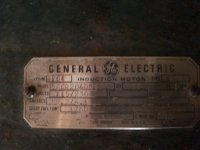
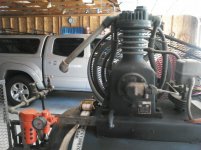
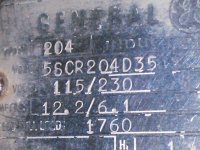
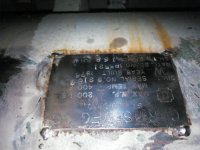
Hey guys, I'm hoping somebody can help me with this. I picked up what appears to be a vintage GE air compressor, but I'm not familiar with the design. It looks nothing like the nearly 40 year old craftsman I used to have. Quite possibly it was made with spare parts. Anyone ever seen anything like this?

By my guess, I would assume it's a dual cylinder from the intake manifolds, but I've only seen them in a V before.

11870645_10156377814780131_4400880008105467951_n.jpg


11225323_10156377815015131_7469883097097909713_n.jpg


11903791_10156377814860131_8600439918768011718_n.jpg


11885199_10156377815195131_3052244582399393101_n.jpg

Yes I know, I broke the oil fill ****** unloading it. I need to run to the hardware store and get a 1/4" x 4" ****** to fix it.

11885238_10156377815285131_8940492972179605194_n.jpg


This is the oil fill/vent tube and the gal ****** I broke unloading it.
 

930dreamer

Super Moderator
Staff member
Joined
Oct 7, 2009
Messages
22,960
Location
Amarillo,TX and Stinnett,TX
Gardner Denver, tank is stamped 1955, Cat D8800 with pony start motor.
 

Attachments

  • 100_3099.jpg
    100_3099.jpg
    146 KB · Views: 71
  • 100_3104.jpg
    100_3104.jpg
    133.9 KB · Views: 69
  • 100_3107.jpg
    100_3107.jpg
    133 KB · Views: 64
  • 100_3103.jpg
    100_3103.jpg
    109.9 KB · Views: 63

scoker66018

New member
Joined
Aug 1, 2015
Messages
4
Curtis compressor please help hello iam rebuilding my grandfathers old Curtis compressor and i cannot get any parts schematic for it i need then for the pressure relief valve and the reeds. i have it apart and am replaceing the rings with champion rings of the same bore diameter but im not sure on the pressure relief valve and the reed. i never seen one like this please help if u have any info it would be much appreciated i would like to know what size of a.c. motor as well if u can help here are the spec Curtis pump
patent: 1869362
model 1396391 1708158
size 2 5/8 x 2 5/8
serial 3085-8006
min compressor rpm 400 please email me [email protected] this is a current project and im kinda stuck thanks


DSCN0097.jpg

DSCN0098.jpg

DSCN0095.jpg[/ATTACH][/ATTACH]
 
Last edited:

BMB

Well-known member
Joined
Sep 12, 2011
Messages
192
Location
GA USA
Hey guys, I'm hoping somebody can help me with this. I picked up what appears to be a vintage GE air compressor, but I'm not familiar with the design. It looks nothing like the nearly 40 year old craftsman I used to have. Quite possibly it was made with spare parts. Anyone ever seen anything like this?

That's not an air compressor pump.
It's a refrigerant (AC) pump.
 
To avoid these ads, REGISTER NOW!

bagged89s10

Well-known member
Joined
Mar 13, 2005
Messages
4,607
Location
CT
I might be picking this up tomorrow but it's wired for 220 and the seller doesn't have a 220 plug. He said he got it from his neighbor who moved and couldn't take it with him, but it did ran. Anyone know who made these for sears and how loud they are?
Model 106.154780 twin cylinder pump with a 20 gal tank and a 2 HP
ImageUploadedByTapatalk1440448054.676208.jpg

I'm trying to replace my oil less craftsman compressor which is just crazy loud.
 

bagged89s10

Well-known member
Joined
Mar 13, 2005
Messages
4,607
Location
CT
Picked it up. Put a plug end to fit my 220 outlet and it purrs. I will be changing the oil/filter in the pump, new lines from the pump to tank/switch/regular, new petcock, and repainted in hammered copper.
ImageUploadedByTapatalk1440612684.989527.jpg
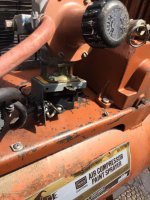
Anyone know if I can find a cover for this pressure switch? I'm assuming it's missing an manual on/off switch too.
ImageUploadedByTapatalk1440612726.474853.jpg
ImageUploadedByTapatalk1440612734.928709.jpg
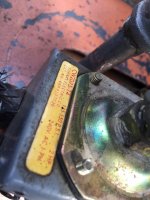
I will try to recreate the label too. Or at least try to remove it with a heat gun and laminate it somehow.
ImageUploadedByTapatalk1440612744.246305.jpg
 

redmondjp

Well-known member
Joined
Nov 25, 2014
Messages
2,318
Location
Redmond, WA
Picked it up. Put a plug end to fit my 220 outlet and it purrs. I will be changing the oil/filter in the pump, new lines from the pump to tank/switch/regular, new petcock, and repainted in hammered copper.

Congratulations, but before you put a lot of time into it, I'd just change the oil in the pump and run it for awhile to see what kind of shape the pump is in. I have had several of these exact same compressors (in the extended family), and they would wear rings and blow a lot of oil into the tank. Also, tank pinholes at the bottom were not uncommon. Just my $.02.
 

bagged89s10

Well-known member
Joined
Mar 13, 2005
Messages
4,607
Location
CT
Congratulations, but before you put a lot of time into it, I'd just change the oil in the pump and run it for awhile to see what kind of shape the pump is in. I have had several of these exact same compressors (in the extended family), and they would wear rings and blow a lot of oil into the tank. Also, tank pinholes at the bottom were not uncommon. Just my $.02.


So if it's blowing oil into the tank and the rings are worn, are the rings replacable/serviceable? If the tank has pinholes, I guess I can make a mount to mount pump and motor onto my oil less compressor's tank.
 

redmondjp

Well-known member
Joined
Nov 25, 2014
Messages
2,318
Location
Redmond, WA
So if it's blowing oil into the tank and the rings are worn, are the rings replacable/serviceable? If the tank has pinholes, I guess I can make a mount to mount pump and motor onto my oil less compressor's tank.
I'm not sure, but the pump was made by Campbell-Hausfeld.

I just put your compressor model number into searspartsdirect.com, and they don't show any of the rings as being available (at least through Sears). But they may be available through Campbell-Hausfeld or a third-party parts source.

So that's why the caution about putting too much into it until you prove it out. My year 1990 Ingersoll-Rand compressor has an Italian-made pump on it, and replacement parts for it were already NLA (No Longer Available) by the late 1990s.
 

bagged89s10

Well-known member
Joined
Mar 13, 2005
Messages
4,607
Location
CT
I'm not sure, but the pump was made by Campbell-Hausfeld.


I just put your compressor model number into searspartsdirect.com, and they don't show any of the rings as being available (at least through Sears). But they may be available through Campbell-Hausfeld or a third-party parts source.


So that's why the caution about putting too much into it until you prove it out. My year 1990 Ingersoll-Rand compressor has an Italian-made pump on it, and replacement parts for it were already NLA (No Longer Available) by the late 1990s.


I think I found all the parts to service this pump on:

http://www.aircompressorpartsonline...-parts-106154780-sears-craftsman-p-52956.html

Looks like I'm in luck. I will change the oil first. And see what it does.
 
Joined
Sep 2, 2015
Messages
7
Location
Salt Lake City
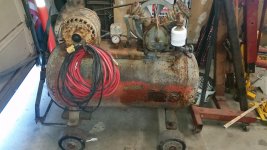
Hey all - new and looking for help! I have been looking for almost a week for information on a compressor I picked up.

http://images.thesamba.com/vw/gallery/pix/1397582.jpg
http://images.thesamba.com/vw/gallery/pix/1397583.jpg

http://images.thesamba.com/vw/gallery/pix/1397581.jpg


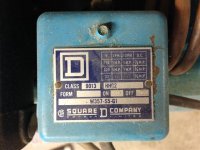
Any ideas? It looks similar to some of the Bendix models with the exception of the govenor(?) on top of the cylinder head. It is paired with a Westinghouse 3/4 horse motor and charges up to 110 psi if that help anybody. The Square D pressure switch says the shutoff is 145 psi but the pressure gauge reads 110 when it shuts off so someone must have dialed it down. I would really love to refresh this thing but I don't want to start tearing into it without knowing where to get parts first.

Thanks!
 

redmondjp

Well-known member
Joined
Nov 25, 2014
Messages
2,318
Location
Redmond, WA
Hey all - new and looking for help! I have been looking for almost a week for information on a compressor I picked up.

http://images.thesamba.com/vw/gallery/pix/1397582.jpg
http://images.thesamba.com/vw/gallery/pix/1397583.jpg

http://images.thesamba.com/vw/gallery/pix/1397581.jpg


Any ideas? It looks similar to some of the Bendix models with the exception of the govenor(?) on top of the cylinder head. It is paired with a Westinghouse 3/4 horse motor and charges up to 110 psi if that help anybody. The Square D pressure switch says the shutoff is 145 psi but the pressure gauge reads 110 when it shuts off so someone must have dialed it down. I would really love to refresh this thing but I don't want to start tearing into it without knowing where to get parts first.

Thanks!

My best guess is that it is an air brake compressor off of an older heavy truck or bus. No idea on the maker, however.
 

Old Faithful

Well-known member
Joined
Sep 10, 2015
Messages
82
Great thread - Discovered it while researching old compressors online. Registered initially so I could see the pictures, was enticed to post so here I am, looking for help on my first post here.

So after growing fed up with the unbelievably loud 'air compressor' I got a Crappy Tire and with the inspiration I got reading this thread, I recently acquired this old Speedaire 2HP compressor for little money (or so I thought considering our valueless cannuck dollar) because the tank was leaking.

Upon closer inspection I discovered the tank had already been patched up and the new hole revealed extremely thin metal. A quick look into the tank revealed the extent of the disaster - rust flakes littering the insides. Ah well, scratch that idea.

Next thing I found out when I plugged it in, the pressure switch is stuck in the on position, I guess the contacts are welded together. OK... Another thing to fix...

So I run the thing anyway and after a few seconds the belt comes off. A quick look tells me I just need to realign the motor pulley, so I do it and it works.

Wait, what's that thunking? It wasn't thunking like that when I got it (granted the guy ran it for only a couple of seconds)... There's plenty of oil in there, seems OK... Definitely comes from the bottom end, at no load, surely not a good sign...

So I tear the pump apart, cylinders are a bit scored but nothing really bad, and the pistons appear tight... So I take the pistons out and then discover the cause of problem: major play at the blind end of the crankshaft, when I pull it out the needles fall into the sump. That's strange, the needles look fine! Looking at the the crankshaft reveals the extend of the damage: it's seriously scored and when I measure with a caliper I realize how much out of round it is: it goes from 18.4 to 19mm!!!

I fully realize now this wasn't such a great deal after all - for $40 I essentially got myself a nice second hand 2HP motor ;-) But I'm looking at the learning value of trying to repair this crankshaft by myself without doing any expensive machining (I don't have a lathe or a press drill and at $100 an hour and a minimum setup fee of about same, machining is clearly not an option for me).

So I was wondering if I might not get it back to a reasonable condition using hand tools, like an emery cloth to grind the high spots down and then perhaps slip on a sleeve to make it back to the original diameter or get an oversize bearing for it? Didn't the old timers use to repair crankshafts this way?

Obviously I am not counting my time - that alone would make the whole project totally worthless - I'm just looking for options before sending this pump to the dumpster (knowing myself I'll probably keep it for a weight or doorstop, hehehe).

Here's a picture of the machine when I got it...

90vvbd.jpg


Any ideas?
 

redmondjp

Well-known member
Joined
Nov 25, 2014
Messages
2,318
Location
Redmond, WA
You have learned a valuable lesson. At least it only cost you $40 - you could have easily paid $150 or more for that same lesson!

My advice? Pull the motor and scrap the rest (or save the pump for a parts donor - it's a Campbell Hausfeld pump that was used on millions of Sears compressors). It's not economical to repair that pump, unless you can find another identical one for cheap to rob parts from (or a complete pump that works, and then you still need a tank and the other parts).

If you are shopping for another compressor, make sure that you can hear it run, and start the compressor with no pressure in the tank. If the pump has excessive bearing play at the rod or piston pin, you will be able to hear it knocking between zero and 20-30 psi - at higher pressures, the pressure in the cylinder will mask the bearing slop as it holds the sloppy parts together on one side so the knocking goes away.
 

ketama

New member
Joined
Sep 19, 2015
Messages
1
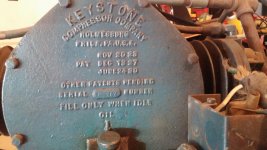
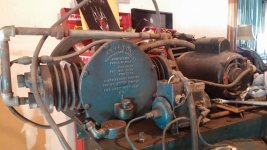
Help ID old Quincy?

Any Quincy folks out there that could identify this compressor?
Got it cheap, trying to figure out how to plumb the unloader circuit.
Looking for good parts sources for old Quincys.
There is no metal ID plate or any markings that I can see.
 

Attachments

  • old_comp_case.jpg
    old_comp_case.jpg
    77.9 KB · Views: 41
  • old_comp_head_close.jpg
    old_comp_head_close.jpg
    49.7 KB · Views: 46

Old Faithful

Well-known member
Joined
Sep 10, 2015
Messages
82
You have learned a valuable lesson. At least it only cost you $40 - you could have easily paid $150 or more for that same lesson!
Very astute - maybe not for the reason you may think, but let's start anyway:
1) I've learned how to take the pump apart and avoid problems when I do take the other one apart... But wait, I'll let you in on it later ;)
2) I've learned to recognize different sounds and what they mean (Again, I'll explain later)
3) $40 is cheap when it comes to learning things, and it was an opportunity for me to refresh what I had leaned 40 years earlier in Mechanic School (I graduated but only worked for a few months in a garage - although I love working on cars, getting slush on my face and dealing with grime of the typical salt belt garage quickly made me change my mind)

My advice? Pull the motor and scrap the rest (or save the pump for a parts donor - it's a Campbell Hausfeld pump that was used on millions of Sears compressors). It's not economical to repair that pump, unless you can find another identical one for cheap to rob parts from (or a complete pump that works, and then you still need a tank and the other parts).
Again, right on - and as you may have guessed by now, the reason I got this compressor in the first place - was that I had purchased a similar Sears compressor for a pittance because it needed work and figured that in the worst case scenario between the two of them I'd have enough spare parts to make one good one out of the two ;)

However, it turned out the Sears deal worked better than expected after I fixed the sticky, burnt contacts on the pressure switch, the stuck pressure gauge that simply had dirt in its orifice, the check valve that was leaking, replaced the mangled o-ring, made a new tank to check valve washer out of tin and an o-ring, soaked the stuck safety valve with jig-a-loo to unstick-it, polished the leaky drain valve seat smooth, get some pipe fittings and a quick release and replace the ratty old 14 gauge electrical cord with a longer 12 gauge...

I also removed the head to check for potential damage after I found a piece of metal in the check valve, thinking it could been a loose reed valve screw (turned out to be simply the worn out check valve rivet, which I replaced with a screw), found that the pistons and cylinders were in decent condition with very minimal scoring then made a new head gasket out of paint soaked cardboard, verified head flatness and found it could be improved with sandpaper on a piece of plate glass...

It now works surprisingly well, I was able to measure its output at >8 CFM @ 90PSI, and that's at 400m altitude (~1300ft) :)

Here's a picture of the thing after restoring it, the only thing that still needs to be done beside installing a regulator is to check the insides of the tank and pressure test it (I already acquired a more recent tank should I need to replace it)

2dhfcc5.jpg


I also noticed, from comparing the sound of the Sears versus the Speedaire, that the Sears may need some new reed valves as it makes a kind of a fluttering, vibration like sound, as if the reed valves weren't tight against their openings, like they seemed to be on the Speedaire when I looked at the head... Hey, who knows, maybe those reeds will fit the Sears head and solve that problem ;-)

If you are shopping for another compressor, make sure that you can hear it run, and start the compressor with no pressure in the tank. If the pump has excessive bearing play at the rod or piston pin, you will be able to hear it knocking between zero and 20-30 psi - at higher pressures, the pressure in the cylinder will mask the bearing slop as it holds the sloppy parts together on one side so the knocking goes away.
Excellent advice and well taken - IF I can get another deal like that! I actually passed on another one a few weeks ago because of a bad noise that I thought was coming from the bottom end, that was different sounding than this one and that I now believe could have been simply come from a bad check valve... But as the seller had been quite dificult to deal with (you know, the kind that makes you feel they are doing you a big favor simply answering your questions and are offended when you suggest their "excellent condition" turns out to be a "needs work"), that kind of sealed the fate of that deal...

Soooo... I'm not 'out in the street' so to speak, although I still need to 'certify' this old lady's tank (I intend to do it with the pressure washer method and have already acquired a larger tank from a failed oil-less compressor for that very purpose should I need it), but I would still love to be able to get the other pump going if it was at all possible in a cost effective manner... You know, getting it round again with emery cloth? I remember truing the crankshaft on an old 302 Ford back in the 70s that was also slightly out of round (OK, probably not as bad as this one), took many hours for sure but it worked... Even if it made me dead last in school and the teacher told me I'd never last in the industry ;)

My question is, if indeed my idea is sound, that once ground, would it be as tough as before, or would the grinding weaken the crankshaft to the point that it would fail very soon thereafter? In other words, would it be worth the effort (by very soon I mean, fail again within a few years)?
 
Last edited:

johnbennetch

Well-known member
Joined
Aug 18, 2015
Messages
67
Location
Carlisle Pa
WOW! That is definately an old piece. Like some kind of ancient scuba gear !!

I know what that is. The tank probably came from a jet pump on a well. But the compressor is a Freon compressor from an old fridge or freezer. The best way to test that is use I long cord and set it as far from the building as you can! Then peep over the window sill to see how she's doing! Lol. No that would have a very slow recovery time. And if it has never had oil added will using, it probably is bad any way.
 

Old Faithful

Well-known member
Joined
Sep 10, 2015
Messages
82
Just saw this on kijiji... What do you think? Asking price is CAD175... The ad says "Ingersol Rand Compressor - 5HP 220V - 30 gallons - Tank needs to be repaired, there is a small leak" (sic)... My question is, do you think it is worth driving 200km just to check it out? Are these worth investing into? I have no other info for now...

1z3bc6q.jpg
 
Last edited:

twooldfarmers

Member
Joined
Jul 9, 2015
Messages
12
Location
SK
Just saw this on kijiji... What do you think? Asking price is CAD175... The ad says "Ingersol Rand Compressor - 5HP 220V - 30 gallons - Tank needs to be repaired, there is a small leak" (sic)... My question is, do you think it is worth driving 200km just to check it out? Are these worth investing into? I have no other info for now...

1z3bc6q.jpg

a small leak to me would suggest it is badly rusted

what that ultimately means is the tank is 'thin' at the bottom and it is at the end of its service life

welding up this small leak does in no way repair the tank

I expect you would find that the tank is full of rusty shale if you look in it with a scope light unless it has been up-ended and cleaned out recently but it is still 'done'

these long flexible shaft LED inspection lights are cheap at places like Princess Auto or Harbor Freight, everyone needs one of these for all kinds of tasks
 
To avoid these ads, REGISTER NOW!
Top Bottom