To avoid these ads, REGISTER NOW!

Garage Lift Emergency

05snopro440

Well-known member
Joined
Dec 7, 2020
Messages
217
Location
Sherwood Park, Alberta
On the "bolt it down" topic: if you want to retain the ability to move a 4-post around your shop but bolt it down while in use, these are what I recommend.
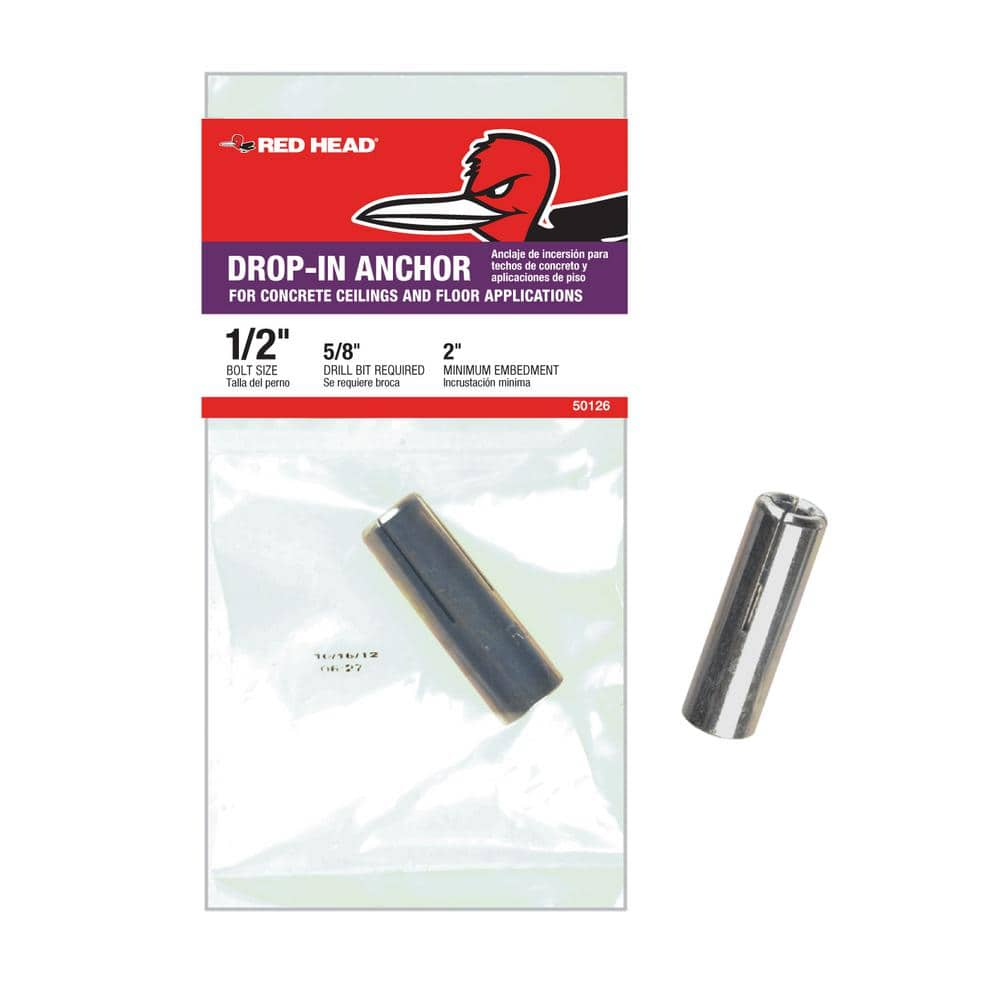

When you pull the bolts to move the lift, you're left with nothing protruding from the floor. When you bolt it down, these anchors provide plenty of strength/rigidity. I only use two bolts/anchors per column on my 9K 4-post.


I'll echo what others have said, when lowering, you absolutely have to hold the lock rod all the way open and focus on ensuring that all four corners are lowering. The only way something like this happens (to this extreme extent) is by inattention when lowering the lift.
It doesn't seem like those 2" long 1/2" anchors meet the requirements for securing to the floor by the manufacturer. While it would be secured, that could give a false sense of security.

The manual lists this: "Concrete shall have compression strength of at least 3,000 PSI (20684 kPa) and a minimum thickness of 4” (102 mm) in order to achieve a minimum anchor embedment of 3 ¼” (83 mm). NOTE: When using (¾” x 5 ½”) (13 x 140 mm) long anchors; if the top of the anchor exceeds 2 ¼” (57 mm) above the floor grade, you DO NOT have enough embedment."

They also provide a minimum torque that needs to be achieved tightening the anchors.
 
To avoid these ads, REGISTER NOW!

racecougar

Well-known member
Joined
Jan 26, 2021
Messages
5,142
Location
Missouri
It doesn't seem like those 2" long 1/2" anchors meet the requirements for securing to the floor by the manufacturer. While it would be secured, that could give a false sense of security.

The manual lists this: "Concrete shall have compression strength of at least 3,000 PSI (20684 kPa) and a minimum thickness of 4” (102 mm) in order to achieve a minimum anchor embedment of 3 ¼” (83 mm). NOTE: When using (¾” x 5 ½”) (13 x 140 mm) long anchors; if the top of the anchor exceeds 2 ¼” (57 mm) above the floor grade, you DO NOT have enough embedment."

They also provide a minimum torque that needs to be achieved tightening the anchors.

The embedment depth is set by the whomever installs the anchors. The anchors I provided a link to have a minimum imbedment of 2". IIRC, I drilled my holes to 3-1/2" in my 4000 psi 5" slab and torqued to 110 ft-lbs. I'm sure the manufacturer's intent is for all four holes in each baseplate to be utilized, but just installing two anchors per column made a big difference in "wiggle" when really wrenching on a vehicle overhead. Keep in mind that there was wording on the same page of the manual clearly stating that the lift does not need to be bolted down, too.
 

05snopro440

Well-known member
Joined
Dec 7, 2020
Messages
217
Location
Sherwood Park, Alberta
The embedment depth is set by the whomever installs the anchors. The anchors I provided a link to have a minimum imbedment of 2". IIRC, I drilled my holes to 3-1/2" in my 4000 psi 5" slab and torqued to 110 ft-lbs. I'm sure the manufacturer's intent is for all four holes in each baseplate to be utilized, but just installing two anchors per column made a big difference in "wiggle" when really wrenching on a vehicle overhead. Keep in mind that there was wording on the same page of the manual clearly stating that the lift does not need to be bolted down, too.
Drilling the holes to 3-1/2" doesn't mean you have 3-1/2" of embedment of the fastener. I.E. you don't have 3-1/2" of contact of the fastener with concrete.
 

05snopro440

Well-known member
Joined
Dec 7, 2020
Messages
217
Location
Sherwood Park, Alberta
For anyone trying to claim that the lift failed, the product manual for Direct Lifts also states this:

"Pay attention to the lowering speed of all four corners. Make sure they are moving down at the same speed. Stop lowering the lift by releasing the lowering lever on the power unit and moving the lock lever to the lock position if any corner stops moving or is slower in descent."
 

racecougar

Well-known member
Joined
Jan 26, 2021
Messages
5,142
Location
Missouri
Drilling the holes to 3-1/2" doesn't mean you have 3-1/2" of embedment of the fastener. I.E. you don't have 3-1/2" of contact of the fastener with concrete.
Embedment depth is defined as the distance from the bottom of the anchor to the top of the base material. Embedment depth and fastener length are not one and the same.
 

05snopro440

Well-known member
Joined
Dec 7, 2020
Messages
217
Location
Sherwood Park, Alberta
Embedment depth is defined as the distance from the bottom of the anchor to the top of the base material. Embedment depth and fastener length are not one and the same.
Do you really think that the manufacturer would be specifying an embedment depth without the intention that the fastener be in concrete for that entire depth? In your case then it's partially embedded in air, not concrete.
 
To avoid these ads, REGISTER NOW!

racecougar

Well-known member
Joined
Jan 26, 2021
Messages
5,142
Location
Missouri
Do you really think that the manufacturer would be specifying an embedment depth without the intention that the fastener be in concrete for that entire depth? In your case then it's partially embedded in air, not concrete.
Yes, as that is the definition of embedment depth. Not certain why you're arguing the point.

Again, the lift manufacturer states that the lift does not need to be bolted down at all.
 

supratreo

Well-known member
Joined
Sep 4, 2020
Messages
354
Location
elk grove, CA
this used to happen often at a shop i worked at. an air leak would cause the locks on one side not to disengage. we would bring it back up to level then hold the locks open with pry bars and ride it down. good times haha
 

racecougar

Well-known member
Joined
Jan 26, 2021
Messages
5,142
Location
Missouri
To expand on my comment about a wedge anchor, specifically in respect to this train of thought:

Do you really think that the manufacturer would be specifying an embedment depth without the intention that the fastener be in concrete for that entire depth? In your case then it's partially embedded in air, not concrete.

In the quick diagram below, note that the green circle encompasses the fastener to base material contact, the red circle encompasses the portion of the fastener "embedded in air", and the blue line denotes embedment depth. Embedment depth is key.


wedge.jpg
 

05snopro440

Well-known member
Joined
Dec 7, 2020
Messages
217
Location
Sherwood Park, Alberta
To expand on my comment about a wedge anchor, specifically in respect to this train of thought:


In the quick diagram below, note that the green circle encompasses the fastener to base material contact, the red circle encompasses the portion of the fastener "embedded in air", and the blue line denotes embedment depth. Embedment depth is key.


wedge.jpg
Yes, and the anchor you showed was 2" long, and shows as being installed at the surface of the substrate. Which would make the air space below the anchor. Especially as you tighten it and it naturally wants to pull up to some degree. You can install it lower in the hole, but then you have a larger hole all the way down and more moment on the fastener. So you're likely not getting the same resistive force as the wedge anchor even if you can somehow get it at the bottom of the hole.
 

racecougar

Well-known member
Joined
Jan 26, 2021
Messages
5,142
Location
Missouri
Yes, and the anchor you showed was 2" long, and shows as being installed at the surface of the substrate. Which would make the air space below the anchor. Especially as you tighten it and it naturally wants to pull up to some degree. You can install it lower in the hole, but then you have a larger hole all the way down and more moment on the fastener. So you're likely not getting the same resistive force as the wedge anchor even if you can somehow get it at the bottom of the hole.

No, the series of anchor I linked to specifically does not have a retainer lip so that it can be set to the prescribed embedment depth. Why would anyone drill a 3-1/2" deep hole and set a 2" anchor flush to the surface? Additionally, it does not "pull up" as you tighten it, as you set the anchor using the appropriate setting tool. You don't use a bolt to expand the anchor. Lastly, it is quite easy to set to the bottom of the hole, it literally drops in. There is no "somehow" about it. Explore drop in anchors sometime. They are a solid option for situations like this.
 
To avoid these ads, REGISTER NOW!
Top Bottom