To avoid these ads, REGISTER NOW!

Kitchen Makeup Air - Adding A Powered Makeup Air Fan to Passive System

yeldogt

Well-known member
Joined
Jan 2, 2012
Messages
18,184
I did ask the Wolf Tech rep about my original question of using the existing solid state fan controller in the hood to drive two blowers as long as the total amperage draw was less than the 8.0 amp rating of the controller. He confirmed this would work but said they don't recommend it and would not explain further.

I also asked about the disparity between the 3.8A rating of my external blower per the manual and the 4.3A rating on the actual blower data tag. He said that their controller in the hood will limit it to 3.8A at max speed.
One wonders how deep is the knowledge. Since the parts are all "off the shelf" ..... back in the day when I bought my first DCS stove and hood it was a tiny group that broke away from Viking (the guy who designed the first home based viking stove started DCS). You were talking to people who really knew the products ------ that said, they were still buying off the shelf products and having others build specific items for them.

My original hood uses baffles vs a filters. I remember the guy telling me that baffles work better as they are less restrictive than filters -- will make less sound and allows for a better hood design. Over the years ... I have to agree as I have used other types and find the baffles to be better. I also don't see the baffles being more of a problem for the blower ... they both get a build up of grease. The baffles DCS was using were made by component industries -- a big food service company. Have no idea if they are size specific or if DCS took off the shelf ones and made them work in the hood, It uses two and two drip trays -- I put them in the dishwasher. The blower is a Broan and the control and switches all off the shelf parts. I continued to buy the DSC until F&P bought and redesigned the line

The DCS was an improvement over the Viking at the time. Viking also went from doing things in house to farming more and more of it out ... They had issues and finally brought more of the fabrication back. Most companies don't make the hoods. I went with a Viking this time because they are making them like the old DCS.

All the above said -- I tried to find out from viking about the new blower style -- they went from the twin wheel on one motor to twin motors. no one knew what I was talking about .... and it seems as if they were selling both. How good were they going to be asking about make up air !!
 
To avoid these ads, REGISTER NOW!

dave*99

Well-known member
Joined
May 5, 2009
Messages
4,275
Location
Coastal NJ
I was surprised by the knowledge of the local appliance dealer. This was a long established family owned independent that serves the community and a number of builders.

He was great at telling me where to spend and where to save. I bought a house full of appliances. After we decided on the Wolf range, I expected a Wolf hood was to follow. He asked a lot of questions about what we cook, how often, family size, special concerns. The Wolf guide indicated an 800cfm hood. He suggested a cheaper hood from a company called Best. And said 600cfm would fit my needs. He was right.

One odd thing he asked.... Do I wait until the food starts smoking to turn on the hood? Or do I turn the hood on 15 minutes before I start cooking as you are supposed to do. I never heard of that and still don't think to actually do it.
 
OP
L

larry4406

Well-known member
Joined
Jan 27, 2006
Messages
19,512
Location
Northern Virginia
I'm not thinking bypass recirculation back into the house. Rather I'm thinking a shunt around the blower.

Since your blower is actually roof mounted (not an inline blower hanging in the attic) I believe some air could come from a T off the 10" duct connected to the hood and drawing either attic air or air from an additional roof mounted inlet grill. A damper on the T line could regulate the air. If you try it with attic air its a cheap test and easily reversible.
Interesting shunt idea…🤔

I could cut in a register in the attic on the 10” line upstream of the roof mounted blower. Opening this register would allow the roof blower to **** on the attic space as well as the kitchen hood. As the register is opened more and more the kitchen hood draws less reducing its performance while lessening the depressurization.
 

dave*99

Well-known member
Joined
May 5, 2009
Messages
4,275
Location
Coastal NJ
Interesting shunt idea…🤔

I could cut in a register in the attic on the 10” line upstream of the roof mounted blower. Opening this register would allow the roof blower to **** on the attic space as well as the kitchen hood. As the register is opened more and more the kitchen hood draws less reducing its performance while lessening the depressurization.
And if you wanted to go full bore GJ more power..... You could branch off a T and put a motorized damper on it to control the quantity of attic air ingested. Use a wireless control/outlet etc for the damper and leave it normally open. On that special occasion where both ovens and a bunch of burners are running, close the damper and open a kitchen window and use all 1500 cfm. Think of it as standard gear (damper open) And overdrive (damper closed)
 

yeldogt

Well-known member
Joined
Jan 2, 2012
Messages
18,184
I was surprised by the knowledge of the local appliance dealer. This was a long established family owned independent that serves the community and a number of builders.

He was great at telling me where to spend and where to save. I bought a house full of appliances. After we decided on the Wolf range, I expected a Wolf hood was to follow. He asked a lot of questions about what we cook, how often, family size, special concerns. The Wolf guide indicated an 800cfm hood. He suggested a cheaper hood from a company called Best. And said 600cfm would fit my needs. He was right.

One odd thing he asked.... Do I wait until the food starts smoking to turn on the hood? Or do I turn the hood on 15 minutes before I start cooking as you are supposed to do. I never heard of that and still don't think to actually do it.
BEST is a division of Broan .. they make a nice product
 

yeldogt

Well-known member
Joined
Jan 2, 2012
Messages
18,184
Interesting shunt idea…🤔

I could cut in a register in the attic on the 10” line upstream of the roof mounted blower. Opening this register would allow the roof blower to **** on the attic space as well as the kitchen hood. As the register is opened more and more the kitchen hood draws less reducing its performance while lessening the depressurization.
Just turn the fan down -- no point is sucking air from the attic
 
OP
L

larry4406

Well-known member
Joined
Jan 27, 2006
Messages
19,512
Location
Northern Virginia
Just turn the fan down -- no point is sucking air from the attic
At low according to Wolf, the solid state controller is at 70V. Thus the minimum fan speed is 70/120 (58%).

So 1500 cfm *.58 = 870 cfm is the min which is still quite a bit. I would have thought the turn down would be broader range but no dice. Would have been nice for them to include the cfm range in their specs (min to max) vs just the max.

@dave*99 suggestion was that by sucking both from the kitchen and from the attic, the kitchen suckage would be less while still on the low speed setting.
 
Last edited:

yeldogt

Well-known member
Joined
Jan 2, 2012
Messages
18,184
At low according to Wolf, the solid state controller is at 70V. Thus the minimum fan speed is 70/120 (58%).

So 1500 cfm *.58 = 870 cfm is the min which is still quite a bit. I would have thought the turn down would be broader range but no dice. Would have been nice for them to include the cfm range in their specs (min to max) vs just the max.

@dave*99 suggestion was that by sucking both from the kitchen and from the attic, the kitchen suckage would be bless while still on the low speed setting.
I get it now..... I'm shocked that the Wolf guy could even tell you that !! He was either a guy to talk to more or just lucky and found the specifications.

Maybe hire a local kid to stand by the window and slowly open it :)


I feel your pain. The real answer ......... there is no answer. My new stove needs a 2.5" spacer behind it (it's a big french thing) -- the original design they made was this thing that sort of looked like an L shaped SS back splash. Not ugly -- but not Audrey Hepburn in her prime either. The solution for US consumers was to just take the counter material behind -- obviously this pushed everything forward and screwed up the cabinet layout and the hood. Anyway -- my point here is the hood. So with my project delayed -- in the time of the delay they come out with a "new spacer" -- this is a nice flat thing with holes for all the heat behind the unit to get out. I'm thinking -- what if I figure out a way to get some incoming air back there ... then the make up air can come right up from behind. Now --- how I'm going to do this I do not know. I made a long rectangle box and then attached a vacuum exhaust to it ... put in on my other DCS stove in the back. Was quite proud of myself ..... using a big pot of water on the front burner. With it all running ... if anything the operation was not as good. The air in the rear acting as a curtain. It's the same thing as if you have a window on either side of the stove ..... opening one will not help as it seems to throw off the air flow. We really need an aeronautical engineer for this problem.

The sad thing is -- you build this multi million dollar house ... and. Honey -- can you crack the door so I can grill these steaks !!
 
Last edited:

danski0224

Well-known member
Joined
Jan 29, 2005
Messages
13,503
Location
Near Naperville, IL
At low according to Wolf, the solid state controller is at 70V. Thus the minimum fan speed is 70/120 (58%).

So 1500 cfm *.58 = 870 cfm is the min which is still quite a bit. I would have thought the turn down would be broader range but no dice. Would have been nice for them to include the cfm range in their specs (min to max) vs just the max.
The lower limit is likely a function of the electric motor in combination with the cheap controller they are providing.

I was talking to a factory startup guy for a commercial air handling unit, and I asked about the VFD and motor range. He said that the motors in that manufacturers' equipment can't reliably handle less than about 40 hz. This was a 3 phase application.

There are motor classifications for VFD use. Yes, I know that you do not have a VFD.

I have also seen a Carrier Motor Master in use on a condensing unit, and it could throttle that fan down to nothing; and far as I could tell, it was just a plain old single phase motor with ball bearings. The Motor Master box is many times the size of your speed control.

Maybe a better controller?
 
OP
L

larry4406

Well-known member
Joined
Jan 27, 2006
Messages
19,512
Location
Northern Virginia
....The lower limit is likely a function of the electric motor in combination with the cheap controller they are providing....
...Maybe a better controller?
Not sure I want to go down that rabbit hole of opening up the hood and trying to find a replacement controller that integrates with the speed knob. There are 3 knobs there all in a row - down lights, heat lamps, and blower/fan.Hood Control Knobs.JPG
 

danski0224

Well-known member
Joined
Jan 29, 2005
Messages
13,503
Location
Near Naperville, IL
Not sure I want to go down that rabbit hole of opening up the hood and trying to find a replacement controller that integrates with the speed knob. There are 3 knobs there all in a row - down lights, heat lamps, and blower/fan.Hood Control Knobs.JPG
Then pick a blower speed that you are most likely to use, and pick one of the fan powered makeup air solutions, then balance it to work with your chosen exhaust hood fan speed. Someone mentioned a CFM per btu on the stove... I don't know how to decide what you want to run it at.

There should be a slight positive pressure.

I don't know what would be easier, figuring the CFM for intake and exhaust or using a micromanometer and a pressure reading.

Pulling air from the attic as mentioned a couple of posts above would be a bad idea.

It appears that these residential quasi commercial look alike hoods do not provide good enough engineering data for proper installation... which flops when the architect passes the buck to the typical trade that is left to install it- the HVAC guy. I'm assuming that most homeowners with them choose them for display purposes only.

In reality, the manufacturer or the point of sale outlet should provide the support required to install it... or they should not sell it. This doesn't necessarily mean that said support should be free. There should be design/build and whatever extra parts are required to end up with a functional product.

Choosing a shiny flashy hood and a generic blower are the easy parts.

Obviously, getting it to work ain't so easy.
 
Last edited:
OP
L

larry4406

Well-known member
Joined
Jan 27, 2006
Messages
19,512
Location
Northern Virginia
Then pick a blower speed that you are most likely to use, and pick one of the fan powered makeup air solutions, then balance it to work with your chosen exhaust hood fan speed. Someone mentioned a CFM per btu on the stove... I don't know how to decide what you want to run it at.
Its a variable speed unit with 4 adults in the house so telling them to only position it a certain way won't work. The AirScape unit adds makeup air based on actual pressure differential. The FanTech unit is calibrated min to max based on the existing blower amperage draw. So it would seem the AirScape unit would better match the pressure needs of the house I am thinking. Also the AirScape unit will respond to other demands in the now tight house (fireplace, dryer, fart fans, etc) which the FanTech won't. FanTech has a heater option to temper makeup air that the AirScape unit does not.
There should be a slight positive pressure.
I will take your word but sounds correct.
I don't know what would be easier, figuring the CFM for intake and exhaust or using a micromanometer and a pressure reading.
Agreed. That is kind of why I like the AirScape unit as it uses a differential pressure gauge to ramp their system to respond.
Pulling air from the attic as mentioned a couple of posts above would be a bad idea.
Why is this bad?

The blower is mounted on the roof. The blower is pulling a vacuum on the house via the 10" duct to the kitchen hood. If a small adjustable bleed were installed in the attic (ridge vent and soffit vent and sealed to house below via 5" of spray foam insulation), then the external roof blower is pulling air mostly from the kitchen and a smaller amount from the attic. The bleed could be tuned to lessen the draw portion from the kitchen.
It appears that these residential quasi commercial look alike hoods do not provide good enough engineering data for proper installation... which flops when the architect passes the buck to the typical trade that is left to install it- the HVAC guy. I'm assuming that most homeowners with them choose them for display purposes only.

In reality, the manufacturer or the point of sale outlet should provide the support required to install it... or they should not sell it.
I agree.

All hoods greater than 400 cfm (Code threshold) should come with a connection port for introducing makeup air directly at point of use of hood and/or provide a matched makeup air unit with controller to drive same. The weasel words of "makeup air my be required consult your HVAC contractor" should be not allowed.
 

danski0224

Well-known member
Joined
Jan 29, 2005
Messages
13,503
Location
Near Naperville, IL
Why is this bad?

The blower is mounted on the roof. The blower is pulling a vacuum on the house via the 10" duct to the kitchen hood. If a small adjustable bleed were installed in the attic (ridge vent and soffit vent and sealed to house below via 5" of spray foam insulation), then the external roof blower is pulling air mostly from the kitchen and a smaller amount from the attic. The bleed could be tuned to lessen the draw portion from the kitchen.
Fan powered exhaust in an attic quickly overwhelms natural draft vent systems like soffit and ridge vents.

Search "fan powered attic ventilators" and you will see that they are almost always universally bad. The cooling effect is the air being pulled out of the house and into the attic through things like pipe penetrations, access doors and bathroom wet wall openings in the attic. Air moves more readily in a column (chimney or ridge vent) than horizontally (like from a soffit vent).

A powered attic ventilator CAN pull a house into negative pressure, much like your kitchen hood. Ever seen plugged up soffit vents? Soffit vents covered with insulation? Not enough of them?

You will certainly end up pulling more air from the house than the attic.

If you were to try a shunt, the dilution air should be ducted from outdoors, not taken from the attic. You could probably use weighted dampers like from a HVAC zone system.

Sounds like you are stuck with the Air Scape system, then. It sounds like the best third party option.

I would leave a review of the Wolf product and actual installation issues.
 
Last edited:

yeldogt

Well-known member
Joined
Jan 2, 2012
Messages
18,184
The reality is very few people get to play with this stuff ... High end builders are going to see more of it. You have to live with some systems to really see the failure points ... or the --- "well that was not worth doing" (time or money)

It's the same with complex HVAC systems ..... most installers know little as they don't install many and have not lived in a house with them.

In the old days houses were comfortable because you pumped heat into them all the time .... it was leaking out just as fast .... so it all worked well as long as you could pay the fuel bill. No inside air problem or hood problems.
 

yeldogt

Well-known member
Joined
Jan 2, 2012
Messages
18,184
im in the business you spend thousands tightening everything up then more money sawing holes in the wall so your fan will work. insane
This is my problem with GBA ...... make a tight house and they want you to put in a 30k fresh air ERV. Build using less materials .... then they come up with the double frame wall. Wait --- insulate on the outside with no way to do good rain screens. We will work on that later. Ventilated attics .... no -- seal it up. Wait -- lets make a cold roof .... or is it a hot roof?
 

Sumboodie

Well-known member
Joined
Mar 20, 2021
Messages
10,732
Location
AK
That's a heck of a cookstove. I don't think I've ever cooked anything that I needed more than 2 burners :D.

For ~$2800 for a fume sucker, I'd expect they'd figure out ANY issues someone has by sending a rep over along with sandwiches and beer!
I don't think my stove, fume sucker, dishwasher and fridge together cost that much :D
 

Denwood

Well-known member
Joined
Sep 22, 2014
Messages
4,195
Location
Thunder Bay, Ontario, Canada
@larry4406 , just came across this so with respect to ramping on the make up air I would use a Hubitat hub (nice way to integrate) and use some automation bits. This is a nice way to jump in to the automation world if that's something you're interested in.

1. Plug your range fan into a current sensing appliance module like this https://aeotec.com/products/aeotec-smart-switch-7/
2. Purchase a fan like the Terrabloom ECM 10" which can be controlled 0-10V and is rated at 1000 CFM using 126 watts (EC fan) : https://terra-bloom.com/products/te...nd-hydroponics-airflow-boosting-1065-cfm-150w
3. Attach a zWave 0-10V dimmer to the fan like this: https://www.fibaro.com/compatibility/qubino-flush-dimmer-0-10v-2/

This is a completely wireless solution that could be programmed however you like based on power detected from the main fan. About $200 in parts including the automation hub. This lets you ramp the make up fan depending on power use by your existing range fan.

I'm doing a slightly simpler application very similar to your case. Power use by our induction cooktop in turn controls the range exhaust fan turning it on and off. Manual control can also be used: https://www.garagejournal.com/forum...nline-ecm-fan-turbocharge-yer-exhaust.491330/

Matt Risinger shot a vid you should watch on kitchen make up air!


and this is a very slick custom solution integrated to the hood:


and a test on the above system:

 
Last edited:

yeldogt

Well-known member
Joined
Jan 2, 2012
Messages
18,184
In warm climates there is less of an impact when make up air comes out at a high level into a conditioned space .... even if it has some humidity. The hot air does not fall like cold air would in a cold climate. My guess is the Matt R system works as well as any would in TX.

The other system -- in the two videos with the son of the guy from TOH .... it's an interesting set up but few will ever be able to get that all made correctly ... the cost will eliminate all but the diehards from the get go. I also question how well it will work .... yes they show it working with the pot of water ,,, but that's not the problem item when cooking. It's smoke. Steam has a lot of power -- it's hot and goes straight up -- if you watch the video the steam is captured rather than sucked into the hood. I think for that to work the hood needs to be taking in more air vs the what the makeup is doing .... That's clearly what is going on. The exhaust duct is being powered and the intake is static .... there is not going to be and equal coming in through that intake. Also -- that style of hood they used is not as efficient .. deeper hood work better. The idea is to capture the smoke

I have been in a house where the makeup came from the back edge of the counter behind the stove --- that system had problems because it made like a curtain of air --- it had one of the inline heaters -- so it was powered.
 
To avoid these ads, REGISTER NOW!

Denwood

Well-known member
Joined
Sep 22, 2014
Messages
4,195
Location
Thunder Bay, Ontario, Canada
I'm working on a system that would eliminate the need for make up air altogether by "unbalancing" the ERV/HRV in proportion to the fan use. I've already got the range hood fan automated to the induction hot plate, so if all goes well, the air intake on the HRV will be proportionally unbalanced when the hood fan is on. EC fans (like the Terrabloom inline 6") can be speed controlled (as in automated) using the Qubino zWave 0-10V dimmer.

If the Hubitat automation system sees that the range hood is on (either manually or via automation) it will ramp up the one of the EC fans on the HRV (the intake) proportionally...we'll see how it works out. Once the bits are in place, I could also ramp the HRV exhaust when cooking is going on. Aside from the EC fans, we're only talking $75 for the 0-12V zWave dimmer.

It doesn't make sense at all (to me anyway) to add another system when one already exists (HRV/ERV) to manage this. Keep in mind, the home only needs about 80-100 CFM at the HRV boosted, based on actual exhaust measurements at the range hood.
 

PoorUB

Well-known member
Joined
Mar 29, 2021
Messages
11,692
Location
Fargo, ND
I have dealt with this on a commercial scale and it always took a fan with 3 phase motor powered by a VFD and the the VFD was controlled by a pressure transducer that monitored the indoor and outdoor pressure differential. Easy in a business, they just run the fan when the building is occupied. In a home with various units exhausting air it gets difficult.

Most homes just toss in a big enough make up air to cover everything, then they are over killed when they don't need much.
 

yeldogt

Well-known member
Joined
Jan 2, 2012
Messages
18,184
I happen to see in the latest issue of Fine Homebuilding they have a hood set up like the video ... I'm away and I'm viewing online ... It's an electric stove and not huge. Austin TX ..... bungalow rehab. It lists the cost at $828k and those numbers don't typically include the outside work. Mid $900k + building in Austin maybe works .... not many other places.

My engineer brain is telling me this is not the solution .. the hood may be pulling the rated cfm but that CFM is flowing from the wrong place.
 
OP
L

larry4406

Well-known member
Joined
Jan 27, 2006
Messages
19,512
Location
Northern Virginia
I have not implemented anything yet except training the hood users to crack the window when they are using it above low setting.

I watched both of the videos Denwood linked.
- I don’t like the Build Show (Matt Risinger) one as he introduces the makeup air on the far side of the adjacent room so he is purging the adjacent climatized space as well.
- The custom wood hood one introducing makeup air at the hood itself is neat but not a solution for me.

Denwood’s automated solution is intriguing. I would need to get real smart on that I think.
 

Denwood

Well-known member
Joined
Sep 22, 2014
Messages
4,195
Location
Thunder Bay, Ontario, Canada
I did confirm that the Terrabloom EC fan's speed can be controlled by the Qubino 0-10V dimmer. The fans come with a pigtail plug so it's pretty much plug n play. I've sent a few tech emails to see if the AC Infinity EC fans can be controlled this way as well.

I'm working on a little science experiment here, but hoping to ramp these AC Infinity EC fans via that 0-10V dimmer to unbalance the HRV (intake) with exhaust fan use in the kitchen. Bench testing now.
IMG_8401.JPG


IMG_8393.JPG
 

yeldogt

Well-known member
Joined
Jan 2, 2012
Messages
18,184
I have not implemented anything yet except training the hood users to crack the window when they are using it above low setting.

I watched both of the videos Denwood linked.
- I don’t like the Build Show (Matt Risinger) one as he introduces the makeup air on the far side of the adjacent room so he is purging the adjacent climatized space as well.
- The custom wood hood one introducing makeup air at the hood itself is neat but not a solution for me.

Denwood’s automated solution is intriguing. I would need to get real smart on that I think.
Matt went Hollywood ..... all too often there are products imbedded because of reasons other than they are the right thing to use. Also -- some of the early builds had issues. Just like THO ...... when products are given free or for reduced amounts the projects don't provide what most people are looking for. Bang for the buck -- what's the logical thing to do here. I remember reading years ago how some of the homeowners had a bit of sticker shock because they had to pay tax at retail for the "free" products
 

u3b3rg33k

Well-known member
Joined
Dec 18, 2017
Messages
4,048
Really surprising the black art this seems to be in these modern times. UFB.

When the B-Label door from the house to the garage is open it’s a huge hole and tons of makeup air are rushing in and the door autoclose hinge springs won’t overcome it.

FanTech(?) makes an integrated unit with fan, damper, optional heater, and controls that allegedly ramp up/down in synch with hood. Loose they look like they are $1500-$1750 range and back ordered of course. The units I looked at need 10” makeup air duct. I would have to abandon the 8” wall cap and change to a 10” roof cap with adequate distance from the remote blower to avoid recirc.

I hope to hear from “my hvac guy” this week. He seemed sure the passive 8” would be adequate.

Any solid state motor control experts here? I think this is the real question I have at present.
problem #1: suggesting that an 8" passive duct can match a 10" high power ducted fan/supply duct. I don't think i've ever seen a room return suggested to be equal or smaller than a supply, they're always larger.

To my knowledge Wolf like all the other vendors stop at weasel words saying make up air may be required. This matches Yeldogt's experience. I have not found any offering from them on same.

On new installations and roughin's, which ours was, would have been a piece of cake to provide two ducts of X-size to the hood and used the manufacturer's provided balanced system but none is offered. I relied on my HVAC guy and house simply appears to be too tight, ***** we have done a good job.

A separate pressure switch and controller for a makeup fan that monitors for positive pressure in the house and ramps makeup fan accordingly would be sweet. Obviously interlocked to pressure/vacuum switch so only works while hood is on.
the dirty secret in big range hoods is "FTNG". not my problem, says the hood MFG.

If I remember correctly from a relatives restaurant remodel you need a engineering firm and use a company that specializes in make up air balancing, on commercial equipment the fan speeds for the exhaust fans are adjustable and the RTU's have the ability a add conditioned make up air to the system when the exhaust fans are running which in a restaurant is pretty much all the time they are open
A system imbalance can make it hard to open the doors or make doors not close if the pressure is too high(this is the issue he had after a remodel and new RTU install. The HVAC company he used for the refrigeration and HVAC work gave him the contact of a firm that specializes in that.
a lot of restaurants design their systems so the economizer/fresh air intake uses "Transfer air". i.e. the required fresh air for the dining room is exhausted through the kitchen. keeps smoke/smells/heat in the kitchen, and out of the dining room. this is cheaper to operate than each space being self-contained, but requires actual planning during HVAC design.

Interesting shunt idea…🤔

I could cut in a register in the attic on the 10” line upstream of the roof mounted blower. Opening this register would allow the roof blower to **** on the attic space as well as the kitchen hood. As the register is opened more and more the kitchen hood draws less reducing its performance while lessening the depressurization.
the net effect of this on your hood is no different than running the fan slower, and creates a pathway for smoke/fire to escape the kitchen into the attic. AHJ should say "no way" if consulted.

I have dealt with this on a commercial scale and it always took a fan with 3 phase motor powered by a VFD and the the VFD was controlled by a pressure transducer that monitored the indoor and outdoor pressure differential. Easy in a business, they just run the fan when the building is occupied. In a home with various units exhausting air it gets difficult.

Most homes just toss in a big enough make up air to cover everything, then they are over killed when they don't need much.
this wouldn't be too hard to do. get two 3ø fans the same size, put them on two identical VFDs, and run them off a single 0-10V signal from a potentiometer in the hood. same make/model fans = same performance, you can tweak your balance by adjusting where 10V is on whichever VFD you wanted.

too bad there's no HRVs rated for hood use, the thinking is homeowners WILL NOT maintain them and thus they're not allowed/listed for that use. I've seen industrial heat recovery systems on kitchen AHUs, and if not maintained well they are absolutely disgusting. heck, they're absolutely disgusting even if they aren't neglected.


1200-1500cfm is 3-4 tons of cooling. an insane system, really. put in a nice outdoor grill, maybe a propane radiant heater for creature comfort. it'll cost less.
 

dave*99

Well-known member
Joined
May 5, 2009
Messages
4,275
Location
Coastal NJ
I'm working on a system that would eliminate the need for make up air altogether by "unbalancing" the ERV/HRV in proportion to the fan use. I've already got the range hood fan automated to the induction hot plate, so if all goes well, the air intake on the HRV will be proportionally unbalanced when the hood fan is on. EC fans (like the Terrabloom inline 6") can be speed controlled (as in automated) using the Qubino zWave 0-10V dimmer.

If the Hubitat automation system sees that the range hood is on (either manually or via automation) it will ramp up the one of the EC fans on the HRV (the intake) proportionally...we'll see how it works out. Once the bits are in place, I could also ramp the HRV exhaust when cooking is going on. Aside from the EC fans, we're only talking $75 for the 0-12V zWave dimmer.

It doesn't make sense at all (to me anyway) to add another system when one already exists (HRV/ERV) to manage this. Keep in mind, the home only needs about 80-100 CFM at the HRV boosted, based on actual exhaust measurements at the range hood.
I'm not sure I understand this statement---- 80-100 CFM? The OP has a hood that runs 750 to 1500 CFM. A very large HRV would be needed to get to those levels. And force feeding a smaller unit will get more air through it, but heat recovery will be severely diminished. What am I missing?
 

Denwood

Well-known member
Joined
Sep 22, 2014
Messages
4,195
Location
Thunder Bay, Ontario, Canada
I'm not sure I understand this statement---- 80-100 CFM? The OP has a hood that runs 750 to 1500 CFM. A very large HRV would be needed to get to those levels. And force feeding a smaller unit will get more air through it, but heat recovery will be severely diminished. What am I missing?
My setup is much different than the OPs as my hood requires far, far less CFM. I throttle my hood setup all the way back to (a measured) 111 CFM because that is what works in my tests. The inline EC fan can ramp to 162 CFM (again, measured). We’re talking a smaller induction cook top here at 30’ wide with a hood 24” over.

My post is just regarding what is possible (inexpensively) with an EC fan and automation. You can go further and integrate bath fans etc with one setup so makeup air is dialed in appropriately. If you live in a tight home designed for efficiency, this is a good thing. If you live in a typically constructed home (pretty leaky) you may not even need to consider makeup air.

You are correct in that balancing an HRV is not ideal, however my setup will have MERV 13 external filtration and a carbon filter setup so I really want fresh air going that route, particularly if we are in the backyard fire pit, or wildfire season. No one is ramping HRV units yet, but my money will be on this tech becoming much more common.

Heating and hydro costs approaching this winter will change a lot of convention on efficiency.
 

dave*99

Well-known member
Joined
May 5, 2009
Messages
4,275
Location
Coastal NJ
^. Interesting project but as you said your makeup air needs are very small. And scaling your solution to fit the OP’s needs seems impractical.

I had a friend that build a very tight house with exactly 1 window that opened. And he never opened it. He had an HRV. That was 25 years ago. He did not have a large range hood.
 

Denwood

Well-known member
Joined
Sep 22, 2014
Messages
4,195
Location
Thunder Bay, Ontario, Canada
Actually scaling the makeup air solution is 100% doable. I detailed it a few posts back…no HRV involved. Terrabloom EC fans go to 12” and 1662 CFM. 0-10V Qubino to control speed. Power monitoring from existing fan can be easily mapped to the Qubino. Completely wireless control via a Hubitat hub.

I currently control our hood’s remote EC fan via power use on the induction cooktop. This way the fan is always on when it needs to be, and off when the induction cooktop power use falls below 5w. For my use case, I’ll dial up the HRV intake about 80 CFM when the Hubitat hub turns the hood exhaust on.

All the kitchen lighting is controlled by the same hub. You can do a lot of nifty stuff with automation these days and costs are not crazy. The Qubino device is about $50.
 
Last edited:
OP
L

larry4406

Well-known member
Joined
Jan 27, 2006
Messages
19,512
Location
Northern Virginia
problem #1: suggesting that an 8" passive duct can match a 10" high power ducted fan/supply duct. I don't think i've ever seen a room return suggested to be equal or smaller than a supply, they're always larger.
Agreed - however the 8" passive duct is already installed. Clearly I was given bad advise but it is what it is.
the net effect of this on your hood is no different than running the fan slower, and creates a pathway for smoke/fire to escape the kitchen into the attic. AHJ should say "no way" if consulted.
Regarding the shunt concept, the blower is remote and mounted on the roof exterior side. Thus the 10" duct and hood is under vacuum. The shunt would pull air from the attic space just like a roof mounted powered attic vent. The hood itself has a back draft damper at the hood itself. I assume you are thinking the ductwork has caught fire and the roof remote fan is not vacuuming the duct and therefore the flames from the duct fire go into the attic? To remedy this, the shunt could easily be ducted to a roof jack to blend in external air vs taking air from the attic space.

1200-1500cfm is 3-4 tons of cooling. an insane system, really. put in a nice outdoor grill, maybe a propane radiant heater for creature comfort. it'll cost less.
The ship has sailed, its already in place, the kitchen is done, and we are not demoing the new kitchen to install an outdoor kitchen. Hey, I figured out if we never use it, it works great!

Rule of thumb on sizing hoods for gas units:
"To calculate the CFM for a gas stove, add the BTU ratings for all burners. Divide your total by 100 to figure the CFM you need.
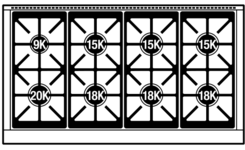
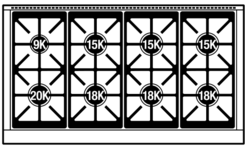
" So in our case, all burners add to 128,000 btu so 1280 cfm would be the cfm recommended per this rule of thumb.

So we are in the right range. I guess we could have decided to cook on Sterno instead?

1666086603462.png

From the Wolf Ventilation Guide:
  • CFM suggestions are based on the cooking appliance
    output.
  • The chart below provides CFM suggestions
    specific to the Wolf cooking appliance and ventilation
    system used. To maximize airflow and performance,
    specify a blower to match or exceed the CFM listed.
  • Additional CFM may be required for long duct runs (which we have)
  • For the DF48850 dual fuel range and Pro Hood they recommend 1100 cfm.
  • However, the 1100 cfm blower option is only for an in-line unit, not roof top. So no good.
  • The remote roof top options are 900 (too small per Wolf), 1200, and 1500 cfm. Due to the long duct run, we chose the larger 1500 cfm.
I am still annoyed that the Wolf hood controller only reduces voltage to around 70V. Thus the minimum fan speed is 70/120 (58%).

So 1500 cfm *.58 = 870 cfm is the min which is still quite a bit. I would have thought the turn down would be broader range but no dice. Would have been nice for them to include the cfm range in their specs (min to max) vs just the max.

Still looking for clever, helpful, and minimally intrusive remediation options. I am following Denwood's science project.
 

Attachments

  • 1666086975830.png
    1666086975830.png
    28.5 KB · Views: 1

dave*99

Well-known member
Joined
May 5, 2009
Messages
4,275
Location
Coastal NJ
Actually scaling the makeup air solution is 100% doable. I detailed it a few posts back…no HRV involved. Terrabloom EC fans go to 12” and 1662 CFM. 0-10V Qubino to control speed. Power monitoring from existing fan can be easily mapped to the Qubino. Completely wireless control via a Hubitat hub.

I currently control our hood’s remote EC fan via power use on the induction cooktop. This way the fan is always on when it needs to be, and off when the induction cooktop power use falls below 5w. For my use case, I’ll dial up the HRV intake about 80 CFM when the Hubitat hub turns the hood exhaust on.

All the kitchen lighting is controlled by the same hub. You can do a lot of nifty stuff with automation these days and costs are not crazy. The Qubino device is about $50.
^^ But now we are back to square one with the original unsolved problem. Unconditioned makeup air. My comment about scalability was based on the limited capacity of the HRV.

The bottom line is moving 750-1500 CFM of air our of the house with a range hood creates significant issues in replacing that air without compromising the air temperature and humidity of the conditioned space.
 
Last edited:

Denwood

Well-known member
Joined
Sep 22, 2014
Messages
4,195
Location
Thunder Bay, Ontario, Canada
I don't see an issue at all if you are actually removing that air. In other words, if your hood is pulling 1000 CFM, and you are exhausting an unconditioned 1000 CFM, then what is the issue? It's all about your design. In Matt's example (other side of room with a makeup vent) this would be a pretty big issue here at -20F !!

Basically there are two scenarios as I see it:

1. You have a monster hood that needs 1500 CFM makeup. In a home setting, it would make more sense to just use a straight up makeup vent/fan. Why condition air that is being heated by a six burner gas stove and just going up the pipe anyway? The design challenge is to ensure make up air is going up the hood, not conditioned air.

2. You have a more conventional hood and electric/induction cooktop that requires a lot less air flow for evacuation. In this case a "smart" HRV would make sense which would unbalance itself as required. There are already auto balancing HRV's out there, so I promise you that the "smart" unbalance thing will be a feature in someone's product, if not already.

I have a 100+ year old home extensive energy retrofitting. At 162 CFM, my hood fan is showing some restriction (about 15%) with a sealed house and a running ERV. The ERV when running is actually restricting air flow into the house to offset the hood. Now honestly, it's not a huge issue pulling a house negative a few CFMs, for a bit of time during hood use...but it does have a measurable energy hit if you're taking -25 C air, and heating it to 20.
 

dave*99

Well-known member
Joined
May 5, 2009
Messages
4,275
Location
Coastal NJ
I don't see an issue at all if you are actually removing that air. In other words, if your hood is pulling 1000 CFM, and you are exhausting an unconditioned 1000 CFM, then what is the issue? It's all about your design. In Matt's example (other side of room with a makeup vent) this would be a pretty big issue here at -20F !!

Basically there are two scenarios as I see it:

1. You have a monster hood that needs 1500 CFM makeup. In a home setting, it would make more sense to just use a straight up makeup vent/fan. Why condition air that is being heated by a six burner gas stove and just going up the pipe anyway? The design challenge is to ensure make up air is going up the hood, not conditioned air.

2. You have a more conventional hood and electric/induction cooktop that requires a lot less air flow for evacuation. In this case a "smart" HRV would make sense which would unbalance itself as required. There are already auto balancing HRV's out there, so I promise you that the "smart" unbalance thing will be a feature in someone's product, if not already.

I have a 100+ year old home extensive energy retrofitting. At 162 CFM, my hood fan is showing some restriction (about 15%) with a sealed house and a running ERV. The ERV when running is actually restricting air flow into the house to offset the hood. Now honestly, it's not a huge issue pulling a house negative a few CFMs, for a bit of time during hood use...but it does have a measurable energy hit if you're taking -25 C air, and heating it to 20.
Read the last post--- OP says an 8" passive duct is all that is available. So how does he ensure make up air is going up the hood, not conditioned air.
 

Denwood

Well-known member
Joined
Sep 22, 2014
Messages
4,195
Location
Thunder Bay, Ontario, Canada
1. Measure the actual hood air use. No point in designing anything until that is determined. I would be willing to guarantee that a fully installed kitchen hood is flowing less (maybe a lot less) then the CFM rating at 0 static.

2. If 8" is the limit, then a fan like the 8" Terrabloom would flow 569 CFM.

3. I'd also take a look at the possibility of running return air in a larger duct (pipe within a pipe) over existing. Let's say there is room in the existing hood for a 12" duct. If the existing hood ducting is 6", then a 12" pipe over that would be the same net square area. Just an idea. Not much tempering would occur over a short length, but B vent has been used for a long time for the same purpose. (edit" I see for the OP that this likely won't work)

"We have a Wolf range hood PW482718 with a remote roof blower 804701. This is a 10" duct with maximum 1500 cfm. The remote blower is rated 4.3A at 120V. I cannot find a fan curve nor any fan speed/cfm data."

Is the duct to the hood itself 10"? I can see via the model drawing that a "B vent" concept might not work ,but there sure looks to be room for venting above the unit, depending on the chimney setup.
 
Last edited:

dave*99

Well-known member
Joined
May 5, 2009
Messages
4,275
Location
Coastal NJ
OP said the duct to the hood is a long run of 10" duct. Due to the length he chose the larger blower motor out of the 2 options.
 

yeldogt

Well-known member
Joined
Jan 2, 2012
Messages
18,184
One could always do a blower door test and get some idea of the leakage in the house -- although I'm not sure exactly if there is a simple way of knowing the how and why of when you have enough leakage for the make up of a given hood.

All houses leak ...

HRV's have a place and the better ones have the ability to pressurize a house -- a plus in the radon area. I'm in the exhaust camp ... get the **** out using enough cfm. I like dedicated fans for bathrooms vs HRV's

The need for high CFM is all about what you are cooking ..... when frying something or searing the smoke needs to be pulled up. There is not enough energy in the plum to have it go straight up and out like a pot of boiling water. I may need to have the fan on high for a few minutes -- most times under 10. I'm not really worrying too much about make up air past what I have. The manufacturers are using worst case situations ..... I have never had all my burners on at once .... certainly not all on high.

The key is also good hood design .... the deep hoods work better and the hood must be sized for the stove or cooktop. I like the simple controls .. some of the hoods with preset speeds don't fit what you need. I find my hoods do fine 90 percent of the time on the lowest setting -- just getting the heat and combustion gasses out. May need a bit more if lots of boiling water -- like at the beach when doing clams and other items that you want it all to go out
 
OP
L

larry4406

Well-known member
Joined
Jan 27, 2006
Messages
19,512
Location
Northern Virginia
Yes, the hood is ducted 10” from inside to remote rooftop blower.

No option to upsize the exhaust duct.

No option to modify the hood to introduce makeup air at point of use at hood; that is a commercial method and not workable for my situation.

I spoke to my energy star guy about a blower door test. He said with the two masonry chimneys I have (one lined with stainless flue connected to hearth wood stove) and other a conventional firebox with damper, that the chimneys will be a large hole for incoming air. I assume we block off both at the chimney cap for testing purposes?🤷‍♂️

We don’t use the basement fireplace (unfinished basement). I could block off its flue at the chimney cap permanently. I think this would just make the back drafting worse at the wood stove in the family room that is proximate to the kitchen.

The energy star guy said he could measure the cfm’s of the hood at various settings (not sure how this would be done).

I think the solution lies in a makeup air system which prevents the house from depressurization when running the hood. That’s why I think the Airscape might be the better way but their online documentation is lacking and I cannot find any postings showing where their system was installed. Airscape also does not have a line heater to temper the incoming air.
 

yeldogt

Well-known member
Joined
Jan 2, 2012
Messages
18,184
Yes, the hood is ducted 10” from inside to remote rooftop blower.

No option to upsize the exhaust duct.

No option to modify the hood to introduce makeup air at point of use at hood; that is a commercial method and not workable for my situation.

I spoke to my energy star guy about a blower door test. He said with the two masonry chimneys I have (one lined with stainless flue connected to hearth wood stove) and other a conventional firebox with damper, that the chimneys will be a large hole for incoming air. I assume we block off both at the chimney cap for testing purposes?🤷‍♂️

We don’t use the basement fireplace (unfinished basement). I could block off its flue at the chimney cap permanently. I think this would just make the back drafting worse at the wood stove in the family room that is proximate to the kitchen.

The energy star guy said he could measure the cfm’s of the hood at various settings (not sure how this would be done).

I think the solution lies in a makeup air system which prevents the house from depressurization when running the hood. That’s why I think the Airscape might be the better way but their online documentation is lacking and I cannot find any postings showing where their system was installed. Airscape also does not have a line heater to temper the incoming air.
My guess is you already have enough leakage
 
To avoid these ads, REGISTER NOW!
Top Bottom