zimman
Well-known member
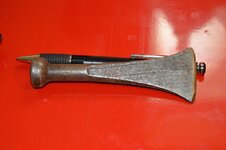
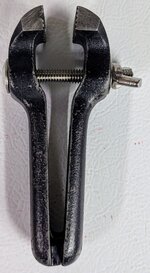
I call it a whale bone. I can't tell you how many pinch welds I've separated with this.
Zim
Zim

Where are you getting them? All the ones I buy rust completely in under a year, even if they claim an anti-rust coating. This tool reminded me that I am going to switch back to rebuilding them.But also don't rebuild calipers because new ones are fairly cheap usually.
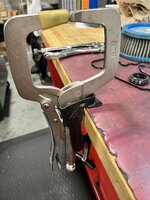
My Malco and ViceGrips fit just fine,Do other brands of locking pliers fit in those clamps very well? That's actually pretty cool.

To add to what others have stated, you can carry three of them and cover nearly every SAE and metric thread in your carry box.This a new one for me. Why would you use this instead of just running a tap/die over the threads?
Interesting to me to see the replies on this with others making effective use of rethreader files. I have had these for years as part of a rethreader set and I never was able to make effective use of them. Maybe I was just trying wrong or lacking patience. It helps to know the context others find them useful. I will consider trying again if/when the relevant occasions come up. I can see the logic of the comments on context of applicability.A lot of guys on here may know what thread files are, but I haven't met many people who know what they are ...
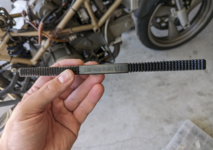
When I have damaged threads, the first thing I reach for is not a file and usually the standard rethreader will do what I need. But when I needed the file, it was the best (and maybe only) tool for the job. Before I had my rethread kit, I used my standard taps and dies. These days I use my rethread kit more often than my taps and dies. Before I had my thread files, I might use a triangular file, but that about removing metal and not pushing the threads back where they need to be, so really best suited to fixing a thread or two damaged near the tip say after cutting a bolt shorter.Interesting to me to see the replies on this with others making effective use of rethreader files. I have had these for years as part of a rethreader set and I never was able to make effective use of them. Maybe I was just trying wrong or lacking patience. It helps to know the context others find them useful. I will consider trying again if/when the relevant occasions come up. I can see the logic of the comments on context of applicability.
Agree. Rethreading taps and dies are great. Regular taps and dies are too easy to start wrong and can exacerbate problems. I can see where the file might help when used correctly in the start portion of a thread to get things going correctly.When I have damaged threads, the first thing I reach for is not a file and usually the standard rethreader will do what I need. But when I needed the file, it was the best (and maybe only) tool for the job. Before I had my rethread kit, I used my standard taps and dies. These days I use my rethread kit more often than my taps and dies. Before I had my thread files, I might use a triangular file, but that about removing metal and not pushing the threads back where they need to be, so really best suited to fixing a thread or two damaged near the tip say after cutting a bolt shorter.
Love my thread files. Especially the metric ones!A lot of guys on here may know what thread files are, but I haven't met many people who know what they are ...


PitPosse also has a made in USA model for two grease gunsThat's pretty neat. I saw on amazon there is one made for two grease guns but it's a chinese version. I might have to pick up a couple of these.

I usually use a flapdisk on an angle grinder for that problem. Just chamfer the end 'til you're past the binged threads.I've had at least one occasion where there was a problem at the start of the threads and I was able to use the files but not the rethreaders
I've had threads that were suitably a problem that I couldn't really use the rethreader until after I had used the files
Damnit--that's the first "I need one" for me for this thread.Nupla (or StrongHand) Handi-Hammer 10oz or 14oz - stop using your hand as a hammer.
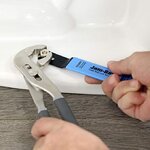
Yes. They don’t cut the threads. They move them back to where they are supposed to be.I guess I don't deal with damaged fasteners much (I just replace them), so learning a lot here.
I see folks mentioning rethreaders. Are these different to just "normal" taps and dies?
On some old things they have stuff that is no longer made with the same quality. As an example, all modern wing nuts I have found new are flimsy cheap formed metal. And generally smaller (when compared to the ones on equipment made back in the 1930s). There's also a bolt that has some kind of wing head that are tricky to find these days but I see them on some old hand tools.I guess I don't deal with damaged fasteners much (I just replace them), so learning a lot here.
I see folks mentioning rethreaders. Are these different to just "normal" taps and dies?
All my local hardware stores--ACE, Do It Again, etc, carry real live wing nuts forged from solid steel.On some old things they have stuff that is no longer made with the same quality. As an example, all modern wing nuts I have found new are flimsy cheap formed metal. And generally smaller (when compared to the ones on equipment made back in the 1930s). There's also a bolt that has some kind of wing head that are tricky to find these days but I see them on some old hand tools.
If it is just a bolt, yeah I replace it if I have one. If I don't, I might repair it and then make a note to get a replacement.
Even with rethreaders, I go slow and easy.
Yeah, but even those cast ones at Ace are not even almost the same. The one on the left is original. The one on the right is what they sell at Ace for cast these daysAll my local hardware stores--ACE, Do It Again, etc, carry real live wing nuts forged from solid steel.
Yeah, but even those cast ones at Ace are not even almost the same. The one on the left is original. The one on the right is what they sell at Ace for cast these days


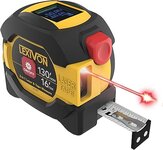
shame it isn't already magnetic https://www.harborfreight.com/66mm-round-magnet-96650.htmlI might be the only one that didn't know this was a thing but its super nice. After getting one I bought some for my equipment maintenance guys at work and they all bought them for their own shops. They are around $30.
Amazon.com: Pit Posse 572 Hand Grease Gun Holder Rack - Made in USA - Garage Organizer Aluminum Storage Caddy Wall Mount Accessory for Enclosed Trailer, Shop, or Garage (Silver) : Automotive
Buy Pit Posse 572 Hand Grease Gun Holder Rack - Made in USA - Garage Organizer Aluminum Storage Caddy Wall Mount Accessory for Enclosed Trailer, Shop, or Garage (Silver): Grease Guns - Amazon.com ✓ FREE DELIVERY possible on eligible purchaseswww.amazon.com

Articulating clip tool.
Didn't know there was such an animal until I was aimlessly poking around Matco's website.
Love this thing!
You may also want to consider the SK Body Clip tool. It's a lot more stout than the Matcos are, basically an actual pry bar, that I find myself using for a lot more than just body clips. I really like the Matcos too, as I bought them when the SK tool had been unobtanium for a long time, but now it can be had at a few places. I got mine from Zoro.Had I bought one of those, I could've installed the Weathertech mudflaps on the car. Space was so tight with some of the clips (also, I was using the same small Stanley prybar I had for years--not the correct tool...). I ended up taking it to a relative's shop. He ended up having to put it on a lift and take the rear wheels off. So, I kind of wonder if even that would've worked...
That being said, my next main "pry tool" I need to buy is a body clip puller.
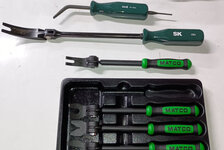

We need a spin-off thread for best tool nicknames.... they were called Mule Skinners...

-It's also possible that the thread file is just dulled, especially if you've had them for years. Thread files are a cutting tools and they can, like a regular file, become dull with use. If they've ever been used on threads that were heat treated steel then they'll just "skate" across the surface. I always try to feel if the thread file will "bite" into the material or not before further use. Mine are Blue Point and I'm selective about using them. An inexpensive brand of thread file may not even work well when new, some brands are more expensive for a reason.I have had these for years as part of a rethreader set and I never was able to make effective use of them. Maybe I was just trying wrong or lacking patience.
In my case I have to confess it was likely from ineptitude and being impatient. They were new condition (stored well with no rust etc).-It's also possible that the thread file is just dulled, especially if you've had them for years. Thread files are a cutting tools and they can, like a regular file, become dull with use. If they've ever been used on threads that were heat treated steel then they'll just "skate" across the surface. I always try to feel if the thread file will "bite" into the material or not before further use. Mine are Blue Point and I'm selective about using them. An inexpensive brand of thread file may not even work well when new, some brands are more expensive for a reason.
Resin encapsulated wire wheels.
Back in my bodyshop days they were called Mule Skinners.
Today I asked the Snap On Man if he had any on the truck and he had no idea what I was talking about.
He had them, he just had never heard them referred to as such.
Yes. Rethread sets are much better than tap and dies to clean up threads that have a bit of damage or corrosion. As other say, they push the metal back to where it should be (reform) vs cutting. You can quickly save a lot of lightly damaged fasteners and save a lot of fastener orders. They are also easier to start than conventional taps and dies. Sets are pretty cheap and work well. Plus since they are not doing a lot of cutting, they tend to last much longer than tap and dies. I strongly recommend getting a rethread set if you do a lot of car work in the rust belt or do a lot of old equipment restoration. It is a good idea to also use anti-seize lubrication on rust belt car component reassemblies also. That helps tremendously in any future work, but anti-seize also has a nasty tendency to get all over everything while working (silver smudges on everything you touch!). I am pretty much resigned to all clothing getting slimed when doing any car work though.I guess I don't deal with damaged fasteners much (I just replace them), so learning a lot here.
I see folks mentioning rethreaders. Are these different to just "normal" taps and dies?
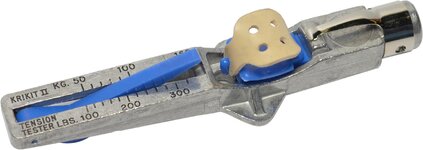
I have a plunger-type tension tester. It's a little more accurate than the tried and true "push on with your finger" deflection test.I use a fairly unknown tool called a Krikit belt tension gauge on some machinery V-belts I service.
It can be used on all kinds of belts though.
Here's a Gates rep using one on a bicycle drive belt.
I have never used the phone app he mentions, but it detects belt frequency to determine tension.
This a new one for me. Why would you use this instead of just running a tap/die over the threads?


