To avoid these ads, REGISTER NOW!

Share unique tools others may not know about

WWheeler

Well-known member
Joined
Jun 23, 2015
Messages
4,105
Location
Middleofnowhere USA
I used a tool like that on my property out in the country where someone started cutting the padlock off my gate and illegally dumping on my property, so I spread a bunch of those around and dumped grass clippings/leaves on top of them on the inlet road just inside my gate. Police caught the guy with 4 flat tires a mile down the road from my property after the gate lock got cut and a new pile of **** got dumped once again. lol Police were already looking to catch them. I was in the process of getting a game camera installed out there but it didn't take that long to get him the old fashioned way.
 
To avoid these ads, REGISTER NOW!

Beerhippie

Well-known member
Joined
Oct 13, 2023
Messages
9,792
Location
Far NE Oregon
I used a tool like that on my property out in the country where someone started cutting the padlock off my gate and illegally dumping on my property, so I spread a bunch of those around and dumped grass clippings/leaves on top of them on the inlet road just inside my gate. Police caught the guy with 4 flat tires a mile down the road from my property after the gate lock got cut and a new pile of **** got dumped once again. lol Police were already looking to catch them. I was in the process of getting a game camera installed out there but it didn't take that long to get him the old fashioned way.
Tack strips!

When the A-hole tries to sue you for the cost of tires, just tell 'em they were for painting and fell off the truck.
 

WWheeler

Well-known member
Joined
Jun 23, 2015
Messages
4,105
Location
Middleofnowhere USA
Tack strips!

When the A-hole tries to sue you for the cost of tires, just tell 'em they were for painting and fell off the truck.

He's still in jail for it. Police out here don't play for illegal dumping. They are who suggested laying down boards with nails, so I did. I laid down plywood with hundreds and hundreds of nails. They'd already matched his tire prints to previous dumping and were on the lookout for a truck with those tires on it. You'd think they were working a murder case. His truck's been impounded and he apparently doesn't have any friends or family to get it out for him, so he's going to lose it too. I've already talked to the shop holding it about buying it once he gets the abandoned vehicle title to it.
 

RTM

Well-known member
Joined
May 13, 2019
Messages
13,157
Location
SF Bay Area
There are a LOT of threads that dies simply don't exist for. I used the hell out of my thread files as a rotating equipment machinist, repairing old shafts. Sometimes I was cutting threads that were something wild like 8"-12tpi
This is really true in old hand tool restoration also. Old planes have odd threads, and instead of looking for a 12-20, just haul out the thread file to clean it up.
 

KnurledNut

Well-known member
Joined
Jan 28, 2011
Messages
8,130
Location
n/a
This a new one for me. Why would you use this instead of just running a tap/die over the threads?
I guess I don't deal with damaged fasteners much (I just replace them), so learning a lot here.
Lots of excellent advice already given on this, but I wanted to add that they can also be used on left hand threads.
These fasteners can be hard to source, or be threads built in to a costly assembly. LH taps, dies, and rethreaders are uncommon.
A thread file can save time and money in these one-off situations.

Another thought, besides metric and inch, these are also available in pipe thread pitches as well as others like Whitworth.
Some of these fasteners may be near impossible to find for replacement, requiring restoration or fabrication.
1757776287093.png
 

Beerhippie

Well-known member
Joined
Oct 13, 2023
Messages
9,792
Location
Far NE Oregon
Not sure if this has been posted yet; but if you to get wire into split wire loom - this tool is cheap and awesome.

Packing split-loom can be incredibly frustrating without a tool like that! I may just order one for next time, whenever that is.
 

Nobody-named-Olli

Well-known member
Joined
Jan 9, 2025
Messages
1,599
Location
North Rhine-Westphalia; Germany
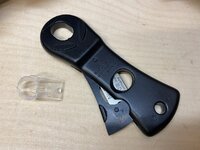
Martor Rapid 594 - cartridge & nozzle cutter. (Made in Germany)

- https://www.martor.com/en/products/cutters/product/argentax-rapid-594

And yes, I know … we all can do that with everything from a pocket knife to a chisel …

But I guarantee, once you tried this tool, you never go back to anything else.

The biggest advantage, especially when dealing with anything else than silicone cartridges: It leaves the full threading intact - every time. (Probably also while wearing a blindfold. …) No more taking one or two threads off by accident. This ensures your nozzle doesn’t end up popping off when using a small diameter opening with high-viscosity adhesives/sealants/… .

IMG_7275.jpeg

IMG_7276.jpeg

IMG_0353.png

IMG_0354.png


Kind regards,
Olli
 
Last edited:

richfinn

Well-known member
Joined
Jan 29, 2011
Messages
4,814
Location
Leeds, Yorkshire, England
Can you explain how that test works?

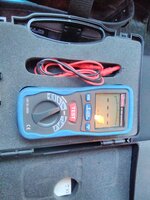
I can try 😂, a good Piezoelectric type injector will generally have a resistance of around 200k ohms, but a regular multimeter only has a very low output voltage, the insulation tester can test resistance using up to 1000v.

Unplug the harness and connect insulation tester across the injector pins.

set the tester to 125v and test across the terminals (120v is pretty typical operating voltage on VW/Audi TDi) to test the Piezo crystal stack (a good reading is 200k ohms at 125v).

You can also set to 1000v and test between each pin individually and the body of the injector to ensure good insulation.

I'm still experimenting with it, and haven't really come across any faulty direct injection petrol injectors yet (I have a BMW test lead ready though) and we don't really see the solenoid type Diesel injectors much anymore.
 
To avoid these ads, REGISTER NOW!

Milton Shaw

Well-known member
Joined
Feb 11, 2011
Messages
4,838
Another unknown tool is a micro stop countersink. Used in aircraft construction they are hand drill operated ball bearing micrometer depth adjustment countersink, counter bore, flat facing, depth drill and thousands of sizes of bits and with and without pilot bit available. Ebay usually has a bunch that are used and still sharp enough to cut just about any material you find. Look on Ebay for micro-stop countersinks, a major mfg is Zephyr and you can see some of the options. They are like Cleco tools very usefull for lots of assembly jobs other than aircraft. Years ago I bought a box of used ones with a lot of bits and cleaned them and took them to local woodworking club and sold out and was asked for another year if I had any more.
 

jeffmoss26

Well-known member
Joined
May 25, 2011
Messages
12,856
Location
Cleveland, Ohio
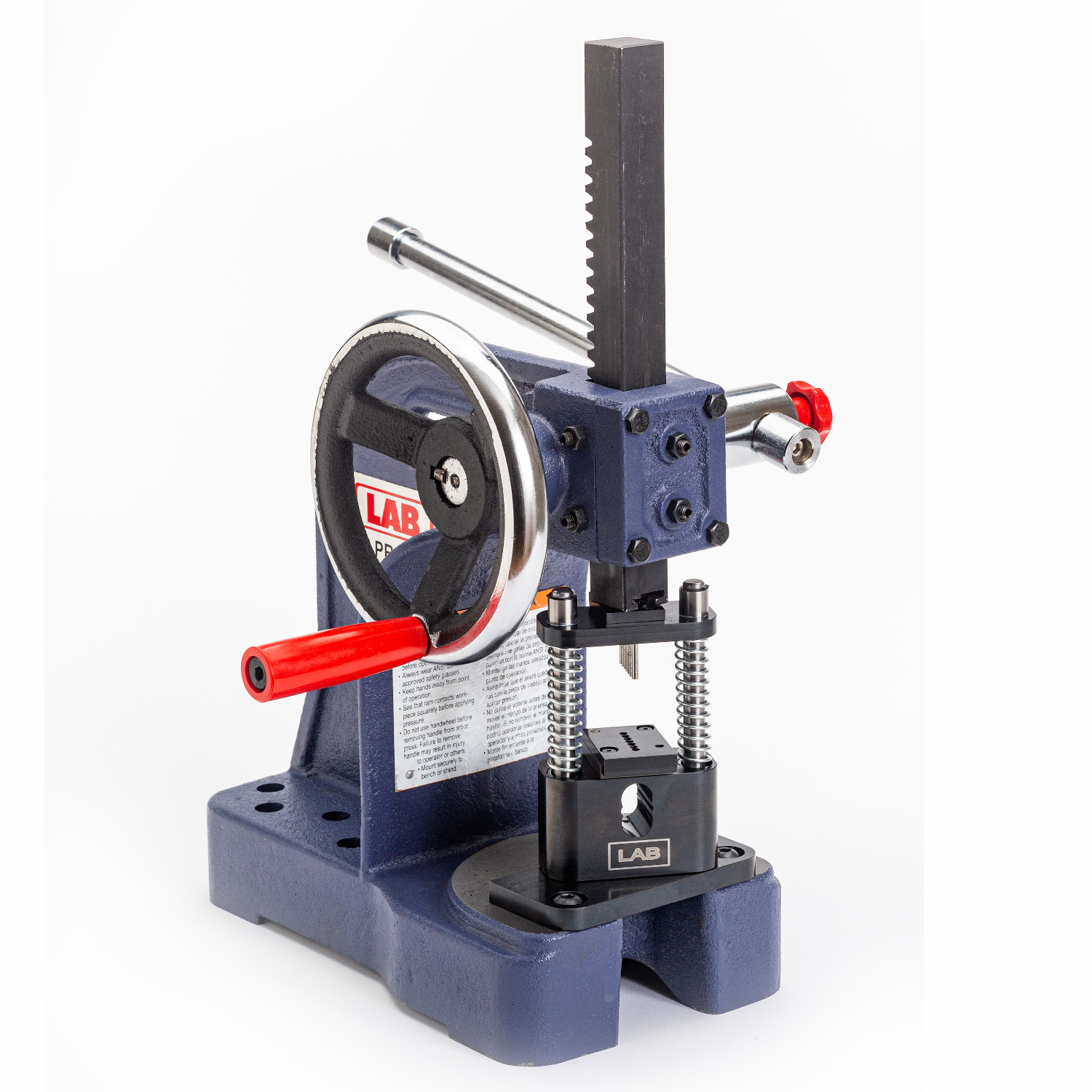
We got this recently at work. It is a huge time saver!
 

Attachments

  • IMG_8938.jpeg
    IMG_8938.jpeg
    585.8 KB · Views: 37

Nobody-named-Olli

Well-known member
Joined
Jan 9, 2025
Messages
1,599
Location
North Rhine-Westphalia; Germany
When you get it seated properly and it has the proper grip, it is much less fuss and a lot quicker than going through the full process of using regular extractors. It is also much better than (most) extraction pliers in terms of necessary clearance.

For that very reason I originally purchased both versions ( minus the, now also available third option, vise grip style) of Engineer screw extraction pliers. However, I found that while the needle nose pliers generally offer a great grip by design, the jaws tend to easily bind/“twist” with torque/force applied so I hadn’t much luck using them for actual screw extraction in confined spaces/ low clearance situations.

The issue with the ScrewIT is, if you need to seat it with a dead blow, that force needs not to be absorbed by the underlying construction. That’s why I said it works best with steel-steel applications. If the screw you’re trying to extract sits in wood, or in a wall plug - too much energy from that needed blow goes everywhere but not where it is needed.

It will not work if too much of the head of the screw/bolt is gone.

It’s one tool in a whole bag of tricks. Not a one-fits-all-solution.

If it works, it gets the job done quick & clean. If it doesn’t, use the next best option.

Kind regards,
Olli
 

Vinny

Well-known member
Joined
Jul 14, 2011
Messages
632
Location
Simi Valley, CA
We got this recently at work. It is a huge time saver!
Don't know anything about locksmithing. How would you do this without the tool? Just a hammer and pins?
 

NightSky

Well-known member
Joined
Jun 29, 2024
Messages
541
Location
Southwest OH
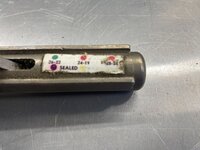
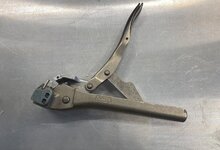
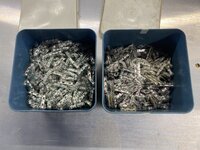
Basically a metal block that holds the core, a hammer and punch to set the caps.
If I am doing one or two cores I’ll still use the block.
I guess the flip side of this coin is that the caps must be removeable. Is there a tool for that or can they be popped out from the inside? Or maybe this core is single use?
 

jeffmoss26

Well-known member
Joined
May 25, 2011
Messages
12,856
Location
Cleveland, Ohio
I guess the flip side of this coin is that the caps must be removeable. Is there a tool for that or can they be popped out from the inside? Or maybe this core is single use?
The cores are reusable but the caps generally are not. The long skinny punch allows you to remove the pins and springs one chamber at a time. Sometimes you don’t have to change all the pins when rekeying.
 

Stubby1743

Well-known member
Joined
Jul 16, 2023
Messages
721
Location
UK
Tang1R.jpg

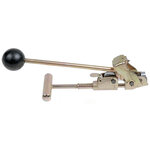
Tangmaster automatic Morse taper release tool. Its advantage over a simple Morse wedge tool is that it enables the removal of a Morse taper chuck from a drill press without any danger of the chuck free falling onto the table.

The wedge is inserted into the removal slot and the handle is pulled down which increases the size of the wedge and releases the chuck which you can hold with your other hand.
 

MichaelP

Well-known member
Joined
Jul 27, 2009
Messages
944
Location
IL/WI border
Tang1R.jpg

Tangmaster automatic Morse taper release tool. Its advantage over a simple Morse wedge tool is that it enables the removal of a Morse taper chuck from a drill press without any danger of the chuck free falling onto the table.

The wedge is inserted into the removal slot and the handle is pulled down which increases the size of the wedge and releases the chuck which you can hold with your other hand.
Do you need to press hard on the handle to release the taper, or it always releases easily?
Regular tool needs a knock with a hammer.
 
Last edited:

Stubby1743

Well-known member
Joined
Jul 16, 2023
Messages
721
Location
UK
I've not had the tool long and so I have only used it a couple of times. The lever has a lot of leverage and so I would think that it will deal with all tapers pretty easily.

It appears that the tool was not a commercial success as most people are happy to use the simple wedge with a light tap from a hammer.
 

neophyte

Well-known member
Joined
Apr 23, 2012
Messages
9,663
Location
Pennsylvannia
I've not had the tool long and so I have only used it a couple of times. The lever has a lot of leverage and so I would think that it will deal with all tapers pretty easily.

It appears that the tool was not a commercial success as most people are happy to use the simple wedge with a light tap from a hammer.
You can buy the tool on Amazon, and other versions have been around a while.


I presume the above may be an Asian copy.

The tool is a weird specialty tool, requiring multiple pieces, some forged, some bent steel, with a bunch of parts needing to be made geometrically correct, and all for a very specific task, that that 99+% of people who actually own tools that could use the taper removal tool, would not buy.
 
To avoid these ads, REGISTER NOW!
Top Bottom