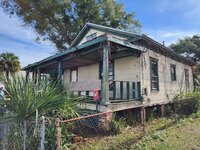
Having the Fire Department burn it would be great, but the house is in the ghetto with its ancient zoning/codes. It is way too close to adjacent buildings for a burn without any collateral damage.
Mti-mark said:
Their problem, not yours.
If this is said in-jest, well, that's a cavalier remark to a potentially horrendous outcome.
If you mean it, this is probably one of the most-callous pieces of advice I've read on the forum. I hope you (the O.P.) ignore that 'advice.'
You better check everything you want to do, and the permits you need are
all granted.
As to having the local FD do a controlled burn, given the proximity of adjacent properties, I suspect the answer to that will be 'no-thanks.' Regulation of controlled burns in the State of Florida got to be much-harder to co-ordinate after a Maimi-Dade County (Miami metropolitan area) probationary firefighter was killed during a live-burn training exercise.
In my prior career as a Florida firefighter/paramedic, I also took the course in conducting live-burn exercises, and have done them. Here are issues you face:
- posting a bond for clean-up according to the AHJ's estimate
- disconnection of utilities and proper treatment of them by qualified utility personnel (water, sewer, gas, electric, or other)
- mitigation of asbestos building materials after an examination of the site by a qualified party identifies the location and amounts of asbestos present
- insurance for the operation to proceed
- use of qualified contractors to perform the work. Thinking you can 'do it yourself' I do not expect will be successful. Just because you're the RPO (registered property owner) doesn't mean that you can do what you wish. I suspect that you have never lived in the house as-of recently. Being a RPO/non-resident of the site you may discover requires additional criteria you will need to meet
- is this a Florida 'cracker' wood-frame building? Built on a few short columns of CBS (often stacked CMU's)? Or is there a spread-footer below-grade with stem walls to some point above-grade? Have you determined the amount of foundation below-grade? If it has that type of construction, you better plan for removal of the material, which would at a minimum, call for a large backhoe and multiple dumptrucks
- Insurance for this undertaking is something you definitely require. In your work, what do you expect is your legal liability if part of an adjacent structure develops structural damage?
Remediation of the site is something which may cost you a considerable sum, and you need to plan for the financial expenditure necessary to fulfill this obligation. Grading, planting grass, improvements such as adding sidewalks, curbing, or repairs to civil engineering components (damage to streets, swales, curb cuts, etc) are likely covered in your local codes and ordinances. Restoration or establishment of foliage like trees and shrubs is probably part of your obligation under codes and ordinances also.
Are you planning to sell the parcel after the demolition, and you're planning on doing this to make it more-saleable? Are you planning to build new housing on the parcel? You need to check into the impact fees, and the time duration after removing the structure before which you need to commence construction of a new dwelling, if that is your plan. Go beyond that timeframe and you may be shocked at what is required by your local regional planning council for impact fees due. Be sure to investigate this before you proceed. Know everything you can about the regulations and ordinances in-place. I know of one instance where the municipal AHJ required the property owner to submit
and have-approved a set of plans for a replacement structure on the parcel before they would grant the demolition permit. That was in an area zoned for SFR's (single-family residences).
In a worst-case scenario, 'do-it-yourself' may become a financially-ruinous decision which in hindsight, was a foolish one to-make.
You can start with reading to a point of thorough understanding of the procedures involved in something such as you propose in your scope of work, beginning here (but not being all-inclusive, consult your AHJ for all which is required)
MunicodeNEXT, the industry's leading search application with over 3,300 codes and growing!

library.municode.com