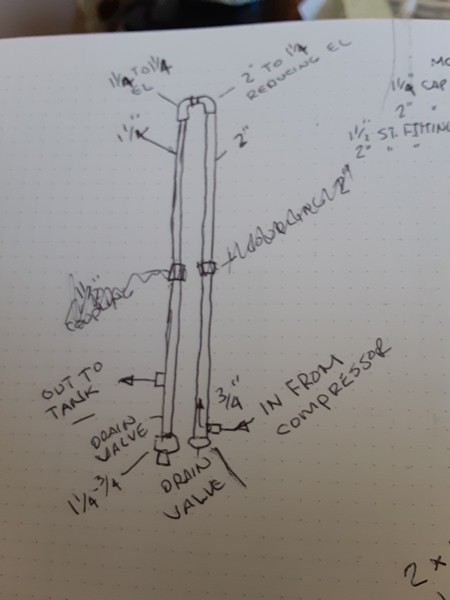
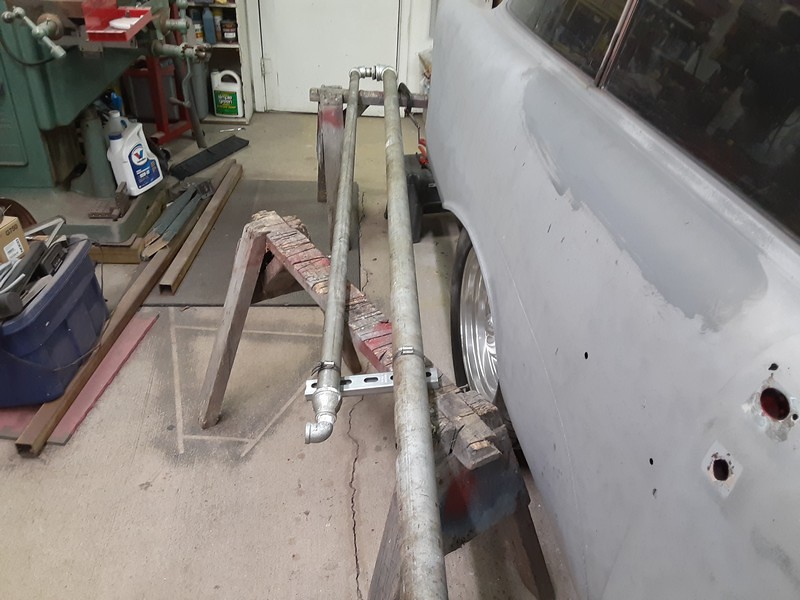
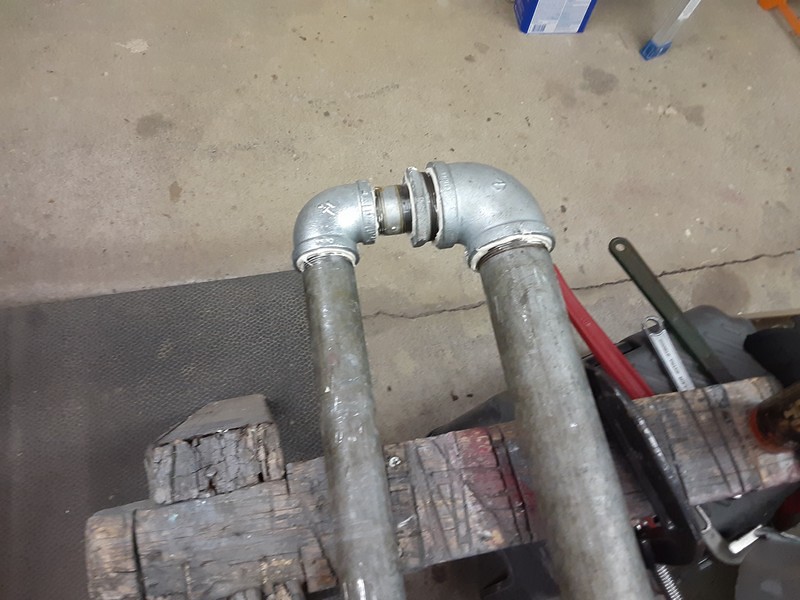
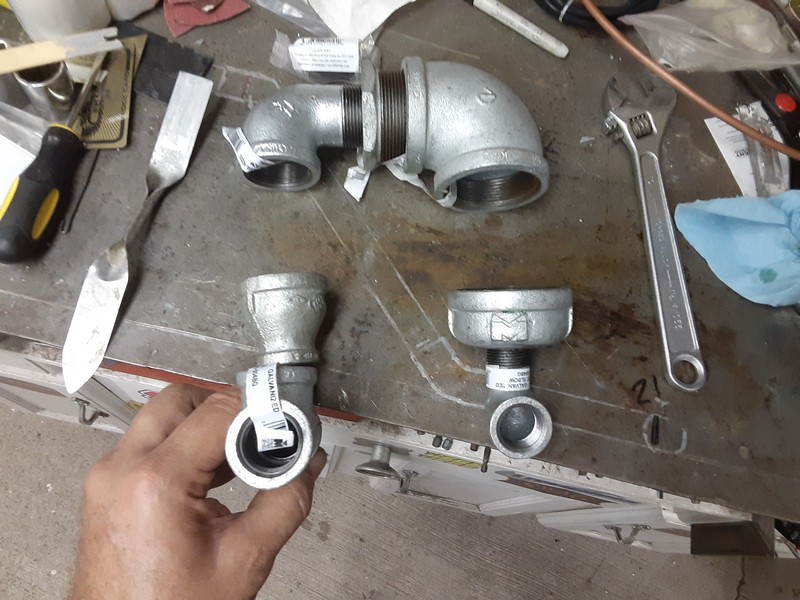
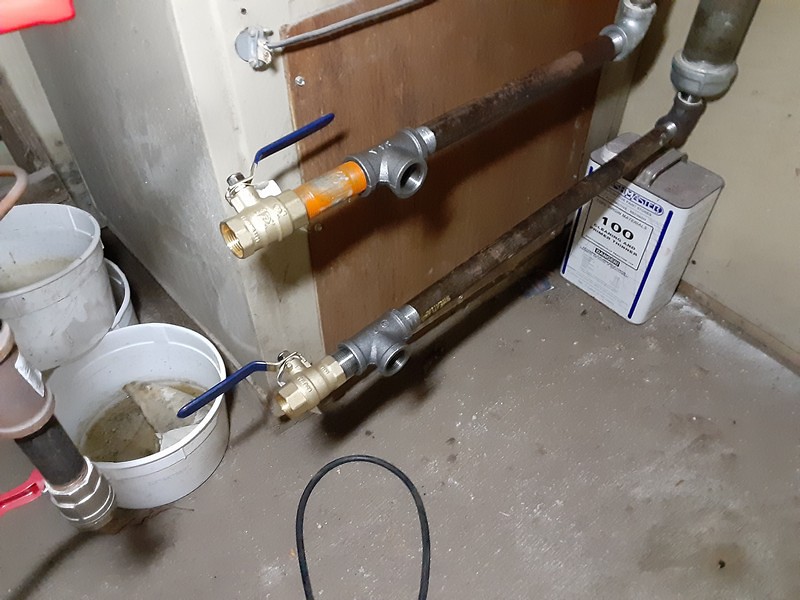
The best value in an aftercooler is to actually consider the physics of what removes water and do that. Here's a link to a similar thread, pay attention to Kay's setup.
https://www.garagejournal.com/forum/showthread.php?t=456267&showall=1Hers is the best I've seen that actually uses the physics right. The weird homemade steel pipe voodoo work slightly, but are not a good value, because they don't remove it well enough to paint steadily, and cost a lot more per amount of water removed than a correctly designed setup.
To make it work, you have to cool the air (which condenses some of the water), allow the water to drop out, have a way to remove the water, and then discharge the air at ambient temperature. Unfortunately, that isn't enough to keep condensation away, as the air pressure drop at the tool cools the air further and causes it to condense more. To really get the air dry, you have to drop the moisture below the saturation level. It takes a chemical or mechanical process to do that, no amount of passive cooling with ambient air temperature will do that. For most things, passive cooling is enough, but for paint it is not, and may not be for sandblasting. For air tools, it's fine.
So, you need to add a second stage dryer to it. One way is to use a refrigerated dryer that cools the air to cold, condenses the water, and then reheats the air or allows it to reheat in the tank to ambient temp. That way, the water vapor level will be below the dew point. Another way is to add a desicant dryer at the point of use. That will cost less than you posted in your original post, as you will be removing most of the water in your cooling step before it gets into the tank, which saves the desicant life.
The radiator you linked from Zoro will work great, but you can also use a high pressure rated transmission cooler for 1/3 the cost. The one Kay used is the same one I did, and it costs well under $100. You might want a slightly bigger model, as our compressors are slightly smaller capacity.
I'll get flamed on this from the pipe voodoo guys, but here's the real physics of them: They are heavy, so have some heat capacity. For the first little bit, the air heats them up, and the heavy steel absorbs the heat from the air going through. After they get hot, they lose heat slowly so aren't very effective for more than a few minutes. The radiators with fans remove heat continuously, and will both cool more and cool for long periods of time. Plus, the cost is about the same as a bunch of pipe and expensive fittings. The only way the pipe stuff makes sense is if you're on a ghetto budget and get the materials free or nearly so. They're better than nothing, but not nearly as effective as a designed solution. If you really want to believe in ghetto voodoo, look up "franzinator". That's the ultimate cult of pipe cooler guys, they have magic setups that will only work if you follow their formula EXACTLY and build to their clan dimensions (you have to pick which clan you believe in, because only their clans dimensions work, the others don't).
Adding a GJ link to discussion of why the Franzinator and pipe coolers aren't a good idea:
https://www.garagejournal.com/forum/showthread.php?t=204287
No sense re-beating a dead horse, it's already been thoroughly done.