To avoid these ads, REGISTER NOW!

Best value in an air drying solution?

ishiboo

Well-known member
Joined
Oct 27, 2010
Messages
9,481
Location
Oshkosh, WI
I just bought a new DXCMV7518075 7.5hp, 80gal compressor, got a deal on it from the store for $1399 and couldn't turn it down! I have a 3M Accuspray system I occasionally spray metal parts with, love the gun but my portable compressor cannot keep up.

I'm looking for a dry air solution that doesn't break the bank. Found a few solutions which get good reviews, only for people to say the $50 filter lasts 5 minutes before it's ready to be replaced.

What's the best deal for dry air? I don't need to paint often, and don't paint anything big, but when I do I don't want to pay $10 a minute for dry air!
 
To avoid these ads, REGISTER NOW!

astroracer

Well-known member
Joined
Jun 22, 2005
Messages
3,001
Location
Mid_Michigan
The 1st order of business for dry air is to get it as cool as you can as quickly as you can.
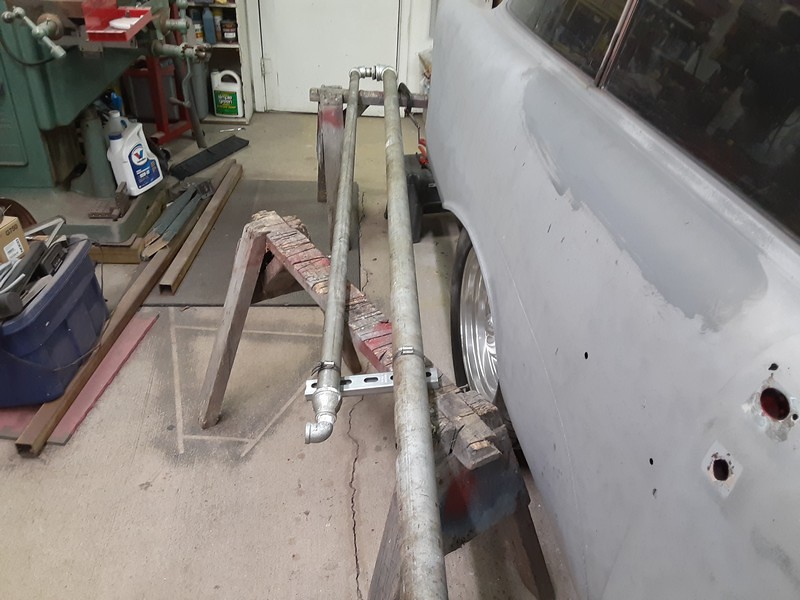
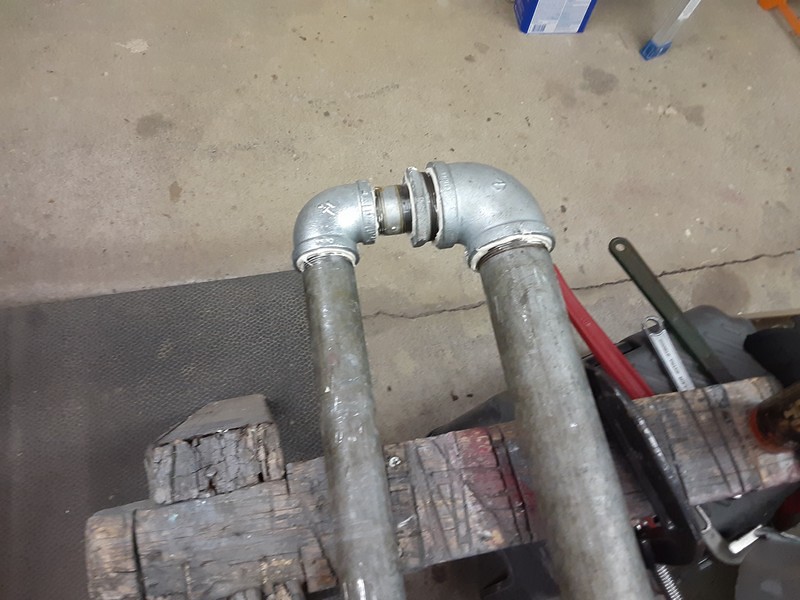
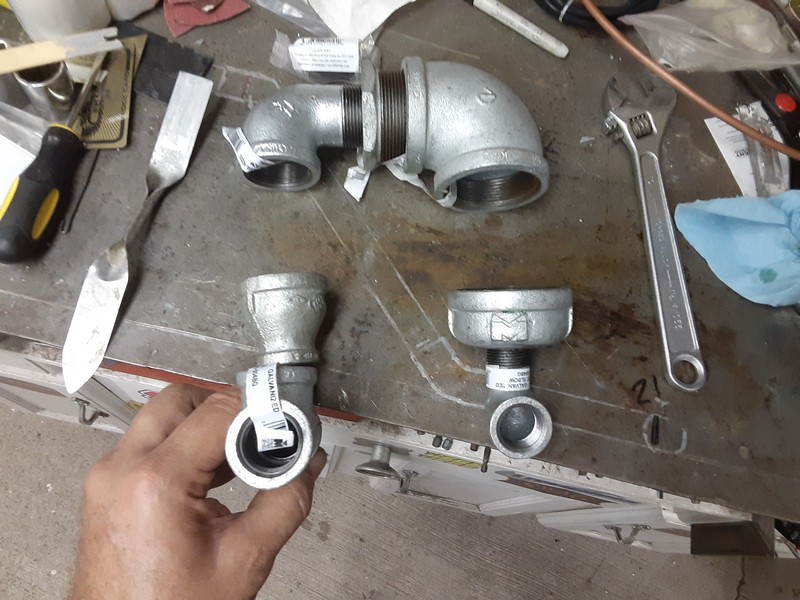
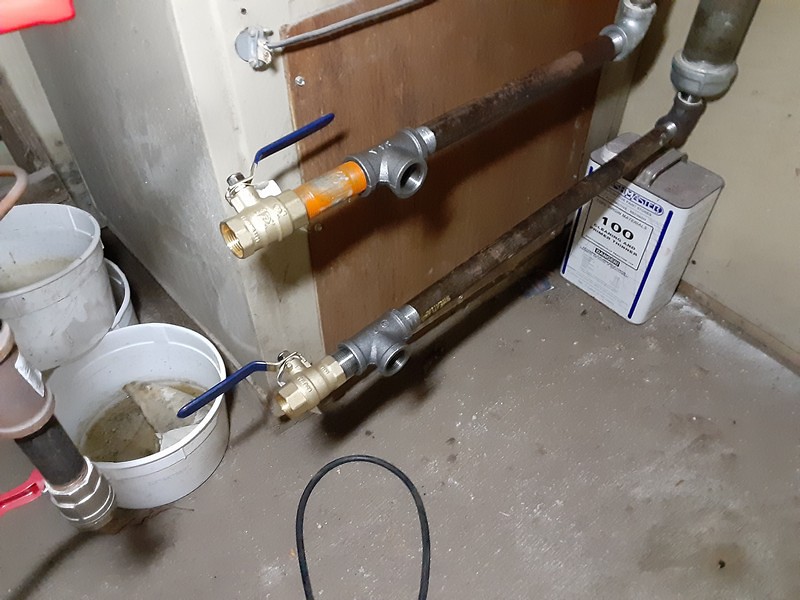
I just built a big pre-cooler for my main compressor out of 2" and 1 1/4" water pipe. I plumbed the compressor output into this big manifold BEFORE it goes into the tank. The charge air from the compressor hits the 2" pipe and immediately decompresses, releasing heat and moisture inside the pipe. i have seen a HUGE drop in tank condensation since I got the system up and running.
Mark
Another good way to cool the air is to run it thru a ********* pipe air system, at least 3/4" for the main line, to cool it off as it is running out to the drops.
I have a couple hundred bucks into my cooler including the auto drains for each leg of the manifold and all of the fittings to get it put together.
Mark
 

astroracer

Well-known member
Joined
Jun 22, 2005
Messages
3,001
Location
Mid_Michigan
And pay attention to the little things. Your link describes the cooler like this:
"Removes Harmful Water, Oil and Contaminants from Compressed Air System."
Well, the "cooler" doesn't remove anything but heat... All of that "harmful water, oil and contaminants" will still have to be filtered out of the system...
It also says it will flow 35cfm @100psi. That's okay if it more then the output on your compressor. :)
mark
 

astroracer

Well-known member
Joined
Jun 22, 2005
Messages
3,001
Location
Mid_Michigan
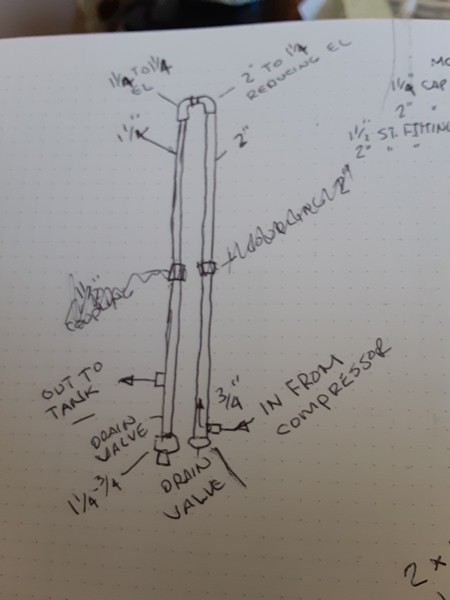
This is a rough concept sketch I did for my cooler.
2v2Hs831qx9EDKg.jpg

Both pieces of pipe are 8' long. They stand vertically in my compressor room and run up into the ceiling.
These pics were taken as I was building the manifold.
2v2Hs83Hdx9EDKg.jpg

2v2Hs83EFx9EDKg.jpg

2v2Hs837Fx9EDKg.jpg

2v2HPqjj3x9EDKg.jpg

I used 3/4" braided hose to connect the manifold to the compressor outlet and the tank inlet. The outlet from the compressor runs at about 230 degrees when it is charging. Running the charge air into this manifold cuts the temp at the outlet to about 100 degrees at the tank... :)
Mark
 

bsaint

Well-known member
Joined
Apr 26, 2010
Messages
5,109
Location
Manchester, CT
Styrofoam cooler. A coil of copper. Put the copper in the cooler and pop the inlet and outlet through the side. Plumb a water trap off the copper at the outlet to drain condensate. Fill cooler with ice. Boom. 32*F dew point air dryer.


Sent from my iPhone using Tapatalk
 

dnschmidt

Well-known member
Joined
Oct 3, 2014
Messages
7,267
Location
Phoenix, AZ
RTI, DeVilbiss and Sharpe make good desiccant dryer systems that are used by most body shops. These typically have three stages. A filter, a common bowl type dryer and then the desiccant dryer. These are the pro way to go. I live in Phoenix where the humidity is usually very low and my desiccant only needs to be changed maybe once every two years. It actually doesn’t really need to be replaced but simply rejuvenated by baking in an oven. It turns from pink to blue when it’s completely dry.
 

astroracer

Well-known member
Joined
Jun 22, 2005
Messages
3,001
Location
Mid_Michigan
The best value in an aftercooler is to actually consider the physics of what removes water and do that. Here's a link to a similar thread, pay attention to Kay's setup. https://www.garagejournal.com/forum/showthread.php?t=456267&showall=1Hers is the best I've seen that actually uses the physics right. The weird homemade steel pipe voodoo work slightly, but are not a good value, because they don't remove it well enough to paint steadily, and cost a lot more per amount of water removed than a correctly designed setup.

To make it work, you have to cool the air (which condenses some of the water), allow the water to drop out, have a way to remove the water, and then discharge the air at ambient temperature. Unfortunately, that isn't enough to keep condensation away, as the air pressure drop at the tool cools the air further and causes it to condense more. To really get the air dry, you have to drop the moisture below the saturation level. It takes a chemical or mechanical process to do that, no amount of passive cooling with ambient air temperature will do that. For most things, passive cooling is enough, but for paint it is not, and may not be for sandblasting. For air tools, it's fine.

So, you need to add a second stage dryer to it. One way is to use a refrigerated dryer that cools the air to cold, condenses the water, and then reheats the air or allows it to reheat in the tank to ambient temp. That way, the water vapor level will be below the dew point. Another way is to add a desicant dryer at the point of use. That will cost less than you posted in your original post, as you will be removing most of the water in your cooling step before it gets into the tank, which saves the desicant life.

The radiator you linked from Zoro will work great, but you can also use a high pressure rated transmission cooler for 1/3 the cost. The one Kay used is the same one I did, and it costs well under $100. You might want a slightly bigger model, as our compressors are slightly smaller capacity.

I'll get flamed on this from the pipe voodoo guys, but here's the real physics of them: They are heavy, so have some heat capacity. For the first little bit, the air heats them up, and the heavy steel absorbs the heat from the air going through. After they get hot, they lose heat slowly so aren't very effective for more than a few minutes. The radiators with fans remove heat continuously, and will both cool more and cool for long periods of time. Plus, the cost is about the same as a bunch of pipe and expensive fittings. The only way the pipe stuff makes sense is if you're on a ghetto budget and get the materials free or nearly so. They're better than nothing, but not nearly as effective as a designed solution. If you really want to believe in ghetto voodoo, look up "franzinator". That's the ultimate cult of pipe cooler guys, they have magic setups that will only work if you follow their formula EXACTLY and build to their clan dimensions (you have to pick which clan you believe in, because only their clans dimensions work, the others don't).

Adding a GJ link to discussion of why the Franzinator and pipe coolers aren't a good idea: https://www.garagejournal.com/forum/showthread.php?t=204287

No sense re-beating a dead horse, it's already been thoroughly done.

Wow, you sure are up on this stuff! Let's see your system! Just curious because you sure do know what you are talking about. I figure you have one helluva set up in your shop and want to see some pics. I know it isn't ghetto so don't be shy. :)
Mark
 

astroracer

Well-known member
Joined
Jun 22, 2005
Messages
3,001
Location
Mid_Michigan
Well that's just great...
My Ghettonator isn't very sophisticated either but it gets the job done and I am not embarrassed to post pictures of it. If that will help someone along the way that's fine, if not, that's fine too.
I built this thing to remove heat and moisture before it gets into the tank and it does that just fine with zero restriction to flow and full automatic drains... If you want to call it ghetto that's fine, just know that it works very well.
 

astroracer

Well-known member
Joined
Jun 22, 2005
Messages
3,001
Location
Mid_Michigan
By the time you get a usable radiator that is high flow and THEN get it all plumbed in with tubing, pipe, drops and filters? You will have quite a bit more into it then what I spent, it is not that simple my friend...
Oh, and I use Craftsman tools as well... I'm afraid you are just not making any points today...
Mark
 

Jswain

Well-known member
Joined
Apr 26, 2013
Messages
2,457
Location
Calgary, AB
7.5hp 80gal for occasional spraying small parts....get yourself a good filter/regulator & mount it before your hose reel and call it a day.

In the future if you start sandblasting lots, or painting entire cars than pick your poison whether you want to build a copper or steel drop manifold on the wall or install an aftercooler on the compressor

https://www.amazon.com/dp/B0000AXCFS/?tag=atomicindus08-20
 
Last edited:
To avoid these ads, REGISTER NOW!

matt_i

Well-known member
Joined
Mar 14, 2008
Messages
10,725
Location
SE Michigan
My opinion is you need 3 stages. Cyclonic - coalescing - dessicant.

Then your air will be ready for paint.

My take is to buy industrial components, good-used or NIB. Lots of "spare parts inventory" out there being resold.

I have an affinity for Master Pneumatic and bought several of their components.

It may not be cheapest but I have great confidence in its longevity. If you want cheap use Amazon or Eastwood might be a step up.
 

engineer2

Well-known member
Joined
Dec 13, 2009
Messages
11,795
Location
Chicago burbs
The best value for an air drying system is to scour ads for a used refrigerated air dryer. Find one that uses 134a. They pop up for a reasonable price a few times a year. 10 to 25 scfm is good size for a home compressor.

If your ambient relative humidity is below around 38%, you may be able to get by with an aftercooler and a desiccant filter for painting.
 
Last edited:

Jswain

Well-known member
Joined
Apr 26, 2013
Messages
2,457
Location
Calgary, AB
You can paint for a pretty long time with a hvlp at 20psi being fed from an 80gallon tank charged to 175psi.
 

stonesfan68

Well-known member
Joined
Apr 19, 2012
Messages
2,758
Location
Houston, TX
Right now I'm thinking this:

https://www.zoro.com/akg-air-cooled-aftercooler-max-hp-10-35-cfm-c-1835bg/i/G1180961/

Plus obviously fans, which I guess would have to use a temperature controller with a thermocouple on the aftercooler?

Followed by this, which seems to get great reviews:

https://www.amazon.com/gp/product/B007EWW1SG/?tag=atomicindus08-20

If you mount the cooler on the back of the belt guard then you won’t need to buy fans or a thermostat. Mount that moisture separator on the discharge of your tank and make sure that you keep the tank drained. You should have air that is dry enough for most purposes in a home shop. Beyond that you’ll have to add a desiccant or refrigerated air dryer.
 

pcmeiners

Well-known member
Joined
Aug 13, 2009
Messages
7,853
Location
In the only town in Pennsylvania, Bloomsburg.
Akg Air Cooled Aftercooler, Max HP 10, 35 CFM at $235 , this is not a good buy

Hayden 1290 $100 cheaper, has far more surface area, swirl tubes, mounts on the pully guard.

Also what is with fans lately ? on most compressor totally unneeded; if you have money to throw away go ahead an buy them. The Hayden unit unit will cool the air to just a few degrees of ambient about 3/4 the way across the cooler fins, when mounted in front of the compressor pulley.

https://www.amazon.com/dp/B000HE6UNK/?tag=atomicindus08-20
 

metlmunchr

Well-known member
Joined
Sep 10, 2011
Messages
1,278
If a compressor is going to see heavy use like running air sanders for bodywork or painting large projects, then mounting an aftercooler in front of the compressor pulley isn't a good idea.

The fan section of the pulley is designed to operate in free air, or, IOW, unrestricted air. Placing any sort of radiator or cooling coil in front of it creates a resistance to air flow which means the fan will be moving less air across the compressor for cooling the compressor itself.

In addition, the air that does blow across the pump will now be heated rather than at ambient temperature, so you've lost cooling capacity in two ways. Less air across the pump and less capacity to absorb heat by the air that does cross the pump. Over time, the compressor will run hotter than normal which means more heat into the air output to the radiator and even hotter air across the pump. The longer it runs, the hotter everything gets rather than the pump coming up to some steady state operating temperature as designed and then holding that temp regardless of how long it runs.

IMO, if you're going to add an aftercooler, spend another hundred bucks on a separate fan and don't risk frying your $1000+ compressor from overheating.
 

FTG-05

Well-known member
Joined
Oct 11, 2012
Messages
1,523
Location
TN
A 20" fan from WM costs $20:

3952274c-5196-4744-8163-58702b28a18c_1.db4a99b204078ab87ac725b012da0edd.jpeg


I'd use that rather than the compressor fan, for all the reasons cited above.

My solution for cheap and effective air cooling was a 120 gallon tank off of CL:
 

Attachments

  • IMG_20180427_151947119_HDR (Large).jpg
    IMG_20180427_151947119_HDR (Large).jpg
    150.6 KB · Views: 42

dr_clyde

Well-known member
Joined
Jan 7, 2009
Messages
6,431
Location
Holland, MI
I just use a refrigerated air dryer.

I got it for free when I got a used compressor.

They go for cheap at auctions and business closing sales.
 

American Locomotive

Well-known member
Joined
Jan 8, 2017
Messages
10,935
Location
Rhode Island
Here's what I just rigged up last week on an HD Husky Compressor. Just got a blasting cabinet, and while the compressor could keep up, after about 5-6 minutes of operating you'd start getting lots of water. The compressor tank would get hot to the touch, and even the air discharge line off the tank would get warm.

It's an old hydraulic cooler from a machine at my previous job - had the fans on it too. Fans are just connected to the pressure switch, so they run whenever the compressor does. For whatever reason, this cooler didn't have a conventional top/bottom inlet and outlet, so I elected to mount it vertically, since water was going to get trapped no matter what. I was able to mount it without needing to modify or weld anything on the compressor. Just used some hole-punched angle iron, some copper tube, couple adapters and some compression fittings to hook it all up. Compressor can be returned to stock very quickly and easily if needed.

It works great though, the discharge on this compressor easily exceeds 250°F while running (these Husky single stage pumps definitely are not efficient), and it's back down to ambient at the cooler outlet. You can feel a significant amount of heat coming off the quite powerful fans.

Either way, it basically completely solved the moisture-in-air problem while blasting. I'm not sure where the moisture is going, I'm assuming it must just be dropping out in the tank now. Before, the blast nozzle would be a slobbering wet mess in just a few minutes. Now I can blast for 10+ minutes and everything is still dry.

attachment.php

attachment.php
 

Attachments

  • 20200822_163655.jpg
    20200822_163655.jpg
    83.4 KB · Views: 135
  • 20200822_163709.jpg
    20200822_163709.jpg
    83.4 KB · Views: 133

pcmeiners

Well-known member
Joined
Aug 13, 2009
Messages
7,853
Location
In the only town in Pennsylvania, Bloomsburg.
"Placing any sort of radiator or cooling coil in front of it creates a resistance to air flow which means the fan will be moving less air across the compressor for cooling the compressor itself.
"

Installed 10 of the Hayden coolers and other coolers, unless you belt guard is within an inches of the pulley, your restriction of air flow is imperceptible, unless the coils of the cooler are totally clogged with dust there is not harmful restriction, again even if that happened most compressors have an air space between the guard and pulley, sufficient air for cooling is still available. Then again, if one allows this, they should not be near machines. Also most mounting hardware allows a space between the guard and the fins, if not the user can engage a few brain cells and add spacing hardware.
The amount of heat radiated from a cooler is appreciable, but the air flow of a typical compressor pulley is so high the temperature of the air after going through a large cooler does not raise appreciably, barely noticeable. Lastly why do you think all major manufacturers of compressors mount coolers on the guard, even the most expensive units, even the biggest air cooled units ?

"IMO, if you're going to add an aftercooler, spend another hundred bucks on a separate fan and don't risk frying your $1000+ compressor from overheating. "

This is not happening , your engineering is off unless you have a cheap compressor with a poorly designed, small pulley integrated fan.
 
Last edited:

American Locomotive

Well-known member
Joined
Jan 8, 2017
Messages
10,935
Location
Rhode Island
Lastly why do you think all major manufacturers of compressors mount coolers on the guard, even the most expensive units, even the biggest air cooled units ?
Those compressors are designed and engineered with that aftercooler in mind. Adding an additional heat may be detrimental to the long-term health of the pump. Will it actually be a problem? I don't know for sure.

120v or 240v muffin fans are cheap enough, give you more packaging flexibility with your aftercooler and you will have no worry about adding additional heat load to the compressor pump.
 

metlmunchr

Well-known member
Joined
Sep 10, 2011
Messages
1,278
"Placing any sort of radiator or cooling coil in front of it creates a resistance to air flow which means the fan will be moving less air across the compressor for cooling the compressor itself.
"

Installed 10 of the Hayden coolers and other coolers, unless you belt guard is within an inches of the pulley, your restriction of air flow is imperceptible, unless the coils of the cooler are totally clogged with dust there is not harmful restriction, again even if that happened most compressors have an air space between the guard and pulley, sufficient air for cooling is still available. Then again, if one allows this, they should not be near machines. Also most mounting hardware allows a space between the guard and the fins, if not the user can engage a few brain cells and add spacing hardware.
The amount of heat radiated from a cooler is appreciable, but the air flow of a typical compressor pulley is so high the temperature of the air after going through a large cooler does not raise appreciably, barely noticeable. Lastly why do you think all major manufacturers of compressors mount coolers on the guard, even the most expensive units, even the biggest air cooled units ?

"IMO, if you're going to add an aftercooler, spend another hundred bucks on a separate fan and don't risk frying your $1000+ compressor from overheating. "

This is not happening , your engineering is off unless you have a cheap compressor with a poorly designed, small pulley integrated fan.

After this reply I did some actual calculations, and it turns out you're correct that the effect should be negligible. I have no problem admitting I'm wrong, and this is one of those times.

I looked at a typical 5hp compressor delivering 15 CFM continuously for an hour and an aftercooler dropping the air temp by 100*F. Using the mass of the air and it's specific heat, and assuming all the heat removed from the air is transferred to the pump (a worst case which would not actually exist in the real world) the heat would amount to about 1800 btu/hr. That's the equivalent of a 500 watt heater, which isn't much as compared to the heat generated in the pump via mechanical friction and compression.

My guess is the actual effect on the pump would be no more than 1/10 of the above given the small percentage of air contacting the pump surfaces as compared to the volume which bypasses the pump. The calculation is based on dry compressed air, but, if we add the latent heat from condensing a pint of water per hour, roughly another 1000 btu/hr, the overall effect should still be negligible.
 
To avoid these ads, REGISTER NOW!
Top Bottom