To avoid these ads, REGISTER NOW!

Bought Bridgeport Clone - Now Getting it Set Up for Basic Machining

86turbodsl

Well-known member
Joined
Jul 1, 2005
Messages
6,554
Location
Michigan
We have a pile of broken Albrecht chucks at the shop. They break and despite claims to the contrary, are rarely fixable affordably. I was bored one day and made it my mission to get them all repaired. I couldn't do it for less than the cost of new.
 
To avoid these ads, REGISTER NOW!

Riverrat

Well-known member
Joined
Jun 26, 2021
Messages
82
You may be a gifted tool maker BUT, that is really bad advice. A drilling machine is not only a core tool but, offers far more options and envelope for drilling than a turret mill. Then there is the possibility of damage to the table of the mill due to a miss step. If you only have a tiny space to work perhaps a turret mill could be an only option, in every other case a drill press is more flexible. The price of admission is low and the utility is high.
I never made mention of a turret mill. I stand by my comments about my Bridgeport having more accuracy than a drill press. The rigidity of the spindle and the table along with having variable speed capability make the milling machine more versatile in my opinion. I can make multiple parts and know that the hole locations will be repeatable which could not be done on a drill press. I don't know of anyone foolish enough to tram a drill press table or indicate a drill press vise. As far as damaging the table, no one can prevent "Act of dunce". Just my two cents.
 

Steve from Socal

Well-known member
Joined
Jan 27, 2009
Messages
3,491
Location
Hutchinson Ks.
We'll have to agree to disagree,

A Bridgeport IS a turret mill, using it to drill critical hole locations is one thing. Why not go for a Jig-bore for all your holes?

Again, I don't discout your knowledge or skill, just your unfound position on a very versitile tool? There has been millions of holes drilled and tapped by primitive drill presses with drill jigs for the precision needed in a zillion things! I don't even have a Bridgeport or clone in my shop. I have a series I head for my K&T's but no TURRET mill, I do have three drill presses and two Radial drills. If you want to drill all your holes with a Bridgeport knock yourself out, telling others to ignore drill presses because you said so is something else.
I never made mention of a turret mill. I stand by my comments about my Bridgeport having more accuracy than a drill press. The rigidity of the spindle and the table along with having variable speed capability make the milling machine more versatile in my opinion. I can make multiple parts and know that the hole locations will be repeatable which could not be done on a drill press. I don't know of anyone foolish enough to tram a drill press table or indicate a drill press vise. As far as damaging the table, no one can prevent "Act of dunce". Just my two cents.
 

Riverrat

Well-known member
Joined
Jun 26, 2021
Messages
82
We'll have to agree to disagree,

A Bridgeport IS a turret mill, using it to drill critical hole locations is one thing. Why not go for a Jig-bore for all your holes?

Again, I don't discout your knowledge or skill, just your unfound position on a very versitile tool? There has been millions of holes drilled and tapped by primitive drill presses with drill jigs for the precision needed in a zillion things! I don't even have a Bridgeport or clone in my shop. I have a series I head for my K&T's but no TURRET mill, I do have three drill presses and two Radial drills. If you want to drill all your holes with a Bridgeport knock yourself out, telling others to ignore drill presses because you said so is something else.
I apologize profusely if you feel I insulted you as that was not my intention. In the work that I have done professionally, a drill press would not give me the accuracy that was required. I am happy for you that your drill presses meet your needs. Peace.
 

Riverrat

Well-known member
Joined
Jun 26, 2021
Messages
82
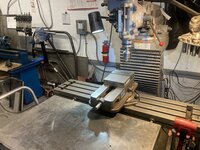
I took a few photos recently from when I pulled my Kurt vise with a swivel base off my Bridgeport and I thought you might find them beneficial. I have a table cart that I bought from HF that I can slide the vise onto. They go for around $320.00. I think that is a bargain compared to back surgery. I find the cart very useful for loading heavy parts on and off the table as well.
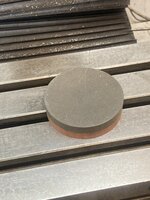
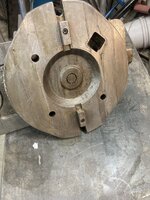
Another practice I would like to share is using a stone on the milling machine table. As a best practice it is important to stone the table when the vise is removed. The stone I use is a Norton stone which I use in a figure eight pattern over the table. The last photo is the bottom of the swivel base for my Kurt vise. The keys that are installed fit the T-slots on the table. I have found that the vise is within a half a thousandth of an inch when I indicate it in after I reinstall it which is easy to correct.
 

Attachments

  • Bridgeport Vise Cart.jpg
    Bridgeport Vise Cart.jpg
    316.8 KB · Views: 32
  • IMG_8786.JPG
    IMG_8786.JPG
    729.5 KB · Views: 29
  • Swivel Vise Base.jpg
    Swivel Vise Base.jpg
    518.5 KB · Views: 27

Grant Gunderson

Well-known member
Joined
May 17, 2013
Messages
2,318
Location
Bellingham, WA
So the pin keeps the collet from spinning...except it apparently doesn't, as they keep sheering off. Tighten the drawbar tight and the taper should hold it.

Mine is gone and when I rebuild my spindle next year I'll look to see how much damage is done to the top of the collet area.

I am absolutely not an expert, just going by the opinion of experts.
When I rebuilt my spindle I purposely left the locating pin out. It's way easier to load tools now, and I have never had one spin in there.
That looks affordable, but I'm inclined to run it for a while without a DRO.
I would HIGHLY recommend getting a DRO right away. A good vise, DRO and Edge finder are the most important tools you can have for a mill. Everything comes second to those. The DRO will instantly make you more accurate as it will automatically compensate for any backlash your machine has.
 

bugnut

ALLIANCE MEMBER
Joined
Jul 14, 2012
Messages
3,847
Location
Central Ohio
This all day every day!

When I rebuilt my spindle I purposely left the locating pin out. It's way easier to load tools now, and I have never had one spin in there.

I would HIGHLY recommend getting a DRO right away. A good vise, DRO and Edge finder are the most important tools you can have for a mill. Everything comes second to those. The DRO will instantly make you more accurate as it will automatically compensate for any backlash your machine has.
 
OP
B

bulletpruf

Well-known member
Joined
Nov 28, 2013
Messages
10,924
Location
San Antonio
I took a few photos recently from when I pulled my Kurt vise with a swivel base off my Bridgeport and I thought you might find them beneficial. I have a table cart that I bought from HF that I can slide the vise onto. They go for around $320.00. I think that is a bargain compared to back surgery. I find the cart very useful for loading heavy parts on and off the table as well.
Another practice I would like to share is using a stone on the milling machine table. As a best practice it is important to stone the table when the vise is removed. The stone I use is a Norton stone which I use in a figure eight pattern over the table. The last photo is the bottom of the swivel base for my Kurt vise. The keys that are installed fit the T-slots on the table. I have found that the vise is within a half a thousandth of an inch when I indicate it in after I reinstall it which is easy to correct.

Good point on the cart. Right now I'm limited on space in the shop, when when I move the Cat 977 out, I'll have plenty of room for stuff like this.

Thanks for the details on using a stone on the table. I have heard of this, but didn't know how it was done. I'll add this to the list of things to buy and do.
 
OP
B

bulletpruf

Well-known member
Joined
Nov 28, 2013
Messages
10,924
Location
San Antonio
When I rebuilt my spindle I purposely left the locating pin out. It's way easier to load tools now, and I have never had one spin in there.

I would HIGHLY recommend getting a DRO right away. A good vise, DRO and Edge finder are the most important tools you can have for a mill. Everything comes second to those. The DRO will instantly make you more accurate as it will automatically compensate for any backlash your machine has.

I do have a good vise and edge finder, but I'd still like to start off without a DRO.

Thanks
 

Ultradog MN

Well-known member
Joined
Jan 20, 2024
Messages
749
Location
Twin Cities
I do have a good vise and edge finder, but I'd still like to start off without a DRO.

Thanks
I agree.
A DRO may be nice to have but you can do nothing on a mill without tooling.
So I suggest you tool up first.
I got my first mill 4 years ago and have done a lot of work with it. It does not have a dro.
I recently upgraded to a J head Bridgeport which came with a dro. I'm sure I will learn to use - and maybe like it - but that is not a high priority for me.
 
OP
B

bulletpruf

Well-known member
Joined
Nov 28, 2013
Messages
10,924
Location
San Antonio
I agree.
A DRO may be nice to have but you can do nothing on a mill without tooling.
So I suggest you tool up first.
I got my first mill 4 years ago and have done a lot of work with it. It does not have a dro.
I recently upgraded to a J head Bridgeport which came with a dro. I'm sure I will learn to use - and maybe like it - but that is not a high priority for me.

I think I have enough tooling to get started. Only thing left on the shopping list is a drill chuck.

thanks
 

txvwnut

Well-known member
Joined
Jan 1, 2015
Messages
7,596
Location
Bedford, Texas
All this talk about the quill pin and my experience is just the opposite. I was using a slitting saw and either got behind on the coolant application or more aggressive on the cut depth and feed and bound the saw in the workpiece, it stopped dead in its tracks. I got the saw loose from the piece and then tried to remove it from the quill only to find it was bound up due to it turning in the quill. I removed the pin from the quill only to find it wasn't damaged at all but the saw arbor was toast. Did a visual and touch inspection of the quill fit another arbor in and all felt good so I reinstalled the pin bought a new arbor went back to work. I guess there's something to be said about the cheaper import tooling, it's soft enough to not do any damage to the machinery.
 

gorilla

Well-known member
Joined
Dec 13, 2007
Messages
1,650
I think that you should get some material to practice your machining on. Some 5052 or 6061 aluminum would be a good start. Trying to machine unknown scrap can be an unpleasant surprise.
 

Grant Gunderson

Well-known member
Joined
May 17, 2013
Messages
2,318
Location
Bellingham, WA
I do have a good vise and edge finder, but I'd still like to start off without a DRO.

Thanks
When I took my tool and die making classes 25 years ago our first assignment was to make a part on the mills with no DRO’s. All of us failed to keep it within spec and it wasn’t for a lack of trying. The reality is it’s really damn hard to keep tolerances without a DRO. The next assignment was the mid term and we had to manually machine a fairly complex part and keep with with in .001 tolerances. Not a single one of us used the non-DRO machines. So my point is regardless of what your making or if you are just starting out, given the costs of metal these days it doesn’t take very many F ups to pay for the costs of the DRO. Even the cheap Chinese ones on EBay work well. Using the DRO you still get to turn the dials and it’s still worth it to pay attention to what your doing but it just allows even a beginner to make relatively accurate parts with not too much effort. Starting off you got enough to learn as it is. Might as well ease some of that learning curve.
 

Grant Gunderson

Well-known member
Joined
May 17, 2013
Messages
2,318
Location
Bellingham, WA
I think I have enough tooling to get started. Only thing left on the shopping list is a drill chuck.

thanks
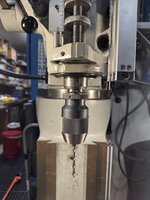
I have a bunch of both U.S.A. Jacobs and Albrechts. The Albrechts are my favorite for smaller drills. They **** for use with Silver Deming drills so I use the Jacobs for those. Good chucks come in size ranges. No such thing as a one size does all. So ideally get an albrecht for smaller sizes up to ½” and then a larger Jacobs’s for ½ and larger.
IMG_1116.jpeg
IMG_1115.jpeg
You can find used chucks dirt cheap. It’s worth it to get a used one and a rebuild kit and rebuild them. All you need to rebuild either is a set of chuck wedges
IMG_1114.jpeg
Also you can buy used tooling and drill bits dirt cheap and then sharpen them. Especially the smaller sizes. I have a grizzly drill sharpener and an end mill sharpener. Vevor makes the same units and are quite reasonable. They are way better than the drill doctor units
 

Grant Gunderson

Well-known member
Joined
May 17, 2013
Messages
2,318
Location
Bellingham, WA
Grant,

I know you run a tight ship but, BARE FEET in the shop!
Haha yes. I’m guilty! Especially at night when I head out to grab a beer out of the beer fridge! I spend some much time in ski boots my feet gotta breathe. I do put proper footwear on when I’m running the machines that dictate it. Ie the mill cause hot metal on bare toes ain’t so fun. I’m also **** enough about cleaning up afterwards I’m ok going barefoot. If my kids going to hang in there I feel it’s on me to keep it clean of metal shards.
 

Ultradog MN

Well-known member
Joined
Jan 20, 2024
Messages
749
Location
Twin Cities
I have a bunch of both U.S.A. Jacobs and Albrechts. The Albrechts are my favorite for smaller drills. They **** for use with Silver Deming drills so I use the Jacobs for those. Good chucks come in size ranges. No such thing as a one size does all. So ideally get an albrecht for smaller sizes up to ½” and then a larger Jacobs’s for ½ and larger.
IMG_1116.jpeg
IMG_1115.jpeg
You can find used chucks dirt cheap. It’s worth it to get a used one and a rebuild kit and rebuild them. All you need to rebuild either is a set of chuck wedges
IMG_1114.jpeg
Also you can buy used tooling and drill bits dirt cheap and then sharpen them. Especially the smaller sizes. I have a grizzly drill sharpener and an end mill sharpener. Vevor makes the same units and are quite reasonable. They are way better than the drill doctor units
Another thought is to replace the arbor.
I buy most of my stuff used at auctions, etc and have a couple of Albrechts.
My larger 1/2" one had quite a bit of runout - like 7 thou or so. I I knocked the arbor out of it and tested just that. It was bent. I bought a new USA made 2JT x3 MT arbor from McMaster for about $40. That got my runout down to about 2 thou which is likely in the spindle and close enough for my purposes.
You could probably get a cheaper arbor from the usual suspects but my point is a new arbor can be an inexpensive fix for an expensive chuck.
 
To avoid these ads, REGISTER NOW!

dutchgray

Well-known member
Joined
Sep 28, 2014
Messages
6,462
Location
Dorset. England.
Another thought is to replace the arbor.
I buy most of my stuff used at auctions, etc and have a couple of Albrechts.
My larger 1/2" one had quite a bit of runout - like 7 thou or so. I I knocked the arbor out of it and tested just that. It was bent. I bought a new USA made 2JT x3 MT arbor from McMaster for about $40. That got my runout down to about 2 thou which is likely in the spindle and close enough for my purposes.
You could probably get a cheaper arbor from the usual suspects but my point is a new arbor can be an inexpensive fix for an expensive chuck.
I got a used 1/2" Albrecht like that, was £45 the arbor was very visibly bent, chuck was good on a new arbor.

I have a bunch of both U.S.A. Jacobs and Albrechts. The Albrechts are my favorite for smaller drills. They **** for use with Silver Deming drills so I use the Jacobs for those. Good chucks come in size ranges. No such thing as a one size does all. So ideally get an albrecht for smaller sizes up to ½” and then a larger Jacobs’s for ½ and larger.
Shouldn't really be using Silver and Deming drills in keyless chucks at all, in all honesty they are a poor choice for milling machine use, MT shank drills in an adapter is far better when you consider how much torque a Bridgeport has in backgear, although the Silver and Deming are more likely to wreck themselves or the chuck than damage the machine if something binds up

All this talk about the quill pin and my experience is just the opposite. I was using a slitting saw and either got behind on the coolant application or more aggressive on the cut depth and feed and bound the saw in the workpiece, it stopped dead in its tracks. I got the saw loose from the piece and then tried to remove it from the quill only to find it was bound up due to it turning in the quill. I removed the pin from the quill only to find it wasn't damaged at all but the saw arbor was toast. Did a visual and touch inspection of the quill fit another arbor in and all felt good so I reinstalled the pin bought a new arbor went back to work. I guess there's something to be said about the cheaper import tooling, it's soft enough to not do any damage to the machinery.
Normally you want to go full depth in one shot with slitting saws, with very low feed.
 

Grant Gunderson

Well-known member
Joined
May 17, 2013
Messages
2,318
Location
Bellingham, WA
Another thought is to replace the arbor.
I buy most of my stuff used at auctions, etc and have a couple of Albrechts.
My larger 1/2" one had quite a bit of runout - like 7 thou or so. I I knocked the arbor out of it and tested just that. It was bent. I bought a new USA made 2JT x3 MT arbor from McMaster for about $40. That got my runout down to about 2 thou which is likely in the spindle and close enough for my purposes.
You could probably get a cheaper arbor from the usual suspects but my point is a new arbor can be an inexpensive fix for an expensive chuck.
Exactly. I picked my big albrecht up for like $25 because the guy that bought it for his drill press couldn’t use it with the arbor in it and he had zero idea you could change them. Drove down to Grizzly and picked up a ground Southbend arbor and it runs great. Also Grizzly has some great prices especially here where I can walk into their warehouse specials room and get what ever they used for their catalog shoots for 50% off. However the problem with them and most important tooling is it’s mostly garbage these days out of china. However their South Bend line is quite a bit better as is usually at least capable of doing their job. The simple south bend stuff that’s ground is actually surprisingly good. That said I’ll never buy a cutting cool from them again or anything that’s “precision”
 

Grant Gunderson

Well-known member
Joined
May 17, 2013
Messages
2,318
Location
Bellingham, WA
I thought the same thing. Like WTF!
Having a small shop space forces me to keep it clean. You won’t find any metal or swarf in there especially on the floor. My 7 year old kid is always running in and out of their to grab bikes, etc on so I keep it very clean. I keep a Festool dust extractor next to the mill so it’s very quick to clean up.
 

RoninB4

Well-known member
Joined
Jul 22, 2020
Messages
3,486
Location
Under My House
Thanks for the details on using a stone on the table. I have heard of this, but didn't know how it was done. I'll add this to the list of things to buy and do.
-Have used that same round stone for decades or a new one when the old one has worn thin. The figure 8 technique is what I also use. I also stone any two metal surfaces (vise, rotary table, angle plate, etc.) in addition to the mill table. Would suggest 2 things added to that.

Use a good amount of oil (not WD-40) on the stone/table. If you use the stone dry it will quickly clog up with metal particles and become almost useless. The oil allows the metal particles to be somewhat suspended in the oil so they'll flush out of the pores in the stone.

Use the coarse side very lightly to knock off any large burrs or raised surfaces. The coarse side shouldn't be used very often after the first time on the table. Wipe the table off and then use the fine sized (with oil) with light-to-medium pressure until you don't feel any "bumps" in your figure 8's. The stone should be used (fine side) whenever you're going to put the vise back on the table or are going to clamp work to the table. It doesn't have to be stoned if there's no reason to believe that there's a raised burr on the table. One or two swipes along the table will verify whether more stoning is required or not. Excessive stoning, especially with the coarse side) does NOT improve the accuracy and can/will destroy the flatness of the table.
 

RoninB4

Well-known member
Joined
Jul 22, 2020
Messages
3,486
Location
Under My House
The reality is it’s really damn hard to keep tolerances without a DRO. The next assignment was the mid term and we had to manually machine a fairly complex part and keep with with in .001 tolerances.
-I don't want to be contrary or argue but I started in the trade well before a DRO was common in the shop. All we had was the dials but still had to hold tolerance. You had to evaluate the sharpness of your cutter, including deflection, the material, and learn to have somewhat of a "feel" for what was happening at the cut. You measured, dialed in, and approached final dimension with reasonable expectations regarding the operation itself. It wasn't what I'd call easy but certainly not "damned hard" either to hold tolerance unless the tolerance was unreasonable for a turret mill like a Bridgeport.

A DRO is nice to have, very useful to use, but hardly essential for a lot of profile work that has just straight sides. When hole locations are important or the work has multiple geometric features you 'll know when a DRO might be handy. The OP doesn't feel the need for a DRO so perhaps he doesn't have the type of work that will benefit from one yet.

I'm also not a big fan of keyless chucks either but that's a discussion for another time.
 
OP
B

bulletpruf

Well-known member
Joined
Nov 28, 2013
Messages
10,924
Location
San Antonio
-Have used that same round stone for decades or a new one when the old one has worn thin. The figure 8 technique is what I also use. I also stone any two metal surfaces (vise, rotary table, angle plate, etc.) in addition to the mill table. Would suggest 2 things added to that.

Use a good amount of oil (not WD-40) on the stone/table. If you use the stone dry it will quickly clog up with metal particles and become almost useless. The oil allows the metal particles to be somewhat suspended in the oil so they'll flush out of the pores in the stone.

Use the coarse side very lightly to knock off any large burrs or raised surfaces. The coarse side shouldn't be used very often after the first time on the table. Wipe the table off and then use the fine sized (with oil) with light-to-medium pressure until you don't feel any "bumps" in your figure 8's. The stone should be used (fine side) whenever you're going to put the vise back on the table or are going to clamp work to the table. It doesn't have to be stoned if there's no reason to believe that there's a raised burr on the table. One or two swipes along the table will verify whether more stoning is required or not. Excessive stoning, especially with the coarse side) does NOT improve the accuracy and can/will destroy the flatness of the table.

Thanks to you, now I have this Dylan song running through my head...


RoninB4

Well-known member
Joined
Jul 22, 2020
Messages
3,486
Location
Under My House
Thanks to you, now I have this Dylan song running through my head...

-Didn't want to mention that I have also hummed that song in my head while truing the mill table over the decades. You have apparently been infected as well, it's yours to keep whether you want it or not. Also a favorite:


Riverrat

Well-known member
Joined
Jun 26, 2021
Messages
82
-Have used that same round stone for decades or a new one when the old one has worn thin. The figure 8 technique is what I also use. I also stone any two metal surfaces (vise, rotary table, angle plate, etc.) in addition to the mill table. Would suggest 2 things added to that.

Use a good amount of oil (not WD-40) on the stone/table. If you use the stone dry it will quickly clog up with metal particles and become almost useless. The oil allows the metal particles to be somewhat suspended in the oil so they'll flush out of the pores in the stone.

Use the coarse side very lightly to knock off any large burrs or raised surfaces. The coarse side shouldn't be used very often after the first time on the table. Wipe the table off and then use the fine sized (with oil) with light-to-medium pressure until you don't feel any "bumps" in your figure 8's. The stone should be used (fine side) whenever you're going to put the vise back on the table or are going to clamp work to the table. It doesn't have to be stoned if there's no reason to believe that there's a raised burr on the table. One or two swipes along the table will verify whether more stoning is required or not. Excessive stoning, especially with the coarse side) does NOT improve the accuracy and can/will destroy the flatness of the table.
Thank you so much for your comments. I agree with you 100%. My comments where very brief and you said what I didn't say. I would use the fine stone 99% of the time for sake of mind. I too use light oil and wipe the table down with lacquer thinner before the vise is reinstalled. Thank you for adding to my comments. Well done!!
 

Riverrat

Well-known member
Joined
Jun 26, 2021
Messages
82
I have a question for those that object to the pin in the column of the BP.
What are your thoughts on the pin in 5c collet blocks. Do you remove them, because they are unnecessary and don't make the collet move? I think they serve a purpose. Give me your thoughts. I am welcome to your answers.
 

whateg01

Well-known member
Joined
Mar 13, 2006
Messages
11,196
Location
doo dah, kansas, usa
I have a question for those that object to the pin in the column of the BP.
What are your thoughts on the pin in 5c collet blocks. Do you remove them, because they are unnecessary and don't make the collet move? I think they serve a purpose. Give me your thoughts. I am welcome to your answers.
None of my 5C accessories have the pin
 

Firebrick43

Well-known member
Joined
May 12, 2015
Messages
13,992
Location
West central Indiana
-Have used that same round stone for decades or a new one when the old one has worn thin. The figure 8 technique is what I also use. I also stone any two metal surfaces (vise, rotary table, angle plate, etc.) in addition to the mill table. Would suggest 2 things added to that.

Use a good amount of oil (not WD-40) on the stone/table. If you use the stone dry it will quickly clog up with metal particles and become almost useless. The oil allows the metal particles to be somewhat suspended in the oil so they'll flush out of the pores in the stone.

Use the coarse side very lightly to knock off any large burrs or raised surfaces. The coarse side shouldn't be used very often after the first time on the table. Wipe the table off and then use the fine sized (with oil) with light-to-medium pressure until you don't feel any "bumps" in your figure 8's. The stone should be used (fine side) whenever you're going to put the vise back on the table or are going to clamp work to the table. It doesn't have to be stoned if there's no reason to believe that there's a raised burr on the table. One or two swipes along the table will verify whether more stoning is required or not. Excessive stoning, especially with the coarse side) does NOT improve the accuracy and can/will destroy the flatness of the table.
I use Norton India stones for this and plateauing scraped surfaces.


I ground three of the orange sides on a good surface grinder with a diamond wheel for ultra flatness but that is probably over kill for most. I stone the stones against each other to maintain flatness and clear any loading up.

Even if you have just two of them and you stone the orange faces together it works well to keep them flat and clear. Just use oil.

When using the stone well oil the surface with a 10 to 20 weight oil and don’t apply any pressure, just move the stone and it will then only cut the raised metal of bumps and dings off and nothing else as long as the face flatness of the stone is maintained.

Always keeping the two together and never using them for anything else other than stoning for dings on the table/vise they will last the rest of your life.
 

Steve from Socal

Well-known member
Joined
Jan 27, 2009
Messages
3,491
Location
Hutchinson Ks.
I don't get the obsession with a key or pin to locate a spring collet? R-8, 5C, etc all have slots to locate them when they are drawn tight. Even snap collet closers use a locating device. Spring collets like BT or TG use a nut to close by pushing on the face of the collet. R8/5C and the like have a draw bar and a shallower taper, without a locating pin the collet can just spin instead of drawing to its designed torque.

The pin was not put there for show, WHY it is there is to tighten the collet with the grip to prevent a tool from spinning. I don't have a lot of R8 or 5C collets, I do have many 2J collets think bigger size 5C. All of my collet holders have a key/pin to keep the collet from spinning when tightening.
 

no704

Well-known member
Joined
Apr 27, 2016
Messages
5,208
I have a question for those that object to the pin in the column of the BP.
What are your thoughts on the pin in 5c collet blocks. Do you remove them, because they are unnecessary and don't make the collet move? I think they serve a purpose. Give me your thoughts. I am welcome to your answers.
I just removed them from 2 blocks about two weeks ago. Easier to assemble and I don’t have to worry about them setting proud when putting the block in a vice or Chuck.
 
To avoid these ads, REGISTER NOW!
Top Bottom