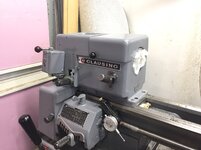
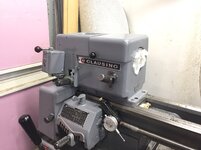
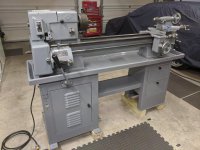
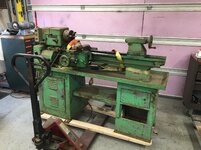
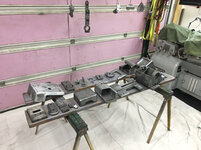
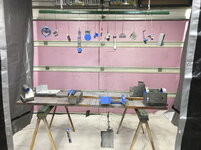
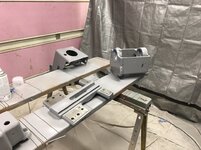
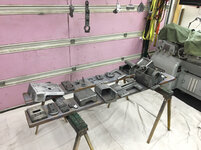
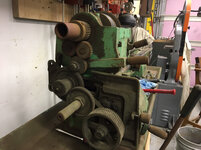
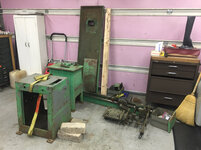
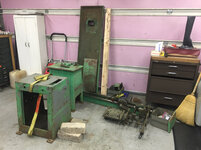
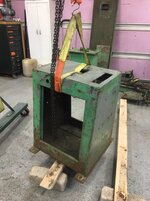
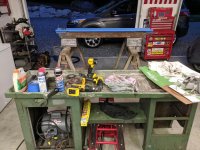
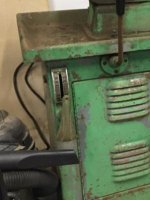
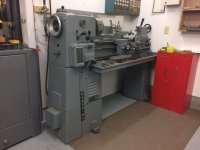
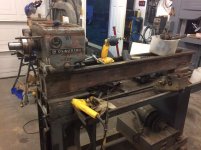
Looks like it’s back to work on the Clausing lathe. I’ve been using the machine for about a year now. It’s been more than pleasurable having a nice piece of equipment that runs pretty well, and does what I need. During my restoration process I decided to keep the bearings that were already installed in the spindle. I inspected them and gave them a good cleaning. I determined while they were not perfect, they did seem to be in relatively good condition. That was where I screwed up.
The bearings have run OK for the last year, I have been able to hold very close tolerances however, They definitely aren’t the most quiet things in the world. I’m also having problems with chatter more than I should. Seems like the only time I can get rid of chatter is to use the tailstock even on short light duty work close to the spindle. I have constantly made preload adjustments and I have finally given up on the old set of bearings.
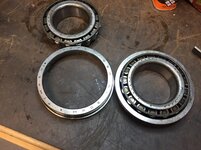
As I removed them from the spindle I decided to inspect them one more time. Seems like I have overlooked a few key details and the bearings are not in as good a shape as I remembered when they were first removed.
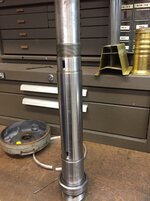
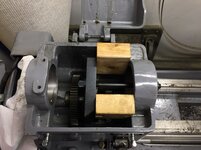
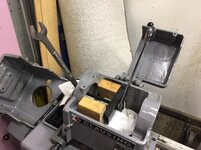
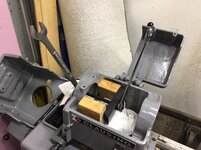
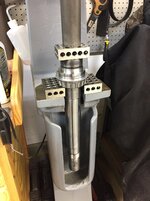
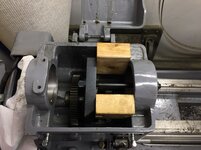
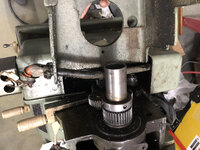
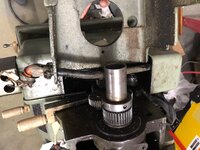
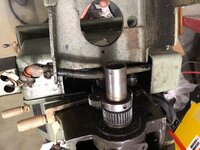
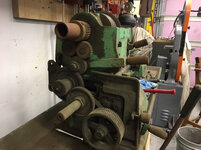
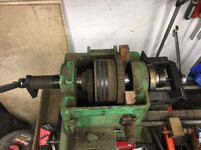
So that brings us to today. I decided to use the same technique for removing the spindle as I did when I first disassembled the machine (milling machine stud set used as a puller). The spindle came out much easier this time. When i assembled the headstock originally i made sure to stone and file off any unfortunate events or high spots of years past. This helped greatly for disassembly.

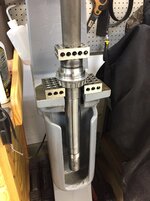
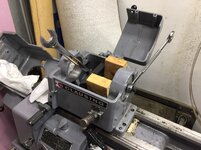
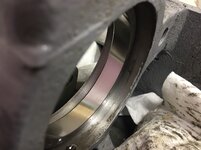
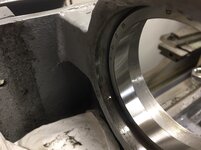
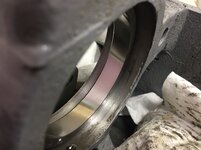
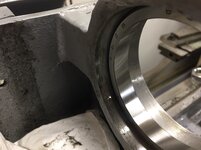
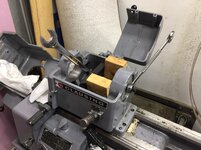
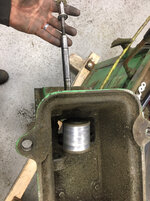
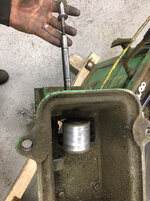
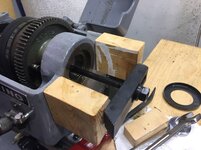
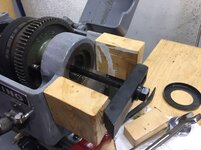
After the spindle was out I needed to remove the bearing races from the headstock. They are pressed in to the headstock casting, up against a shoulder. For this I used a slug of aluminum that was about the size of the bearing race. I then used the milling machine stud set as a puller in coordination with the slug. This pulled the race out very easily and straight.

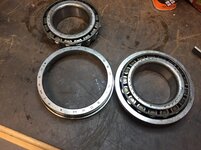
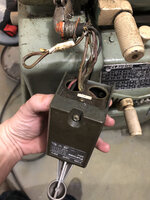
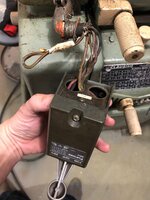
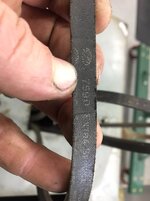
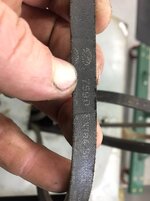
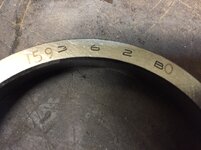
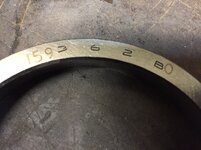
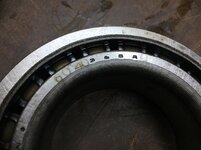
Here are all of the bearing numbers for anyone in the future. The races are the same, but there are two different bearings.
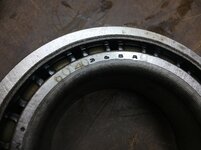

I went ahead and ordered some bearings tonight. Timken replacements were $150 for everything. It looks like it will take about a week and a half for everything to get here. In the morning I’m going to call my bearing distributer to see if they have anything in stock. If they do, I will cancel the order on Amazon and pick them up in person so I can keep moving. Not the worst price in the world, but it was definitely money I didn’t want to spend. I hope this will solve my problem, Or at least quiet down the machine a little bit. I feel like that in itself would make me happy.
I’m planning on keeping you along for the rest of the ride but Moral of the story… Just replace the bearings when you have it apart. Haha. Lesson learned.
Sent from my iPhone using Tapatalk
The bearings have run OK for the last year, I have been able to hold very close tolerances however, They definitely aren’t the most quiet things in the world. I’m also having problems with chatter more than I should. Seems like the only time I can get rid of chatter is to use the tailstock even on short light duty work close to the spindle. I have constantly made preload adjustments and I have finally given up on the old set of bearings.
As I removed them from the spindle I decided to inspect them one more time. Seems like I have overlooked a few key details and the bearings are not in as good a shape as I remembered when they were first removed.
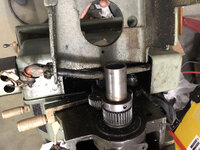
So that brings us to today. I decided to use the same technique for removing the spindle as I did when I first disassembled the machine (milling machine stud set used as a puller). The spindle came out much easier this time. When i assembled the headstock originally i made sure to stone and file off any unfortunate events or high spots of years past. This helped greatly for disassembly.
After the spindle was out I needed to remove the bearing races from the headstock. They are pressed in to the headstock casting, up against a shoulder. For this I used a slug of aluminum that was about the size of the bearing race. I then used the milling machine stud set as a puller in coordination with the slug. This pulled the race out very easily and straight.
Here are all of the bearing numbers for anyone in the future. The races are the same, but there are two different bearings.
I went ahead and ordered some bearings tonight. Timken replacements were $150 for everything. It looks like it will take about a week and a half for everything to get here. In the morning I’m going to call my bearing distributer to see if they have anything in stock. If they do, I will cancel the order on Amazon and pick them up in person so I can keep moving. Not the worst price in the world, but it was definitely money I didn’t want to spend. I hope this will solve my problem, Or at least quiet down the machine a little bit. I feel like that in itself would make me happy.
I’m planning on keeping you along for the rest of the ride but Moral of the story… Just replace the bearings when you have it apart. Haha. Lesson learned.
Sent from my iPhone using Tapatalk
Attachments
-
 1fad37cba9fec651ea9b53e509ab8781.jpg454 KB · Views: 3
 -
 fb54665daa1dfe21cddf4edcb573048c.jpg438.4 KB · Views: 3
 -
 fd9d8bbd2122f82955222bec49bbdb86.jpg514.3 KB · Views: 3
 -
 bc40bc99b9cb53ebcd1f51458cc6e0de.jpg540.8 KB · Views: 3
 -
 9db1c2e1b41e8b96ee251c7137004b94.jpg374.2 KB · Views: 5
 -
 3f96740d1582acbcb574a15922f8985c.jpg475.6 KB · Views: 5
 -
 7cd6beb7d03d3ff7bc36a6f5bced7fa9.jpg619.9 KB · Views: 5
 Great job bringing this one back to great function and form! I am wondering a couple things....did you ever try to pry lightly under the chuck and use an indicator to check movement? Also I was curious if you ever checked contact between the headstock and bedway underneath. Of course its sitting on 3 points but sometimes that's not enough and it needs better contact. To fix this my suggestion would be to blue one part and set the other with a light rub and then you'd have to scrape some, which is probably a subject suitable for an entire forum. Even without the scraper tool it would only take one little soft chip that got smashed in between the headstock and bedway to push it out of alignment or be a "soft" bolted joint that could lead to chatter.