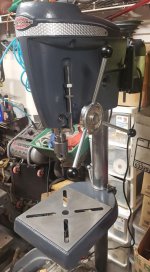
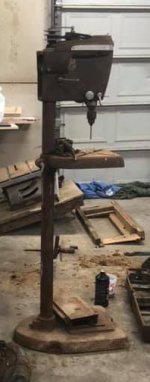
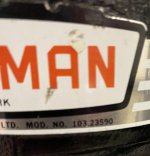
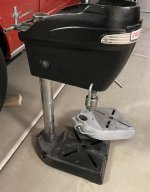
39 LaSalle
Well-known member
39 LaSalle, Frank is on it. There is possible some interference with the switch operation.
I am not an electrician. If I understand you correctly, the motor ran before and now it is giving you the issues you stated?
If you have not disassembled the Centrifugal switch, then do not take it apart. This would only complicate the issue most likely. Re-coating the exposed windings can be done and is fine to do if you make sure all the windings are touching before you coat. They all need to be in contact then insulated. However, I would not re-coat them unless you determine this to be an issue.
All things considered, I would recommend you first determine if there is a wire or something preventing the switch from operating. Next make sure the contact have not been bent to prevent operation.
An issue I found on one of my motors was that is operated just fine when it was horizontal but when mounted on the press vertically, it would not disengage the start windings. That motor was a split phase motor and a more complicated Centrifugal switch. I suspect your Centrifugal switch is operating correctly so the most likely issue is the end cap switch, the one that the Centrifugal switch disengages when iiit opens fully.
One last thought, are you sure you assembled all the wires correctly when you put the motor back together? one wrong wire connected improperly will certainly cause the same issues.
Frank and yourself may well be right. It certainly makes sense.
I didn't really disassemble any wires other than those in the base to attach a new cord, so I don't see that being a problem. The order in which this all went was when I got the DP, I had the motor off and the cord was VERY sketchy looking. So I plugged it into a power strip with the switch off, and the motor switch on so that I could effectively turn the motor on from the power strip. I figured I didn't want any part of me touching any part of that motor just in case. Motor ran great, of course I didn't leave it on for more than say 30 seconds at a time.
I then disassembled the motor to clean and repack the bearings, get the mud dauber nests out of it, inspect the wiring, replace the cord, and to repaint the end frames, air cone, and stator band cover. Photo from this point shows that the windings in question still had the reddish copper color to them. Got that all done and put it all back together, which granted, putting that switch assembly back in the frame was a nightmare.
Got it all back together and bench tested it, and it ran great. But again, I didn't run it for more than say 30 seconds. I didn't really see a need to at the time. It ran great from what I could tell and that was that. After I got it on the press and actually ran it for up to 2-3 minutes at a time is when the burning issues became apparent. So I decided to pull it back off and bench test it again to see if friction of some sort was the problem. Nope. Still burning. That meant I had to take apart again, but I've left the switch assembly in place so I don't have to fight that again unless I have to. This is where I discovered the windings in question were now charred.
I think what I'm going to try next is leave the governor and switch alone for now. Tomorrow my insulation varnish "should" arrive and I can apply that over the windings. Then I'll reassemble the motor and make extra damn sure that none of the cutout switch wires or anything else is interfering with the governor and see if that fixes the problem. I'll report back what my findings are as the information becomes available.