dr_clyde
Well-known member
I figured it's about time for me to start a shop projects thread. This way I don't have to make a new thread for the little stuff.
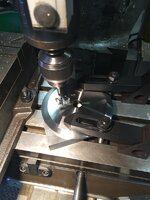
My shop is a blend of fabrication and machining. I do a lot of one offs, repairs, prototypes, custom jobs and some small runs of production welding occasionally, but I try to avoid it when I can. I also do sanitary pipefitting on occasion, installing stuff like tanks and filters. It also gives me a nice place to work on my motorcycle and buddies hot rods.
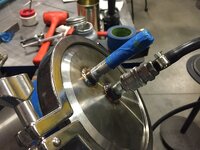
To start things off, here are some photos of a job I'm finishing up right now. This is a flow control panel. There will be hard piping run to the back side, then as the brewers want to change the path of flow of whatever's inside the pipe, they change jumpers around on the front ports. Kind of like an old telephone switchboard.
I started with a piece of 1/4" stainless plate laser cut to my drawing.

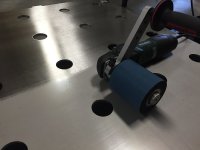
The laser shop said they only had a 2B finish, and it would be at least a week for the #4 brushed I needed. No sweat, an hour or two on the Metabo burnisher gives me a satisfactory finish.

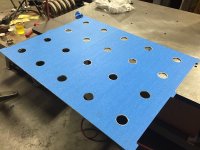
I covered the plate in masking tape to prevent scuffs and scratches for the rest of the build.
Next up was welding the two ferrules back to back through the plate.

Each weld is purged and I rotate them as I weld so I can do it in one pass. I used my Miller Dynasty set to 35 amps with the lift arc enabled, walking the cup.

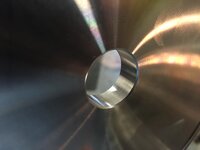
These welds need to be sanitary, so I check the inside after each one to make sure they look like this.

Each weld then gets sanded with the tube sander so it fits into the hole and lines up with the others.

I set the plate on the table and make a frame for the outside. This keeps such a large plate from flexing. Then I block the frame up so the ports are exposed evenly on each side. They get tacked, then re-purged for the fillet welds to hold them in place. When I tack them, I run a piece of square tube across them and hold them down with clamps. This makes sure they don't move out of plane. The flat ground table helps by having a plane big enough and flat enough to fit such a large plate.

After a bit of welding, it looks like this. They are all held in place by the jumpers while welding. This serves two purposes, it gives a path for the purge, and prevents them from moving.
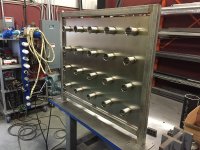
I will finish welding the floor plates on, then passivate and clean each weld. Then the pipefitter will run the hard pipes to the back while I start on the next job. I'll try to get a photo when it's complete and installed.
That's all for now. Thanks for looking.
My shop is a blend of fabrication and machining. I do a lot of one offs, repairs, prototypes, custom jobs and some small runs of production welding occasionally, but I try to avoid it when I can. I also do sanitary pipefitting on occasion, installing stuff like tanks and filters. It also gives me a nice place to work on my motorcycle and buddies hot rods.
To start things off, here are some photos of a job I'm finishing up right now. This is a flow control panel. There will be hard piping run to the back side, then as the brewers want to change the path of flow of whatever's inside the pipe, they change jumpers around on the front ports. Kind of like an old telephone switchboard.
I started with a piece of 1/4" stainless plate laser cut to my drawing.
The laser shop said they only had a 2B finish, and it would be at least a week for the #4 brushed I needed. No sweat, an hour or two on the Metabo burnisher gives me a satisfactory finish.
I covered the plate in masking tape to prevent scuffs and scratches for the rest of the build.
Next up was welding the two ferrules back to back through the plate.
Each weld is purged and I rotate them as I weld so I can do it in one pass. I used my Miller Dynasty set to 35 amps with the lift arc enabled, walking the cup.
These welds need to be sanitary, so I check the inside after each one to make sure they look like this.
Each weld then gets sanded with the tube sander so it fits into the hole and lines up with the others.
I set the plate on the table and make a frame for the outside. This keeps such a large plate from flexing. Then I block the frame up so the ports are exposed evenly on each side. They get tacked, then re-purged for the fillet welds to hold them in place. When I tack them, I run a piece of square tube across them and hold them down with clamps. This makes sure they don't move out of plane. The flat ground table helps by having a plane big enough and flat enough to fit such a large plate.
After a bit of welding, it looks like this. They are all held in place by the jumpers while welding. This serves two purposes, it gives a path for the purge, and prevents them from moving.
I will finish welding the floor plates on, then passivate and clean each weld. Then the pipefitter will run the hard pipes to the back while I start on the next job. I'll try to get a photo when it's complete and installed.
That's all for now. Thanks for looking.
 Looking forward to this!!