OP
DocsMachine
Well-known member
- Joined
- Sep 16, 2006
- Messages
- 1,917
Anyone here ever run a turret lathe as an actual job?
Doc.
Doc.

Nice work. I had a VM68 at one point, they were fun gunsFor those of you the know a little something about paintball, here's another video for ya!
Best guess is the gun was customized some time in the 90s, and has been sitting, dismantled, for most of that time. The current owner received it from a now-deceased uncle, and wanted it fixed back up into playable condition. I didn't get too carried away trying to polish out all the corrosion marks, out of both time and sentimentality reasons.
This one was kind of rushed, as I'm currently up against more than a couple deadlines, let me know what'cha think, and feel free to critique.
Doc.
[...]and being fully engaged in my work when operating any turret style lathe.
Nice machine but kind of old school now.

If I had the room for one I would have one, they are only worth scrap money now where I am and one could be useful for small production jobs, as it is if someone wants more than about a dozen of anything I won't do it.
)


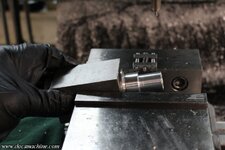


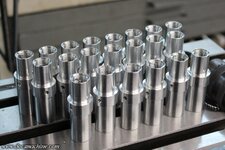 But for the time being, the "old ways" worked just as well as they did years ago, and got the job done. I'm calling that a win.
I had the same desire to have one too. I even bought a $100 Burgmaster #6 turret drill press - basically the drill press equivalent. I really like the neat auto indexing mechanism. But the reality is that unless you are doing some level of production the setup time is longer than if you just used a normal drill press. So years later I finally sold it off to make more bench space.Those videos are making me want a turret lathe.
Just as well I don't have the space really as I really wouldn't have much work for one.
I have just bought an Arboga radial arm drill, the little 2' one.

 I can't recall when or where I saw this specific idea, but it's been a good long time- easily twenty years or more. And of course a version of it is briefly mentioned in SouthBend's How To Run A Lathe back in 1941.
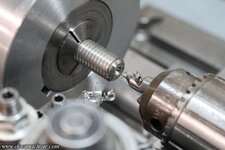


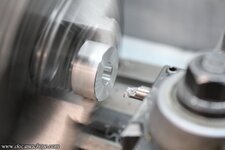


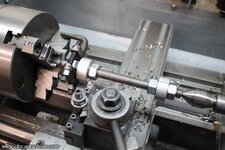


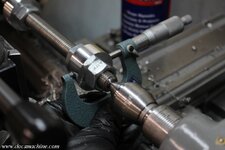


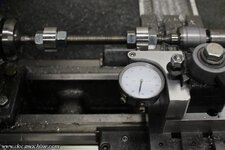
 As I said toward the end up there, the indicator showed more slop in the X axis screw than I'd anticipated. I'm strongly considering cracking the thing back open, and seeing if I can't replace that cheap eBay ballscrew with a better quality one, preferably with a double or anti-backlash ballnut.
Previous job used a lot of turret lathes until early 2000s and still a few in use within last few years for just a handful of low run parts not justified to put on cnc lathes. Did you have questions about them?Anyone here ever run a turret lathe as an actual job?
Doc.
I'm sure most of you don't exactly need to be told that, but once I took the time to measure more than a few spots on one of these things? Turns out the expanding collet of course expands the material, too. Hard to test with what we have on hand and the companys' priorities. Harry
Doc, liked the video! Your peck drill sequence looks like it is very slow, are you using the g83 canned code?


 The (pretty much one and only) hot trick for them back in the day, was a plug for the CO2 cartridge that simply had a bigger knob, for easier gripping. They called these "Speed wheels".
  -so the bar needs to slide fairly easily in the collet.
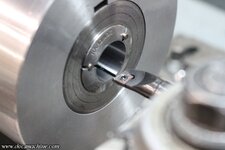


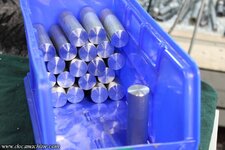


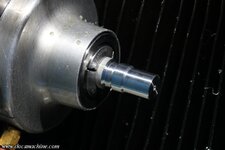

Doc have you considered drilling your tail stock for "air-ride" with a foot peddle so it floats on air when you want it to? It does help with the friction (A LOT!), inerta not so much, but easier is easier! HarryOne of today's little jobs:
Local customer...
Oh, and if I ever write an exercise book, one of the major workouts will be drilling multiple steps with a two hundred and fifty pound tailstock.
Doc.
Carriage mounted drilling arrangements are the way forward.
Doc have you considered drilling your tail stock for "air-ride" with a foot peddle so it floats on air when you want it to?
Drill chuck on a straight arbor in a boring bar holder or if they exist in Aloris type holders a morse taper holder. (In the UK where Dickson toolposts are kind of the standard the morse taper holders are very cheap used as no one seems to want or use them very much)-Yep. I've been wanting to get one of the CXA toolblocks with the drill chuck. They ain't cheap, though, even well-used.
I have an ER holder in a boring bar block I've used, but that's not as convenient as a Jacobs style chuck.
Doc.