All work and no play, as the saying goes, makes Jack a dull boy. And lemme tell ya, folks, Jack has been a dull boy indeed.

On the plus side, it warmed up this week, getting into the low forties, and one thing I've been champing at the bit to do, is clean up and paint some of these new (to me) lathe parts. That tends to involve stripping paint and pressure-washing them clean, especially if, like these, the parts have multiple layers of paint which are peeling not only off each other but off the base metal as well.
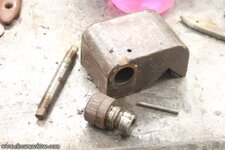
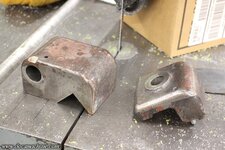
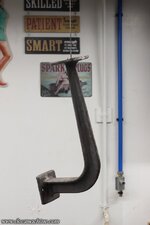
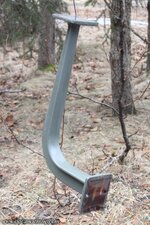
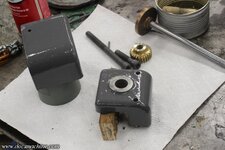
So I got some better stripper (still not as good as the good stuff) and stripped and hosed the first two parts a couple of times. The L-shaped bit is a tool-tray spar that bolts at the tailstock end of the bed, and the other is a threading dial.
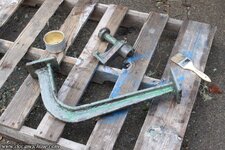
The spar played stubborn, I think at least one layer of paint may have been an epoxy, or possibly a lacquer, as the stripper barely touched it. I had to help things along with some manual scraping, as well as the pressure-washing.
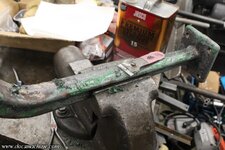
Still not 100% stripped, but I ran out of daylight before I was done.
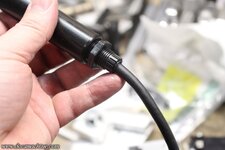
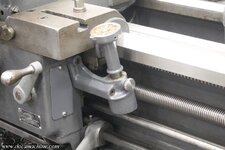
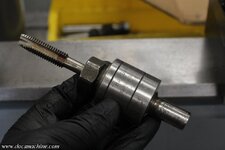
The threading dial came out nicely, though, needing only a few touch-ups with a razor blade scraper. Note that thumbscrew, we'll be coming back to that in a moment.

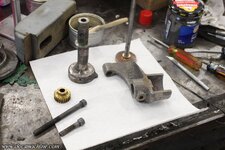
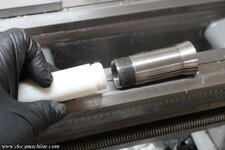
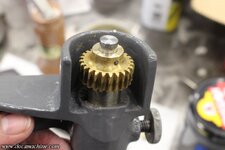
Now, this is a simple setup, and assembles pretty much the same way most other threading dials do. The gear that engages the leadscrew is simply pinned to the shaft...
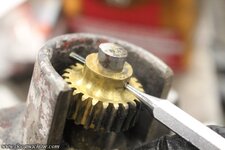
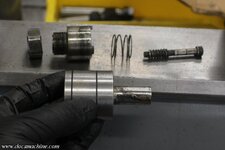
And with that removed, the shaft and dial simply slide out.

After that, the shaft housing slides out of the mounting body, and that's it. Some cleaning and painting, and it can go right back together.

The dial, interestingly enough, is cast bronze- an unusual use of the material given the wartime controls on the use of such strategic materials when this lathe was made. Years ago, when rebuilding the lathe itself, I noted a few other pieces were made of bronze, when cast iron would have worked just as well, but speculated that perhaps Springfield already had a large stock of the parts, already cast and machined, from prior to the war. And that said stock was small enough (Springfield was not a huge manufacturer on the level of Monarch or Leblond) that perhaps it was determined the already-made parts were more valuable than the relatively small amount of the metal.

100% speculation, of course, but still an interesting ponderable.
Now, here's a bit of a puzzler: That thumbscrew? When I first picked up these parts, I assumed that thumbscrew, when loosened, allowed one to "clock" the hashmark for the dial, to wherever the operator preferred it. 9 O'clock, 12 O'clock, 3 O'clock, etc. Or possibly adjust it to line up when "picking up" an existing thread.
It's not a feature I've seen before, but I'm hardly an expert on a wide range of lathes.
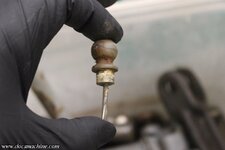
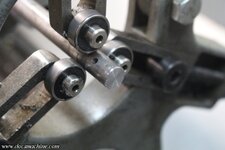
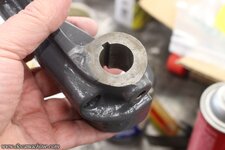
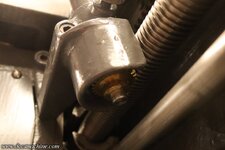
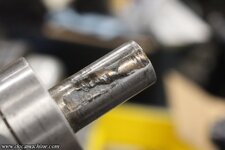
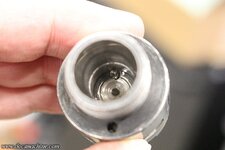
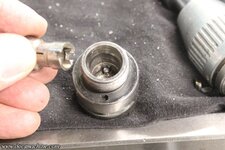
However... that thumbscrew sockets into this drilled spot on the shaft housing:

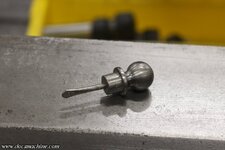
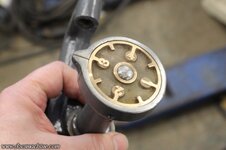
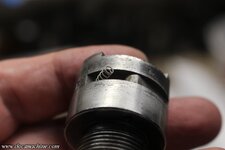
And, on the other side, there's this key that fits into a keyway in the mounting casting.

Okay, I can see the castings wanting/needing to be firmly attached... but why the thumbscrew? A normal setscrew would seem more appropriate, or even a short bolt.
Either the setscrew or bolt was lost at some point, and some wag just threw the thumbscrew in there simply because he had it... or the castings were originally intended to rotate, but at some point somebody got annoyed with that, and keyed it.
I was thinking the former was more likely... except note the orientation of the numbers on the dial. They're upright at the
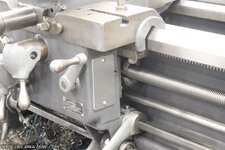
top of the disc. Here's a pic of how I found the dial on the parts machine:

That cast-in point? That's the 'hashmark' you line the dial up with, in order to engage the halfnuts. Given the orientation of the numbers on the dial, one would presume the hashmark would go at the top...
Was it originally adjustable, and some operator decades ago maybe got mad that somebody on one of the other shifts kept moving it, and so drilled and keyed it?
The world may never know.
Last, I found my old paint! I knew I had a bit of the 'dark grey' left that I'd used on the big Turret lathe, and managed to find it- and an even older can I'd used on the Springfield itself.
The
newest if the two being closing in on five years old at this point.
I had to chisel through a thick dried top layer, and there was some still liquid paint left in each. That I poured through a filter into a spare glass dip jar.

It's probably still good, though I ought to add a touch of thinner to it, and I'm not so picky if the color isn't an exact matching shade, I'd get annoyed. On the other hand, this won't be anywhere near enough to do all the pieces I have, including the big taper attachment and the steady rest. I might be better off just tossing this- or using it on something unrelated- and getting a fresh can. It'll probably be months closer to summer before I get to the taper and steady, but the new can won't go bad that quickly...
Anybody used years-old paint? How'd it work out?
Doc.