To avoid these ads, REGISTER NOW!

Maxjax Installs: Post Here

jrj3rd

Well-known member
Joined
Aug 20, 2005
Messages
139
Location
Severna Park, Maryland
Re: Happy Maryland Customer

Hey, what part of Maryland are you in? I'm in AA county and looking at a maxjax alongside a couple other brands :) You 100% happy so far?

Justin

I am in Severna Park, AA County. Still very happy with the lift. Just poured a new floor last week so will be re-installing everything next month when it cures completely. :thumbup:

John
 
To avoid these ads, REGISTER NOW!

FlameOut

Well-known member
Joined
Jan 12, 2008
Messages
428
Location
Pittsburgh, Pennsylvania
Sorry if this isn't in the correct thread. There are so many MaxJax threads I just picked this one.

I've had my MaxJax for a while now, but now I'm in need of 10 new concrete anchors (moving lift into my new garage) I emailed gabe about purchasing and he said I could order from him or from Grainger. I just happen to have a Grainger's about 5 miles from me.

Does this look like the correct anchor? (Part # 6JF55)

I still have a few weeks to wait since I just poured the concrete last week
 
Last edited:

ponchopower

Well-known member
Joined
Mar 1, 2010
Messages
254
Hey guys, I've been a "lurker" here for about a year. Reading and making notes while I was focused on a car project that has now neared completion. I just joined because after deciding to purchase a set of Maxjax I ran into some installation issues that deserve note.

Some folks here have posted of issues with securing the Wej-It PD58 Power Drop anchors to correct tension and spec. Much to my disappointment, while my first lift post seemed to install correctly, my second did not and I had 3 anchors that were not set. I did some research, and discovered that the intallation instructions for installing the PD58 anchors that Dannmar provides are very different from the installation procedure that Wej-It specifies. Wej-It has been very helpful in this regard. Actual and correct installation instructions for the Wej-It PD-58 anchors provided by Dannmar are available on the Wej-It site. You'll notice the use of a washer and 5/8" nut to set the anchor, rather than simply attempting to set it by the use of the sacrificial 5/8" bolt. Additionally, torque values are posted on the Wej-It site. the PD58 should test to 90 ft-lbs of torque with the lift post removed.

Because of the different installation instructions for the Wej-It PD58 anchors, I decided to remove my posts and test the anchors. I'm extremely glad I did. Every single anchor failed. This is in a 25 yr old 4000psi floor that has a minimum depth of at least 5 1/2". No structural issues whatsoever. I have now driven the PD58 anchors down into the substrait, and am using an epoxy enabled anchor system to secure the posts.

None of my anchors without the posts tested even beyond 45 ft-lbs of torque. I've spoken to Dannmar at length - as well as to the BendPak engineer who designed this lift. Dannmar purchased the rights to this lift from Bendpak. Suffice it to say that without going into details, I am not happy with the explanation from Dannmar. I keep getting told that the lift "does not require the full holding capability of the PD58 anchor" and that "if you ask Wej-It, they'll tell you that all lifts are installed incorrectly". That has not been my experience.

Anyway, I'm not beating up on the lift. Though I have not completed my installation, the lift itself is assembled and (short of discrepencies between product changes and the manual) it seems fine so far. But the installation instructions are not correct. The "testing" method from Dannmar is not sufficient, and can yield false results. There may well be other lifts out there that are not safe. I strongly recommend people check those anchors.

I would be more than willing to provide far more detail for anyone who is interested. Hopefully, I will finalize installation of the Maxjax this coming weekend.
 

FoMoCo_Mofo

Active member
Joined
Apr 4, 2006
Messages
27
Location
So Cal
I have just checked my anchors the Weg-it way and all of mine were properly set. I have a strog feeling that once the lift is installed and used then re-tightend, which I suggest doing when a car is on the lift (I use a 12V Impact) they are fine no matter who's instructions are used.
 

ponchopower

Well-known member
Joined
Mar 1, 2010
Messages
254
Not according to Wej-It. I experienced two failure modes of the anchors. The first is the anchor spinning in the concrete. That can be caused by the Dannman process, and cannot be corrected without replacing the anchor with a different type. It results in the 7/8" concrete hole being larger than spec, reducing stress and shear yield in the anchor. The Wej-It process places no rotational torque on the anchor whatsoever during the setting process - eliminating this failure mode completely.

BTW, from an engineer perspective, using that 12v impact while a car is on the lift is likely reducing your anchor capacity - and in no mechanical way contributes to a better anchor set. This is because the impact is working on the same process as a hammer drill. Abrupt torque will apply energy to the surrounding concrete matrix rather than applying mechanical leverage by means of the 5/8" coarse thread. That's why the use of an impact wrench is specifically prohibited by both the lift AND the anchor manufacturer.

BTW, I would be curious to know how you "checked your anchors the Wej-It way"? What I did was to take a 3/4" drive 2" impact socket placed upside down over the anchor. Placed a Grade 8 washer to act as a bearing surface on that, and threaded a 5/8" coarse bolt through and into the anchor - careful to prevent the bolt from ever bottoming out in the anchor. Then using a 1/2" drive torque wrench with 15/16" socket to determine torque.
 
Last edited:

FoMoCo_Mofo

Active member
Joined
Apr 4, 2006
Messages
27
Location
So Cal
Hmmm.

funny now that I remeber correctly when we first installed the lift, by buddy who is a contractor set the anchors with the non-rotational method and told me why he did it this way. I just thought he was doing it "his" way and we all know how contractors can be

The Concrete is 40 years old and 6 to 7" thick throughout, so I don't see the concrete ever weakening, but I am still probably not being too kind to the anchors.

Nonetheless, I am moving the location of the MaxJax to make way for my BendPak HD-9. so I will install the new anchors the way Wej-it suggests and stop getting medieval on it with the impact.

Thanks
 

ponchopower

Well-known member
Joined
Mar 1, 2010
Messages
254
No problem. I only posted here because I was frankly amazed - and scared crapless - when I discovered just how badly the anchors were set (or really, not set). When I installed the first lift post exactly as per the Dannmar instructions, it seemed completely solid. I had obvious issues with installing the second post. This is what started the whole thing and me doing more investigation and calling Wej-It directly. Had the really "obvious" failures not happened, I'd have finished the install and there would be a car on the lift right now. I'd have had absolutely no idea that the lift was really unsafe. But, because of the discrepencies in information, I decided to unbolt the first post and test it.

The point of the story is that I'd be willing to bet two things with some very serious money.

1) That there are people who have installed (in this case, Dannmar specifically) lifts and who think they are to spec - and who have unsafe anchors. If you notice, parts of the instruction manual are kind of "generic". So it may be related to more than just the MaxJax. I don't know. But I do know that the MaxJax instruction manual gives a clearly inadequate and untested process that is not recommended or supported by the actual anchor manufacturer.

2) That some people who have had anchors fail or twist, resulting in them having to cut out and repour concrete, may have experienced this because of the incorrect method of setting the anchors listed in the MaxJax installation manual.

These are my opinions, and may not be fact. What is most certainly fact is the discrepencies in the installation process. And when you consider the differences in the process, consider this. The only advantage to doing it the Dannmar way is - that Dannmar doesn't have to provide a single washer and a single 5/8" coarse nut. I don't think it was deliberate. I just think it was a sloppy mistake. I posted this because I don't want to read about somebody getting crushed under their car because the anchors pulled out and they didn't know - and I didn't speak up.

I have 10 Wej-It Power Sert anchors waiting to be installed this weekend. I'm going to order the AWF epoxy and then all should be well. Hopefully that'll end the issues.
 

UPSHIFT

Well-known member
Joined
Aug 28, 2008
Messages
188
Location
Simi Valley, CA
Ponchopower,

Thank you for raising awareness of the anchor bolts. It is always best to err on the side of caution. Although you have pointed out an installation procedure not endorsed by Wej-it, it is (was) a procedure that had been tested many times before, and with loads exceeding 150% of the rated capacity.

Two-post lifts have been used around the world for almost four decades. They are the most commonly used vehicle lift in the world today. Although the cantilever style design does make one speculate about the forces applied to the anchors and floor, it is quite low compared to other structures. The MaxJax lift has a lower rated capacity than most commercial lifts and the arms are shorter which reduces the moment loading considerably. The tension load on each MaxJax rear anchor when loaded at full capacity, off-set and rear-heavy is only 2300 pounds.

We appreciate your communication with Wej-it engineers, but we too have had similar discussion, and not with over-the-counter reps or call center techs, but chief engineers. Remember, our companies purchase over 200,000 anchors a year - we are attended to.

Below is a recent email received from a Wej-it engineer. This person was given all communication relating to your anchor bolt issue.


Gabe,

I can’t see any way that your installation process caused floor damage to Ponchopower’s floor. If indeed there was floor damage I suspect that the continued torquing of the anchor simply created enough tension that the anchor overcame the concrete’s ability to resist it but even that would have to be at torque values far above what he stated he used. Residential concrete is well known to be dubious in terms of its continuity of thickness and questionable in terms of content of aggregate.

But just to be sure something else was not happening here I took a random box of PD-58’s from our stock and tested them to see if I could duplicate Ponchopower’s results and I found that these anchors (when installed in proper thickness concrete and installed as directed) work perfectly. The scan #5215 000 is of the lab’s data collection sheet. On it you will find that the average of the 3 anchors that I pulled was 22,806 lbs tension which is comfortably above the catalog value of 14,800 lbs tension.

I would be remiss if I did not point out that there are no torque values published on our website for Power Drop anchors as alleged by Ponchopower since they are considered “Turn Set” anchors.

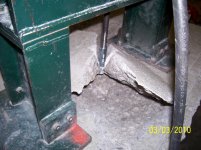
The pictures that are attached illustrate the fact that the anchors never failed, the concrete failed to withstand the force of the anchors when pulled to failure. A concrete spall as seen is the typical failure mode for these anchors.

A couple of things to note from the attached photos are as follows;
1 - All anchors spalled the concrete at tensions above published values. These results are consistent with normally functioning anchors when pulled to failure.
2 – None of the anchors lost the friction clip or suffered any body damage and therefore could have given even more resistance (higher tension values) had the concrete been able to withstand the pressure.
3 – To see if the anchors acted adversely when a torque was applied I took them to 100 Ft. Lbs and all of the sample anchors set without any trouble.
4 – I included 1 photo of the top view of a properly set anchor.

What my experience tells me is that it is likely that Ponchopower’s floor did not meet the minimum thickness requirements or that some mis-installation occurred such as a condition known as a reverse spall. That is when the installer breaks the backside of the concrete out because of excessive drilling pressure. Both conditions could create the scenario as described by Ponchpower.

Your instructions also state to blow the dust from the hole. If this is not done a condition could be created whereas the anchor might fail to reach the proper depth of embedment and cause similar issues as outlined.

Best Regards,

XXXX XXXXXX
Technical Services
Wej-it Fastening Systems
 

Attachments

  • 100_0821.jpg
    100_0821.jpg
    144.4 KB · Views: 1,119
  • PD58 Test MaxJax.jpg
    PD58 Test MaxJax.jpg
    136.4 KB · Views: 484

ponchopower

Well-known member
Joined
Mar 1, 2010
Messages
254
Again, I strongly disagree with the post provided by Gabe above. I have refrained from providing more specific details, but can easily do so.

First of all - your statement that the procedure has been "tested" - that is a false statement. Period. It is true that the procedure has been "used". But not "tested". "Testing" of a partially installed anchor is simply not possible. The question here is not in fact whether the full stress and shear capacity of the anchor in question is requried. It is whether the anchor is set - or not. You have absolutely zero capability of providing stress and shear capacity on a "partially set" anchor. You and I have discussed this already, and suffice it to say that while my description is mechanically correct and supported by industry standard engineering processes, yours is not.

Second, the "torque values" provided by Wej-It were initially provided by a Wej-It representative - personally and directly. Gabe, you and I also both know that you specified to me a 60 ft-lbs torque rating - which I questioned and which is why I went directly to Wej-It.

Third, your representation to whoever the person providing that email is not entirely accurate. We can easily get into a discussion of "dueling Wej-It representatives here" but let's get to the basics. Wej-It disagreed with your statements, to the extent that they provided me directly free product of a different type (which I have already received). Beyond that, it is simply not possible that "excessive torque" was applied. Nor is it possible that there is either "reverse spalling" or "insufficient concrete depth". Frankly, I can still prove this right this very second. The holes are now empty. The PD58s have been driven down into the substrait. Every single hole can easily be inspected at this point to determine both the constitution of the concrete matrix, as well as the depth and condition. That will not likely be the case after tomorrow, as I intend to inject epoxy and set replacement anchors, but it is the case right now. If you're interested in actually dealing with this rather than speculating or trying to avoid a liability issue, let me know asap. You have my phone number. But again - recognize that even the message you provided by an unknown Wej-It associate were gained using anchors tested by using the Wej-It instructions - not yours.

Also, please carefully recognize that I am not alleging the the actual metal anchor structurally failed. I am stating that the anchor "system" which includes the supplied PD58 combined with a concrete matrix which meets (or in this case exceeds) specified requirements using the supplied instruction set failed to meet minimum strength requirements for safe operation of this device.

Additionally, I specified to you up front that I was not at the time certain what kind of "damage" had been generated. I did not state that the floor was definitely "damaged" - other than the fact that by the anchors not setting as a result of this ineffective process (which I note you do not mention nor characterize in your post) I can no longer attempt to use PD58s in those holes. I was very clear to you via phone call, followed up by email (the last which you did not acknowledge) that I was going to test the anchors, drive all that failed into the substrait, and inspect for possible damage. You'll note my text in this thread accurately portrays exactly that.

Also, please do not attempt to malign the communication I've had with Wej-It and with Bendpak. Those communications were with not just "counter" people, but with engineers - including the chief engineer who designed the MaxJax product.

Again, I am very disappointed with the support thus far. For example, I did not mention that you (Gabe) personally during our 2nd conversation were recommending that you send me replacement anchors (Wej-It 7/8" x 4 1/2" wedge anchor) to be used "temporarily" (call took place on Tues Feb 23rd) even though the anchor would not fit through the baseplate nor was it supported in an installation where the concrete was drilled all the way through or where the concrete was at the given depth.

I did not intend this thread to bash anyone. I am truly concerned about the safety of these lifts if installed explicity as per the Dannmar instructions, and posted this simply to recommend people inspect their anchors.

Gabe, I challenge you to show me exactly where my testing method is invalid. I am not an 18yr old video gamer with no experience. The bottom line here is simple.

I have a completely cured concrete floor of at least 5 1/2" solid thickness exceeding 3000psi that currently has ten (10) holes in it that can be easily inspected to prove that the concrete is not the issue here. I have records of our initial and subsequent discussions concerning this beginning on Feb 22nd early in your day during which you promised to but failed to return a call that day. You and I both know that you acknowledged on the morning of Feb 23rd when I called you again that your instruction set was "incorrect" and that only at approximately 4:30pm (pacific time, not my time) that day when I returned yet another call you reversed that position.

This is a situation where the failure mode can result in death, and I'm disappointed.
 
Last edited:

Teken

Well-known member
Joined
Jan 2, 2010
Messages
8,214
Location
The Bad Lands
I am just writing in this thread so as I can be updated on this matter. As I plan to buy one of these units this summer, and all the relevant information as to how best to install this device so as safety is always first.

Regards

EVIL Teken . . .
 

FlameOut

Well-known member
Joined
Jan 12, 2008
Messages
428
Location
Pittsburgh, Pennsylvania
No problems at all with the installation of my MaxJax. Anchors seem to be holding just fine. I check every now and then, and all are still torqued correctly. Have there been any reports of any of these lifts failing?

Funny how this poster just seemed to join GJ forums to bash Dannmar? A total of 11 posts, and 10 of them are concerning the MaxJax. I have been extremely pleased with my MaxJax, and now couldn't imagine getting by without it. The few minor problems I did have were handled personally by Gabe, and he personally called me to make sure everything was good
 

BerBer5985

Well-known member
Joined
Oct 9, 2009
Messages
175
Location
Crofton, MD
Re: Happy Maryland Customer

Justin

I am in Severna Park, AA County. Still very happy with the lift. Just poured a new floor last week so will be re-installing everything next month when it cures completely. :thumbup:

John

And I'm also in AA county. I'm in Crofton. Nice to see there are some real local people here. By the way, we own a flooring store here in Crofton if you should ever need something. Just come in to Quality carpet One in the K-Mart shopping center on route 3, ask for Greg, and tell them you're from the garage journal forum and I'll will do my cost + 10% on materials for you and we also offer labor if you need it.
 
OP
G

G-force

Well-known member
Joined
Jul 2, 2006
Messages
739
Location
Oregon
So what are the main differences between Danmar's installation instructions and Wej-It's instructions?
 

ponchopower

Well-known member
Joined
Mar 1, 2010
Messages
254
To clear the air - if you read through my posts you'll see I was quite explicit about a few things.

1) I've hung out here but not posted for some time. This site is actually where I learned of the MaxJax. I felt no need to post before, however upon discovering the safety issue here I felt I had to.

2) If you also read, you'll see that I really tried NOT to bash Dannmar. This post started about an incorrect procedure in the Dannmar instructions as compared to the recommended instruction procedure from the anchor manufacturer. This is not an accusation. It is simply fact. It can be verified with anyone having access to the internet. Simply download the MaxJax instruction directly and download the Wej-It PD58 instructions directly from Wej-it. Then compare them. It only got testy because of some inaccurate information describing this situation was published by Gabe.

3) The differences in the installation have been published in this thread. In general, here's what they are. Steps 7 through 9 of page 12 of the MaxJax manual are incorrect. Those procedures differ most critically in the following two areas.

First, the Wej-It instruction calls for the use of the 5/8" sacrificial bolts, as well as a hard washer and a 5/8" (in the case of the PD58) nut (or similar replacement). Rather than putting both vertical AND rotational torque on the anchor assembly, Wej-It specifies the insertion of the bolt into the anchor - first through the nut and then the washer (which acts as a bearing surface). Then, the bolt (after being inserted at least the depth of the bolt diamter) is held steady with one wrench while the nut is turned. What this does is to stabilize the anchor sleeve, preventing any possible energy being placed in rotation, allowing the anchor bell to pull straight up and only straight up until the anchor is set. As mentioned previously, one of the failure modes is for the anchor to "spin". This method prevents that failure mode.

The second issue is specifically step 8 of page 12. And it's been called out on this site before, quite frankly. That is, that the anchor is not yet set, however the baseplate is placed back on top of it for the "setting" or "tightening" process - which again, uses only the bolt. This can (and has) result in the anchor not being properly set in the concrete substrait - however it "appears" to because the anchor is pulled up flush with the concrete and then tightens. Why does it tighten? Because the anchor is being tightened against the baseplate - not necessarily being set into the concrete.

Flameout, if you also read the post I've been clear about the fact that I don't believe this necessarily reflects on the quality of the lift itself. My issue was - and is - with the anchor installation process.

Why is the process different? The "correct" process isn't more difficult. It's not more expensive. It's not even really more time consuming.

How do you know your anchors are correct, Flameout. Have you tested torque values without the lift column in place? Because if you haven't - then you have no idea.

Again - my issue is not with the lift. I am definitely disappointed with Dannmar because I see this is a very serious safety issue. Forgive me for attempting to make sure people are aware of an issue that could kill them. Call me a flamer for providing very factual information for people to make their own decisions. I'm on other boards, and were you to check you'd realize that I'm far more giving of thanks and credit than any complaints. This is not about Gabe being "friendly". This is about whether or not a concrete mechanical anchor installed in a method not supported by the anchor manufacturer and not tested is safe to support a cantilevered two post lift with a capacity of 6000lbs that people will be crawling around under.
 

ponchopower

Well-known member
Joined
Mar 1, 2010
Messages
254
For those who care, a few photos.....

Hammer drill and SDS bits (5/8" and 7/8") used during installation
5March2010ConcreteLift005.jpg


Tools used to test for anchor set...
5March2010ConcreteLift006.jpg


Assembled socket, washer and bolt unit to allow for straight up torque test on anchor... Different bolt lengths were used depending on anchor depth....
5March2010ConcreteLift007.jpg


Bottom view of that same assembly, illustrating how this method allows for the anchor stress in concrete is being measured rather than just trying to pull the anchor apart...
5March2010ConcreteLift008.jpg


Tools used to drive non-set PD58s straight down into the substrait - this slightly chipped the surface of some of the holes, but not to any structural degree....
5March2010ConcreteLift009.jpg


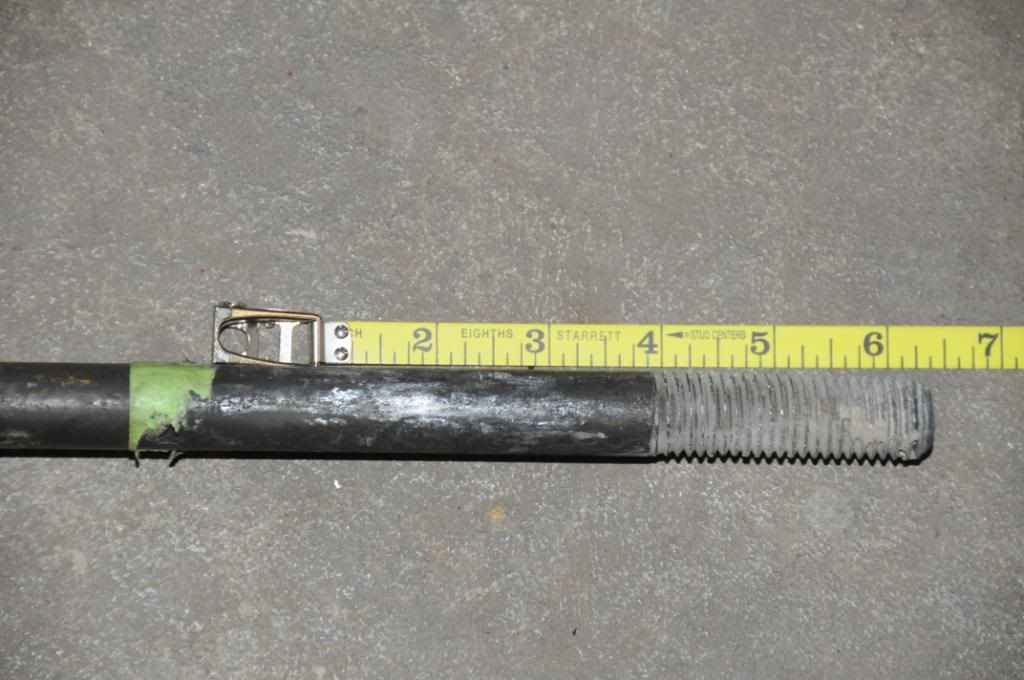
Driving Pin showing measured depth that anchors were driven down - green tape indicates depth....
5March2010ConcreteLift010.jpg


Example hole after driving anchor down - as mentioned, process of driving anchor straight down resulted in slight chipping on surface. Depth of concrete measured to minimum of 5 1/2" concrete on all holes....

5March2010ConcreteLift004.jpg
 

BillGalbraith

Well-known member
Joined
Dec 19, 2009
Messages
270
Ponchopower, I just wanted to chime in my words of support for an issue that you have presented. I don't think that you've tried to flame anyone or any company. You've presented a valid argument, and a very simple solution. I plan on buying a MaxJax this summer as well, and planned to use the sacrificial bolt method even before I read your description, only because it makes more sense from an engineering standpoint (and I are an ingineer). Thank you for air an important safety tip. If people out ther don't want to heed your advice, there is nothing you can do to convince them.
 

tyrell2004

Well-known member
Joined
Feb 27, 2009
Messages
116
The second issue is specifically step 8 of page 12. And it's been called out on this site before, quite frankly. That is, that the anchor is not yet set, however the baseplate is placed back on top of it for the "setting" or "tightening" process - which again, uses only the bolt. This can (and has) result in the anchor not being properly set in the concrete substrait - however it "appears" to because the anchor is pulled up flush with the concrete and then tightens. Why does it tighten? Because the anchor is being tightened against the baseplate - not necessarily being set into the concrete.

PP has been pretty fair at assessing the issue.This is the crux of the matter.
However it seems to me, in order for this to happen one or more of three things needs to happen.
The hole is too large.
The concrete is bad.
The anchor's wedge is defective.
The bolt anchor would have had to move up 5/8" with almost no set or partial (45ft/lbs as in PP's case) for this to happen.
I suppose the wedge could "drill" out the concrete if it begins to spin or rotate. But I think it would only be able to rotate if one of the three things above had happened or was present.
It also seems that the wedge portion spinning, rotating and scraping the hole wider all while moving up the 5/8" at the same time seems possible but a very unique experience. Again I think defective wedge, concrete or hole diameter would be needed.
But it could lead to a nice torque reading while only capturing the base plate between the bolt and anchor and not concrete set.

As suggested, Simple solution is to set the anchors without the base plate in place, confirm torque or turns and then move lift in place and wrench to spec.
Sleep well at night.
My two cents.

ps Question did the anchors actually pull out when Tested PP? or just pull up and above floor level?
Also post pics of the epoxy if you get a chance
 
To avoid these ads, REGISTER NOW!

FlameOut

Well-known member
Joined
Jan 12, 2008
Messages
428
Location
Pittsburgh, Pennsylvania
As I stated before, I really haven't any problems with my anchors, other than when I drilled my first set of holes, I used a cheap hammer drill like in the above photo. The hole was off center a bit, and not perfectly round. I was forced to move the position of my lift a bit because of the holes not lining up, butI did have the anchors installed, and one anchor did spin, and I think it was because of the cheap hammer drill not drilling a perfect hole)

I ended up buying a good hammer drill and after repositioning the location of my lift, all 10 or my anchors are tight as can be. For me, my MaxJax was the best investment I have made for my new garage, and I see no problems at all with the anchors system
 

padstack

Well-known member
Joined
Feb 25, 2010
Messages
246
not to hijack, but i have a question about a potential install in my garage. I have asloped floor (which I would assume wouldn't be a good idea), but my floor is only 4" thick. Would I need to grind the mounting area level and then anchor down? If so, would being slightly less than 4" cause me problems? It seems like I would be better off with one of the scissor lifts if that's the case, but I love the potential portability. I'd have mounting places in two spots in the garage and one in the driveway!

Thanks!
 

RAYJAY

Well-known member
Joined
May 29, 2006
Messages
2,638
Location
UNION DALE PA
the install went pretty smooth. I ended up buying a 6.9 amp bosch bulldog sds rotary hammer drill and sds bits 5/8, 3/4, and 7/8. I first used the 5/8", then 3/4", and then 7/8". I wanted the holes to be perfectly circle so i made 1/8" increments. When i got to the 7/8" bit, in some holes i seemed to hit metal...it looked like i had some sort of rebar or something, but the metal rods or sheet wasnt as big as rebar. My cement was 4"-5" thick in some places, but i feel more secure now knowing that my concrete had some sort of rebar in it.

Some pics... I'm sooo stoked that i got a lift now!

10.jpg


13.jpg


19.jpg


dsc_5663.jpg

only one image is showing up :( what is your celing height
thanks

jeff
 

dmeray1

Well-known member
Joined
Aug 12, 2010
Messages
64
To clear the air - if you read through my posts you'll see I was quite explicit about a few things.

1) I've hung out here but not posted for some time. This site is actually where I learned of the MaxJax. I felt no need to post before, however upon discovering the safety issue here I felt I had to.

2) If you also read, you'll see that I really tried NOT to bash Dannmar. This post started about an incorrect procedure in the Dannmar instructions as compared to the recommended instruction procedure from the anchor manufacturer. This is not an accusation. It is simply fact. It can be verified with anyone having access to the internet. Simply download the MaxJax instruction directly and download the Wej-It PD58 instructions directly from Wej-it. Then compare them. It only got testy because of some inaccurate information describing this situation was published by Gabe.

3) The differences in the installation have been published in this thread. In general, here's what they are. Steps 7 through 9 of page 12 of the MaxJax manual are incorrect. Those procedures differ most critically in the following two areas.

First, the Wej-It instruction calls for the use of the 5/8" sacrificial bolts, as well as a hard washer and a 5/8" (in the case of the PD58) nut (or similar replacement). Rather than putting both vertical AND rotational torque on the anchor assembly, Wej-It specifies the insertion of the bolt into the anchor - first through the nut and then the washer (which acts as a bearing surface). Then, the bolt (after being inserted at least the depth of the bolt diamter) is held steady with one wrench while the nut is turned. What this does is to stabilize the anchor sleeve, preventing any possible energy being placed in rotation, allowing the anchor bell to pull straight up and only straight up until the anchor is set. As mentioned previously, one of the failure modes is for the anchor to "spin". This method prevents that failure mode.

The second issue is specifically step 8 of page 12. And it's been called out on this site before, quite frankly. That is, that the anchor is not yet set, however the baseplate is placed back on top of it for the "setting" or "tightening" process - which again, uses only the bolt. This can (and has) result in the anchor not being properly set in the concrete substrait - however it "appears" to because the anchor is pulled up flush with the concrete and then tightens. Why does it tighten? Because the anchor is being tightened against the baseplate - not necessarily being set into the concrete.

Flameout, if you also read the post I've been clear about the fact that I don't believe this necessarily reflects on the quality of the lift itself. My issue was - and is - with the anchor installation process.

Why is the process different? The "correct" process isn't more difficult. It's not more expensive. It's not even really more time consuming.

How do you know your anchors are correct, Flameout. Have you tested torque values without the lift column in place? Because if you haven't - then you have no idea.

Again - my issue is not with the lift. I am definitely disappointed with Dannmar because I see this is a very serious safety issue. Forgive me for attempting to make sure people are aware of an issue that could kill them. Call me a flamer for providing very factual information for people to make their own decisions. I'm on other boards, and were you to check you'd realize that I'm far more giving of thanks and credit than any complaints. This is not about Gabe being "friendly". This is about whether or not a concrete mechanical anchor installed in a method not supported by the anchor manufacturer and not tested is safe to support a cantilevered two post lift with a capacity of 6000lbs that people will be crawling around under.

Not to hijack...but, I started out wanting a scissors lift, then found the MaxJax and read your information about the anchoring system and found it educational. I also learned I could install a full size two post lift like the Eagle MTP-9F on my 4" thick 3500 psi garage floor. I am wondering if the anchor systems are similar to the MaxJax? Has anyone installed a full size 2 post lift?
 

regguy1

Well-known member
Joined
Dec 15, 2009
Messages
4,053
Location
On Mount Olympus with Zeus
I have 2 full size 2 posts at my shop, they install with same style Wedge anchors, only they use stud with nut and washer vs drop in with bolts...

I've lifted all kinds of vehicles and stood under them for nearly 20 years.
 

Attachments

  • viewImage.jpg
    viewImage.jpg
    39.5 KB · Views: 705

gcan

Well-known member
Joined
Dec 30, 2006
Messages
152
Location
Alabama
I've had mine in for about a year and having read this decided to do the test.
I bought a 1-1/2 x 1" galvanized reducer at lowes, much cheaper than the socket , used it as a spacer and then torqued the anchors to 90 pounds.
All held to 90 pounds except two, they held but pulled above the finished floor
very slightly (between 1/16 and 1/8").

My question is what do you think about grinding those 2 so they are flush with the floor?

They didn't spin and did grab so grinding them down slightly should be ok, right? or I could use the spacers that came with the lift and accomplish the same. Thoughts?

Thanks in advance for any advice
 

regguy1

Well-known member
Joined
Dec 15, 2009
Messages
4,053
Location
On Mount Olympus with Zeus
I've had mine in for about a year and having read this decided to do the test.
I bought a 1-1/2 x 1" galvanized reducer at lowes, much cheaper than the socket , used it as a spacer and then torqued the anchors to 90 pounds.
All held to 90 pounds except two, they held but pulled above the finished floor
very slightly (between 1/16 and 1/8").

My question is what do you think about grinding those 2 so they are flush with the floor?

They didn't spin and did grab so grinding them down slightly should be ok, right? or I could use the spacers that came with the lift and accomplish the same. Thoughts?

Thanks in advance for any advice

I think you'd be OK grinding them flush, they probably didn't wedge fully until you pulled them up a bit.. as long as they hold torque test, go with it...MY OPINION only :)
 

ollie

Member
Joined
Jul 27, 2010
Messages
9
Location
sebastopol CA USA
I've just received my MaxJax, deliveredby Conway to the top of my basement garage ramp Friday.

Some initial notes and recommendations for those contemplating purchase of a MaxJax around my experiences so far

Download the instructions from the MaxJax site before you purchase. (if this doesn't work Google file PS-7REVA_v2.pdf)

Read this thoroughly since this is what you'll be doing when the crated products arrive. you get this same file printed out but buried deep in one of the boxes. For some reason it starts at Step 3 - putting together the first two steps for the compressor cart is pretty obvious however

Wear steel toe cap boots when you're unpacking - I dropped one of the posts on my foot while unbolting it all. Be aware this is heavy equipment that can easily crush body parts. Watch your fingers...

Sort out the various fasteners into appropriate bins before you start so you can figure out what goes where

STEP 4 ( Installing the Hydraulic Cylinders )
It's not obvious form the instructions, but you need to take the two bolts that hold the top brace out so that you can completely remove the hydraulic ram in each tower. So far as I can see, there's no way to attach the cylinder air fittings and put them through the hole at tower base with complete removal

This is where I am in my installation - I'll post again with comments as I proceed
 

dmeadow

Well-known member
Joined
Sep 3, 2005
Messages
952
Location
Houston, Texas
You might check this thread:

http://www.garagejournal.com/forum/showthread.php?t=71971&highlight=maxjax+mysterious

I started my install a couple of weeks ago but held up due to a few factors. I finally got all my anchors done today and will follow up in the thread.

A couple of things:

Look again, there is a Step 1 and a Step 2 on the previous page.

You don't have to remove those two bolts in Step 4, nor do you have to remove the cylinders from the towers. See my method in the above post.

Good point on the steel-toed boots! I always wear mine in the garage.
 

ollie

Member
Joined
Jul 27, 2010
Messages
9
Location
sebastopol CA USA
You might check this thread:

http://www.garagejournal.com/forum/showthread.php?t=71971&highlight=maxjax+mysterious

I started my install a couple of weeks ago but held up due to a few factors. I finally got all my anchors done today and will follow up in the thread.

A couple of things:

Look again, there is a Step 1 and a Step 2 on the previous page.

You don't have to remove those two bolts in Step 4, nor do you have to remove the cylinders from the towers. See my method in the above post.

Good point on the steel-toed boots! I always wear mine in the garage.

Thanks! I''m going back to do some more installation this afternoon, very useful
 

rdkc01

Member
Joined
Jul 14, 2009
Messages
6
The rubber pads provied with my MaxJax lift reek like naphthalene or paradichlorobenzene (moth balls) to the extent they smell up the entire garge. Do any of you have the same situation? Is there a solution to this issue?
 

Falcon67

Well-known member
Joined
Jun 11, 2009
Messages
18,371
Location
Merkel, TX
The rubber pads provied with my MaxJax lift reek like naphthalene or paradichlorobenzene (moth balls) to the extent they smell up the entire garge. Do any of you have the same situation? Is there a solution to this issue?

I don't have a MaxJax, but anytime I get some of those peculiar smelling items (rubber / whatnot) from someplace like HF I lay it up on the flat roof over the porch to cook in the sun a couple of days. The welding blanket I bought stunk really bad - about 3 days out in the air fixed that.
 

rdkc01

Member
Joined
Jul 14, 2009
Messages
6
Three days outside after scrubbing with soap and water and still smells. Anyone else??
 

polo2k

Well-known member
Joined
Mar 19, 2010
Messages
94
Location
UK (south)
I cant pretend to be a structural engineer but I have read all of this thread.
from what I can read the issue is not weather the wedges are gripping the concrete, it is weather this is happening because they grip the hole, or when they hit the base plate.

I think ive read that they need to be installed below the surface, then the bolt tightens and pulls it up a bit (still below the surface). Is there any reason that the users coudnt use a sleve over the bolt so that even if the wedge hits the base plate it is still far enough "in" the concrete to be effective?

what about those special bolts that cut threads in concrete? or would they be way too weak?
 

regguy1

Well-known member
Joined
Dec 15, 2009
Messages
4,053
Location
On Mount Olympus with Zeus
I cant pretend to be a structural engineer but I have read all of this thread.
from what I can read the issue is not weather the wedges are gripping the concrete, it is weather this is happening because they grip the hole, or when they hit the base plate.

I think ive read that they need to be installed below the surface, then the bolt tightens and pulls it up a bit (still below the surface). Is there any reason that the users coudnt use a sleve over the bolt so that even if the wedge hits the base plate it is still far enough "in" the concrete to be effective?

what about those special bolts that cut threads in concrete? or would they be way too weak?

I don't think the sleeve idea is good. the anchor bites the concrete as it's pulled up in the hole. friction causes the sleeve to fold up and "wedge" into the hole. If you stop it before it's wedged in tight you won't have the pullout strength. I'm not an engineer either, that's my own analysis....anyone can feel free to disagree :confused:
 

dmeadow

Well-known member
Joined
Sep 3, 2005
Messages
952
Location
Houston, Texas
The rubber pads provied with my MaxJax lift reek like naphthalene or paradichlorobenzene (moth balls) to the extent they smell up the entire garge. Do any of you have the same situation? Is there a solution to this issue?

I don't need to visit China. I already know what it smells like.
 

Hybridss

Well-known member
Joined
Sep 2, 2010
Messages
345
Location
New Port Richey Florida
FYI.. I have had my Maxjax for about a month now. I did the clutch on the 99 Cobra and a few other things...worked great. I also put my 2007 Saturn Outlook full size AWD SUV up in the air and left it overnight. Base vehicle weight is right at 5000 lbs and there was atleast a few hundred lbs of stuff inside. Probably 5250 lbs or so. Held like a champ even with me shaking the **** out of the SU like I was having a wild seizure. I wanted to put it to the test and not be all gingerly around it. Its either gonna hold...or its not. Held just fine. Next up is front brakes on the Saturn followed by headers and cam on the 04 Z06.

Only complaint is the hoses need to be longer.


BTW...whoever posted about sticking one of the magnetic angle finders to the towers...great idea! You can get some cheap ones for like $2. Good idea to "preflight" your lift prior to use daily. I would use that on ANY lift.
 
Last edited:

540i6

Well-known member
Joined
Jul 26, 2010
Messages
48
Location
Hayward, CA
I'm in the process of installing my MaxJax and everything is now assembled except for the female quick disconnects that attach to the hoses. The hose threads did not come pre-wrapped with teflon tape and instructions are silent about this as well. Did you guys use teflon tape on these connections? I'm attaching a picture of the connections I'm talking about just in case. It's the ones covered with a blue cap.

Thank you in advance!
Alex.
 

Attachments

  • IMG_0422.jpg
    IMG_0422.jpg
    167.1 KB · Views: 243
To avoid these ads, REGISTER NOW!
Top Bottom