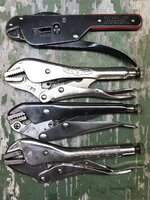
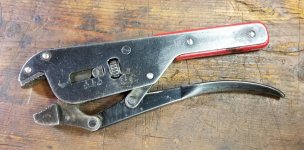
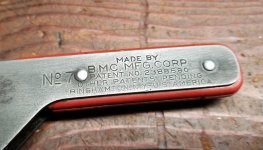
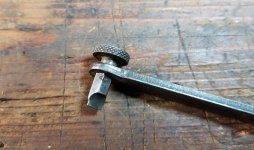
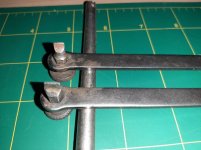
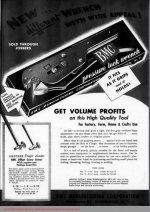
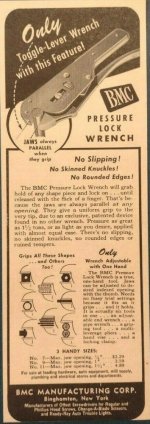
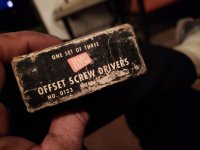
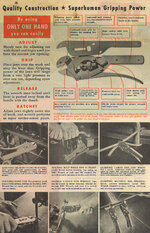
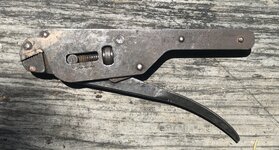
I just learned of this thread from Lugz’s post on the Garage Sale thread (probably of the tool as well, earlier).
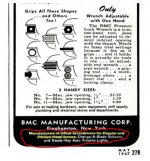
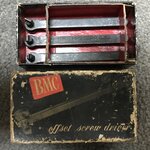
I had seen a No9 model in a flea market shed weeks before learning anything about it; the red plastic handle spacer caused me to dismiss the tool as a gimmicky wannabe. After reading a bit more, and realizing they were sophistcated, elegant tools, and not junk, I returned a few weeks later, but it was gone. Somewhere in the last month, I handled a BMC offset screwdriver, but probably since I didn’t own the pliers, just smiled at recognizing the name and left them.
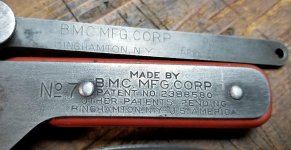
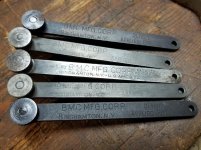
Yesterday, I bought a No7 at a different flea for $1. They were frozen, but not rusty enough to explain it.
Everyone seems to say these work great but it makes me wonder why no one makes a similar design today.
My guess is, they may in fact “work great” when they work at all, but as evidenced by the one I picked up yesterday, they can be difficult to maintain. Once jammed, the screw and nut are impracticable to access, as the design is more enclosed and held together with numerous rivets.
By contrast, ViseGrips and their knockoffs are inherently more robust - fewer parts, fewer rivets (easier and cheaper to manufacture - have you noticed the BMC screw has a weld or braze at the front?); the adjustment is accomplished by turning a bolt, easily removed or replaced (with a hex head, even!). The spring is heavier and more accessible, likewise replaceable with any handy substitute.
We can appreciate the higher level of sophistication of the BMCs, but ViseGrips are the smarter investment, both from the manufacturer and the consumer points of view.
As a market parallel, I’d suggest the popularity of the internal combustion engine: 2-stroke (ViseGrips) versus 3-stroke (BMC). Or, within the bounds of automobiles, the 4-cylinder versus the 12-cylinder. Which is more robust? Which is more reliable in the field?