GaryM909
Well-known member
I picked up these German snap ring pliers a few years ago. They are branded LUX. The only thing I can find about them is that they seem to be the same as Seeger. They feel like they are very good quality.

This is one of the links I was looking at; https://www.elora.de/en/blog-news/circlip-pliers-from-elora/^
Lux / Emil Lux GmbH & Co. KG, Emil-Lux-Str. 1, 42929 Wermelskirchen, Germany / https://lux-tools.emil-lux.de/ / est. 1919 /

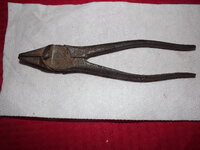
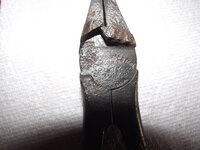
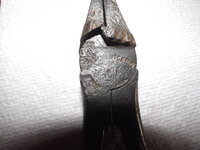
Using the searchAnyone knows what these pliers would be used for? Thanks.
 www.garagejournal.com
If you do not have every plier ever made, you can count this as a failure.Pliers are easy to dismiss and misplace. Eventually you need one. Or find another one at that sale . . .
Craftsman Water Pump Pliers, Non-Slip
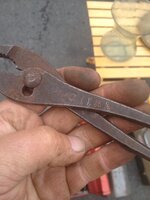
I put them over in the Utica thread. I found a pair of Conks that were labeled wire cutters and benders. I can see the wire benders. Do you think Army Corp?Ref @Mike'smeatshop post #524. It's definitely Utica. Even if you can't make it out in the branding around the top of the pivot, it's fairly legible in the address around the bottom of the pivot. Those are side-cutting Button's pattern pliers.
I thought he was asking about the odd cutters. They're for snipping wire.
Still one of the great anti-theft owner's marks on this J.P. Danielson pair.
Good ol' Bob China! Worked with him back in the '80s.Still one of the great anti-theft owner's marks on this J.P. Danielson pair.
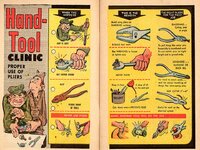
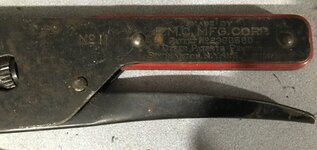
What is the age of the locking pliers? what year was the first locking pliers patient? Thanks for posting nice items.Just added a few more to my collection. I'm now of fan of these BMC locking pliers.

What is the age of the locking pliers? what year was the first locking pliers patient? Thanks for posting nice items.
Join the club!I'm now of fan of these BMC locking pliers.
 They came in three sizes: 7, 9, and 11. I have never seen an 11 in the wild, and consider it the rarest in my experience. Nice find! If you want to see more examples, information, period ads, etc, including the backstory (inventor owned a Chevy car dealership - Botnick Motor Corporation, and was dissatisfied with locking plier-wrenches not having square jaws or a graduated setting), we have an entire thread dedicated to BMC pliers. See "BMC" in the A-Z Index of Threads in the Sticky titled READ B4 POSTING at the top of the forum.
Unfortunately, casual (and even many serious...) collectors point to the first Wm. Petersen (of "Vise-Grip" fame), 1,392,443, in 1921. And they even have Wikipedia on their side! Because, well, Vise-Grips, in name and number, are like the Borg, and also like Kleenex, or, more aptly, "Crescent wrench". But DATAMP deftly credits Collison & Wright, 1,280,405 in 1918, made by Ord Mfg, in Ord, Nebraska.what year was the first locking pliers patent?
If you want to nerd out further, CC#6 is linked here.It may seem odd, at first, to cite Joseph Eifel’s famed geared (10-to-1 power ratio) “Plierench” as the first example of a locking plier-wrench type tool, something not even DATAMP does, but it’s kind of hard to argue against it.
It was patented (1,181,654 on May 2, 1916) earlier than their example (also a Not-Petersen) with text by Eifel that describes its function very deliberately as a “plier form wrench” that “will not tend to work open in handling” having “firmer engagement than is possible with any other form of wrench known to me” with “pressure applied when closing the mechanism” and “a means for releasably locking the jaws in position.”
On top of that, it is stamped “LOCKS THIS WAY <-” right on the head near the lower handle.
Lastly, Louis Isele, who patented the Seymour Smith "Snap-Lock" cited it in his application in 1948.
It is not toggle-actuated, it doesn’t have a spring, it doesn’t adjust with a knob, and it doesn’t look like a “Vise-Grip” or any knockoffs, but it absolutely is an adjustable locking plier-wrench, in name, and in function.
Thank you that was really educational, I checked out the CC#6 link, mole grip ? I had never heard that term , vise grip or known as Vice grips is the terminology in the Deep South Pacific. The term tongue and groove plier was new to me as they are known as Multi’s or Multi grips , a C wrench is a shifter or shifting spanner. And there are numerous other name differences. There are some Australian made locking pliers circa 1950s by obsolete tool makers that would sit nicely in your collection.Unfortunately, casual (and even many serious...) collectors point to the first Wm. Petersen (of "Vise-Grip" fame), 1,392,443, in 1921. And they even have Wikipedia on their side! Because, well, Vise-Grips, in name and number, are like the Borg, and also like Kleenex, or, more aptly, "Crescent wrench". But DATAMP deftly credits Collison & Wright, 1,280,405 in 1918, made by Ord Mfg, in Ord, Nebraska.
If that reference to Nebraska makes your spidey-senses tingle, it should. What DATAMP - and apparently nobody other than yours truly seems to have theorized, is that it's asking the dang near impossible for us to think that William Petersen, of DeWitt, Nebraska, arrived at his locking plier-wrench design completely independent of the design that Mssrs Collison & Wright had invented just a few years prior from a location less than 150 miles away! I suspect that every farm shop in the state was using them, that one of them with a little ingenuity thought he could iterate on them, and he did.
But I disagree with DATAMP. I credit Joseph Eifel. As I wrote in the Eifel section of the Curator's Corner #6 posted in my Lugzsonian thread on the topic of Other ("Not-Petersen") Locking Plier-Wrenches...
If you want to nerd out further, CC#6 is linked here.
You're welcome! Glad you enjoyed it.oldpliers1 said:Thank you that was really educational,
It might be just a Great Britain thing. I'm not sure. If you Google it, you'll find all kinds of references.Mole grip ? I had never heard that term ,
 www.wonkeedonkeetools.co.uk
I'm sure there are. The idea can be found around the globe. I've added a few more US models since that write-up, but I'm not actively seeking them out, I just grab one whenever I run into a name or design I don't recognize in the wild, and I'm not trying to be exhaustive.There are some Australian made locking pliers circa 1950s by obsolete tool makers that would sit nicely in your collection.
My dad left UK in the 50s and always called them vice grips, never mole, never exported to colony in any quantity.You're welcome! Glad you enjoyed it.
It might be just a Great Britain thing. I'm not sure. If you Google it, you'll find all kinds of references.
Here's a summary I just purloined from a UK site:
In 1947, Thomas Coughtrie went to work for the Birmingham engineering company, M K Mole and Son, and, after the death of the joint managing directors and Mole brothers, became the managing director. In the 1950s Thomas Coughtrie patented his own version of the locking pliers and called them ‘Mole grips’. The name stuck and the tool became extremely popular with mechanics and engineers across the UK.A Brief History of Mole Grips - Wonkee Donkee Tools
A brief history of mole grips Shop for Mole Grips Early designs The first locking pliers were invented by William Petersen in De Witt, Nebraska around 1924. After arriving in the U.S. and setting up a blacksmith’s shop, Petersen must have required a tool that combined the gripping power of a...
I'm sure there are. The idea can be found around the globe. I've added a few more US models since that write-up, but I'm not actively seeking them out, I just grab one whenever I run into a name or design I don't recognize in the wild, and I'm not trying to be exhaustive.
Join the club!
I agree, NO problem with that plier collection!I don’t see a problem. Happy Thanksgiving.
-Don
That's a nice plier selection! It's nice to see tools all so clean too.I might have a problem…
Go buy two more pair of pliers, do this daily, and call us when you are at 20X that amount.I might have a problem…

Happy Thanksgiving to all!That's a nice plier selection! It's nice to see tools all so clean too.
We're seeking full disclosure here, so, what is in the Craftsman Leatherette pouch?


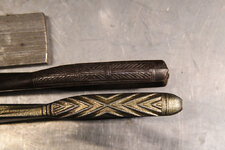
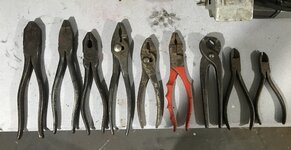
The pair with the so-called herringbone pattern are definitely J.P. Danielson. No idea on the others.Any ideas?
You mean the dark ones? I would describe both patterns as "herringbone".The pair with the so-called herringbone pattern are definitely J.P. Danielson. No idea on the others.
Nope . . . no problem.I might have a problem…