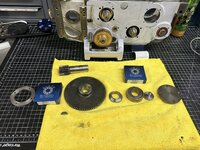
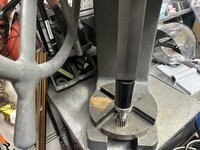
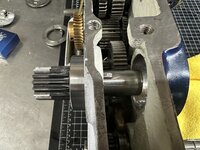
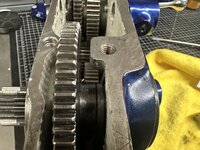
To avoid these ads, REGISTER NOW!

Rebuilding a monarch 10ee lathe

OP
G

Grant Gunderson

Well-known member
Joined
May 17, 2013
Messages
2,320
Location
Bellingham, WA
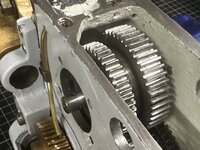
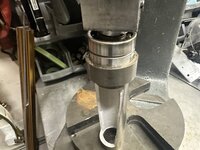
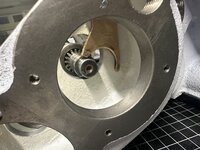
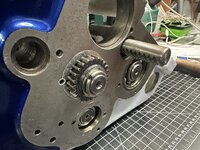
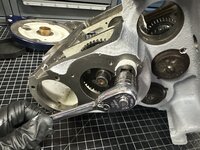
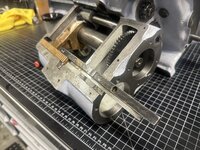
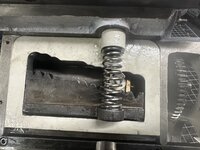
IMG_7952.jpegI can then push the friction stem though the rear bearing.
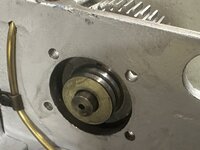
IMG_7953.jpeg
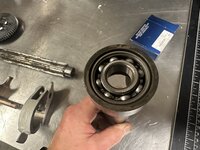
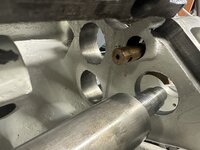
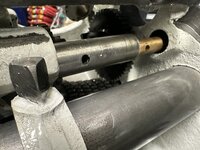
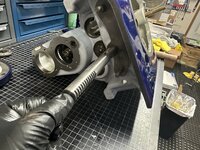
The rear thrust bearing stack then gets installed.
IMG_7954.jpeg
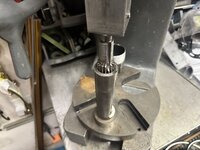
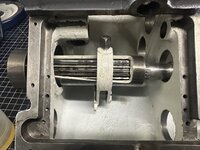
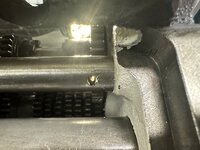
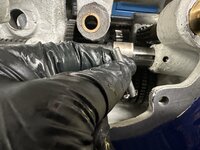
I then install the lever arm into the front of the fiction stem and housing.
IMG_7957.jpeg
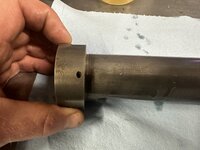
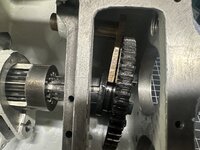
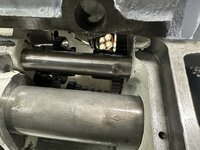
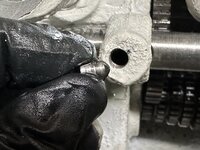
and secure it with a 6-32 dog point set screw.
IMG_7961.jpeg
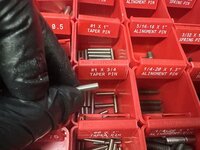
I then compress the two friction gears together, install the rear bushing, align it with an alignment pin and then install its #1 x ¾" taper pin. I then install the front friction retaining nut, same as I did on the longitudinal feed friction assembly and its done other than installing the rear cover plate.
 
To avoid these ads, REGISTER NOW!
OP
G

Grant Gunderson

Well-known member
Joined
May 17, 2013
Messages
2,320
Location
Bellingham, WA
Ok, now to fix the oil pump line.
IMG_7964.jpeg
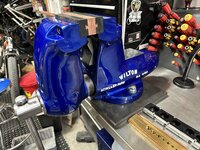
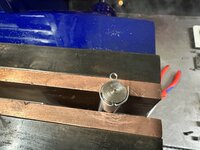
With the pump clamped in the vise, I install the line, and then use my tubing bender to bend as tight of a radius as possible with out kinking the line.
IMG_7966.jpeg
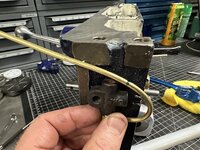
I feed the line through the bore in the casting. Notice the orientation of the line where it exits from the pump area. There is actually a cut out in the casting here to accommodate it. I didnt notice that before.
IMG_7968.jpeg
I then bend the end of the line, measure and cut it. Way better than last time and no kink! I still need to wait for the copper line to arrive to run the other 3 lines.
 
OP
G

Grant Gunderson

Well-known member
Joined
May 17, 2013
Messages
2,320
Location
Bellingham, WA
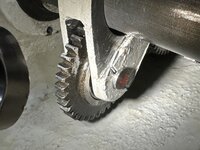
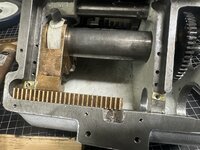
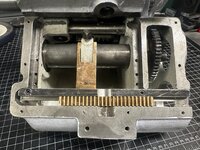
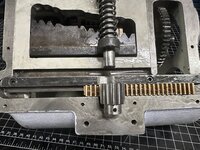
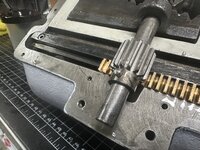
Next up is installing the rack pinion gear.
IMG_7970.jpegNotice how much gunk the pinion still has int it after the first round in the ultrasonic. It was caked in there!
IMG_7974.jpeg
All cleaned up. It's got a bit of wear on it. Might see if I can find a replacement in better shape.
IMG_7975.jpeg
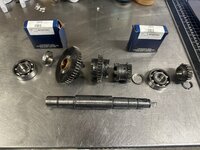
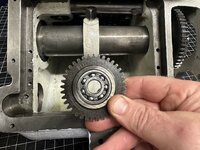
Here is the pinion gear assembly all laid out from rear to front. I uses two New Departure C88505NR5.ND bearings. I was able to find new old stock replacements for these.
IMG_7977.jpeg
I used a drift out of an automotive ball joint tool set as a drift to press the rear bearing on to the pinion shaft. Once again everything gets coated with way oil prior to assembly.
IMG_7978.jpeg
I supported the pinion shaft with some Vee blocks to tap in the woodruff key.
IMG_7979.jpeg
The pinion shaft with rear bearing gets pushed into the rear of the apron.
IMG_7982.jpeg
I gave it a rotation to make sure all of the gears where moving correctly and that nothing was binding.

IMG_7984.jpeg
I used some 8-32 oval head screws to temporarily install the rear bearing retainer to push the bearing into place.
IMG_7985.jpeg
Moving to the front of the apron the bearing spacer gets slid onto the pinion shaft.
IMG_7986.jpeg
I then used the front bearing retainer to press the bearing in. I need to decide if I want to Crome the front retainer plates or paint them....
 
OP
G

Grant Gunderson

Well-known member
Joined
May 17, 2013
Messages
2,320
Location
Bellingham, WA
IMG_7989.jpeg
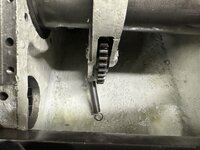
Notice no gaps on either side of the pinion gear and it moves freely.
IMG_7994.jpeg
The retaining screw for the front pinion gear bearing gets a dab of Ted-gel.
IMG_7995.jpeg
I used a pin spanner an some non-marring pliers to torque it down.
IMG_7996.jpeg
The pinion gear and shaft is now installed other the bearing retainer plates and their gaskets.
 
OP
G

Grant Gunderson

Well-known member
Joined
May 17, 2013
Messages
2,320
Location
Bellingham, WA
Next up is the top idler gear and stud installation.
IMG_7997.jpeg
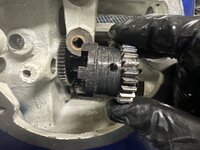
I install the rear locking bushing first.
IMG_7998.jpeg
The idler gear gets installed onto the stud, notice the protrusion on the gear faces the front of the apron.
IMG_7999.jpeg
I then use a brass drift to press the stud in flush with the front of the apron.
IMG_8001.jpeg
and alignment punch makes sure the locking bushing is aligned with the stud and the casting.
IMG_8002.jpeg
I chase the threads.
IMG_8003.jpeg
and finally install the set screws to lock it all in place.
IMG_8004.jpeg
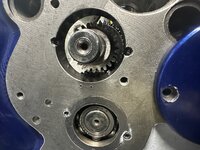
all of the gears are guck in the apron. Nothing binds and it all seems to work as it should!
IMG_8007.jpeg
Next I need to install the sight glass. I got some 3D printed inserts for these from @mooserov. They are pretty slick and will make it easier to read.
IMG_8008.jpeg
I place one of the cork gaskets I made earlier into the sight glass
IMG_8009.jpeg
Followed by the mineral glass. from Image International part# FC239-20
 
OP
G

Grant Gunderson

Well-known member
Joined
May 17, 2013
Messages
2,320
Location
Bellingham, WA
IMG_8010.jpegThe sight glass inserts have a center line imprinted into them, but I am adding a black line to that to make it easier on the eyes.
IMG_8011.jpeg
The gasket gets installed in the back of the insert
IMG_8015.jpeg
Finally the sight glass assembly gets installed with three 8-32 x ¾" oval head stainless screws. It sets slightly proud with th insert behind it, but I'll trade that for it being way easier to read!
 
OP
G

Grant Gunderson

Well-known member
Joined
May 17, 2013
Messages
2,320
Location
Bellingham, WA
Last thing for the apron is to install the take up bearing.
IMG_8016.jpeg
I slide the makeup bearing shaft into place.
IMG_8018.jpeg
the spacer goes on it next.
IMG_8019.jpeg
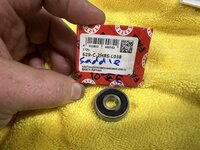
Followed by a *** 629-C-2HRS-L038 bearing.
IMG_8020.jpeg
IMG_8021.jpeg
then the brass washer
IMG_8025.jpeg
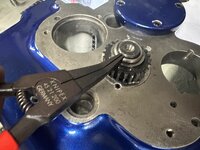
I then used these special Knipex retaining ring pliers to install the lock ring. These are designed specifically to hold these types of lock rings.
IMG_8027.jpeg
Makes it super easy to spread the ring and install it.
IMG_8028.jpeg
IMG_8031.jpeg
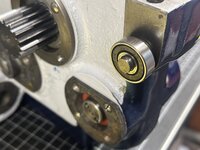
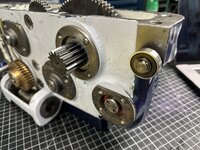
and then finally install the lock screw in the front. The apron is now done!... well other than running 3 oil lines, painting and installing the bearing cover plates front and rear and some touch up paint around the SHCS bores on the friction housings. Turned out really well! I'm pretty damn happy that I was able to get it all back together after taking a year off from the project. Just goes to show the benefit of taking good notes on the tear down.
 
OP
G

Grant Gunderson

Well-known member
Joined
May 17, 2013
Messages
2,320
Location
Bellingham, WA
Spent the am riding bikes in the fog. Not only are the trails in great shape.
IMG_8102.jpeg
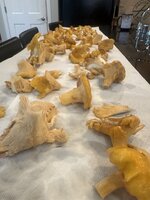
But I came home with 2 gallon ziplock bags full of Chantrells. Going to have to make a special dinner for the lady friend tonight.
IMG_8104.jpeg
The gear box has been sitting since last fall. Pulling the tape felt a bit like a 6 year old on Christmas
IMG_8107.jpeg
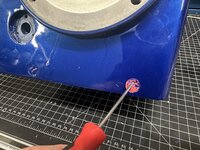
I used silicone paint plugs for the holes. They did a great job and where easy to remove with Pick
IMG_8109.jpeg
IMG_8110.jpeg
IMG_8112.jpeg
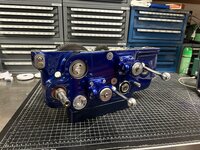
Paint turned out nice!
IMG_8114.jpeg

I’m making my lady friend one of my favorite fall meals, Tartiflet. I first had it in the Savoie region of Switzerland and France and ended up learning how to make it over there. It’s classic alpine mountain food and will be delicious with the Chantrelles.
IMG_8118.jpeg
IMG_8126.jpeg
It’s basically just potatoes, garlic, bacon chantrells, thyme, rosemary, tarragon and white wine with some really stinky French / Swiss cheese, white wine and crème French.
I’ll start in on the gear box tomorrow if all goes to plan.
 

Attachments

  • IMG_8111.jpeg
    IMG_8111.jpeg
    846.6 KB · Views: 4
Last edited:
OP
G

Grant Gunderson

Well-known member
Joined
May 17, 2013
Messages
2,320
Location
Bellingham, WA
Ok, time to put the gear box back together. This is probably the most complicated part of the lathe rebuild. I'm going to start by putting the Tumbler shaft in first.
IMG_8140.jpeg
Here are the tumbler shaft parts all laid out. It uses a 3204 New Depature Bearing.
IMG_8147.jpeg
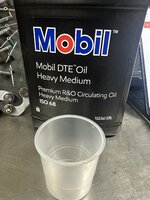
The gear box uses Mobile DTE Heavy Medium oil. All of the parts are getting a coating of it prior to assembly.
IMG_8144.jpeg
I used one of the old bearings as a drift to press the new bearing into the outer tumbler shaft
IMG_8145.jpeg
IMG_8148.jpeg
I then cleaned the inner tumbler shaft with a brass brushed then flipped the outer shaft around and pressed the inner tumbler shaft into the bearing.
IMG_8150.jpeg
I made sure the gear flanges all got a good coat of oil.
IMG_8151.jpeg
This drill hole aligns with one of the screw holes in the top of the gear box, so we need to make sure it gets inserted with the right orientatio.
IMG_8153.jpeg
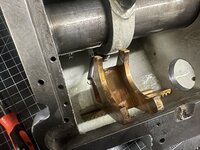
The bronze shifting fork also got a good coat of oil.
IMG_8156.jpeg
And gets loosely inserted into the upper bore hole.
IMG_8154.jpeg
Note its orientation here.
 
OP
G

Grant Gunderson

Well-known member
Joined
May 17, 2013
Messages
2,320
Location
Bellingham, WA
IMG_8157.jpeg
IT will eventually get inserted into another part, but it needs to go in now.
IMG_8158.jpeg
The tumbler gear bracket gets slid onto the tumbler shaft as the number shaft gets inserted into the casting.
IMG_8162.jpeg
I then slide the Tumbler Shaft Clutch gear into the shift fork, and then slide it onto the tumbler shaft.
IMG_8165.jpeg
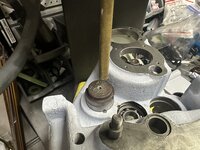
Next I will need to press the shaft in. You can see the screw hole directly above it that corresponds to the drill hole in the shaft I mentioned earlier.
IMG_8164.jpeg
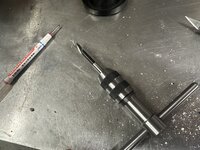
First I need to clean out the counter bores of the bearing plate for the tumbler shaft. I did this by chucking a #10 counter bore into a my large Starrette tap handle.
IMG_8168.jpeg
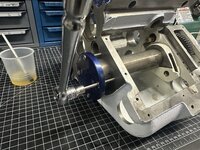
I then used some 10-24X1.25 SHCS to press the bearing plate and thus the shaft into position. As it got closer I switched to shorter screws. The plate is only on temporarily. We will have to remove it again latter, and then eventually cut a gasket for it for the final instal.
IMG_8173.jpeg
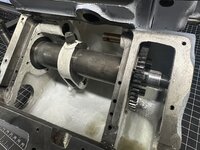
The tumbler shaft is now fully installed.
IMG_8174.jpeg
 
OP
G

Grant Gunderson

Well-known member
Joined
May 17, 2013
Messages
2,320
Location
Bellingham, WA
I had made a mistake and installed the clutch shaft in the wrong order, so I've edited this post to reflect the proper order of assembly.
IMG_8441.jpeg
The next item to go back into gear box is the cone gear stack

IMG_8239.jpeg
I used some Vee blocks to support the shaft so I could use a soft blow mallet to tap the 3/16" key back in. I then slid the center gear spacer onto the shaft.
IMG_8480.jpeg
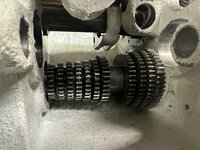
Here it is all laid out. Note, there is 7 gears to the left of the shaft spacer plus the large bearing spacer. To the right of the shaft spacer is the the 4 larger gears plus the thinner bearing washer.
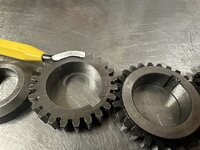
IMG_8481.jpeg
The gears were difficult to slide back on to the shaft. When I inspected them I realized they all had small burrs on the inside edges, so I deburrred all of them.
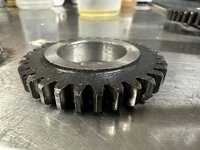
IMG_8483.jpeg
Notice the raised center section of the gears. They all have these on both sides, except the two on either side of the center shaft spacer (non raised side goes next to it) and the smallest and larges gear also lack them on the sides next to the bearing spacers.
IMG_8484.jpeg
I lubed everything with the heavy-medium oil and slid all of the gears on the left side of the shaft spacer on to the shaft. The smallest gear needs to sit dead flush with the shoulder on the shaft.
IMG_8485.jpeg
The large bearing spacer then slides on with the smallest side facing out.
IMG_8486.jpeg
I then inserted the partial cone gear stack into the front of the gear box and slide it to the full left side of its bore.
IMG_8489.jpeg
The right side bearing stack then gets slid on one at a time followed by the thin bearing spacer.
IMG_8231.jpeg
The cone gear shaft uses a new Departure 3204 bearing on the right side these are open sided bearings. It used a C8504 on the left side. This is the same OD and ID as the the 3204 but has a raised center section on shield on the external side. I couldn't find a replacement for the C8504 as these are both non-metric bearings. Luckily the new old stock3204 bearings will work here as the bearing retainer locates the bearing by the outer edge and not the center.
 
Last edited:
OP
G

Grant Gunderson

Well-known member
Joined
May 17, 2013
Messages
2,320
Location
Bellingham, WA
I had made a mistake and installed the clutch shaft in the wrong order, so I've edited this post to reflect the proper order of assembly.
IMG_8488.jpeg
The right side bearing and its lock ring gets pressed in flush with the casting. Note the single dot factory witness marks. It then gets locked into place with two ¼-20 dog point set screws.
IMG_8444.jpeg
I then pressed the left side bearing and locking cover into place and also secured it with its ¼-20 dog point set screws.
When both bearing retainers are pressed in dead flush with the outer edge of the casting, the cone gear shaft is designed for everything to fit perfectly. So it's critical that these retainers are perfectly flush. The cone gear stack is fully installed now. It's easy to test it by spinning it by hand.
 
Last edited:
OP
G

Grant Gunderson

Well-known member
Joined
May 17, 2013
Messages
2,320
Location
Bellingham, WA
Next up is the installation of the clutch shaft assembly.
IMG_8175.jpeg
Note, the clutch shift gear has the side with the pin securing its key facing the left. It uses two New Departure 3204 bearings I was able to find new old stock bearings for it. The larger bearing spacer goes on the left.
IMG_8198.jpeg
I began by pressing the bearing into the left side of the casting with an Abbey tools bearing press. You want it just barely pressed into the casting to start.
IMG_8491.jpeg
the clutch shift gear then gets slid on to the shaft and then inserted into the casting and pushed into the right side bore
IMG_8492.jpeg
Make sure the oil weep holes for the inner bronze bushing in the left gear are aligned wit the outer body of the gear.
IMG_8494.jpeg
The left hand clutch gear gets slid onto the shaft followed by the bearing spacer. The smaller side of the bearing spacer faces out. The left end of the shaft can then be pushed all the way into the left side of the casting and into the bearing that was partially pressed in earlier.
IMG_8495.jpeg
I then checked that the weep holes are aligned in the right hand gear.
IMG_8496.jpeg
I then gets slid on to the shaft through the bore in the right side of the gear box casting. Make sure the gears are properly meshed. then , side the small bearing spacer washer on.
IMG_8218.jpeg
The right hand side bearing lock ring then gets pressed in dead flush with the casting followed by its two ¼-20 dog point set screws to lock it into place.
IMG_8498.jpeg
the left side bearing retaining cover then gets pressed in flush to the casting and then retained by its two ¼-20 dog point lock screws. I then installed the two ¼-20 crews that seal the center of the bearing caps.
IMG_8499.jpeg
the woodruff key then gets tapped in.
 
To avoid these ads, REGISTER NOW!
OP
G

Grant Gunderson

Well-known member
Joined
May 17, 2013
Messages
2,320
Location
Bellingham, WA
IMG_8500.jpeg
the other gear then slides onto the woodruff key with the longer side facing into the casting for the proper offset.
IMG_8222.jpeg
I have a set of special Knipex retaining ring pliers that are designed just for this kind of lock ring.
IMG_8224.jpeg
the lock ring then secures the outer gear onto the shaft.
IMG_8503.jpeg
The clutch gear shaft is now fully installed. It's a good idea now to test to make sure everything moves freely and that the shift gear can move between the two sides and mesh. As long as both bearing retainers are pressed in flush with the edge of the casting, then it is designed to fit perfectly together.
 
OP
G

Grant Gunderson

Well-known member
Joined
May 17, 2013
Messages
2,320
Location
Bellingham, WA
Next up is to install the Feed shifter assembly.
IMG_8505.jpeg
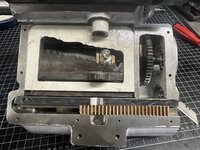
Here it is all laid out after a good cleaning in the ultrasonic.
IMG_8506.jpeg
The feed shifter rack with a good coating of oil gets inserted into the right side of the casting.
IMG_8507.jpeg
It has a factory witness mark dimple next to the side of the pin hole that faces the rear of the casting. The bronze shifter fork needs to slide into the shaft, and then the holes need to align for the pin.
IMG_8508.jpeg
IMG_8509.jpeg
The pin gets inserted from the rear of the casting.
IMG_8510.jpeg
IMG_8519.jpeg
A cotter pin then secures the pin. My gear box was missing it when I opened it up. It was easier to install than I expected with a set of long needle nose pliers. You can rotate the pin with a second set of pliers to properly bend the cotter pin back on its self.
IMG_8511.jpeg
the pinion gear for the feed shifter gets slid onto the bronze rod.
IMG_8514.jpeg
and secured into place with a dog point set screw.
IMG_8515.jpeg
with a good coat of oil the feed shifter oil gets inserted. make sure pinion gear signs with the fork shifter rack.
 
OP
G

Grant Gunderson

Well-known member
Joined
May 17, 2013
Messages
2,320
Location
Bellingham, WA
Next up is to install the Feed shifter assembly.
IMG_8505.jpeg
Here it is all laid out after a good cleaning in the ultrasonic.
IMG_8506.jpeg
The feed shifter rack with a good coating of oil gets inserted into the right side of the casting.
IMG_8507.jpeg
It has a factory witness mark dimple next to the side of the pin hole that faces the rear of the casting. The bronze shifter fork needs to slide into the shaft, and then the holes need to align for the pin.
IMG_8508.jpeg
IMG_8509.jpeg
The pin gets inserted from the rear of the casting.
IMG_8510.jpeg
IMG_8519.jpeg
A cotter pin then secures the pin. My gear box was missing it when I opened it up. It was easier to install than I expected with a set of long needle nose pliers. You can rotate the pin with a second set of pliers to properly bend the cotter pin back on its self.
IMG_8511.jpeg
the pinion gear for the feed shifter gets slid onto the bronze rod.
IMG_8514.jpeg
and secured into place with a dog point set screw.
IMG_8515.jpeg
with a good coat of oil the feed shifter oil gets inserted. make sure pinion gear signs with the fork shifter rack.
 
OP
G

Grant Gunderson

Well-known member
Joined
May 17, 2013
Messages
2,320
Location
Bellingham, WA
Screenshot 2023-10-11 at 6.33.33 PM.pngIt gets secured with the extra long dog point set screw on the right hand side of the gear box.
IMG_8520.jpeg
I then rotated the shaft and made sure it all felt good.
IMG_8521.jpeg
the cover plate then gets taped into the right side of the casting
IMG_8522.jpeg
a ½" pipe plug with some teflon tape secures the left side.
IMG_8523.jpeg
the feed shifter assembly is now finished.
 
OP
G

Grant Gunderson

Well-known member
Joined
May 17, 2013
Messages
2,320
Location
Bellingham, WA
The clutch shifter assembly then goes in next.
IMG_8525.jpeg
Here it is all laid out.
IMG_8526.jpeg
Mine was missing the #5 woodruff key here when I took it apart.
IMG_8527.jpeg
The clutch shifter rack gets a liberal coat of oil and inserted into the left side of the casting.
IMG_8528.jpeg
I made sure it was supported on both ends of the casting.
IMG_8529.jpeg
and then tapped in a new #5 woodruff key. I then slid the rack to the left side.
IMG_8531.jpeg
and slid the shifter fork onto it. I then used a couple of starrett pin punches to align the fork and the rack, and then tapped the rack into the fork to align the pin holes.
IMG_8532.jpeg
The pin then gets a cotter pin installed into on end.
IMG_8533.jpeg
the pin then gets inserted into the rack and fork, and secured with a second cotter pin. Note how I properly bent the cotter pins back on themselves.
IMG_8535.jpeg
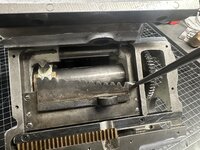
A dog point set screw gets inserted into the right side of the casting. It needs to get driven in far enough to reside in the grove in the rack, but not bind it. Its purpose is to keep the rack in the proper orientation.
IMG_8537.jpeg
It then gets locked into place with a nut.
 
OP
G

Grant Gunderson

Well-known member
Joined
May 17, 2013
Messages
2,320
Location
Bellingham, WA
IMG_8538.jpeg
The detent plunger then gets inserted into the left side of the casting with plenty of oil.
IMG_8539.jpeg
followed by the spring
IMG_8540.jpeg
and then the dog point set screw. I will set the tension on the ball detent a bit latter, but for now its just in there to keep from loosing the spring.
IMG_8541.jpeg
the right side cover gets tapped in flush
IMG_8542.jpeg
followed by the right.
 
OP
G

Grant Gunderson

Well-known member
Joined
May 17, 2013
Messages
2,320
Location
Bellingham, WA
IMG_8543.jpeg
The clutch shifter stuff and piñon gear need to get installed next. I started the dog point set screw into the piñon gear first.
IMG_8544.jpeg
note the alignment mark from tear down on the pinon gear.
IMG_8545.jpeg
It gets aligned with the center detent on the rack.
IMG_8546.jpeg
The stud then slides In and gets secured with the dog point set screw into the recess in the stud shaft. I then used a pin punch to rotate the stud and adjusted the set screw on the detent to a pressure that I liked.
 
OP
G

Grant Gunderson

Well-known member
Joined
May 17, 2013
Messages
2,320
Location
Bellingham, WA
Next for the gear box is the screw shaft clutch assembly.
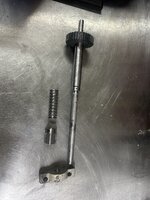
IMG_8547.jpeg
Here it is all laid out.
IMG_8548.jpeg
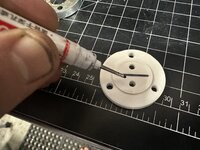
On the right side it uses a ND PN20205 thrust bearing. This bearing has a flange on it and I had no luck finding a replacement with one. Closest I found was a MRC 205RDU bearing. So we will have to pay attention when pressing it in. Ideally it would be nice to find a replacement with the flange on it.
IMG_8549.jpeg
Same story on the left side. It used a New Departure 20303 thrust bearing with a flange on it. I did find a New departure QM20303 thrust bearing but again no flange.
IMG_8550.jpeg
The right side bearing gets slid onto the shaft up to its shoulder with the thrust side facing out.
IMG_8552.jpeg
You can see here how it is missing the flange.

IMG_8553.jpeg
The clutch gears have to be placed into the casting next. The center gear needs to mesh with the center clutch gear bellow.
IMG_8555.jpeg
The right side clutch gear needs to mesh with the feed selector shaft.
IMG_8557.jpeg
The screw shaft then slides into the right side of the casting and into the two gears we just placed. Make sure the gears mesh now.
IMG_8558.jpeg
The bronze washer slides onto the screw shaft from the bore in the left side of the cavity.
IMG_8559.jpeg
followed by the lock ring. Note the side with the two factory witness mark dimples faces the clutch gear and washer.
 
OP
G

Grant Gunderson

Well-known member
Joined
May 17, 2013
Messages
2,320
Location
Bellingham, WA
IMG_8560.jpeg
It's dog point set screw must align into tech bore into the screw shaft.
IMG_8561.jpeg
It then gets Locked into place.
IMG_8562.jpeg
The left side thrust bearing gets pressed in, with the thrust side facing out
IMG_8563.jpeg
The inner thrust plate slides onto the shaft.
IMG_8564.jpeg
Followed by the outer thrust plate. This then gets pressed in so its is flush with the casting.
IMG_8569.jpeg
I then spin the gears and shift the shifter through all 3 settings to make sure everything moves freely and shifts properly.
IMG_8571.jpeg
the #3 lock washer goes onto the shaft next.
IMG_8572.jpeg
Followed by the #3 locking nut. Evidently they make special socket sets for these.... I dont own any of those so used a spanner wrench to tighten the lock nut. IT only gets minimal torque on it. Too much and the gears will all bind up and you have to back it off.
IMG_8573.jpeg
The tab for the lock washer then gets driven into the slot of the nut to secure it.
IMG_8576.jpeg
the screw shaft is now fully isntalled. I am a bit concerned that those thrust bearings without the flanges may work there way further into the casting overtime. I need to look again and see if I can source some with the flanges.
 
OP
G

Grant Gunderson

Well-known member
Joined
May 17, 2013
Messages
2,320
Location
Bellingham, WA
Next up is installation of the number shifter rack.
IMG_8589.jpeg
Here are all of the parts laid out.
IMG_8588.jpeg
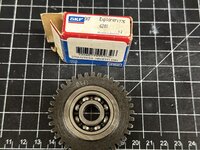
The tumbler gear uses a New Departure 6201 Bearing a Ski 6201 is an exact replacement.
IMG_8590.jpeg
I had scribed the Bed o note side that faces the bed of the late during disassembly. Makes it easy to know what way it faces now.
IMG_8592.jpeg
It gets inserted into the tumbler shifter bracket.
IMG_8591.jpeg
The pin that holds the gear in gets a cotter pin installed in one side.
IMG_8593.jpeg
It then gets installed into the shifter bracket and gear. At this point You may be thinking, why didnt I do it before I installed the Tumbler shaft. The reason is it needs to nest with the Tumbler shaft gear inside of the Tumbler shaft. So it can't be installed until this point.
IMG_8594.jpeg
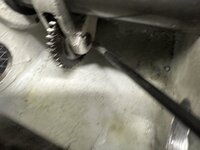
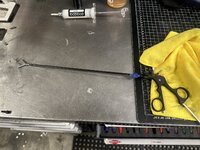
To install that cotter pin I used this Endoscopy tool. It's like a super long version of forces, but you can rotate the tip to grab at any angle. Its a pretty useful tool.
IMG_8596.jpeg
Second litter pin secured.
IMG_8600.jpeg
The extension spring gets attached to the tumbler shifter gear bracket.
IMG_8608.jpeg
I then connected the extension spring to the bronze Tumbler shifter fork and rack.
 
OP
G

Grant Gunderson

Well-known member
Joined
May 17, 2013
Messages
2,320
Location
Bellingham, WA
IMG_8609.jpeg
The tumbler shifter fork and bracket then gets rotated into place.

IMG_8611.jpeg
The retaining bracket then gets slide into place.
IMG_8613.jpeg
I noticed when I cranked down its mounting bolts, it caused the shifter fork to bind. So I cut some .005" brass shim stock to fit under it.
IMG_8612.jpeg
That worked perfectly.

I now need to install the lower (rear) tumbler lock plate.

IMG_8615.jpeg
IT gets secured with two #1 x ¾" taper pins. I thought about using the threaded taper pins to make serving it easier latter, but those wont work here as these need to be bellow flush with the lock plate.
IMG_8622.jpeg
I cleaned up the tapper pin holes with a #1 tapper pin reamer.
IMG_8619.jpeg
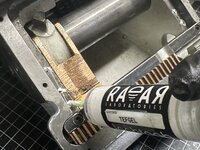
I then added some Tef-Gel to all of the mounting holes.
IMG_8623.jpeg
The #1 x ¾" tapper pins get driving in to be just bellow flush. This perfectly locates the locking plate.

IMG_8624.jpeg
It then gets secured with 4 screws.
IMG_8625.jpeg
The number shifter gets moved over, then the Upper (front) tumbler locking plate gets pushed down into position.
 
OP
G

Grant Gunderson

Well-known member
Joined
May 17, 2013
Messages
2,320
Location
Bellingham, WA
The Tumbler lock shaft gets installed next.
IMG_8627.jpeg
There is an adjustment collar mid shaft to adjust its tension and it has a pin to hold it in place.
IMG_8628.jpeg
First the spring gets installed between the two lock plates.
IMG_8629.jpeg
The Tumbler lock shaft gets a good coating of oil, and is then slid in from the front of the gear box

IMG_8632.jpeg
The pinion gear needs to get slid on it before the shaft is fully pushed in. It uses a #0 x ¾" tapper pin, so the larger holes need to be on top.
IMG_8633.jpeg
The pin then gets driven in flush.
IMG_8634.jpeg
I then added some Tef-gel to the screw holes for the cover plate.
IMG_8636.jpeg
IMG_8637.jpeg
The cover plate then gets secured. Other than painting the back bracket for the Tumbler lock shaft and screwing it down, the back half of the gear box is pretty much done now.
 

dutchgray

Well-known member
Joined
Sep 28, 2014
Messages
6,468
Location
Dorset. England.
Nice work on the Monarch. I want a lathe but no way do I want to ever disassembly one.
To be fair rebuilding lathes is something you only do if you really have to. If the machine is in good operating condition as is its better to leave it. Just inspect the machine properly and attend to issues as they arrive.

This 10EE was in need though looking at the start condition and it's being done properly.
 
OP
G

Grant Gunderson

Well-known member
Joined
May 17, 2013
Messages
2,320
Location
Bellingham, WA
Could really just collect all of this and put together a "monarch 10ee total overhaul guide" book.
Now that I’m this far along with it the thought has crossed my mind. Not sure if there is enough demand to cover the printing costs.
Grant, great progress. You mentioned ultrasonic cleaning of parts, any special cleaner for grease and oil?
I used to use a bit of simple green in water. I now just use Dawn professional in water in it. With either solution it’s best to minimize the exposure for aluminum parts. Especially if they are anodized.
To be fair rebuilding lathes is something you only do if you really have to. If the machine is in good operating condition as is it’s better to leave it. Just inspect the machine properly and attend to issues as they arrive.

This 10EE was in need though looking at the start condition and it's being done properly.
Truth be told I good have left the gear box and apron alone. But being this deep into the rebuild already it seemed silly to not just do all of it. Plus I now know exactly how it all works.

It’s kinda like how I taught myself photography by taking cameras apart and rebuilding them. Or how I taught myself how to use my Bridgeport by rebuilding it. It’s just how my mind works. Plus you learn a lot of additional skills by doing these things
 

dutchgray

Well-known member
Joined
Sep 28, 2014
Messages
6,468
Location
Dorset. England.
Truth be told I good have left the gear box and apron alone. But being this deep into the rebuild already it seemed silly to not just do all of it. Plus I now know exactly how it all works.

It’s kinda like how I taught myself photography by taking cameras apart and rebuilding them. Or how I taught myself how to use my Bridgeport by rebuilding it. It’s just how my mind works. Plus you learn a lot of additional skills by doing these things
You do certainly learn how the machine works.
I disassembled the compound, cross slide, saddle, taper turning attachment and tailstock on my Dean Smith and Grace 13x42 when I bought it to clean all the grease out that had been pumped in over the years. Being a quality machine everything came apart and went back together pretty easily.
 
OP
G

Grant Gunderson

Well-known member
Joined
May 17, 2013
Messages
2,320
Location
Bellingham, WA
You do certainly learn how the machine works.
I disassembled the compound, cross slide, saddle, taper turning attachment and tailstock on my Dean Smith and Grace 13x42 when I bought it to clean all the grease out that had been pumped in over the years. Being a quality machine everything came apart and went back together pretty easily.
That’s the thing well built machines are almost always well designed to be easy to work on as well.
 
OP
G

Grant Gunderson

Well-known member
Joined
May 17, 2013
Messages
2,320
Location
Bellingham, WA
So I decided I didnt like the angular contact screw shaft bearings I used with out the flange. I did a bunch of research and the proper bearings for it with the flange / snap ring are a 6205 and a 6303 bearing. The original bearings where Angular contact bearings with a flange which do not exist anymore. The 6XXX series is designed to take both radial and axial loads so should be find in this case.
 
To avoid these ads, REGISTER NOW!
Top Bottom