To avoid these ads, REGISTER NOW!

Shed Project: New Construction Build Thread

To avoid these ads, REGISTER NOW!
OP
L

lupinsea

Well-known member
Joined
Mar 30, 2010
Messages
261
Your very thorough in you documentation it's neat to follow as you build. Congratulations on the progress, I bet your excited that it's looking so great.

It's very satisfying to see the project progress from the 3D model to an actual built structure. It's one of the things I love about my field of architecture. But to see it happen to a personal project is the best yet.
 
OP
L

lupinsea

Well-known member
Joined
Mar 30, 2010
Messages
261
Big image post from the last week+.

Spent most of last week's evening putting up the plywood and installing some added blocking.

Then I got a big 1/2" long splinter lodged in my thumb as I started working on the rafters Sunday.

Finished installing the rafters with splinter lodged in thumb. Not "critical" and it wasn't bleeding much so I started working on the steel brackets that night. The next morning I headed in to urgent care to have the Doc remove said splinter. She had to dig around under the skin and it took her a while to find it. Started pouring down rain so I kept working on the steel roof brackets the rest of the day yesterday.

I'm noticing that the Seattle region is starting to get more mixed weather and I think my window of long sunny days are quickly coming to an end. Not only that but I've lost about 1.5 hours of daylight to work in the evenings since the summer solstice. This is causing me to wonder just how much I'll get done by fall/winter. The roof should definitely be done in the next week or two. And I can probably get the building wrapped, and windows installed. Siding can happen during rainy weather, too, but I might need to wait until next year to paint. We'll see.


P1080287.jpg

Looking south toward the back of the garage. The plywood
wall sheathing is all up on the big shed.


P1080285.jpg

Detail of the blocking. In the corners are some 2x4 scrap I nailed up to
support any interior finished wall paneling at some point in the future. The
horizontal blocks are where the steel brackets will bolt into. Both of the
blocking needed to be installed before the plywood went up.


shapeimage_4.png

Plywood around the window and door openings were run long. By not
worrying about making precise cuts it sped up installation time.


shapeimage_5.png

Afterwards, a rotozip saw with a spiral saw big was used to trim out the
opening. Just run the big along the framing, no need to fuss with careful
measurements.


shapeimage_6.png

The end result is a perfectly trim window opening with no fuss.


P1080292.jpg

The main window over a future workbench.


shapeimage_3.png

The big shed building all sheathed, trimmed, and blocked, ready to start roof framing.​
 
OP
L

lupinsea

Well-known member
Joined
Mar 30, 2010
Messages
261
Most of the steel work happened after dark in the garage. Usually on this project I've tried to do what I could outside during daylight and leave things such as this to after-dark work since it can be done in the garage. No sense wasting valuable daylight.

Because of this I've been double tracking the project. While I was working on the brackets in the evening, during the day I've also been trying to put up the rafters and work on anything I could on the shed buildings themselves. But I may have started too late on the steel and I think I'm getting to a point where I can't work on the roof much more until I get these brackets finished.


P1080280.jpg

Setting up a few of the more tricky cuts with the plasma cutter. With the unit I
have I only manage about 40-48" of cutting out the tips trying to cut the 1/4"
plate steel. So I use it sparingly. Once I used up this electrode I switched over
to the angle grinder and a cut off wheel for the remaining cuts.


P1080294.jpg

All the plate are now rough-cut to shape and size.


shapeimage_4.png
.
shapeimage_5.png

Cleaning up the edge of the plates. After cutting they're a little rough (left).
But some time with the angle grinder with a grinding disc and then flap wheel
and they clean right up. A few months ago I found a spare NIB DeWalt angle
grinder in the garage. So now I have two angle grinders, one for the flap
wheel, and one for the grinding disc. Having both of these plugged in and at
hand greatly speeded up working on the steel. No need to waste time
changing switching between discs and flap wheel. . . just grab the other angle
grinder.


shapeimage_6.png

Setting up some plates for tack welding. In this case I need to make a ****
weld. Now how the two plates are prepped with the areas to be welded
having the dark gray mill scale removed with the angle grinder. Additionally,
the edges of the plate were chamfered to help with weld penetration.


shapeimage_3.png

This is one of the primary strut brackets that is getting tack welded together.
All the holes were pre-drill before welding since it makes life so much easier
to drill on a simple flat plate instead of a three dimensional object.


P1080315.jpg

A few of the brackets have been fully welded. Starting to set up the second
primary bracket, note the completed one with the full weld in the
background. A pro probably could get away with stitch welding these but I'm
a rank amateur so I wanted to fully weld both sides of the plates.


shapeimage_3.png

Starting to layout the roof framing. The top of the walls have been marked
off for the rafter locations. Here the 2x6 rafters are being sorted out and
ranked. The boards in the best condition with the fewest knot holes will be
put where the rafters are most visible (the big overhang on the north of the
building) and are now set aside. The ugliest looking boards will go toward
the back of the roof furthest from view. Further, any boards with a "good
side" and a "not so good side" will be set so the good side is visible from
entering through the door.

Part of the reason for all this is that I think the lumber was kept under too
tight of a wrap with the plastic sheeting I used to cover it. It shed rain water
but it also trapped any moisture. So the lumber had been sitting in a bit of a
sauna for a few months. Between that and not elevating it enough from the
mossy lawn . . . it got a bit discolored. The rafter ends on some of the
boards needed to be sanded to brighten up the wood again.


P1080316.jpg

The rafters over the main body of the big shed are up. This time the flashing
end caps were pre-installed prior to hoisting up the rafters. This made it
much easier to nail the flashing on with the board down at grade level
instead of 12 feet in the air. But it also mean extra care was needed in
handling the boards to keep the flashing from getting bashed into the walls,
ladder, or floor.


OWilde

Well-known member
Joined
Aug 25, 2010
Messages
89
Location
Gardiner, Maine
:eyecrazy:

Most impressive Sir!

Started reading this thread a couple hours ago--just finished...

Better than ****.

Thanks,

Geoff
 

993James993

Well-known member
Joined
Feb 24, 2008
Messages
524
This build is awesome!

Are you an experienced welder or did you learn welding for this task?

If you want to finish before winter you may consider (and I am not suggesting that you actually do it) taking a vacation week to dedicate to the build. I did this at the start of my garage and it was one of the most memorable vacations I've had.
 

Motown 454

Well-known member
Joined
Sep 25, 2008
Messages
1,359
Man I hope the guy building my garage does this nice of a job. I'll be very happy. Nice work!
 

twostory

Well-known member
Joined
Dec 23, 2005
Messages
554
Location
Duluth, Georgia
Lupinsea,

While I like the design of your shed, your framing technique could use a little help.

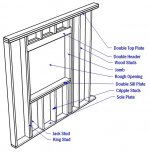
Your door & window framing is not done correctly. Look at the picture below to follow my advice.

Your jack studs are not located at the ends of the sill. Adding more jacks studs will fix this.

The door jambs do not support the widow sill above the door. To fix this, you will cut the door jamb where the top of the door frame is. Replace the top of the door frame with a 2x4 that is 3 inches longer, add a short block to support a new window sill that is also 3 inches longer. Note: the existing king stud should not be modified by this procedure.

Good Luck
 

Attachments

  • windowframing.jpg
    windowframing.jpg
    57.5 KB · Views: 194
OP
L

lupinsea

Well-known member
Joined
Mar 30, 2010
Messages
261
This build is awesome!

Are you an experienced welder or did you learn welding for this task?

If you want to finish before winter you may consider (and I am not suggesting that you actually do it) taking a vacation week to dedicate to the build. I did this at the start of my garage and it was one of the most memorable vacations I've had.

Thanks.

Self taught welder by dinking around over the years. Certainly no where near pro-quality but I haven't had a weld fail . . . yet. Given the modest building loads I should be fine with my welding skills for the shed brackets.

I've taken a day or two here or there to work on the shed. This monday I took a day off as well but half of it was burned up in the urgent care clinic getting a 1/2" splinter cut out of my thumb. A bit of a wasted day. Depending on how things shape up I might take some more days off. If worst comes to worse I can take more days off than I have vacation for, they just won't be paid days off. I.e. no work, no pay. And my wife and I are spending about a week and a half in Hawaii in November plus Thanksgiving and Christmas I need to plan for. I think I'll be ok on the time off.
 
OP
L

lupinsea

Well-known member
Joined
Mar 30, 2010
Messages
261
Lupinsea,

While I like the design of your shed, your framing technique could use a little help.

Your door & window framing is not done correctly. Look at the picture below to follow my advice.

Your jack studs are not located at the ends of the sill. Adding more jacks studs will fix this.

The door jambs do not support the widow sill above the door. To fix this, you will cut the door jamb where the top of the door frame is. Replace the top of the door frame with a 2x4 that is 3 inches longer, add a short block to support a new window sill that is also 3 inches longer. Note: the existing king stud should not be modified by this procedure.

Good Luck


No doubt my framing could use some help but the window and door openings are just fine if you look at the structural loads on the building. A few points:


  1. The wall with the window above the door is a non-load bearing wall since my rafters are running parallel to it. And in fact, the wall sits between two rafters. So it only needs to carry itself. In this case, about 12" x 42" of plywood and two 9" long 2x4's that sit over the window / door opening.

  2. Also, while I don't technically "need" a header over the door and window I did nonetheless put a doubled 2x4 header over the window. That header spans between the two king studs on either side of the door and is supported by continuous jack studs that sit on the mud plate. If there were load on the wall this essentially carries the load for anything under it (both the window AND door). Think of it as a two for one. One header for two window openings lined up one under the other.

  3. There's no point to the header over the door and under the window sill. The windows are vinyl with a nail flange all the way around. This means they're supported not just on the top and bottom but also nailing into the jack studs on the side. Besides, the window weighs maybe 40 lb if that. A 2x4 turned flat can certainly carry that load over a 36" span. Heck, I weigh over 200 lb. and I've stood on the window sill to do some work on this building. It's solid.

So the framing may not be done in the "normal" way but it checks out structurally. The wood has been placed where it needs to go.

In a diffierent configuration or application it would be a different matter. But for this wall in this building with the roof framing running the way it is it's fine.

Thank you, though, for the concern, I can certainly see where it looks odd.
 
OP
L

lupinsea

Well-known member
Joined
Mar 30, 2010
Messages
261
Almost forgot . . .


shapeimage_7.png

All the steel brackets were welded, cleaned, ready for painting as of last night.
Now I just need to find a good place to paint where I won't get over spray on
stuff I care about..​
 
OP
L

lupinsea

Well-known member
Joined
Mar 30, 2010
Messages
261
The brackets are done. Put the last coat of paint on the other night after getting them all cleaned up. I must say that I'm very impressed with Rustoleum's "Professional" series of enamel spray paint. It's proven a tough paint in the past when i've used it, it holds very well, and goes down with good coverage. The new spray tips also shoot out a ton of paint so coverage is fast. Between the primer and the paint all the nooks and crannies on the welds are fully coated and protected.

We're heading out on a family vacation for a few days to the beach cabin so the paint should be nice and hard when I get back and the brackets ready for installation.

Only had a few minutes of daylight the other day but I was still able to get most of the blocking cut for the big shed roof framing (no photos yet), even if I was cutting most of the blocking with a headlamp strapped to my noggin. Each piece was custom measured and custom to ensure an exact, tight fit to really lock in the rafters to keep them from racking. The reason is that as careful as one is about laying out the rafters, each piece of lumber could very slightly in size. A 1/16 or 1/8" here or there isn't a big deal, but stacked up over 10-12 rafters and it can add up to significant gaps.


P1080319.jpg

Shooting the first coat of primer after setting up the "paint booth" at one end of my garage.


shapeimage_8.png

Finished coat of black paint.​
 
OP
L

lupinsea

Well-known member
Joined
Mar 30, 2010
Messages
261
Working in the rain is not fun. While I had decent weather much of the weekend there were several hours working in a downpour toward the end of the day on Saturday. The whole weekend was spent pretty much installing two big brackets on the north elevations and two small stubby ones on the south elevation. These are to support the roof overhangs at each end of the building.

The use of some false work to support everything until the final pieces were installed was a big help. For some reason I had been working around how to do this for a couple weeks until this idea struck. So simple I'm not sure why I didn't think of it sooner. Oh well.

With all the bad weather we've been having lately it's really underscored that summer is quickly drawing to a close in the Northwest and that I need to quickly get a roof installed. To that end, I'm almost there. Four more rafters to put up then the plywood roof sheathing can go down. . . then the shingles.


P1080657a.jpg

Finished installing the blocking for the roof framing. Used
some metal angle clips on this roof to tie it into the wall better.


P1080658a.jpg

Started to install the mounting blocks for the steel brackets.
The building paper went up first so that I could later tie it
into the weather barrier system.


shapeimage_3.png

Detail of the block showing the drip
edge (kerf cut) and the 45 deg bevel
routered into the perimeter for a
finishing touch. It helps to keep the
block from looking like the chunk of
2x8 it really is.


shapeimage_4.png

All the brackets for the struts are installed and awaiting the wood members.


P1080668.jpg

Before the struts themselves could be built, some false work
went up to support everything in mid-air. A little extra work
was entirely worth it as it made setting and aligning the strut
lumber so much easier. Some scrap 2x6's were tacked on to
the side of the walls. They'll peel off easily enough with a
pry bar when I'm done with them.


P1080672.jpg

This is the first piece of lumber installed. It's been cut,
pre-flashed with an end cap, and the bolts and washers
installed. Note how I don't have to try to hold the far end
up with the false work support.


P1080671.jpg

I figured I was working about 12 ft off the ground. Despite
that it wasn't too bad. But certainly slow going with the
need to double check everything before each cut. You can
just see a stop block on the false work out at the end of
the beam. It sticks up on the other side and acts as a stop
or rest at 90 degrees from the wall. Makes truing up the
strut easier.


shapeimage_5.png

Close-up detail of the lower strut with steel bracket and
mounting block.


P1080674.jpg

The finished strut and beam assembly: A pair of 2x members sandwiching
the 1/4" steel brackets, spaced out with some washers for a 1/2" reveal gap.​
 
OP
L

lupinsea

Well-known member
Joined
Mar 30, 2010
Messages
261
Did a low key topping out ceremony last night with the installation of the final rafter.

2 hours to install four rafters. Working on a ladder *****, you spend more time going up and down the ladder and moving it around than you do driving in the fasteners. In this case I used two 4" timber screws at each end of each rafter. Their holes were pre-drilled to keep the wood from splitting. It was a lot slower than using the nail gun but more accurate and stronger, which was important considering these four rafters don't get any blocking for racking resistance.


shed-westelevation.jpg


P1080680.jpg

The rendering vs. the actual construction. Not bad. Did a change for the big
window to a single narrow unit based on what was available in the salvage
yards but otherwise it's coming along as planned.


P1080684.jpg

All the rafters are installed and the false work has
been removed from the struts.


shapeimage_3.png
.
P1080681.jpg

Part of the topping out ceremony is to put a small tree on the very last,
highest structural member. Tada (left). On the right is a picture of the rear
brackets and rafter to support the south end of the roof.


shapeimage_4.png

View from the garage / house.​
 
OP
L

lupinsea

Well-known member
Joined
Mar 30, 2010
Messages
261
Thanks guys. Here's the latest . . .


It was a bit disconcerting getting way out on the long over hang to set the plywood roof sheathing. At least at first. . . I kept wondering just how well did I actually build it? Especially when I needed to lean over the end and hook up the ratchet strap to pull it into square with the rest of the building.

But it's done.

Two layers of 1/2" plywood like the small shed building with all the seams over lapped and glued down for maximum strength.


The roofing should be finished by the end of the week. Then I need to figure out what to do next:

- apply the semi-transparent stain to the soffits
- rip the cedar deck boards down into furring strips
- wrap buildings with the building paper
- custom cut / mill the door jambs


P1080707.jpg

The plywood roof sheathing is on now and the roofing has started.


shapeimage_3.png

Man, this is going to be a nice place to store some left over paint and patio furniture.


P1080710.jpg

I have about 2/3 of the shingles installed. It probably could have been done
in one long day but I'm only working on it a couple hours here or there after
work now that the weekend is over.


shapeimage_4.png

The roof is quite tall for just a simple back yard shed. Peak is at 13'-6" off the ground.​
 

mdbeck1

Well-known member
Joined
Mar 7, 2010
Messages
2,297
Location
Norman, OK
I think that I'd choose to wrap the building in Tyvex (or your local equivalent) first. That way if you get some massive rain storms you don't have to worry about the plywood warping.
 
To avoid these ads, REGISTER NOW!
OP
L

lupinsea

Well-known member
Joined
Mar 30, 2010
Messages
261
Thanks guys.

I'm starting to wrap the buildings now. The stuff I'm using is called Hydrotex from Fortifiber. I think it should work out ok. It's rated to meet Oregon's revised building codes that (I think) allow for open gapped siding systems similar to what I'll be using. It's a double layer WRB (weather resistive barrier) with the base layer a woven poly drainage plane and the outer layer a 60 min asphalt saturated building paper.

No real exciting pics to show the latest. Mostly it was wrapping up the shingling and installing the final flashing at the top roof edge. Looks pretty much the same as the last photos but a little tidier without the flap overhanging the end of the roof.

I took the weekend off to take my son on his first camping trip (he's 2 yrs old) but I'm going to get back into the shed project. I have a number of things I need to do before I actually work ON the shed:

  • Rip all the cedar boards into 1/2" thick furring strips
  • Custom mill my own door jambs
  • Buy more flashing for window / doors
  • Order siding (12"w x 12 ft long smooth surfaced Hardi Planks)

I also need to finalize a color for the shed in the next day or two. Sherwin Williams is having a 30% off paint sale. Might as well take advantage of it. I've already picked up the semi-transparent stain for the soffit and beams: a light golden color.

For the shed color I'm not sure yet. I'm leaning toward a midnight blue. I'd have loved to go a "classic" barn red but it was too bright for my wife. I'm also considering a white and someone in my office suggested a sage green or olive drab (probably similar in color to 993James993's garage door).

So the color scheme would be:

Soffits and Brackets
golden semi-transparent color

Windows / Door jambs
white (I'll match the wood door jambs to the vinyl windows)

Main Body Color
midnight blue (front runner)
white / cream
sage green
olive drab
warm charcoal gray, maybe a shade lighter

The darker the color the more the panel joints disappear and I don't want them to disappear. But the lighter the color the more it might show dirt. Yet the less noticable any fading would be. Anyways, I have a couple days to consider this.
 
OP
L

lupinsea

Well-known member
Joined
Mar 30, 2010
Messages
261
The past week I've been working on installing the building wrap or weather resistive barrier (WRB for short). This is traditionally the felt building paper that has about a 50 - 100 year track record. But in this case I'm using a hybrid building wrap. It's a dual layer wrap with a base layer of polymer sheet and an outer layer of high performance kraft paper that actually works better than the felt for wall applications. This should work very well for the open gap rain screen siding system I'll be installing.

While conceptually an easy task (rolling out paper along the wall and stapling it in place) it's a semi-slow going process. The rolls are heavy-ish and awkward to hold against the wall with one hand while I staple. The bottom course was easy enough but to attempt the operation while having to move a ladder around the building would have been folly. Instead, I'd measure out and cut manageable lengths and staple those up individually with sufficient overlap at each joint.

This weekend was spent gathering more materials. 10 gallons of paint were order (w/ 30% off coupon!). Screws and nails were bought, along with the raw lumber for the door jambs I'll be custom milling. More flashing. And 65 pieces of 12" tall Hardieplank smooth siding (to be delivered Tuesday morning).

Besides the material acquisition, more building paper went up and two windows were installed this weekend, too.


P1080878.jpg

Getting the buildings wrapped in their WRB (weather resistive
barrier). The WRB looks like it billows out a bit, this is because
it is only stapled along the top edge (that gets overlapped by
the course above). Eventually the siding will be installed over
the paper and will pin it down more. And while the siding nails
will pierce the WRB, I figured might as well add as few holes
as possible and not staple it down over the field of each course.


Window%20Flashing.jpg

Integrating a window with the WRB and flashing. No matter what is installed,
from windows to brackets to siding, it all needs to be coursed, shingle-like, to
shed water to the outside of the building envelope. The basic procedure I'm using is:

1. Cut bottom of opening at 45 degrees from the lower
corners and wrap building paper into opening.

2. Install window flashing, sill first. The side jamb flashing
is set over the sill flashing but under the next course of
building paper (white outlines). Note how it is coursed like
shingles. Also, the flashing overhangs the window opening
About 1.5" and is then wrapped around the corner to the
inside of the opening slightly.

3. Install the window per manufacturer’s instructions, in this
case, a bead of caulk is on the sides and across the top.
The bottom wasn’t sealed just in case water gets behind the
window it can drain out. Window is coursed over the side
flashing but under the WRB.

4. Slip the head flashing under the building paper but set it
over the top flange of the window and side jamb flashing.
Done. Note in this arrangement how all the elements are
coursed like shingles. Should water get behind any of the
layers, as it moves down the wall it will be directed
outward away from the structure.


shapeimage_3.png

Remember the bracket mounting blocks and the WRB I installed
under them weeks ago? Now, with the rest of the WRB tucks
under the paper behind the blocks. The courses of paper above
this will lap over the paper behind the block. Later, some metal
flashing will be integrated over the top of the block.


P1080880.jpg

Like the mounting block, the brackets at the south end of shed
had WRB pieces mounted behind them. And likewise, this let
everything tuck under the upper elements. The sides overhang
quite a bit as the manufacturer recommends a 6" horizontal
overlap and a 2" vertical overlap.


shapeimage_4.png

By the time I got to the window opening above the door I decided
to start installing the window flashing and window. It seemed
easier to do this with out fighting the course of WRB paper above.

Also, note that this WRB isn't simply black felt paper. It's a dual
layer wrap consisting of a poly sheet as the first layer with a high
quality, thick, durable, virgin-fiber black asphalt impregnated
paper over that. You can just make out the bottom layer in some
of the photos where the wrap isn't tucked tight to the building yet,
its green.​
 

993James993

Well-known member
Joined
Feb 24, 2008
Messages
524
This is really nice! Having recent experience with bitumen infused felt paper and window flashing I had to smile at your description. You should be very proud of this project. You've done a wonderful job and everyone here is anxious to see your updates.

What are you planning for an encore? Is there a new garage in your future?
 
OP
L

lupinsea

Well-known member
Joined
Mar 30, 2010
Messages
261
This is really nice! Having recent experience with bitumen infused felt paper and window flashing I had to smile at your description. You should be very proud of this project. You've done a wonderful job and everyone here is anxious to see your updates.

What are you planning for an encore? Is there a new garage in your future?

Ha! My encore is sitting on my **** and doing nothing!

I've been pretty much going non-stop on house projects for over a full year now between a kitchen remodel, home office renovation, patio pour, and now the shed. Very little time off during that year, mostly it's been a matter of getting home from work, changing into my work clothes, and getting going on the projects. Weekends, too. Sometimes I'll grab a bite to eat before I start working. But mostly I get working immediately and eat after it gets dark. Aft the height of summer this would be around 9:30 - 10 pm. On the kitchen and home office I could work when it was dark so I'd be working until 10pm to midnight most nights.

So I'm hitting a bit of project burn out and want to get back to spending time with my wife and son and getting out on the trails again with my Jeep.

I'd love to remodel the garage but sadly that's not going to happen (for a while, if ever). I don't have a major need for lots of shop space and while my current garage is a bit narrow it "works" perfectly fine, so long as it's not cluttered (hence this shed project).

We're planning a major remodel in about 5-6 years. If we can swing the budget I'd love to tear off the roof framing and vault the interior spaces of the house as the roof planes are integrated into the new addition. The thought was that if we're ripping off the roof framing, that's the time to do the garage remodel. Just need to pour a new foundation wall a bit further out then frame up the new exterior wall. Oh, and pour a new concrete floor.
 
OP
L

lupinsea

Well-known member
Joined
Mar 30, 2010
Messages
261
Oh, and I finished with the building wrap last night.

Just need to install two more windows and then start the flashing around the doors and light blocks.

I hauled some 2x8's up to my neighbor's cabinet shop and we are going to cut some custom door jambs. I also brought up the cedar decking we'll be ripping into 1/2" thick furring strips. That will be part of the rain screen siding system. I'm doing something similar to what Platinum Overcast has done but with painted fiber-cement panels instead of Ipe hardwood.
 
OP
L

lupinsea

Well-known member
Joined
Mar 30, 2010
Messages
261
Finish with most of the flashing / block / widow integration with the WRB (weather resistive barrier (the black tar paper looking stuff all over the sheds)). One of the last things to be installed were the light blocks. These are mounting bases for the wall sconces. Like the windows, they need to be integrated with the WRB with a full compliment of proper coursing and flashing. Besides simply mounting the blocks I also added solid 2x blocking behind each. The blocking was first screwed to the plywood sheathing from the front (under the WRB), then the light blocks were screwed to the wall with screws going in from the back side. This way there's a solid connection point for the electrical junction boxes (I hate wobbly sconces and insubstantial fixture mountings) and no visible fasteners for the light blocks.


light%20blocks.jpg

L to R: The WRB is properly cut and layered in a shingle-like
fashion around where the light block will go. Light block in
stalled. Finally, a flashing cap is added to the top and tucked
under the outer course of the WRB.


shapeimage_6.png

No wobbling. This is the mounting blocking for the wall sconce
junction boxes. The four holes are for the screws holding the
exterior light blocks on.


shapeimage_5.png

It's not a speedy process working on this. Every time I move
the ladder I set a piece of wood under the legs of the ladder so it
won't tear the WRB. Critical? Perhaps not, but I'd just assume
have as few holes in the WRB as possible. Note absence of lots
of stapling over the WRB shrouded walls.​


The other thing that started happening this weekend was the installation of the siding. I think this will be a long-ish process. Between dwindling day light in the evenings after work, the cold, worsening weather, and just a generally slow process it'll take a while.

Part of the design of the rain screen system involves use of 1/2" furring strips. Late last week my friend helped me cut over 530 lft of furring strips. They were made by recutting some 5/4 x 6 cedar deck boards. As nuts as this sounds it was also one of the most cost effective solutions (discounting the "cost of our time"). 1x2's would have cost a lot more. At the last minute I had been worried about such small pieces of wood splitting when the fasteners were driven through them. So before the furring strips were installed I did some test nailng and test screwing. The results showed zero splitting. It seems the cedar is a soft enough wood that it tends to crush rather than split. As of yesterday the small shed building is pretty much entirely furred with zero splitting anywhere.

At the same time we ripped the furring we also milled some custom door jambs for both sheds. I'm trying for a particular look and for a particular method of integrating the jambs with the rain screen system. The cuts involved straightforward use of the table saw. We even cut in a kerf to fit some weather stripping. The jambs were cut out of #2 and better Doug Fir framing lumber.


P1080888.jpg

One of the custom door jambs we cut at my friend's
cabinet shop. I pre-primed all the wood once I got
it home before cutting it to length and notching the tops.


P1080979-filtered.jpg

Test nailing the cedar furring strips. Probably should
have done this before cutting the 530 lft of strips but it
worked out in the end. No splitting at all.


shapeimage_3.png

The small shed building with most of the
furring strips installed. Also, with the
door jamb installed.


shapeimage_4.png

Detail of the furring strips around a window. The black tick marks
are where the gaps between the siding panels should be. I'm
thinking of hitting these areas with some black spray paint so the
wood isn't as noticeable. Or maybe I leave them as it so they
silver out over time and are simply part of the building? As in,
why hide them, necessarily?​


.
 
Last edited:
OP
L

lupinsea

Well-known member
Joined
Mar 30, 2010
Messages
261
The last two nights after darks I've been cutting an nailing together some scraps to build some drying racks. The idea is to pre-paint the siding panels (at least the first coat) before installing them. Built as a simple self supporting A-frame, it can support panels on both sides. This rack will let me paint almost an entire wall worth of panels and set them aside to dry. In theory, it'll be worth the time it took to build to speed up the painting process.


shapeimage_5.png
 
OP
L

lupinsea

Well-known member
Joined
Mar 30, 2010
Messages
261
Um. . . it is a shed, two sheds actually.

I just didn't want a wood floor.

You know, for durability.


:headscrat


There's definitely some extra coin in the foundation. That's probably the big extravagant expense of the project. What I did vs. a simple concrete slab is probably a difference of $2k-ish. And there is some extra cost in the furring strips and special order building wrap, maybe another $300 there. I'd still be using the fiber-cement board siding. And some extra for the strut brackets ($200 for steel, lumber, and fasteners). And double layering 1/2" plywood vs. standard single layer 5/8" plywood for the roof was maybe a difference of $100-ish.

But other than that? They are two rectangular boxes with single-slope shed roofs of 3-tab comp shingle and 2x4 walls with plywood.

At last count we were at $8850 for all the work and materials done so far. This includes the siding and paint that hasn't been installed yet. What's left is a very modest electrical install to do that consists of a few lights, a few outlets, and probably three switches.

I'm guessing we'll hit low-to-mid $9k when the project is alllllll done. And that's for a shed that will be built very well with decent quality materials and some unique, well designed features that will last as long as our house.

FWIW, our original budget was $7500 which did not including an excavator rental ($300) that I thought I'd probably wan to do or concrete pump truck fee ($400) that I wasn't counting on at all. The rest is unforeseen extra material expenses. I did good on most of the major material quantity take off. The real killer was the "death by a thousand cuts" little expenses. . . . consumables, nails, specialty screws I need for certain application but I could only buy in certain quantities, tubes of construction adhesive and caulking, more flashing that I figured, two broken tape measurers, new saw blades, etc.

Stuff that I hadn't figured out how to estimate for.

Oh, and i also used $100 of the shed budget to build a custom cargo deck for my Jeep.

The big, massive, major savings came from me doing all the work on this without having to hire it out (except for the concrete pump truck). I'm guessing contractors would have charged in the $20-25k range if I hired the whole thing out. Of course, it would have been done faster, too.
 
OP
L

lupinsea

Well-known member
Joined
Mar 30, 2010
Messages
261
Integrating the doors with the WRB has been much trickier than the windows. The windows have a nice nail flange all the way around which helps course the windows into the WRB. Doors do not. So there's nothing to bridge the rough opening and the back of the door jamb.

I thought I had this licked by having a gap big enough to stuff a rubber or foam gasket in there, after wrapping the opening with metal flashings. Alas, no. The shims for the door messed this up by intruding on the space for the gasket. And the shims needed to be where they are to fully support the door jamb on framing.

So plan B.

My friend helped me rip some wider furring strips, 1.5" x .5" (vs the 1" x .5" used elsewhere). This slightly wider furring strip will close up the gap and **** into the back of the door jamb. And by applying a bead of caulking to the edge of the strip before installation it the seam is weather tight and protected. Before installation, too, I sprayed the furring strips black.

Since then, I've figured out a better detail for this but it's too late for the shed project. I'm not re-cutting the door jambs. This will work fine.


door%20jamb%20detail.jpg

Detail of the door jamb.


shapeimage_7.png

Door furring strip installed with head flashing
wrapping the top. Next is to install some more
WRB and tuck it under the course about a foot
above the door. Then finish installing the
regular furring strips above the door.​


.
 

tool whore

Banned
Joined
Aug 25, 2010
Messages
160
Location
Salisbury, NC
Just read all 8 pages. Thank God for photos! Super awesome job on planning, pre-planning, details, drawings and for doing 99.9% of it yourself! Wow!

Did the $9k~ include the patio slab? Curious about the costs. Kind of shocked that you did not choose architecturals rather than 3 tabs. At least it wasn't copper.

Do you plan any gutters, rain barrels, wind mills or solar panels? I'm fairly embarassed of my homebuilt shed now. I think I'm going to start drinking. Thanks for the imspiration though, really.
 

Sawbladz

Well-known member
Joined
Jun 9, 2009
Messages
103
Location
Collingwood, ON, Canada
Looks amazing. I love builds that are well thought out. Every detail is covered. Looks like installing that wrb would have been a good time to get the wife involved. Lol. Can't wait to see the final product!
 
OP
L

lupinsea

Well-known member
Joined
Mar 30, 2010
Messages
261
Thanks guys.

This is what I do for a living, working in the field of Architecture.

Between the years earning my M. Arch degree and the 10+ years I've spent working professionally on other client's projects, it's nice to apply some of these skills to my own project. Especially something as substantial as the shed(s). Prior to this it's been a bathroom remodel, kitchen refresh, and built-in / remodel of our home office.


Just read all 8 pages. Thank God for photos! Super awesome job on planning, pre-planning, details, drawings and for doing 99.9% of it yourself! Wow!

Did the $9k~ include the patio slab? Curious about the costs. Kind of shocked that you did not choose architecturals rather than 3 tabs. At least it wasn't copper.

Do you plan any gutters, rain barrels, wind mills or solar panels? I'm fairly embarassed of my homebuilt shed now. I think I'm going to start drinking. Thanks for the imspiration though, really.


Patio
The $9k doesn't include the patio.

I figure there's maybe $600-ish in the patio. $700 if you include the stacked concrete retaining wall I did last summer (the wall rubble was free but the lights and crushed rock fill weren't). There was maybe $500-ish in concrete and about $75-100-ish for the formwork, rebar, and other stuff.

I'm really glad "we" did the patio this summer. Our old one just felt weird. Too small and it terminated in the middle of the lawn. The new extension brings it out to better utilize the back yard. It has a great sense of space about it and feels real comfortable to relax and lounge about on.

If anyone wants to read more on the patio, click here.

The first entries are on the design and construction of the retaining wall. The last four entries at the bottom of the page are on the patio pour itself.

FWIW, the $600-ish patio extension is probably the biggest bang for the buck improvement on the house. It doesn't look like much now, perhaps but once it gets landscaped and cleaned up (next spring!) it'll look awesome.


3 Tab vs. Architectural
This might sound odd to some but I actually prefer the look of the basic 3-tab over the "Architectural" comp shingles. It's a flatter, smoother, more uniform look. The Architectural versions are just too mottled or fussy for me.

My preference was for a standing seam metal roof but that wasn't in the budget. Or I should say, I did the initial estimate with that but it got "value engineered" out as the original estimates came in higher than I thought. So no standing seam metal roof.

Likewise, I was originally going to use a T1-11 grooved plywood panel as the bottom layer for the roof sheathing. Did that on my mom's remodel and some client's projects and it looks good. Adds some detail to the soffit. But the T1-11 is surprisingly expensive so for the shed that was value engineered out, too.


Gutters, Rain Barrels, Solar Panels, etc.
The gutters are still up in the air but no on the rain barrels or the solar panels. I'm not seeing the point to a rain barrel up here in Seattle. And the solar panels are too expensive for the electricity they provide. The pay-off time period is too long and they just don't make sense to me at all right now. Maybe in the future when their efficiency improves.

What will determine the need for the gutter will be how bad the ground is eroding under the drip edge. I'm hoping to plant some big NW sword ferns behind the buildings. Hopefully those will catch most of the water. But if it gets eroded out too much then either I'll put on a gutter or do the Japanese method where they'd have a swath of rock or gravel right under the drip edge on the ground instead of a gutter.

Similar to the idea in this photo and this photo. Note the band of gravel / rock at the perimeter of the covered paved area.
 
Last edited:
OP
L

lupinsea

Well-known member
Joined
Mar 30, 2010
Messages
261
I don't know if I've ever lived in any structure as well thought-out or constructed as those two sheds.
I know I haven't. And my own current house is no exception. This was highlighted last night as my wife and I are wrangling back and forth about the furniture layout for our son's bedroom (he's 2 yr old now but will transition out of the crib soon). Whoever designed / built our house did a piss poor job of room layout for the bedrooms. Because there is no conceivable good place to put a normal twin bed. Either it blocks part of the closet, is too close to the baseboard heater, or screws up entry through the door. If the door was 2 ft over, away from the corner of the room it would all work out great. But it's not.
 

c_mccann

Well-known member
Joined
Mar 30, 2010
Messages
919
Great project! Where did you find the flashing to put on top of the exposed beams, that stuff has my number...
 
To avoid these ads, REGISTER NOW!
Top Bottom