Nastyzen, could you explain the benefit of a 8 into 1 exhaust ? and what makes them so tricky to fabricate ? They sound absolutely bad a$$.
I would of thought that they would of gone 4 into 2 per side and so on because of the distance to go.
That collector is cool.

The firing order goes in a circular motion and is the reason for that unique sound I would guess also.
To do true 180° headers (dual collector) in equal length is (or would be I should say. . .I've never done a set!) tricky. As Nasty stated, you would go in a circular (or maybe opposing on an 8-into-1?) pattern to maximize scavenging of the cylinder. This is why true merged collectors are used. Making 180° headers, is an to attempt to equalize scavenging on each cylinder. Because of the nature of most 90° crankshafts, you will have two cylinders fire sequentially at least once on each bank. By bringing tubes over from the opposing bank, you theoretically even out the exhaust pulses each bank.
Take a SBC firing pattern: 1-8-4-3-6-5-7-2. The 8-4 and 7-2 ignition events are right after one another. By merging into one collector, crossing over the #3 and #5 and the #4 and #6 bank-to-bank so that the exhaust pulses are spread apart evenly. This, in effect, maximizes cylinder scavenging because the low pressure area behind the prevous exhaust pulse helps scavenge the spent exhaust gasses from the cylinder, and in turn, helps pull a fresh intake charge in during cam overlap, especially on high RPM naturally aspirated engines.
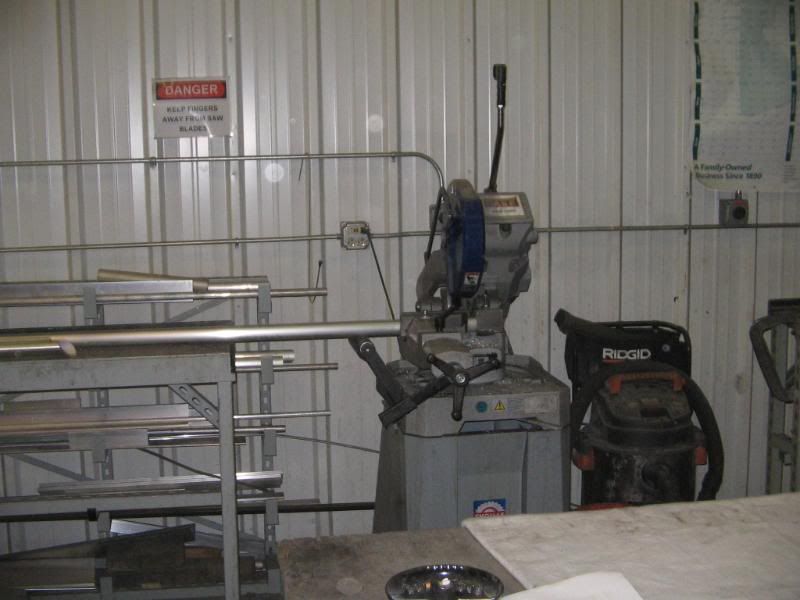
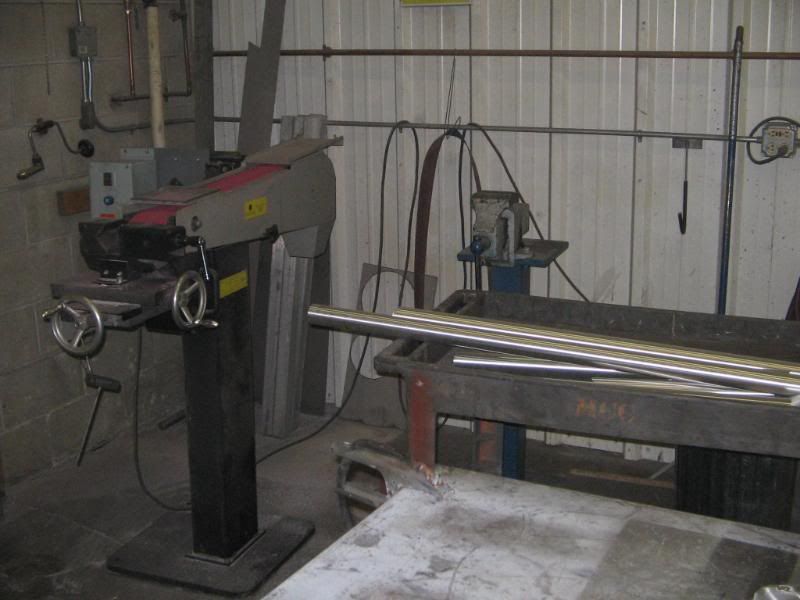
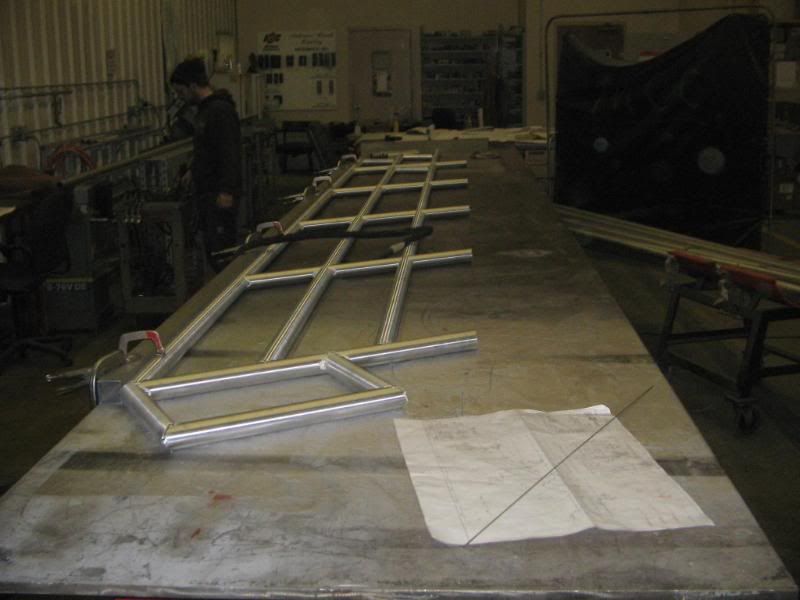
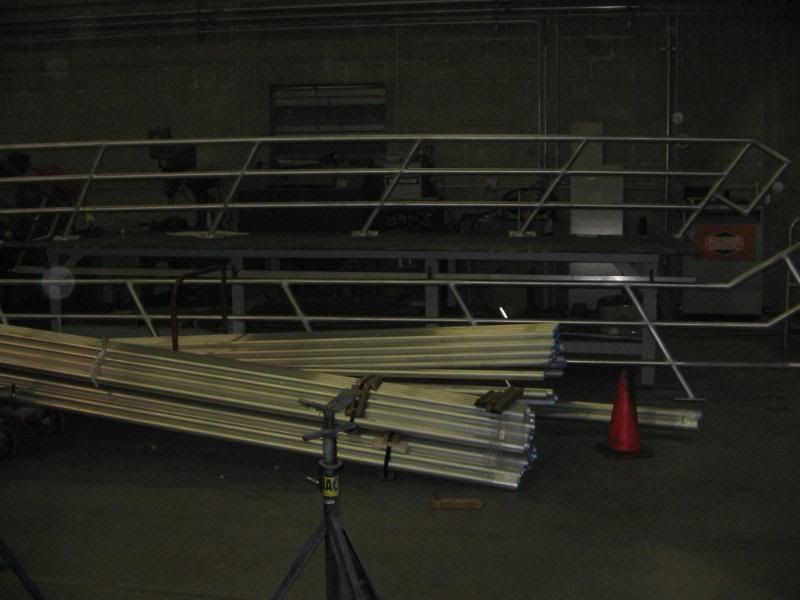
There are some comments out there about never wanting to do a set of headers. Don't be intimidated by headers! Chances are that if you are a fabricator, someone will eventually ask for a set of headers. If you want to learn, and have some patience, they can be quite relaxing as Nasty pointed out. BUT. . .you need to take your time! Don't be afraid to scrap tubes if they are not to your liking or the fit up is poor. If you scrap some, use them as visual aids for another tube. Cut some 22.5°, 45° and 90° pieces as templates to lay out the tubes. Make sure your tube joint fit up is tight, as this will make them much easier to weld and less prone to distortion. Make sure to have the spark plugs in with a socket to check clearance.
Also, there are plenty of videos out there on the basic construction techniques. Many people are intimidated by the welding because of welds adjacent to other tubes. Just tack everything up, and pull each tube out individually to weld and put back in the header.
The headers on my twin turbo '72 Chevy Vega that I posed a pic of earlier are the first set I ever built. During a big car show/cruise, a local header builder I knew, Mark Weiss, and his buddy Reggie Jackson (the car collector, or "professional baseball player" as some would call him!) asked if I could build a set of headers for one of his cars, as Mark was too busy. I was floored!
You can do it. . .just take your time to do it right, just as it is with any fabrication project. Building your own set of headers is a very gratifying project, and will teach you a lot about tube fabrication. Just look at the pics in this thread for inspiration. There are some very, very, very impressive headers in this thread!
Are my headers perfect? No. Are they equal length? I tried! Did I have to cut on a bias to make some tubes fit? Absolutely!




 Click on images.