do you have a thread for your setup? I wanna know all the things.Not sure how I post three copies of the same photo. First time trying to post from my iPhone.


You are using an out of date browser. It may not display this or other websites correctly.
You should upgrade or use an alternative browser.
You should upgrade or use an alternative browser.
Show us your VFD conversions/installations
- Thread starter Techie1961
- Start date
Looking for some advice on how to dial in this setup:
Machine- Grizzly G0614 1.5hp swivel head metal band saw
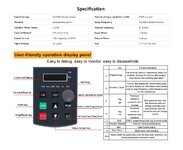
VFD- Mysweety 2.2KWH unit 2.2KW 220V VFD: Input voltage: 220V(+/-15%); Output voltage: 220VAC; Input frequency: 50/60 Hz; Output frequency: 0-600 Hz; Input phase: 1 phase; Output phase: 3 phase
Good news I have it running and all seems fine? This is my first attempt at setting up a VFD and would like to confirm I have this running at optimal conditions.
The only parameters I have tweaked is the power input dial. I calculated Feet per Min to Blade rotations and have the blade spinning at roughly 170 FPM / 341 FPM w the power input at ~83%
Questions:
Q- Is the power input dial the ideal way to adjust the power going to the machine and setting the blade speed? If not, what is?
Q- Are there other parameters I need to be concerned about that would negatively effect the motor/electronics? The instructions are bit vague on checking things like frequency etc...
Thanks in advance ( I may post this separately if this thread doesnt get much traction)


Machine- Grizzly G0614 1.5hp swivel head metal band saw
VFD- Mysweety 2.2KWH unit 2.2KW 220V VFD: Input voltage: 220V(+/-15%); Output voltage: 220VAC; Input frequency: 50/60 Hz; Output frequency: 0-600 Hz; Input phase: 1 phase; Output phase: 3 phase
Good news I have it running and all seems fine? This is my first attempt at setting up a VFD and would like to confirm I have this running at optimal conditions.
The only parameters I have tweaked is the power input dial. I calculated Feet per Min to Blade rotations and have the blade spinning at roughly 170 FPM / 341 FPM w the power input at ~83%
Questions:
Q- Is the power input dial the ideal way to adjust the power going to the machine and setting the blade speed? If not, what is?
Q- Are there other parameters I need to be concerned about that would negatively effect the motor/electronics? The instructions are bit vague on checking things like frequency etc...
Thanks in advance ( I may post this separately if this thread doesnt get much traction)
I assume you mean the speed pot/dial? that's often how it's done.Looking for some advice on how to dial in this setup:
Machine- Grizzly G0614 1.5hp swivel head metal band saw
VFD- Mysweety 2.2KWH unit 2.2KW 220V VFD: Input voltage: 220V(+/-15%); Output voltage: 220VAC; Input frequency: 50/60 Hz; Output frequency: 0-600 Hz; Input phase: 1 phase; Output phase: 3 phase
Good news I have it running and all seems fine? This is my first attempt at setting up a VFD and would like to confirm I have this running at optimal conditions.
The only parameters I have tweaked is the power input dial. I calculated Feet per Min to Blade rotations and have the blade spinning at roughly 170 FPM / 341 FPM w the power input at ~83%
Questions:
Q- Is the power input dial the ideal way to adjust the power going to the machine and setting the blade speed? If not, what is?
Q- Are there other parameters I need to be concerned about that would negatively effect the motor/electronics? The instructions are bit vague on checking things like frequency etc...
Thanks in advance ( I may post this separately if this thread doesnt get much traction)
do you have both the pump motor and the saw motor run off the same VFD? i see one VFD and 2x 3ø motors.
I assume you mean the speed pot/dial? that's often how it's done.
do you have both the pump motor and the saw motor run off the same VFD? i see one VFD and 2x 3ø motors.
Yes, the vfd pot dial controls the motor speed.
At the moment I have connected the vfd directly to the cord that feeds the control box.
All functions on the OEM control box work as intended.
I used the pot dial on the vfd to set the blade speed.
so if you're functionally plugging in the appliance cord to the VFD, there's a few things to be aware of:Yes, the vfd pot dial controls the motor speed.
At the moment I have connected the vfd directly to the cord that feeds the control box.
All functions on the OEM control box work as intended.
I used the pot dial on the vfd to set the blade speed.
VFD needs to stay in V/Hz mode, with no power saving/soft start features turned on. vector mode should not be used.
Contactors WILL drop out below a certain voltage (or you'll burn contacts/chatter coils/contacts). I cannot tell you what that is.
If you keep it running fast, i don't see much of an issue. if you try to run things slowly I anticipate problems & unhappiness.
VFD cannot provide "grid level" inrush, so starting anything under load is unwise.
454ragtop
Well-known member
I don't think having switches between the VFD and motor is recommended, usually the switches are tied into the control side of the VFD.
This is my approach, use the vfd as a 3ph to 1ph converter and not rely on any modifications to the controls.
Using the fast/slow buttons as intended dialed in via the rotary knob on the vfd to run blade speed at spec
Using the fast/slow buttons as intended dialed in via the rotary knob on the vfd to run blade speed at spec
Firebrick43
Well-known member
That is very unwise and highly likely result in a blown inverter.This is my approach, use the vfd as a 3ph to 1ph converter and not rely on any modifications to the controls.
Using the fast/slow buttons as intended dialed in via the rotary knob on the vfd to run blade speed at spec
I am surprised it hasn’t already blown
paulsomlo
Well-known member
It's generally been considered bad practice to open the connection between the VFD's output and it's load, although I have heard that modern VFD's are not as prone to failure with open phases. I did find this regarding the "Mysweety" VFD:That is very unwise and highly likely result in a blown inverter.
I am surprised it hasn’t already blown
"8-Way Protective System: Our 2.2kw vfd has 8 kinds of protection including over voltage, over current, overload, overheating, stalling and open phase to secure the utilization. Supporting external braking resistor for fast accelerating/decelerating speed control."
whateg01
Well-known member
My car has airbags for protection in case of a front-end collision. I don't make it a habit to constantly use that protection. I don't think the intent of the protection is to make that the standard mode of operation but rather to protect the drive in case of an open circuit fault.
paulsomlo
Well-known member
AgreedMy car has airbags for protection in case of a front-end collision. I don't make it a habit to constantly use that protection. I don't think the intent of the protection is to make that the standard mode of operation but rather to protect the drive in case of an open circuit fault.
Thanks for the replies. I am new to this and appreciate advice from those with more working knowledge.
Using the saw control box between the motor and VFD is not recommended?
Should I be using the VFD dial and start/stop buttons to operate the saw?
ex leave the saw controls "on" and only use the VFD to actually start motors?
I do I bypass the motor start button on the saw controls? The saw motor button is a normally closed button that requires pushing to start the motor.
Using the saw control box between the motor and VFD is not recommended?
Should I be using the VFD dial and start/stop buttons to operate the saw?
ex leave the saw controls "on" and only use the VFD to actually start motors?
I do I bypass the motor start button on the saw controls? The saw motor button is a normally closed button that requires pushing to start the motor.
paulsomlo
Well-known member
That's correct - the VFD and motor should be hard wired, without the saw control box in between.Thanks for the replies. I am new to this and appreciate advice from those with more working knowledge.
Using the saw control box between the motor and VFD is not recommended?
Should I be using the VFD dial and start/stop buttons to operate the saw?
ex leave the saw controls "on" and only use the VFD to actually start motors?
I do I bypass the motor start button on the saw controls? The saw motor button is a normally closed button that requires pushing to start the motor.
You can bypass all the controls on the saw and use the VFD, although not ideal from an ergonomic standpoint. You can't really leave the saw controls "on", since the on/off buttons are momentary. What you'll need to do is bypass the saw's controls and use the on/off buttons on the saw to control the VFD. Some of the details to work out are whether the on/off buttons are NO or NC and what the VFD requires. I'm not sure if you'll be able to retain the speed choice on the saw's control box, you may have to make a choice and hard wire the speed. And if you plan to use coolant, running that pump off the VFD will be another detail to be dealt with. You'll also need a disconnect to power the VFD.
There's really nothing unusual going on here - this is pretty much what many of us encounter when using a VFD for phase conversion. Post up a link to the VFD manual and tell us whether the on, off, and emergency buttons are NO or NC.
Last edited:
I have a possible future project. We have an old Lodge & Shipley lathe at work that may come home with me. We have 3 phase power at work to operate it, but not at home. It has a 20hp induction motor that can be wired for 220 or 440. I have a 200 amp service in my shop. I dont need any variable speed for the motor as the gearbox goes from 24-2000 rpm, just a way to operate it. I built a small (3hp) rotary converter years ago to operate some woodworking tools that works fine for that. I also came across some things called "digital phase shifter converters" that are rated for 20hp and reasonably priced. I am sure the lathe has never used the full 20hp when in use at work. It has a HP meter that barely moves when you turn it on to work with it. The other option would be finding a single phase motor to replace it with but that would be a lot of work. Also looked at building a static converter, even with it being derated I would still have plenty of HP left. Ideas?
slodat
ALLIANCE MEMBER
I have an American Pacemaker with a 15HP spindle motor. The Pacemaker has a clutch. I'm able to start the Pacemaker on a 10HP rotary phase converter.. if the gear box is in the lowest gear, and in neutral. It draws 270 amps single phase on startup for about 2 seconds. Once it's started up, I've ran it through all the speeds, etc.
20hp single phase (DOL start) is a LOT of inrush.I have a possible future project. We have an old Lodge & Shipley lathe at work that may come home with me. We have 3 phase power at work to operate it, but not at home. It has a 20hp induction motor that can be wired for 220 or 440. I have a 200 amp service in my shop. I dont need any variable speed for the motor as the gearbox goes from 24-2000 rpm, just a way to operate it. I built a small (3hp) rotary converter years ago to operate some woodworking tools that works fine for that. I also came across some things called "digital phase shifter converters" that are rated for 20hp and reasonably priced. I am sure the lathe has never used the full 20hp when in use at work. It has a HP meter that barely moves when you turn it on to work with it. The other option would be finding a single phase motor to replace it with but that would be a lot of work. Also looked at building a static converter, even with it being derated I would still have plenty of HP left. Ideas?
here's a single phase 10kW/14hp motor:
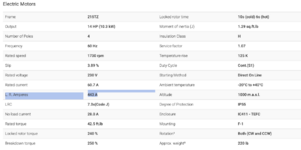
i don't think your neighbors will like it (if you can even start it). dirty napkin math says that's 632A inrush for a 20hp 1ø motor.
FWIW, if you wanted a NEW VFD to run a 20HP motor, hitachi recommends doubling the amperage rating of the VFD (1.73x) for the motor if you're going to single-phase the VFD (so you don't burn up the inlet diodes).
pricing for reference:
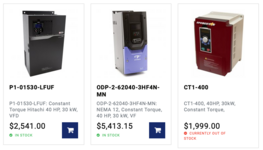
a couple seconds of acceleration ramp time and that inrush comes down to running amps, especially unloaded.
depending on the motor and intended use you might be able to get away with a 30HP drive, output stage isn't an issue here (already oversized by 50-100%), just inlet.
but if you planned on using full capacity of the motor for big work, I wouldn't want to gamble on the diodes being happy overloaded.
When I built my shop I ended up having to change my electrical service. So I ended up with my own pad mounted transformer and a 400 amp service that I split 200a to the shop and 200a to the house. I need to look at the transformer to see what its rated for.
I ran across this, dont know if its anything to even consider.... Seems to be other brands available of the same thing. I definitely wont need the full 20hp ever. The lathe does have a clutch, so when it starts its not driving the complete gearbox.

 www.vevor.com
I am going to do some hunting around on marketplace to see what a rpc might go for used.
I ran across this, dont know if its anything to even consider.... Seems to be other brands available of the same thing. I definitely wont need the full 20hp ever. The lathe does have a clutch, so when it starts its not driving the complete gearbox.
VEVOR Single Phase to 3 Phase Converter – 20HP, 70A, 220V
Convert single phase to 3 phase power with the VEVOR 20HP 70A converter. 220V input/output, energy-efficient, and easy setup for home or business use. Buy now!
www.vevor.com
I am going to do some hunting around on marketplace to see what a rpc might go for used.
I'd be curious of the longevity of Vevor vfd.When I built my shop I ended up having to change my electrical service. So I ended up with my own pad mounted transformer and a 400 amp service that I split 200a to the shop and 200a to the house. I need to look at the transformer to see what its rated for.
I ran across this, dont know if its anything to even consider.... Seems to be other brands available of the same thing. I definitely wont need the full 20hp ever. The lathe does have a clutch, so when it starts its not driving the complete gearbox.
VEVOR Single Phase to 3 Phase Converter – 20HP, 70A, 220V
Convert single phase to 3 phase power with the VEVOR 20HP 70A converter. 220V input/output, energy-efficient, and easy setup for home or business use. Buy now!
I am going to do some hunting around on marketplace to see what a rpc might go for used.
Beerhippie
Well-known member
Not a VFD, just a phase converter.I'd be curious of the longevity of Vevor vfd.
50 hp rpcNot a VFD, just a phase converter
Three phase converter
$3,000Listed 6 weeks ago
in Vancouver, WA
Attachments

Last edited:
Working on my VFD conversion of my Bridgeport milling machine. I bought this 3 position switch to handle fwd stop rev, but I don't know how to mount it. I assume I can't simply tighten the mounting nut really hard and hope for the best.
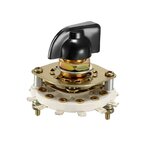
Is there some secret trick to this? Am I meant to remove one of the Phillips head screws? I feel like if I did that, I'd need a spacer a nut. The front panel face is where the silver washer is now, which sticks up off that face with the Phillips heads in it.
There's no tab that I can see and the shaft isn't D-shaped.
Is there some secret trick to this? Am I meant to remove one of the Phillips head screws? I feel like if I did that, I'd need a spacer a nut. The front panel face is where the silver washer is now, which sticks up off that face with the Phillips heads in it.
There's no tab that I can see and the shaft isn't D-shaped.
I'm sure you can source a used 40 hp 3 phase motor.Yeah that’s a little overkill and more than I want to spend. I have come across a few in the $800 to $1500 range.
Why not? Is the switch so stiff you think it will spin on the shaft even with the nut tightened? Otherwise, I think that switch was designed to be panel mounted exactly like that.I assume I can't simply tighten the mounting nut really hard and hope for the best.
It’s pretty stiff, but hard to say until it’s mounted. Epoxy could help. Just feel I’m trying to so,ve a problem that shouldn’t exist.Why not? Is the switch so stiff you think it will spin on the shaft even with the nut tightened? Otherwise, I think that switch was designed to be panel mounted exactly like that.
In fairness, you haven't yet demonstrated that a problem actually exists! Tighten down that nut and give it a shot.It’s pretty stiff, but hard to say until it’s mounted. Epoxy could help. Just feel I’m trying to so,ve a problem that shouldn’t exist.
Beerhippie
Well-known member
usually, there would be an internal star lockwasher on the switch side to retain it and prevent twisting.It’s pretty stiff, but hard to say until it’s mounted. Epoxy could help. Just feel I’m trying to so,ve a problem that shouldn’t exist.
whateg01
Well-known member
I've

Been running my $100 eBay vfd for about 10 years.I'd be curious of the longevity of Vevor vfd.
whateg01
Well-known member
Can't tell from that pic, but often the threaded section is a D or double D and the washer has a tang that engages a hole to keep it from turning.It’s pretty stiff, but hard to say until it’s mounted. Epoxy could help. Just feel I’m trying to so,ve a problem that shouldn’t exist.
Steve from Socal
Well-known member
When I built my shop I ended up having to change my electrical service. So I ended up with my own pad mounted transformer and a 400 amp service that I split 200a to the shop and 200a to the house. I need to look at the transformer to see what its rated for.
I ran across this, dont know if its anything to even consider.... Seems to be other brands available of the same thing. I definitely wont need the full 20hp ever. The lathe does have a clutch, so when it starts its not driving the complete gearbox.
www.vevor.com
I am going to do some hunting around on marketplace to see what a rpc might go for used.
With a 20HP motor your best bet is an inverter. Soft start/ramp up will give you the lowest inrush, a 40HP idler is going to need a pony start and may end up costing more outright. The motor is what 55 amps at 240/3 that is just shy of 100 amps single phase. I would check with your utility about that before you get too far into this, that is a big load on a residential service.
I ran across this, dont know if its anything to even consider.... Seems to be other brands available of the same thing. I definitely wont need the full 20hp ever. The lathe does have a clutch, so when it starts its not driving the complete gearbox.
VEVOR Single Phase to 3 Phase Converter – 20HP, 70A, 220V
Convert single phase to 3 phase power with the VEVOR 20HP 70A converter. 220V input/output, energy-efficient, and easy setup for home or business use. Buy now!
www.vevor.com
I am going to do some hunting around on marketplace to see what a rpc might go for used.
With a 20HP motor your best bet is an inverter. Soft start/ramp up will give you the lowest inrush, a 40HP idler is going to need a pony start and may end up costing more outright. The motor is what 55 amps at 240/3 that is just shy of 100 amps single phase. I would check with your utility about that before you get too far into this, that is a big load on a residential service.
Last edited:
Your saying to use an “inverter” which I think is the same as a VFD? Motor plate calls out 51 amps @ 60cy and 53 amps @ 50cy.When I built my shop I ended up having to change my electrical service. So I ended up with my own pad mounted transformer and a 400 amp service that I split 200a to the shop and 200a to the house. I need to look at the transformer to see what its rated for.
I ran across this, dont know if its anything to even consider.... Seems to be other brands available of the same thing. I definitely wont need the full 20hp ever. The lathe does have a clutch, so when it starts its not driving the complete gearbox.
VEVOR Single Phase to 3 Phase Converter – 20HP, 70A, 220V
Convert single phase to 3 phase power with the VEVOR 20HP 70A converter. 220V input/output, energy-efficient, and easy setup for home or business use. Buy now!
I am going to do some hunting around on marketplace to see what a rpc might go for used.
With a 20HP motor your best bet is an inverter. Soft start/ramp up will give you the lowest inrush, a 40HP idler is going to need a pony start and may end up costing more outright. The motor is what 55 amps at 240/3 that is just shy of 100 amps single phase. I would check with your utility about that before you get too far into this, that is a big load on a residential service.

It doesn’t have any of that. And no start washer. I’ll try a lock washer of some sort and see how that works.Can't tell from that pic, but often the threaded section is a D or double D and the washer has a tang that engages a hole to keep it from turning.
Actually, the threaded shaft steps up to a slightly bigger unthreaded portion. I think I will drill a clearance hole for the unthreaded shaft, then 2 tiny drill starts in the back of the cover plate to capture the Phillips heads. Hopefully with the nut bottomed out, I will be able to clamp the cover plate.
I think my chances are good since I’m using a die cast cover plate with a water proof enclosure.
If it’s not obvious to everyone, this for the VFD controls on my mill.
Last edited:
If the cover plate is thick enough, drill 2 dimples for the screw heads to index into.It doesn’t have any of that. And no start washer. I’ll try a lock washer of some sort and see how that works.
Actually, the threaded shaft steps up to a slightly bigger unthreaded portion. I think I will drill a clearance hole for the unthreaded shaft, then 2 tiny drill starts in the back of the cover plate to capture the Phillips heads. Hopefully with the nut bottomed out, I will be able to clamp the cover plate.
I think my chances are good since I’m using a die cast cover plate with a water proof enclosure.
If it’s not obvious to everyone, this for the VFD controls on my mill.
if it’s too thin for dimples, cut out a secondary plate with indexing holes or slots and sandwich it in front of the switch. Add a few drops of CA glue for good measure!
if you have your own transformer, more than likely the neighbors won't care so much.When I built my shop I ended up having to change my electrical service. So I ended up with my own pad mounted transformer and a 400 amp service that I split 200a to the shop and 200a to the house. I need to look at the transformer to see what its rated for.
I ran across this, dont know if its anything to even consider.... Seems to be other brands available of the same thing. I definitely wont need the full 20hp ever. The lathe does have a clutch, so when it starts its not driving the complete gearbox.
VEVOR Single Phase to 3 Phase Converter – 20HP, 70A, 220V
Convert single phase to 3 phase power with the VEVOR 20HP 70A converter. 220V input/output, energy-efficient, and easy setup for home or business use. Buy now!
I am going to do some hunting around on marketplace to see what a rpc might go for used.
finding a used VFD is likely easier than finding a cheap 20hp 1ø motor.
jar944
Well-known member
I have a possible future project. We have an old Lodge & Shipley lathe at work that may come home with me. We have 3 phase power at work to operate it, but not at home. It has a 20hp induction motor that can be wired for 220 or 440. I have a 200 amp service in my shop. I dont need any variable speed for the motor as the gearbox goes from 24-2000 rpm, just a way to operate it. I built a small (3hp) rotary converter years ago to operate some woodworking tools that works fine for that. I also came across some things called "digital phase shifter converters" that are rated for 20hp and reasonably priced. I am sure the lathe has never used the full 20hp when in use at work. It has a HP meter that barely moves when you turn it on to work with it. The other option would be finding a single phase motor to replace it with but that would be a lot of work. Also looked at building a static converter, even with it being derated I would still have plenty of HP left. Ideas?
Just buy a 20hp vfd and under drive it. It will work fine if you only need 10hp regularly and not dim the lights in the neighborhood.
I'm running a 15hp planer on a fuji frenic FRN0060C2S-2U

FRN0060C2S-2U
FRN0060C2S-2U quick delivery, authorized Fuji Electric distributor. Offers complete line of AC Drives . Easy online ordering, rewards program, and great pricing.
 www.wolfautomation.com
454ragtop
Well-known member
Are you using that switch between the motor and VFD or to control the VFD through the low voltage control terminals? Not recommended to put a switch between the VFD and motor, and that switch is way overkill to control the VFD. A simple 3 terminal switch is all you should need. I'd do it with 2 switches myself, a pull on push off switch for the motor start and a separate switch for FWD-REV, both connected to the control side of the VFD.It doesn’t have any of that. And no start washer. I’ll try a lock washer of some sort and see how that works.
Actually, the threaded shaft steps up to a slightly bigger unthreaded portion. I think I will drill a clearance hole for the unthreaded shaft, then 2 tiny drill starts in the back of the cover plate to capture the Phillips heads. Hopefully with the nut bottomed out, I will be able to clamp the cover plate.
I think my chances are good since I’m using a die cast cover plate with a water proof enclosure.
If it’s not obvious to everyone, this for the VFD controls on my mill.
I ended up recycling the factory 3 - phase barrel switch to control the low voltage inputs to the VFD. In addition to having it on hand, it's a much more satisfying "clunk" when switching it on than a plasticky little switch.Are you using that switch between the motor and VFD or to control the VFD through the low voltage control terminals? Not recommended to put a switch between the VFD and motor, and that switch is way overkill to control the VFD. A simple 3 terminal switch is all you should need. I'd do it with 2 switches myself, a pull on push off switch for the motor start and a separate switch for FWD-REV, both connected to the control side of the VFD.
Attachments
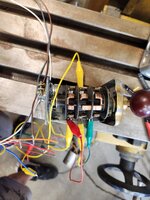

aquinob
Well-known member
An arboga mill I no longer have

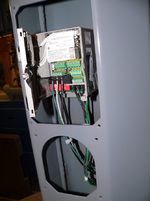
My Delta 20" saw with the VFD mounted in the cavity that the optional blade welder would sit. Power buttons control power to the VFD and the VFD controls the motor directly.

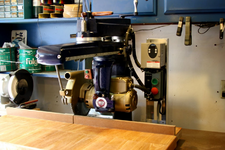
A Delta 30C Ras with the 2hp motor. Used an spare motor controller off a Unisaw to power the VFD and made a button pad near the handle out of rosewood with two buttons to control the VFD. VFD wired directly to the motor.

My Delta 20" saw with the VFD mounted in the cavity that the optional blade welder would sit. Power buttons control power to the VFD and the VFD controls the motor directly.
A Delta 30C Ras with the 2hp motor. Used an spare motor controller off a Unisaw to power the VFD and made a button pad near the handle out of rosewood with two buttons to control the VFD. VFD wired directly to the motor.
Yeah low voltage control from the VFD. Fwd Stop ReverseAre you using that switch between the motor and VFD or to control the VFD through the low voltage control terminals? Not recommended to put a switch between the VFD and motor, and that switch is way overkill to control the VFD. A simple 3 terminal switch is all you should need. I'd do it with 2 switches myself, a pull on push off switch for the motor start and a separate switch for FWD-REV, both connected to the control side of the VFD.
Maybe I should start my own thread as I wrap this up. I feel like I had a lot of novel ideas with this. Snowing hard here today. I’ll get back to my shop later this week and start taking pictures.
Quick spoiler alert, I put a set of receptacles on the back of the mill for future DRO, lights, maybe power feed. I’ll put a power switch there that shuts all power to the mill. The VFD will mount inside the column, accessible through the vented column door. Controls will be on the right side eventually co-located with the DRO.
Last edited:
whateg01
Well-known member
The switch will loosen up a little over time, but will probably be fine as is. If I was worried about it, I would probably just other a switch that has the tab for clocking rather than trying to make something work.Yeah low voltage control from the VFD. Fwd Stop Reverse
Maybe I should start my own thread as I wrap this up. I feel like I had a lot of novel ideas with this. Snowing hard here today. I’ll get back to my shop later this week and start taking pictures.
Quick spoiler alert, I put a set of receptacles on the back of the mill for future DRO, lights, maybe power feed. I’ll put a power switch there that shuts all power to the mill. The VFD will mount inside the column, accessible through the vented column door. Controls will be on the right side eventually co-located with the DRO.
No offense, but I doubt you are going to do anything that hasn't been done by somebody already. I do like the idea of making 120v available at the machine. It's easy to find a bunch of stuff that'll use it.