
You are using an out of date browser. It may not display this or other websites correctly.
You should upgrade or use an alternative browser.
You should upgrade or use an alternative browser.
Show your "Long C" Craftsman!
- Thread starter Outlawmws
- Start date
d42jeep
Well-known member
Sears wasn’t a big supplier to the Ordnance division but they may have supplied some tools to the Signal Corps. Lugz can probably shed more light on any military Sears contracts. Eagle, Gem and Noera supplied most of the military oilers that look like that Craftsman one and the Eagle one that Outlaw found. The second picture is the Gem in the bracket bolted to the firewall of my Jeep.
-Don

-Don
Last edited:
Private Lugnutz
Well-known member
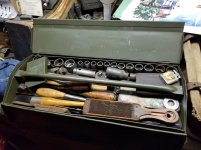
WWII jeep oil cans were 6-1/2" high with spout, 2-1/2" high vessel (without the spout), straight 4" spout, 4" diameter base, 1/2-pint (8 ozs.) capacity, made of steel, with a bottom made of 0.12" spring steel (hence the name "spring bottom" push cans), electrically welded to the body. Same spec for the GMTK. The base diameter and height spec were important because the jeep toolkit oil can was kept in an ingenious sliding-catch holder mounted on the fire wall under the hood in the engine compartment. The straight 4" height of the spout spec was important because the GMTK oil can needed to stand straight up in the bottom of the carry box with the spout sticking through a hole in the removable tray, as I have noted many times before. See Pic 1, on the left.
I had the same CRAFTSMAN marked example as ooba tooba. Sold years ago. I considered it postwar due to the lines bracketing either end of the logo, which was reminiscent, for me, of Heritage styling. It was also slathered in an opaque lacquer on the bottom, to retard rusting, which was a September 1949 fed spec. I could be wrong. I compared it to Eagle, GEM, and Noera cans and never could figure out who made it for Sears. See Pics 2 & 3.
Sears, Roebuck, & Co had a multitude of contracts during WWII worth a total of $17.836M, from the expected (cotton sheeting, shoes, handkerchiefs, fountain pens, refrigerators, padlocks, sewing kits, etc) to perhaps the unexpected (M5 Gun Parts, Mortar Shell Bodies) and some interesting things in between (seabags, canvas buckets, electrical repair kits, and vulcanizers). By far their biggest contracts were with the Navy and, as Don alluded to, the Signal Corps. Due almost certainly to their proximity to the Navy Yard, the Naval Air Factory, and the US Army Signal Corps HQ all being located in Philadelphia. Tools and tool-sets were almost exclusively confined to Signal Corps. But they did have two small interesting contracts with the Air Corps for "Sockets" and "Shop Equipment."
I've said this before, but it bears repeating, because it doesn't seem to be well-known for whatever reason, but Sears, Roebuck and Co's single most significant contribution to the war effort was undoubtedly Donald Marr Nelson (1888–1959). He was an executive vice president with Sears for many years before being plucked by request, by name, by FDR himself to be the Director of Priorities for the OPM in 1941 and 1942 and then Chairman of the War Production Board from 1942 to 1945. That's right. The WPB. He ran the War Machine. It's not at all a stretch to say that a Sears guy was FDR's right hand supply man during WWII. And supply (along with air superiority, radar, cryptography, and D-Day deception) won the war.
I had the same CRAFTSMAN marked example as ooba tooba. Sold years ago. I considered it postwar due to the lines bracketing either end of the logo, which was reminiscent, for me, of Heritage styling. It was also slathered in an opaque lacquer on the bottom, to retard rusting, which was a September 1949 fed spec. I could be wrong. I compared it to Eagle, GEM, and Noera cans and never could figure out who made it for Sears. See Pics 2 & 3.
Sears, Roebuck, & Co had a multitude of contracts during WWII worth a total of $17.836M, from the expected (cotton sheeting, shoes, handkerchiefs, fountain pens, refrigerators, padlocks, sewing kits, etc) to perhaps the unexpected (M5 Gun Parts, Mortar Shell Bodies) and some interesting things in between (seabags, canvas buckets, electrical repair kits, and vulcanizers). By far their biggest contracts were with the Navy and, as Don alluded to, the Signal Corps. Due almost certainly to their proximity to the Navy Yard, the Naval Air Factory, and the US Army Signal Corps HQ all being located in Philadelphia. Tools and tool-sets were almost exclusively confined to Signal Corps. But they did have two small interesting contracts with the Air Corps for "Sockets" and "Shop Equipment."
I've said this before, but it bears repeating, because it doesn't seem to be well-known for whatever reason, but Sears, Roebuck and Co's single most significant contribution to the war effort was undoubtedly Donald Marr Nelson (1888–1959). He was an executive vice president with Sears for many years before being plucked by request, by name, by FDR himself to be the Director of Priorities for the OPM in 1941 and 1942 and then Chairman of the War Production Board from 1942 to 1945. That's right. The WPB. He ran the War Machine. It's not at all a stretch to say that a Sears guy was FDR's right hand supply man during WWII. And supply (along with air superiority, radar, cryptography, and D-Day deception) won the war.
Attachments


Last edited:
JoCoSawdust
Well-known member
That's great info Lugz, thanks!
Smokeshow69
Well-known member
That's great info Lugz, thanks!
True dat! Lugz, that was some really interesting info. I always figured the Sears jugernaut found a way to capitalize on the war but it make sense through your explanation.
Private Lugnutz
Well-known member
While this is undoubtedly true, I'm sure the government would've been contracting with Sears even if FDR had not pulled their main wiz away from them, and $17m is a relatively modest number compared to many companies, and paltry compared to the likes of duPont or GM. But don't miss the real significance of my point, which was the opposite view. It was the federal government, and FDR for sure, who capitalized on Sears. Our military was ranked 11th in the world when WWII began. It was a disjointed, outdated mess, rife with cronyism and NIMBYism. Think about industry, at first not wanting anything to do with the disruptivesness of the war in Europe, then zealously looking to exploit it, with a consortium of hundreds of top executives each thinking their ideas and solutions were the best. Think about the task the WPB had whipping all that into shape. The monumentality and the unprecedentedness of it. Nobody knew how to buy (identify, order, etc), package and ship a general store's variety of goods at that kind of scale and magnitude better than Sears. Nobody knew how to manage it. Nelson did.I always figured the Sears jugernaut found a way to capitalize on the war...
ooba tooba
Well-known member
- Joined
- Jan 13, 2014
- Messages
- 747
That is interesting info Lugz. So you think the cans Outlaw and I have are possibly late 40s -50s made? Also, speaking of deception helping win the war, one of my favorite things from that period that can actually bring a smile is the Rupert.
https://www.forces-war-records.co.u...d-day-paradummy-found-residing-in-garden-shed
https://www.forces-war-records.co.u...d-day-paradummy-found-residing-in-garden-shed
Private Lugnutz
Well-known member
I am only guesstimating on yours (and mine) for the reasons I gave. Those geometric logos (no Long C or Underline Craftsman, no short C underline R) are hard enough to definitize on something like pliers, for example. I could be wrong. I did NOT look through any catalogs. Just my impression.
I did not see Outlaw's can. My impression is Don identified it as a WWII Eagle. Eagle, GEM, and Noera cans are readily identifiable to wartime guys so I take his word on it.
Ruperts were the sources of entire SS Panzer Divisions being diverted or split in half.
I did not see Outlaw's can. My impression is Don identified it as a WWII Eagle. Eagle, GEM, and Noera cans are readily identifiable to wartime guys so I take his word on it.
Ruperts were the sources of entire SS Panzer Divisions being diverted or split in half.
ooba tooba
Well-known member
- Joined
- Jan 13, 2014
- Messages
- 747
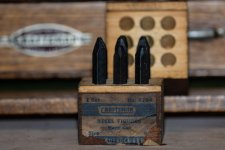
I overlooked Don’s post somehow.

JoCoSawdust
Well-known member
Cool find Ed. Now you can put owner marks on your rare ratchets!!
Private Lugnutz
Well-known member
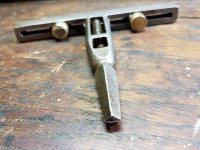
So who else has a brace bit gasket cutter? 
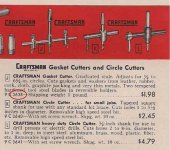
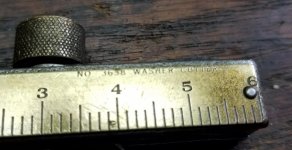
Just found this at the flea this morning. The logo is geometric, not Long C, and the only catalogs I can find it listed in are 1950's era, but it doesn't look like those, and something about it (the spring and the brass rule) just seems older than 50's to me. I could be wrong.
Just found this at the flea this morning. The logo is geometric, not Long C, and the only catalogs I can find it listed in are 1950's era, but it doesn't look like those, and something about it (the spring and the brass rule) just seems older than 50's to me. I could be wrong.
Attachments



JoCoSawdust
Well-known member
Very cool find Lugz, never seen one. I think the flat top "A" in Craftsman would put it towards the later part of the Heritage era. It would be interesting to try to cut a gasket with it!
Private Lugnutz
Well-known member
Thanks, I'll repost over there.
Cool find Ed. Now you can put owner marks on your rare ratchets!!
Yup, first thing I did......
RTM
Well-known member
Lugz
That looks a lot like my Hargrave gasket cutter. Maybe track features from them, then dig into Craftsman catalogs
https://archive.org/details/cincinnatitoolcocatalogno111/page/n14/mode/1up
That looks a lot like my Hargrave gasket cutter. Maybe track features from them, then dig into Craftsman catalogs
https://archive.org/details/cincinnatitoolcocatalogno111/page/n14/mode/1up
d42jeep
Well-known member
I found some old Craftsman tools today. I think that the auger bits are earliest. The smaller one is marked Craftsman Vanadium, the larger one I has a red cap with geometric lettering. I’m pretty sure the simple gasket cutter is newer as is the really rusty =v= extension.
-Don
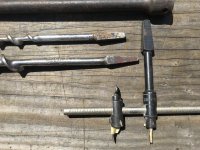

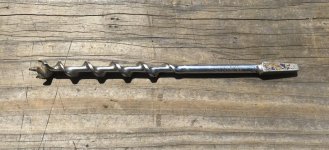
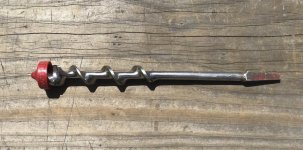

-Don
Last edited:
ooba tooba
Well-known member
- Joined
- Jan 13, 2014
- Messages
- 747
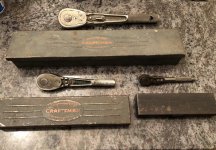
My 3/8 set and box came in. Happy I have a matching box with the 1/2 drive, but I will be looking for a better 3/8 d 3/8 socket. This one is used up. On the little 1/4 set I’m disappointed no sockets will fit on the breaker bar just up the the ball. They’re all BE and they all go on the ratchet fine, and there doesn’t appear to be any damage at all to the breaker bar...
Attachments

JoCoSawdust
Well-known member
Nice line up OT. I assume those clamshells are wartime or immediately post-war. The sets I have in those clamshells are all Circle U stuff. Are there any burrs on the stud of the 1/4d hinge handle? Does the ball detent operate? If not, I've run across a few of those. I spray it with PB blaster and let it sit a day. Then I put it in a vise and push the ball down. Always works like a charm for me. None of those clamshells would have contained a ratchet. Seems like ratchets were a luxury back then. I'll check my stash tomorrow for a 3/8 socket for your 3/8d set and let you know. BE or H? I assume H for that era.
ooba tooba
Well-known member
- Joined
- Jan 13, 2014
- Messages
- 747
Thanks Sawdust I’ll do that with the bar and look at it a little closer. It’s all BE stuff, and now I’m confused what box those would have come in originally?
JoCoSawdust
Well-known member
I'm not saying your boxes have the wrong tools in them at all OT. Did you find any of those boxes with those contents in the wild? My unproven theory is that the BE and H markings (as relate to contracts and at some point, they changed from BE to H. I can't prove that. I'd expect to see late war or post war tools in those clamshells and, if my theory is correct, that would mean H or U tools. Again, I'm just making a half-way educated guess on that base on purely anecdotal evidence. Those are nice sets one way or the other! I checked my stash, no 3/8d 3/8 socket.
Here's a prewar 1/2d set I have, found in the wild and all BE. The only thing I added to this is the short extension.

These clamshells like yours were also found stocked with tools seen.

Here's a prewar 1/2d set I have, found in the wild and all BE. The only thing I added to this is the short extension.
These clamshells like yours were also found stocked with tools seen.
Attachments


Smokeshow69
Well-known member
I'm not saying your boxes have the wrong tools in them at all OT. Did you find any of those boxes with those contents in the wild? My unproven theory is that the BE and H markings (as relate to contracts and at some point, they changed from BE to H. I can't prove that. I'd expect to see late war or post war tools in those clamshells and, if my theory is correct, that would mean H or U tools. Again, I'm just making a half-way educated guess on that base on purely anecdotal evidence. Those are nice sets one way or the other! I checked my stash, no 3/8d 3/8 socket.
Here's a prewar 1/2d set I have, found in the wild and all BE. The only thing I added to this is the short extension.
These clamshells like yours were also found stocked with tools seen.
I like that second set alot ! Actually I have that set


ooba tooba
Well-known member
- Joined
- Jan 13, 2014
- Messages
- 747
So my 1/4d BE set is probably in it’s original case I’m guessing. The 3/8d set did come in the case but I had the 1/2d set before I found the case. I really don’t see many of your 3/8 style cases or my 1/4 style around.
d42jeep
Well-known member

JoCoSawdust
Well-known member
Some nice pieces in there Don.
OT, the BE tools very well could have come in those clamshells. Figuring out exactly what Sears was doing during and after the war is like beating my head against the wall. If BE tools did come in those, it certainly blows my theory out of the water.
OT, the BE tools very well could have come in those clamshells. Figuring out exactly what Sears was doing during and after the war is like beating my head against the wall. If BE tools did come in those, it certainly blows my theory out of the water.
Ricky Joe
Well-known member
You might research where the head of Sears was during the war. It might give some clarity!
d42jeep
Well-known member
You might research where the head of Sears was during the war. It might give some clarity!
Thanks, JoCo. The research won’t be very difficult since Lugz covered it a few days ago!
https://www.garagejournal.com/forum/showpost.php?p=9066510&postcount=2963
-Don
ooba tooba
Well-known member
- Joined
- Jan 13, 2014
- Messages
- 747
Also posted elsewhere, but hey..why not.
*thanks Sawdust for the catalog pic!
*thanks Sawdust for the catalog pic!
Attachments
-
 9E6C0860-D684-4756-A268-453F54E0023E.jpeg120.5 KB · Views: 29
 -
 6FD019BB-B705-4D47-95C6-690D300065C5.jpg147 KB · Views: 20
 -
 95CD7EF2-0F0C-4AD1-822B-C1548485176D.jpg146.4 KB · Views: 22
 -
 B9B4BCD6-6976-45E9-9AE8-BC758DFF47B2.jpg146.7 KB · Views: 25
 -
 7D84A3AF-1FE1-4738-BB84-F128B0049C57.jpg153 KB · Views: 27
 -
 51080E54-B5A9-44DE-B318-DCB6FD45368C.jpg90.4 KB · Views: 28
 -
 CB94B0AE-CD94-4C5A-8807-809765909DCC.jpg147.3 KB · Views: 33
JoCoSawdust
Well-known member
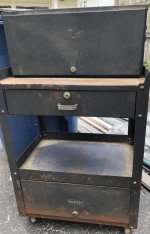
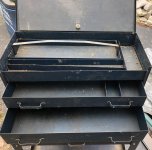
Congrats over here as well OT! Does the drawer have slides?
ooba tooba
Well-known member
- Joined
- Jan 13, 2014
- Messages
- 747
Thank you again, sir. No I don’t think the drawer had slides. I opened and closed it twice just to take a few pics before I had to run off for a rehearsal, but I’ll look it over a little better after work today.
ooba tooba
Well-known member
- Joined
- Jan 13, 2014
- Messages
- 747
Confirmed, Sawdust. No drawer slides in either top or bottom box, and too is indeed the larger of the two offered in the ‘39 catalog pic you sent.
JoCoSawdust
Well-known member
Thanks OT. You need my shipping address, right? 
ooba tooba
Well-known member
- Joined
- Jan 13, 2014
- Messages
- 747
Heh. Who knows, right?
d42jeep
Well-known member
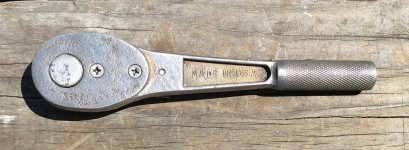
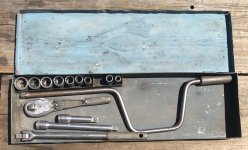
Username sent a matching ratchet to add to the set. Thanks!This partial Circle H 3/8” drive set came in this badly repainted Heritage box.
-Don
Attachments


Username already in use
Well-known member
You’re welcome! That set is looking good. I may have a long extension for that set somewhere as well. I’ll go look for it.
Smokeshow69
Well-known member
Don what pieces are you missing ? I might have a few spares ?
d42jeep
Well-known member
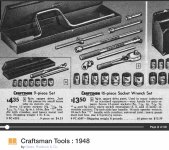
Thanks, Smokeshow. I’m not much of a Craftsman expert. I’ll have to do some catalog research as to what came in the set. The lack of a crossbar is always annoying. I have two 8 point sockets but I don’t know if it came with three or more. Here are listings from the ‘48 catalog that look somewhat close. I seem to need a u-joint, a sliding tee handle and a longer extension.
-Don
-Don
Attachments

Last edited:
Provincial
Well-known member
ooba tooba
Well-known member
- Joined
- Jan 13, 2014
- Messages
- 747
Jumping back to FDRs picking of Sears Mr Nelson to handle materials for the war, some may find it interesting that he wrote a book in 1946 called “Arsenal of Democracy”, considered a major work on mobilization efforts of the US during the war. Sounds like a book I’d enjoy.
*according to Wiki Nelson had some tough times in his position and was routinely criticized by the military and others, and was almost replaced.
*according to Wiki Nelson had some tough times in his position and was routinely criticized by the military and others, and was almost replaced.