
Model A Fan
Well-known member
To make my garage more usable and to put my tools to work, I need to add 220v to run a table saw and an air compressor. I have included photos of a (poorly?) wired sub-panel that was in the house when I bought it. It currently runs off the main breaker in the house, which is where the orange wire is coming from in the photos. The panel has only one breaker currently hooked up to anything, and it is operating a light socket with one of those LED panel lights screwed into it. The other lights in the garage are powered off the main breaker panel in the house. I would also eventually like to add an oven (kitchen oven) so I can cure powder coating projects too big for a toaster oven. I have included photos of my sub-panel and the motors for my table saw (12.4A) and air compressor (15A).
I have a few questions regarding options for wiring my garage for these two units.
1. Am I able to run 220v out of this box with the set-up I currently have? What will determine the ability of my wiring?
2. I have watched April Wilkerson's video on YouTube (Running 220v in your Garage), and it looks like you can run two outlets for 220v off the same breaker as long as the overall amps don't exceed the breaker's amps? If this is the case, can I upgrade to a 30A breaker and have both of my machines on the one breaker? If not; do I just install a second breaker with proper amp ratings in the next slot and wire the second one the same as the first one?
3. I have 12/2 wire for this project; will this be sufficient or will I need to use something larger? Per the video I referenced, she used a gray PVC type conduit with loose wires inside. I think this was the "THNN" wire referenced, and she ended up using 10 gauge THNN. I think she should have used two blacks and a green for the hots and grounds instead of the white, or put a black electrical tape wrap around the white at least. If I use this type of conduit, should I use THNN and not the 12/2? If I don't use conduit, can I use the 12/2 or would I still need 10/2? The runs would be approximately 15' and 30' max from the sub-panel.
4. I'd also like to wire up some lighting for my shop as right now I have a bunch of those Harbor Freight and Costco LED lights hanging in the rafters because they're plugged into outlets. Given the wiring I want to do with the 220v, can I still fit the LEDs into the sub-panel?
5. I have a general understanding of how electricity works and that the 220v feed for the two machines will need two hots and a ground (two hots to breaker, ground to the grounding bar), is my plan for one 30A breaker OK, or should I split it into two 20A breakers? What happens if I use a 30A breaker for each? Would I run the risk of the machine burning up the motor and not tripping a higher amp breaker?
6. The yellow Romex coming in has a neutral and ground connected to the grounding bar. The black "hot" is loose and curled inside the box but not connected. What can/should I do with this to make it "safer" if it isn't safe currently?
7. Can I switch the black hot wire on the 15A breaker to the single 20A breaker so I can put another double breaker next to the 20A double breaker currently there? This is the circuit that currently runs the single light screwed into the light socket.
8. I have electrical spaghetti running through my rafters. If I identify what is connected to where in my house breaker, can I "detach" those from inside the house and connect them in the garage? All I currently have are two garage door openers and two surge protectors. This is how I run the majority of my lighting. The garage door openers are plugged into outlets running from inside the house, and I have other LED lighting plugged into the ceiling mounted outlets.
9. Would I be better off buying and installing a larger sub-panel for my garage for the future expansion? I could reuse this one in my barn for when I get 100A service to the barn for conversion into a shop. It seems like this panel is almost too small to truly be useful for anything of size or capability.
10. Should I separate the grounds from the neutrals and have them on separate bars?
11. Should I just sell my house and build new? This is my dream, but for now, I have to deal with this place. Thank you in advance for any info and help. I have a decent background in handyman stuff, but electricity is one I like to double and triple check, then hire an electrician . The cost of hiring someone is so high right now that I wanted to give it a go. But based on what I'm seeing, there were no clear "how-to" videos since most people's garages are already set up for bigger service and are done better to begin with.
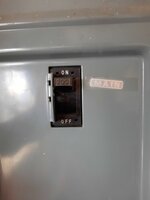
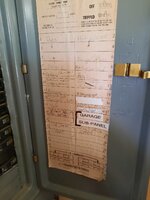
Here is the sub-par sub-panel. I didn't wire this, and when I opened it up, I was surprised it was done so sloppily.


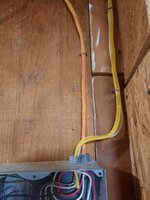


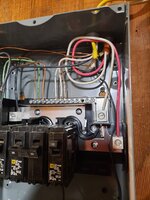

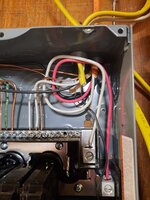
I would like to add an outlet to power my table saw. Here is the motor spec plate.
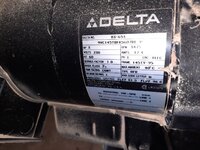
Here is my air compressor data plate.

I have a few questions regarding options for wiring my garage for these two units.
1. Am I able to run 220v out of this box with the set-up I currently have? What will determine the ability of my wiring?
2. I have watched April Wilkerson's video on YouTube (Running 220v in your Garage), and it looks like you can run two outlets for 220v off the same breaker as long as the overall amps don't exceed the breaker's amps? If this is the case, can I upgrade to a 30A breaker and have both of my machines on the one breaker? If not; do I just install a second breaker with proper amp ratings in the next slot and wire the second one the same as the first one?
3. I have 12/2 wire for this project; will this be sufficient or will I need to use something larger? Per the video I referenced, she used a gray PVC type conduit with loose wires inside. I think this was the "THNN" wire referenced, and she ended up using 10 gauge THNN. I think she should have used two blacks and a green for the hots and grounds instead of the white, or put a black electrical tape wrap around the white at least. If I use this type of conduit, should I use THNN and not the 12/2? If I don't use conduit, can I use the 12/2 or would I still need 10/2? The runs would be approximately 15' and 30' max from the sub-panel.
4. I'd also like to wire up some lighting for my shop as right now I have a bunch of those Harbor Freight and Costco LED lights hanging in the rafters because they're plugged into outlets. Given the wiring I want to do with the 220v, can I still fit the LEDs into the sub-panel?
5. I have a general understanding of how electricity works and that the 220v feed for the two machines will need two hots and a ground (two hots to breaker, ground to the grounding bar), is my plan for one 30A breaker OK, or should I split it into two 20A breakers? What happens if I use a 30A breaker for each? Would I run the risk of the machine burning up the motor and not tripping a higher amp breaker?
6. The yellow Romex coming in has a neutral and ground connected to the grounding bar. The black "hot" is loose and curled inside the box but not connected. What can/should I do with this to make it "safer" if it isn't safe currently?
7. Can I switch the black hot wire on the 15A breaker to the single 20A breaker so I can put another double breaker next to the 20A double breaker currently there? This is the circuit that currently runs the single light screwed into the light socket.
8. I have electrical spaghetti running through my rafters. If I identify what is connected to where in my house breaker, can I "detach" those from inside the house and connect them in the garage? All I currently have are two garage door openers and two surge protectors. This is how I run the majority of my lighting. The garage door openers are plugged into outlets running from inside the house, and I have other LED lighting plugged into the ceiling mounted outlets.
9. Would I be better off buying and installing a larger sub-panel for my garage for the future expansion? I could reuse this one in my barn for when I get 100A service to the barn for conversion into a shop. It seems like this panel is almost too small to truly be useful for anything of size or capability.
10. Should I separate the grounds from the neutrals and have them on separate bars?
11. Should I just sell my house and build new?
This is my dream, but for now, I have to deal with this place. Thank you in advance for any info and help. I have a decent background in handyman stuff, but electricity is one I like to double and triple check, then hire an electrician . The cost of hiring someone is so high right now that I wanted to give it a go. But based on what I'm seeing, there were no clear "how-to" videos since most people's garages are already set up for bigger service and are done better to begin with.Here is the sub-par sub-panel. I didn't wire this, and when I opened it up, I was surprised it was done so sloppily.
I would like to add an outlet to power my table saw. Here is the motor spec plate.
Here is my air compressor data plate.
Last edited:





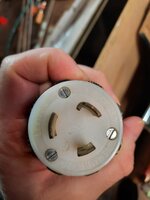

 I had to take back a full set of outlets because I didn't read their teeny tiny print saying 125v when I needed the 250v. Someone put them in the wrong spot and I just grabbed what was left.


 ) and the slab has sunk on one side causing a crack to run the length of the garage, so I plan to scrape it off and build a real shop; but that may be years in the future if we don't build new/move out of WA State instead.