To avoid these ads, REGISTER NOW!

Below 265 SQ/FT Tiny Tokyo Shop

All workspaces below 265 squarefeet.

Ipassgas

Well-known member
Joined
Jul 21, 2015
Messages
1,041
Location
Grand Strand, SC
I went to Japan as a kid. It was fascinating. Just like this thread.

Are the ceiling mounted things in the bathroom, or the space above?
I'm guessing your wife is Japanese. What does she think of this endeavour?
60 amp service? With electric on demand water heaters? :wtf:

I'll be following your story!
 
To avoid these ads, REGISTER NOW!

Bogdan M.

Well-known member
Joined
Dec 4, 2012
Messages
998
Location
Bucharest, Romania
I love this thread.
Very interesting to say the least. I knew Japan is a bit strange, but I was very naive.
It's one of the most interesting threads around.
Congrats!
 

dubjager

Member
Joined
Aug 13, 2015
Messages
17
Going to echo some other sentiments-- this thread is absolutely fascinating. Can't wait to hear more... Love the writing as well!
 
OP
B

Bakafish

Well-known member
Joined
Feb 7, 2017
Messages
477
Location
Tokyo
I went to Japan as a kid. It was fascinating. Just like this thread.

Are the ceiling mounted things in the bathroom, or the space above?
I'm guessing your wife is Japanese. What does she think of this endeavour?
60 amp service? With electric on demand water heaters? :wtf:

I'll be following your story!

They are in the space above the unit bath ceiling, which needs to be at least 30cm below the real ceiling or floor joists above it. The units are available in two heights, 200 or 220 cm, and the walls, water tower and mirror all are different heights to accommodate. The space above the unit is accessible via a small watertight service panel and is mostly required for the air management system since the lighting and controllers are only about 10cm high. I took some pictures, but it is really hard to see what is going on, just lots of random boxes and wires.

But I also rudely discovered you really need that much space to be able to position and attach the ceiling panels to the walls. I didn't want a low ceiling, so I chose the 220cm unit even though it left me with about 20cm of space instead of the 30cm they required. This made installing the ceiling far more challenging, if I didn't have one wall opened I would have been screwed, but thanks to a lot of contorting and a cordless angle impact driver it all worked out.

My wife is Japanese. I asked her recently why she trusted me to cut apart the house and do all of this work myself and she said if I screwed it up, it is just an "old house" (again, in Japan more than 20 years == old!) and she'd just tear it down and build a new house... :dunno:

There is a lot of mythology about Japanese women, I don't want to dive into the treacherous waters of comparing female cultural norms, but it would be very unsafe to assume any woman will tolerate the level of disruption, layers of dust and exposed wiring present in our house the last few years. My wife is pretty cool... :thumbup:

As far as on-demand heaters, they are primarily Gas powered. In big cities they use "City Gas" which is Natural Gas to us, primarily Methane based. But in the suburbs and countryside they mostly use bottled LP, Propane gas, which is very efficiently delivered to the home. In the real countryside and northern areas (where it can get bitterly cold) it is very common for the houses and apartments to have a large Kerosene tank and to heat the water with that (as well as large stand alone Kerosene space heaters used indoors. An unforgettable smell.)

The only electric water heaters I have seen are a tank style that uses a heat pump, not resistive heating. These are very unusual and only sold in the city where you presumably have enough ampacity (~40A) to support them. They also have a ton of logic and monitoring to ensure they run when you are drawing less that the delta of you maximum capacity, and during off-hours when you are unlikely to be using other power sources and power costs are low.

Then there are cogeneration solutions. There is a system by Panasonic that uses natural gas through a Fuel Cell to generate up to 10A of electrical power and uses the waste heat to heat water which it stores in a tank. An alternate system developed by Honda uses "City gas" to run a super quiet "offset-crank" motor/generator to do the same thing. There were issues with power shortages after the big quake, and these systems that allowed you to generate your own (modest) power off of your gas line, and sell electricity back to the power company when you heat your water made sense to someone... They are still very fringe items though, and I think something like a Tesla Power Wall and solar panels would be a better investment for most.

I love this thread.
Very interesting to say the least. I knew Japan is a bit strange, but I was very naive.
It's one of the most interesting threads around.
Congrats!

Going to echo some other sentiments-- this thread is absolutely fascinating. Can't wait to hear more... Love the writing as well!

Thanks guys! Thinking about this stuff makes it kind of fresh in my head and reminds me some of the reasons I enjoy being here. I love digging to discover the constraints that explain the alternate solutions to problems they always come up with over here. There's a reason for everything, and when things seem inexplicable I just have to get to the bottom of it.
 

happy hoppy

Well-known member
Joined
Apr 13, 2006
Messages
115
I am loving this thread, thanks. It explains a lot. My wife and I visited Japan for the first time about 6 years ago and we fell in love with Japan and we have been back once a year since. On our 2nd visit we rented a car in Tokyo, near our hotel in Shinagawa and we drove to Mt Fuji and back. It was hands down one of the most fun and most ridiculous things I have even done. On another trip to Japan, having not learned my lesson, I rented a car at the airport in Narita, attempted to drive to Tokyo. I found myself on a freeway ( NOT FREE ) that had NO exits for MANY miles. We passed Tokyo, and half way to Chofu I managed to make a U turn at a toll booth. There is a toll booth operator in Japan that I am sure retired early after seeing me do that. I can't wait to hear more about living in Japan, Its a goal of mine to spend a year in Japan before I am dead.
 

Ipassgas

Well-known member
Joined
Jul 21, 2015
Messages
1,041
Location
Grand Strand, SC
I meant to ask this before, but you have a comic of you fixing up the bath from a fashion magazine? What, err, how . . . what?
Did you become locally famous as that crazy gaijin?
 
OP
B

Bakafish

Well-known member
Joined
Feb 7, 2017
Messages
477
Location
Tokyo
I am loving this thread, thanks. It explains a lot. My wife and I visited Japan for the first time about 6 years ago and we fell in love with Japan and we have been back once a year since. On our 2nd visit we rented a car in Tokyo, near our hotel in Shinagawa and we drove to Mt Fuji and back. It was hands down one of the most fun and most ridiculous things I have even done. On another trip to Japan, having not learned my lesson, I rented a car at the airport in Narita, attempted to drive to Tokyo. I found myself on a freeway ( NOT FREE ) that had NO exits for MANY miles. We passed Tokyo, and half way to Chofu I managed to make a U turn at a toll booth. There is a toll booth operator in Japan that I am sure retired early after seeing me do that. I can't wait to hear more about living in Japan, Its a goal of mine to spend a year in Japan before I am dead.

Yeah, I will try to discuss some of the transportation quirks over here. It is crazy that the majority of Tokyo air traffic went to Narita which is ridiculously far from Tokyo itself. It's like landing in San Jose to go to San Francisco... You are brave to drive here, I try to avoid it as much as possible.

I meant to ask this before, but you have a comic of you fixing up the bath from a fashion magazine? What, err, how . . . what?
Did you become locally famous as that crazy gaijin?

Heh, I'm not famous, but my wife is in the media sometimes. They thought having the bathtub stored in our living room was so funny they commissioned that strip to run with her interview. I think I harmed the image of potential foreign husbands for many Japanese women reading that...
 
OP
B

Bakafish

Well-known member
Joined
Feb 7, 2017
Messages
477
Location
Tokyo
Sorry everyone, I'll update soon. The wife unexpectedly decided to open her own clinic and I had to focus on that for a while.
 

RSr

Well-known member
Joined
Jul 20, 2010
Messages
155
Location
Pittsburgh, PA
Thanks guys!


Building Permits

Disclaimer: I tried and failed to understand the copacetic way to do this, but couldn’t find anyone who understood what a building permit was, or where you would apply. I think the deal is that this work was probably illegal as hell. My guess is that you have to be certified and licensed to turn a screw here in Japan, and as far as requesting a permit, there doesn’t seem to be any public way of doing so. This system is set up to service professionals and as I unsuccinctly explained above, normal people never do this sort of thing, so there isn’t any need to provide them the means to do so legally. The converse is, as far as I’m aware, very little awareness or suspicion that someone would attempt anything that would require a permit in the first place, so no one is looking. The work I did to replace the window was very externally obvious, but I timed it to happen on a very significant local holiday and wrapped it up as quickly as possible, so as not to tempt the gaze of Sauron. I try to keep things on the down-low and not disturb my neighbors or attract undue attention. But if I disappear you can assume I was either arrested or miswired something important :)

Its nice to hear you've been quiet for good reasons, I wondered if they sent you off for re-education. Very cool thread and I'm sure many hope you keep it going :beer:
 
OP
B

Bakafish

Well-known member
Joined
Feb 7, 2017
Messages
477
Location
Tokyo
Reaching the beginning - Part 1

Okay, sorry to go dark for so long. I had a lot of saved up progress when I started pushing out posts, and that allowed me to set a pace of updates that wasn’t very sustainable and made me look more productive than I actually am. I’m a pretty lazy guy, and this construction is done when I’m not working my daily job as a support engineer. My wife surprised me by moving forward her plans to open her own clinic, and I had some odds and ends to do there to make it suit her needs (Ask me about the Pee-Box!) Also, please bear with me if some of these reports are not particularly interesting. I tend to be fascinated by details that many will find pretty mundane, it is what it is.

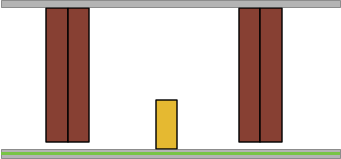
So at the last update, it looks like I had documented the Unit Bath installation, finishing the plumbing, and wiring up all the various electronics. This left the room below the bathroom - my shop - with no ceiling joists & sheetrock, lights or insulation. The existing design used separate staggered 2x4’s about a centimeter below the doubled 2x10 floor joists from the second floor in order to decoupling them, isolating the ceiling to reduce sound transmission. (Cross section below.)

Ceiling_Cross.png


As I had boxed out the center of the floor in order to recess the bathroom on it’s steel frame and have the uniform floor level, I needed to cut and mount all new ceiling joists. This required a lot more shorter sections, and it was at this point where I made one of my more major mistakes impacting efficiency. I think it is important to document my mistakes if this construct-a-blog is really going to serve any purpose beyond self glorification.


Ceiling_Animation.png


The Second Floor joists now looked like the animated PNG above, and the ceiling joists to hang new sheetrock would need to be spaced so that the sheetrock edges would naturally fall where they were located. When I pulled the previous ceiling, it was using stainless clips to to fasten it around the perimeter walls, and I did my best not to damage them but I had to do quite a bit of repairs to them with pliers and a large flat punch to get them back into biting shape. In typical construction the ceiling goes up first, then the walls are butted tightly against them supporting the edges, but allowing some float so expansion or settling doesn’t create cracks. I was going to have to do some gymnastics in order to squeeze the new sheetrock into this existing gap. Another soundproofing measure they made was to use two layers of 9.5mm sheetrock glued together, rather than the 15mm typically used throughout most of the house. This actually made things easier, as I was doing all this alone and they don’t have sheetrock lifts here in Japan (well they do, but they are called employees, and I am a one man show.) So I had to do a lot of strategizing about how the sheets would be staggered, how to insert them into the gap made by the existing wall sheetrock to engage the clips, the order they needed to go in since some of the sheets would have to be inserted into a gap on three sides, and the proper places to screw everything to make sure it stayed up.

But back to what I did wrong, the key takeaway I want to leave you with is always get your ceiling joists (or wall studs) as level as humanly possible. Sheetrock doesn’t really cover flaws or find its own level, it follows every bump, skew, lip, curve and contour. I was in a rush to make progress and I was so concerned about all the other factors I mentioned, I made the myopic decision to just level the sub 5mm discrepancies out with a skim coat. If you ever find yourself saying ’skim coat’, stop right there and heed my warning: You don’t want to do that, it is a really bad idea.

Before putting in the insulation I needed to pull a lot of the new wiring (I mean I had the certified electrician that I totally hired do that.) I will go into detail on the wiring improvements across the whole house in a different post after Nemo Denki replaces my main electrical panel, but having easy access to everything was an unusual treat as I’m typically pulling wires using only existing holes to access inside the walls and ceiling (light switch openings, air conditioner drain ports, etc.) This is nearly impossible and requires a lot of rare earth magnets, steel snakes, pull strings, chains, inspection camera’s and most importantly persistence and patience. I wish there was a magic way but It has become a sort of challenge to get a wire pulled somewhere as non-disruptively as possible, and my knuckles and arms usually bear the battle scars for weeks afterwards.

With a plan in place, I recycled much of the original hangers and laminated 2x4’s (which are really good for ceilings since they tend to be straighter and less prone to twisting or sagging.) I had to make allowances for some of the Unit bath bracing and plumbing, but it wasn’t difficult. I decided that I would do my best to install sound insulation, as the experience of standing in the ceiling-less room when the shower was in use convinced me of its need. The fiberglass composite floorpan seemed to amplify every drop that hit it like a water drum, and the shop below may need to return to being a bedroom someday.

I found a local source of Green Glue which has a very good reputation for sound absorption when bonding layers of sheetrock, and given the tiny dimensions of the room seemed worth a try despite the cost. So first I wrapped the plumbing in sound absorbing carpet underlayment, loosely packed fresh fiberglass batting in all the cavities, and then carefully cut 10cm rigid foam insulation to fill all the spaces under the bathroom pan and tub.

I’ve been updating the lighting to LED throughout the house, so I chose some white balance adjustable and dimmable 100w sealed can lights from Panasonic’s very extensive line. They provide the beam spread and luminance maps for all their products, so I could find the right units to properly light the space without any hot spots. I added a drop for one of the dc powered, networked file alarms I use as well. I’ll detail that system as part of the home security post I will eventually get to.
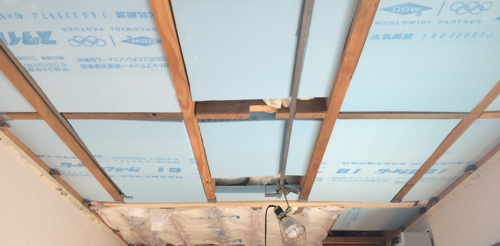
Insulation.png


So, here we are all pre-wired and insulated. I had the wife pilot a 600cc engined rental micro-truck to the Big Beaver Pro to get our 10 sheets of water resistant 9.5 mm sheetrock, and a 2 kilo bag of all purpose 120 minute synthetic powdered gypsum mud. I will note that sheetrock and wall mud are only available at the most professional of building supply shops, not at normal home centers or hardware supply. I had a plan of how each piece would go up and I had a big bag of instant mud, so I was feeling super confident. Using my 6 axis laser level I projected onto some masking tape on the floor where the light fixture mounts and fire alarm holes would be centered, so I could later project back up to the ceiling and cut the holes perfectly when it was done.

I decided that the first layer of sheets to go up would have the most joinery as I wanted to make sure the number of seams I would have to tape up and mud would be minimized. Please note when you look at my layout that Japanese use 3’ x 6’ sheets for everything (plywood too), so I didn’t have the option to get 4’ x 8’ sheets. They also don’t sell 15mm (standard 3/8”) which most of my house is built with, it is all 9.5 or 12.5mm. This is one of the reasons why I am so hesitant to make holes or otherwise mess with any of my walls. I found several odd sized offcuts of 15mm sheet rock hidden in the wall cavities when I did the new bath, so I saved that for emergencies.

The first layer went up without too much trouble. I of course made all the greenhorn mistakes, oversetting screws, missing the joist, cracking corners. It looked like hell actually, but it was solid and the second layer would surely hide the chaos below it (above really.) I committed to do a better job with the final layer by marking out where the joists were and properly sizing the sheets to minimize the gaps. I would spend the time getting these right in order to prevent the dreaded blowout from forcing it in too tight a fit. Never force sheetrock, it is basically dust being held together with paper. Super strong in shear, super not interested in being hammered into place. You will just cause it to fracture in a really unhelpful way that is in the exactly wrong place (the edge you are trying to fasten) and just rasping it would probably have been faster anyway.

This final stage also had the challenge of being the largest sheets, the two end sheets having to slot in on three sides to engage the clips inside the gap made by the existing walls. I know 9.5mm 3x6 sheets are as wimpy as they get, but all of them were covered on one side with the stickiest green liquid you’ve ever seen that costs more per cc than perhaps printer ink (some may disagree…) I correctly intuited that this was going to be really difficult, and it was, but I got them up, and it mostly worked as I expected. The resulting surface was far less like the cratered and rutted WW I French battlefields of the first layer, but retained the rolling hills of the charming countryside that the War to End All Wars was once fought upon. No problem, just mix up a bucket of mud and get floating.

So... floating. It sounds so passive and nice…

There are many professional trades that I trample upon with my D.I.Y. laissez faire, ‘How hard could it be?’ attitude. It always leads me to respecting all the details and difficulties that these tradesmen have had to learn and overcome, and that’s part of the fun, getting your *** kicked by your ignorance to come out the other side with knowledge few possess or appreciate. Let me tell you, this was three months of my life I hopefully spent taking a bullet for the team. So, what was so difficult? Well, creating a flat surface overhead with mud and a thin piece of metal was obviously going to be a challenge, but I was unprepared for how many layers, how much sanding, how many bags of mud I would have to mix. I learned that .5 cm of deflection across a large area really adds up. I filled and filled and built up, and then scraped and sanded, and discovered new undulations and depressions to deal with. All of this accompanied by dust. I swear for every bag of mud I mixed up, I vacuumed two bags of dust after sanding. And there is nothing quite like plaster dust to get all over everything and everywhere. My wife never came closer to anger with me about anything more than this dust, and I’ve subjected her to some pretty horrific hardships (as my readers must well know by now.)

So day after day, every weekend for months I would do the same thing, take the train to my one source of powdered mud, buy the last two bags I will need to finish (this time for sure!!) And in my mud covered overalls, on my mud covered ladder, using my mud covered tools, in the Martian dust storm of my shop, I would patently mark up the ceiling’s latest defects with a pencil. The high spots, the basins, the disjoints, the seams, the pin holes and the fish mouths. Then, mix up a bucket, and start spreadin’ the new layers. Wait for it to dry, scrape off the crufty edges, sand it down, vacuum the bigger drifts, and repeat. I’m sure a pro could have done it in a day, and if I had to do it again, I’d avoid making the mistake of not installing the ceiling flat in the first place! Have you even been reading this? That’s the whole point of what I’ve been saying! :)

You will note I didn’t document this part of my effort with photos, but pictures just don’t convey this sort of thing well, and I just wasn’t in the mood to take them. I got better, it got easier, and I did a far better and faster job the next ceiling I did (later post!) But please avoid my mistake, and if you ever come across a plasterer in the wild, buy him a beer, he deserves one.
Respect.
 
OP
B

Bakafish

Well-known member
Joined
Feb 7, 2017
Messages
477
Location
Tokyo
Reaching the beginning - Part 2

So I finally had a ceiling that no longer resembled the surface of an angry sea. If I was in the US the next step would be to rent or buy a texture nozzle and hopper for my air compressor to shoot some thinned mud up there resulting in a sweet final texture. This is something I have never done before, and given my recent experience I was more than nervous about this. But my fear was misplaced as I wouldn’t even have this option. There is no such equipment available here in Japan, they don’t do spray on textured walls and ceilings.

Japanese certainly have textured walls, in traditional (old) Japanese construction they use a plastering technique that provides both color and texture. Mixing different minerals in with the plaster, sparkly mica’s and quartzite sand, they give a bold texture and shimmering earth tone colors that can be really beautiful. But as these are labor intensive to make, prone to cracking and really hard to clean, the technique has mostly been abandoned in home construction. You can still see fantastic examples of it in Onsen hotels and restaurants though. As modern construction became more common, they switched to a method using sophisticated machines and thousands of finish choices. Almost any color, texture or pattern can be achieved with this modern method. In the US we call this highly advanced process, wall papering. And it’s not just for walls anymore, it’s for ceilings too.

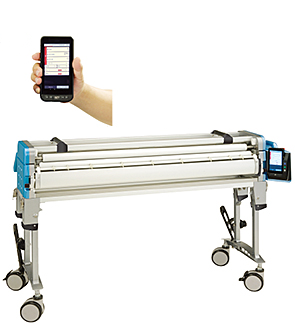
You say, “Hey man, you said they use sophisticated machines! What are you saying? Like robots?” Well, I wish, it’s not that cool. But still, we are talking about wall paper here, so on a relative scale I think you can allow for some hyperbole. The device I speak of is designed to put an even layer of adhesive across the sheet of paper, trim the edges, put two types of special plastic strips along those edges, cut it to perfect hanging length, book it properly, and finally wrap it in an air tight envelope and mark it’s details and dimensions for later installation. Witness it in all it’s glory! (Yes, this one, like the best JDM toilets has Bluetooth and an App.)

Paper_Machine.png


I didn’t get use one of these unfortunately, they don’t rent them, but this is how all the professionals do it. Let me get into some of the details that I think (and I could be wrong here, wall paper always seemed really lame to me in my life before Japan, I never dabbled in it) are unique to Japanese methods.

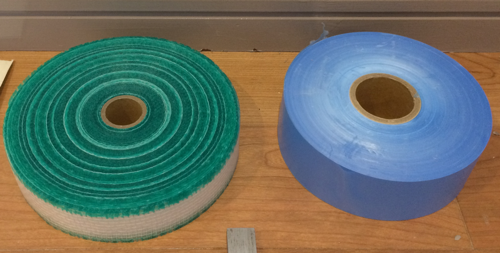
The plastic strips I mentioned require special attention. They are two different rolls of plastic about 3-4cm wide. One is a very thin film, the other two layers of a more robust material sandwiching a loosely threaded fiberglass mesh. These are adhered to the fresh paste along the edges of the paper, one type per side, preventing the edges from drying when the paper is removed from the envelope for affixing to the wall. The purpose of these strips is pretty ingenious as by putting the reenforced strip against the wall and overlapping the adjacent sheet of paper with the film strip, the glue on the top sheet will not get on the sheet below. You can then use a straight edge and a razor knife to cut through both sheets simultaneously and create a perfect seam, with the reenforced strip (miraculously) preventing you from scoring the wall underneath. You discard the loose strips, gently peel off the remaining plastic from the back of the two edges exposing the still fresh paste, and use a roller to press it flat creating astonishingly invisible seams.

Backing_Strips.png


I admit that probably sounds like a lot of trouble, but the paper sold here can’t even be used by butting it up against itself as the edges are unprinted, untextured and must be trimmed anyway. As I said, I’ve never hung paper it the US and I have no idea if just butting precut edges is easier, but I suspect that unless you have perfectly flat walls and the paper is exactly plumb, getting the edges gapless must really ****. Let me know what you think of this technique…

Anyway, so now it was time to hang the ceiling paper. But I decided to use my new mudding skills on the walls too, so I tore off all the old paper using a mild ammonia solution and proceeded to tape and mud all the defects and get the corners nice and straight. The guy’s who built this house didn’t primer the sheetrock or tape the corners, which may or may not be normal here and so after removing the old paper, the sheetrock surface was a bit of a mess. So I taped all the corners and added several coats of quite expensive primer to everything and once that was done, put up some new crown moldings and painted all the trim. Now, I was finally ready to paste up the snazzy wall and ceiling papers I had selected at the giant showroom downtown.

If I somehow made positioning a 3’ x 6’ section of sheetrock overhead single handedly, wielding a screw gun in the other hand, all while balancing precariously on a ladder sound like fun, it really wasn’t. So this time, faced with doing the same thing with a giant folded floppy sheet of adhesive covered paper, dependent on only a thin layer of wet paste to keep it up, I resorted to a more effective way to reach the ceiling. The paper is surprisingly fragile, you can easily tear or crease it once it has the paste applied, so I needed some kind of low scaffold that would allow me to walk the length of the room. Duct taping together the steel tubing I had used to brace the floor when I reengineered it, and positioning it on the lowest ladder rungs gave me the perfect platform to make my attempt.

Egg_Beater.png


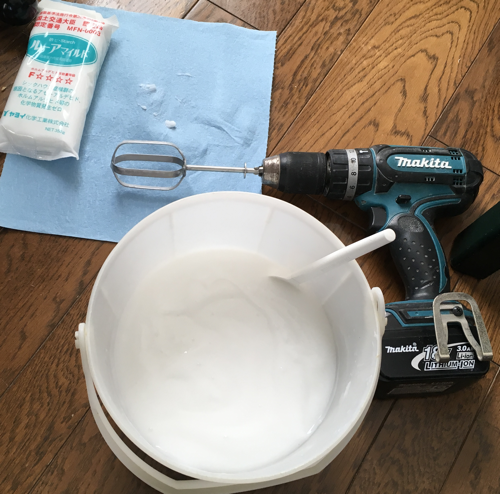
I had to improvise a bit when mixing up the paste (don't tell my wife about the egg beater) as it came in a gel form that needed to be blended with water until smooth. The first attempt at hanging the ceiling didn’t go well, with one hand holding a long stiff bristle brush, rubbing out any air bubbles and getting the paper to adhere and the other desperately trying to manage a heavy folded bundle of wet paper, trying not to tear it, fighting gravity, keeping it straight, running back and forth as the end you started with is peeling off. It must have looked pretty comical.

Once I calmed down a bit, and took more time to really get the paper stuck before moving forward, it ended up going pretty smoothly. Making the cut on their overlap was the next challenge. The trick to that is that you never lift up the knife, you cut along the straightedge, stop (leaving the knife in place), move the straightedge forward (tightly butted against the knife edge), continue the next cutting motion, etc. I used my laser level here agin to project a straight line along the seams, which worked a treat! Trimming the edges where they met the wall turned out harder than expected due to the angle the knife had to be held at to reach the gap in the moulding, it was very hard to get a clean cut. The corners were also really tough, even though I tried to use the double fold technique I had seen, I tore most of them and had to do tedious repair work.

Compared to the ceiling, the walls were cake. For some reason (I was being cheap!) I gave myself a really small margin of extra paper, so I had to do a lot of calculations and literally drafted out the walls to get the material I had, and the offcuts all puzzled together to cover the walls. The laser again made plumbing the paper very easy, and the cut seam technique became very natural and worked out great. It’s been a while since I went on a tangent right? Let’s do this!

Modern tools are very fascinating to me, as I come from a technical background, there are things that have to some degree, attempted to replace ‘the old way’ that actually impress me in their utility. One of those things is my beloved Bosch GLM100C laser measuring device. It cost me like, $150 or something, I had been resisting to buy such a thing because it seemed frivolous and pretentious (well, more so than my ridiculous magnesium alloy and stainless steel Tajima tape measure) but what an idiot I was. That thing would have saved me so much time and improved my accuracy by leaps and bounds. Playing that game of, how long can I extend my tape before the dreaded, “Clack” of it suddenly collapsing to the ground. The bending your tape at the corner and estimating where you think the actual measurement is. Having to try and write down or remember (and then have to remeasure) the dimensions you just took. All of that gone in the flash of a solid state laser and with the most startling accuracy you could ever hope for. Buy one of these now, you will thank me for it (even if you will look like a nerd.)

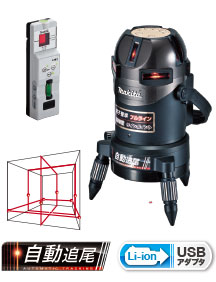
But that’s not our tangent! Come over here, this is what I wanted to show you. The multi-axis laser leveling device. So as with many tools in Japan, this has become a very competitive and feature laden market segment, fighting over what could only be a handful of craftsman who use such devices. The Makita units (they have 20 different models currently) are my favorite, but are totally, ridiculously overpriced. If you are not familiar with how these things work, there is a little three legged R2D2 droid looking device that has a lockable pendulum inside it. That pendulum has several (depends on how much you pay) lasers that project through windows cut into the housing. When the device has detected that the pendulum has found its plumb, the lasers illuminate and project a matrix of plumb lines on the walls. The best of these project on all axises and augment these lines with additional points, like vertical top and bottom projections, and some offset points that I don’t understand the use of, but clearly are worth paying extra for by Japanese tradesmen.


The latest of these use high visibility green or super high output red lasers, that help in big rooms and daylight conditions. They also are available with a separate sensor unit that detects exactly where the line falls on it, allowing you to precisely mark a projected line, even if it is difficult to see with your special ‘laser filter’ glasses that help emphasize the lines. Oh, not crazy enough? Why not get the model where the remote actually causes the base unit to rotate automatically, tracking the remote so that you can get it to project the layout lines exactly where you need them. I chose a relatively cheap Chinese made unit as I couldn’t bring myself to spend thousands on a Japanese unit. Mine works, but the quality is what you’d expect. These are not nearly as useful as a laser measuring device, but are one of those things that can make difficult things really easy in the right situations.

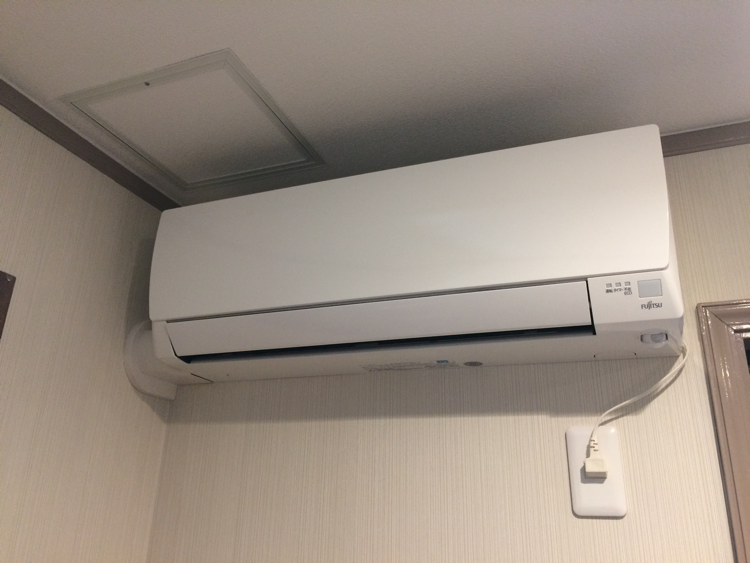
So, here’s the final result, this is a closeup so you can get an idea of the trim, wall paper and ceiling textures.

AirCon.png


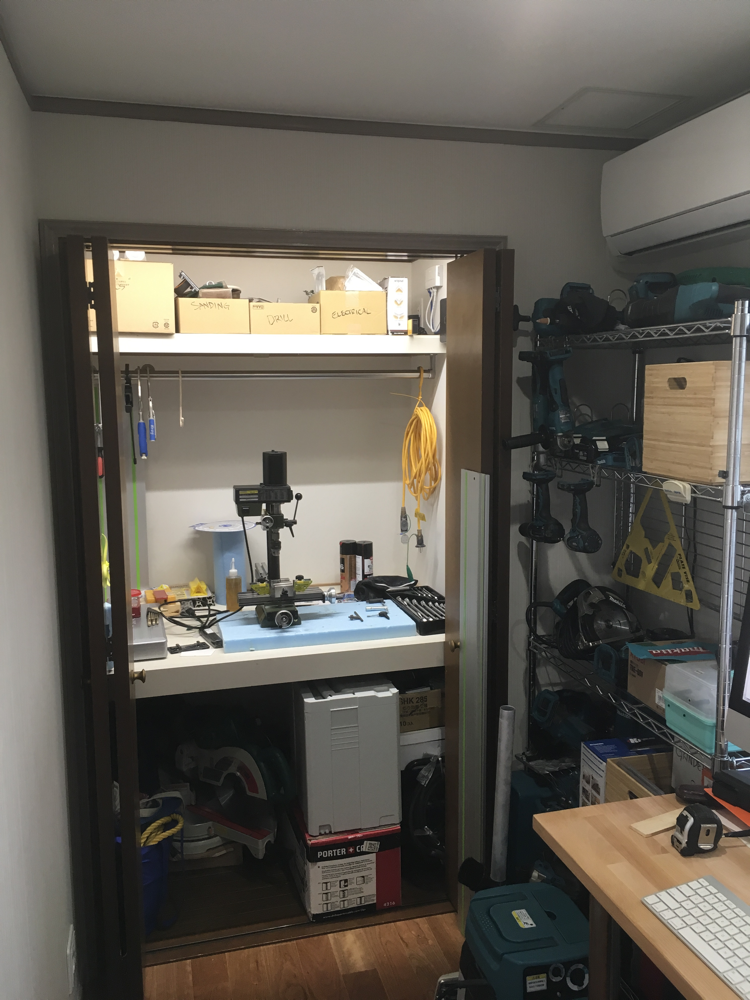
This shows the closet that I installed some nice lighting and electrical into, the tools stored under there will hopefully have a place where they can be set up to be usable.

Closet.png


This shows the storage rack that fits behind the door. I plan on replacing this door with a larger sliding type so my miter saw trolley and materials can better go in and out.

Door.png


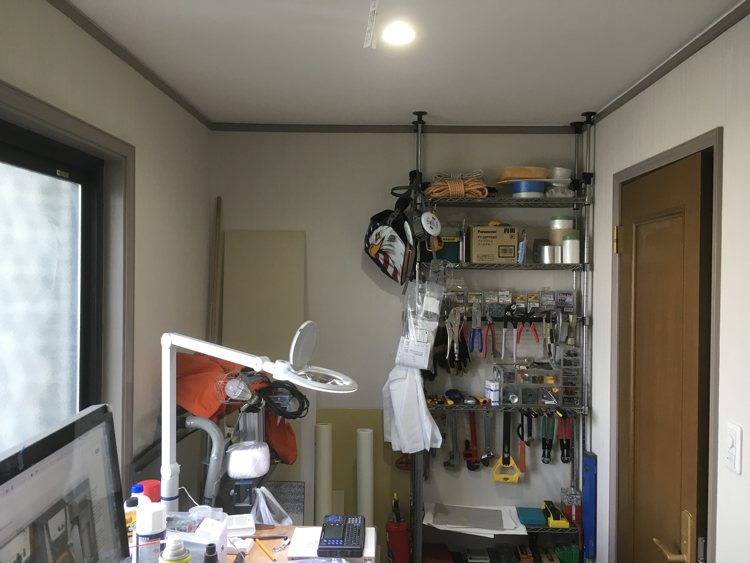
I know it’s not very ‘race car’ and with my tools all packed in it, there’s no room to even turn around, but that’s the challenge, how to make it work. Custom cabinets, clever storage solutions and workspaces. I’m hoping I can create and share solutions that can be used by others in less cramped conditions. I’ll also keep updating on some of the ancillary projects and unique aspects of this house as I mentioned before.

Thanks as always for letting me go on endlessly!
 

Ipassgas

Well-known member
Joined
Jul 21, 2015
Messages
1,041
Location
Grand Strand, SC
Welcome back, Bakafish!

I love the update.

In hindsight, could you have hired a Japanese tradesman to float the ceiling, or is that a skill that simply isn't for sale there?
 
Last edited:

1949 caddyman

Well-known member
Joined
Oct 5, 2010
Messages
1,778
Location
Arizona
Cool thread I was in Japan in the 60's while in the Air Force. Reading this brings back memories of my time there.
 
OP
B

Bakafish

Well-known member
Joined
Feb 7, 2017
Messages
477
Location
Tokyo
Its nice to hear you've been quiet for good reasons, I wondered if they sent you off for re-education. Very cool thread and I'm sure many hope you keep it going :beer:

Sorry to concern you! By the way, tell me about your 911. I still need to get one myself one of these days, but so many ways to go... Pre-1973 so I can do everything myself. 80/90's to take advantage of some modern safety innovations. A 930, because "turbo" or something a few years ahead, because hybrid/electric makes so much sense here.

Welcome back, Bakafish!

I love the update.

In hindsight, could you have hired a Japanese tradesman to float the ceiling, or is that a skill that simply isn't for sale there?

Yes, probably. I'm not pulling the ripcord until I'm really in trouble though, this was all about effort, there wasn't any technical challenges, so I needed to slog through it. I got better at it, and when I tore out and replaced the ceiling in my hallway in order to get access for new electrical runs, it went back together quick, clean and easy thanks to the lessons learned from this misadventure. I won't go out of my way to float a ceiling in the future, but I'm not intimidated by it either.


Cool thread I was in Japan in the 60's while in the Air Force. Reading this brings back memories of my time there.

I think that would have been an amazing time to be here, when they were first experiencing success after digging out of the shadows of a terrible war. I would also love to take a time machine and visit here during the bubble days in the 80's. Don't get me wrong, Japan is still great, but those decades are legendary.

Thanks for the update.

Brilliant thread! I love the amount of detail you provide.

Thanks for reading! Let me know if I'm not clear on anything. It makes sense to me, but I want it to make sense to you.
 
To avoid these ads, REGISTER NOW!

LaneRover

Well-known member
Joined
Jan 19, 2014
Messages
301
Location
Maine
A buddy of mine has a wife from Japan and he will amaze her family when he visits them by things like fixing a faucet or a drain. He is amazed that he can put his camera bag down and walk away while taking pictures and not worry about his other gear getting stolen.

I've sent him a link to your thread so he can see it.

Thanks for the good read!
 

LaneRover

Well-known member
Joined
Jan 19, 2014
Messages
301
Location
Maine
He also said that when he visits he is always getting yelled at for brining something home that he could have thrown out at a store . . .
 

bargainhuntingking

Well-known member
Joined
Nov 22, 2013
Messages
434
Location
The Amazing Pacific Northwest
Awesome thread! I’m traveling in in Japan at the moment and totally digging your posts. I was at a book/magazine cafe in the Hiroshima Station a few moments ago before getting on the Shinkansen back to Tokyo and saw this. Perhaps the DIY movement here is gaining a toe hold?
3ba0ee9d9125db5428adfbc776915836.jpg
 
OP
B

Bakafish

Well-known member
Joined
Feb 7, 2017
Messages
477
Location
Tokyo
Awesome thread! I’m traveling in in Japan at the moment and totally digging your posts. I was at a book/magazine cafe in the Hiroshima Station a few moments ago before getting on the Shinkansen back to Tokyo and saw this. Perhaps the DIY movement here is gaining a toe hold?

It is trending, but it is really superficial and in the earliest stages. A lot of painting flower pots and crafts. I've gotten more hooked in to some of the online industrial supply firms, not McMaster Carr level of selection, but a big step above Amazon and local supply stores.
 

wasfast

Well-known member
Joined
Apr 10, 2014
Messages
874
Location
San Diego CA
Bakafish, do you have some updates? I really enjoyed your thread and the detail but have withdrawals after so much time. Please?
 

QwikKotaTx

Well-known member
Joined
Aug 10, 2013
Messages
967
Location
Seabrook, TX
Very cool thread. Do you have a picture of the finished tub/shower? I have only been to Tokyo for 2 days but it was pretty cool. Most of my hotels had dedicated tubs with shower head but they were simple connected to the sink connections. The toilets were definitely a hoot.
 
OP
B

Bakafish

Well-known member
Joined
Feb 7, 2017
Messages
477
Location
Tokyo
Very cool thread. Do you have a picture of the finished tub/shower? I have only been to Tokyo for 2 days but it was pretty cool. Most of my hotels had dedicated tubs with shower head but they were simple connected to the sink connections. The toilets were definitely a hoot.

I didn't realize I never uploaded some completed shots of the bathroom. I guess I was trying to focus on the "shop" which is a total mess :)

I need to figure out how to take photos in extremely small spaces, maybe some kind of fisheye with barrel compensation applied? @sakurama would know.

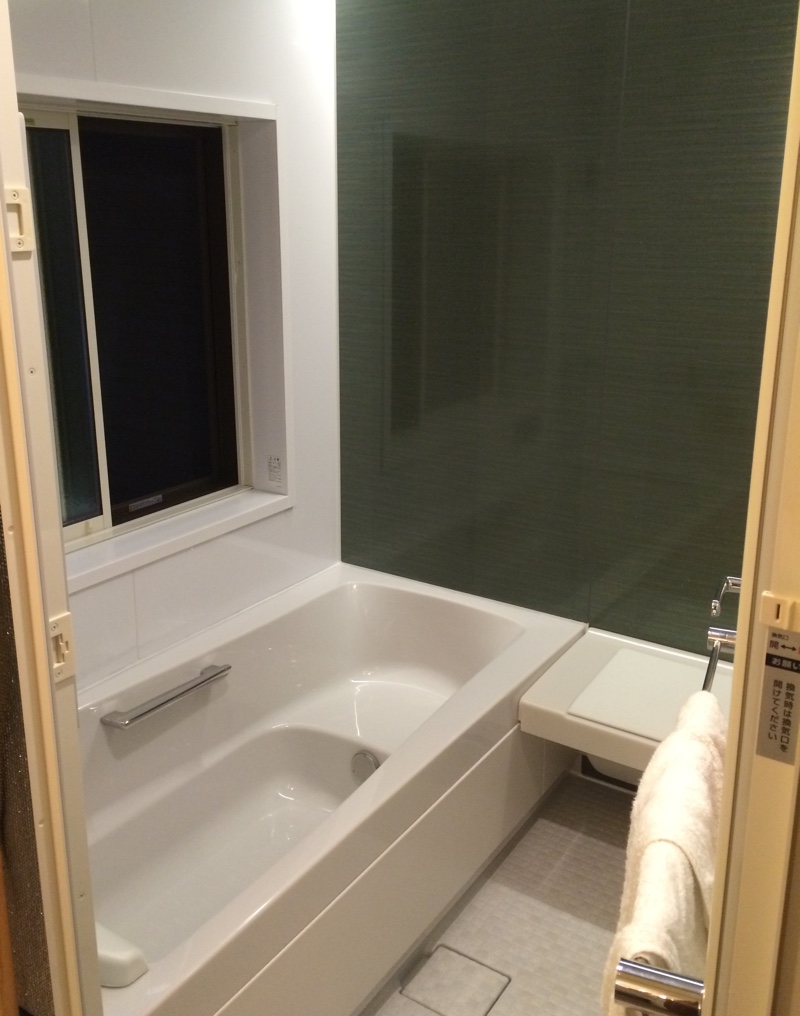
Anyway, this is looking at the bathtub and the new window, the metal grill in the tub is the bath filling and recirculation port.

Bathroom_Window.jpg


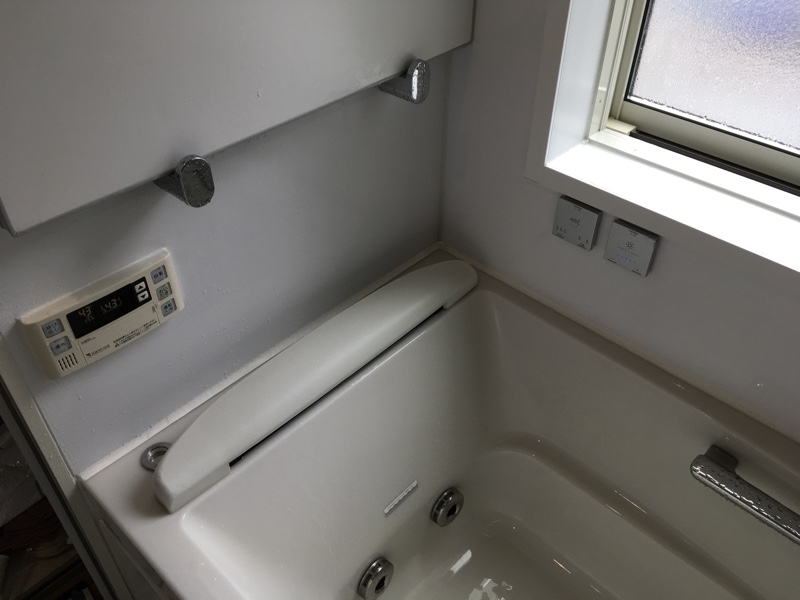
Here is a view of the Tub itself, the headrest incorporates a LED backlit waterfall feature. The two ports at the bottom are the AirJets, the two square remotes control lighting features and the water features. The larger control panel handles the instant water heater, bath filling controls (it auto levels it based on backpressure as near as I can determine) and "Waifu Call" where you can make demands for a fresh beer to the remote panel in the dining room. You can see the insulated cover panels stored on their hooks, when in place they can keep the water warm for a day pretty easily, kind of astonishing.

Tub.jpg


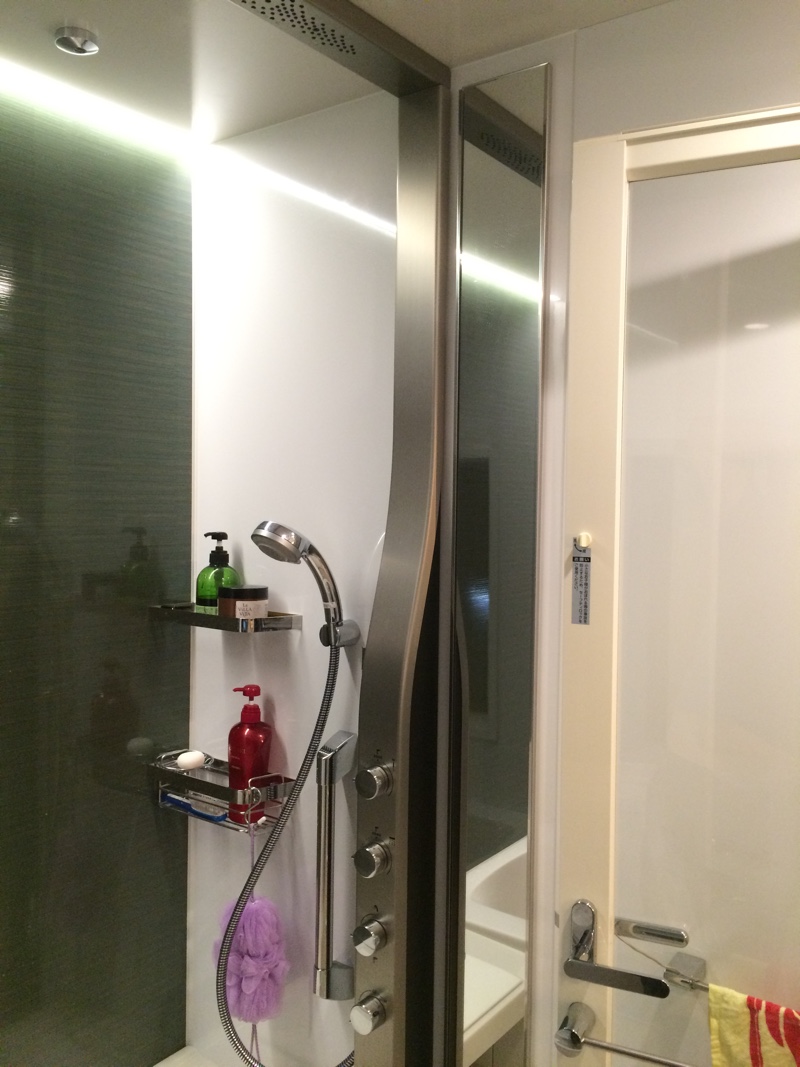
And this is the "Shower Tower" which has a ceiling 'rain' function, the small metal port in the ceiling provides a kind of heavy pulsed stream, a sort of shiatsu shoulder massage. It works really well, with little splashing, hard to explain, but really nice. The hand shower is used by Japanese to clean before taking a bath, they don't really use standing showers, I later installed an extra mount much higher to allow standing as the default location is only suited for sitting. There is a spot at the bottom to fill your traditional wash tub. All those dials allow you to control these various functions simultaneously. There is a full length sealed LED lighting strip incorporated along the full length of the wall. The mirror is not heated, but is coated with a DLC film and has stayed pretty fog and water-spot free over the years. I still haven't installed the waterproof bluetooth speakers I bought, and I need to make an iPad mount for the wall, but it's been leak free, enjoyable and a great addition to the house.

Shower_Tower.jpg
 
Last edited:
OP
B

Bakafish

Well-known member
Joined
Feb 7, 2017
Messages
477
Location
Tokyo
Just a little look at the last completed project as well...

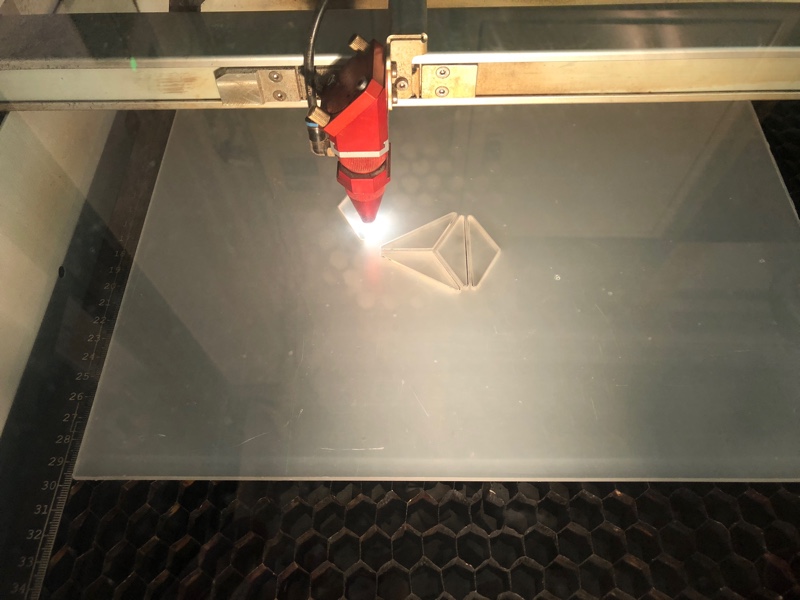
This is an acrylic template I made in Fusion 360 and cut at my local "Maker" space.

laser.jpg


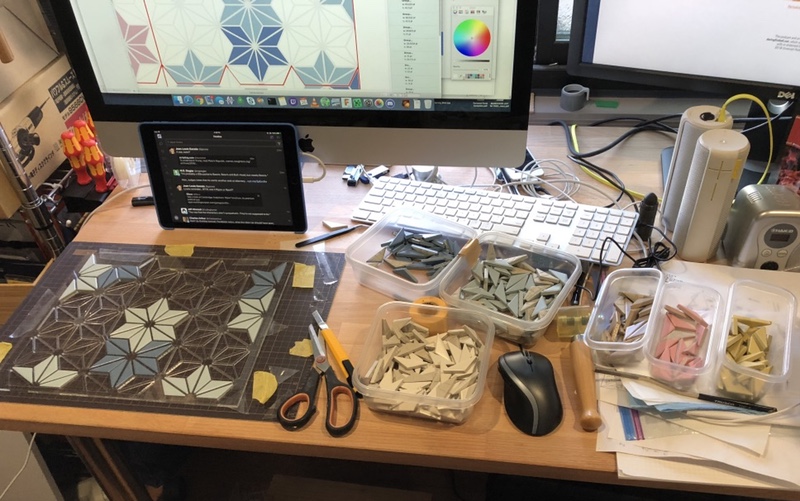
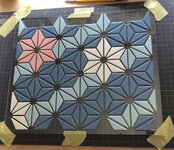
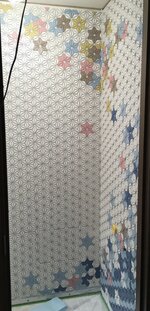
The tiles are made in Japan and create a traditional pattern called Asa-no-Ha which means Hemp Leaf. I laid out the design in Omnigraffle since it allowed me to easily toggle the colors of the patterned objects and keep an accurate count of the number of tiles of each color I needed.

chaos.jpg


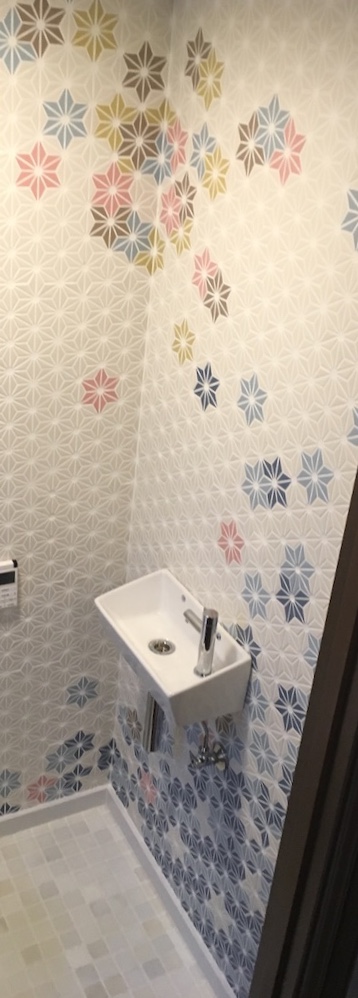
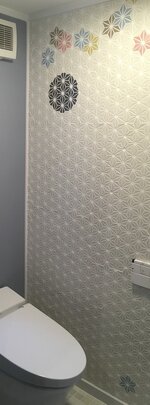
I bought special adhesive mosaic film (which like many things I had to special order and ship over from the states) that I applied to the faces of the tiles to create sheets, which were marked and stored for later application. Here is a teaser of the results, I will try to do a detailed documentation soon.

Tile_Tease.jpg
 

wasfast

Well-known member
Joined
Apr 10, 2014
Messages
874
Location
San Diego CA
Exceptional work on the tile and it's pattern. I have one of the same laser cutters here at work and am still amazed how well it cuts various materials, especially acrylic.
 

Jsun

Active member
Joined
Jul 13, 2016
Messages
27
wow great work! very interesting seeing the differences in things. that inverted cup gas trap.. very interesting!
 

QwikKotaTx

Well-known member
Joined
Aug 10, 2013
Messages
967
Location
Seabrook, TX
Thanks so much for posting pictures of the bath/shower. Very interesting setup. My cheap *** especially likes the insulated tub cover. I am constantly throwing out gallons of hot water after filling our big garden tub but then again, my kids are usually pretty dirty when they get in. The Japanese sure do like their controls, lots of options on just about anything.

If you don't mind me asking, what is the total square footage of your home? It looked quite big from the outside.
 
OP
B

Bakafish

Well-known member
Joined
Feb 7, 2017
Messages
477
Location
Tokyo
If you don't mind me asking, what is the total square footage of your home? It looked quite big from the outside.

It's about 1400 sq.ft, 3 stories. I think I detailed the zoning restrictions, irregular plots and the sunlight rules earlier, it has a serious impact on the architecture and tradeoffs made in housing design. Those awkward rooflines and shapes you see in Tokyo housing are not really style as much as functional workarounds to maximize available space.

This is still considered a pretty large place in Tokyo, it pays to marry a hard working woman :pimpflash:
 
OP
B

Bakafish

Well-known member
Joined
Feb 7, 2017
Messages
477
Location
Tokyo
Exceptional work on the tile and it's pattern. I have one of the same laser cutters here at work and am still amazed how well it cuts various materials, especially acrylic.

Yeah, the technology behind these IR laser cutters is pretty well established and cheap at this point, there is a very good opportunity for disruption if a suitable solid state IR device can be brought down to a reasonable cost. The fumes are probably my biggest hesitation to building one myself, I can deal with a big watercooled tube if I have to.

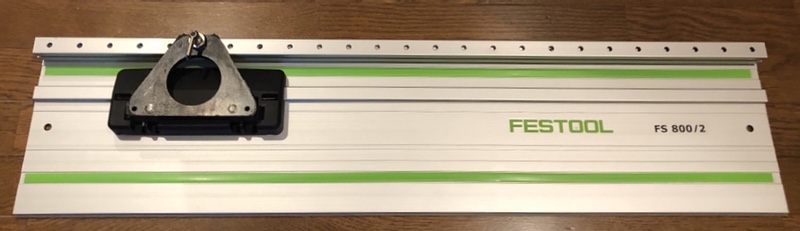
I did invest the time to become proficient in Fusion 360 and got myself an Ender 3 (Crack warning, this additive stuff is addictive!) and I am really trying to decide the best way to set up a CNC over here as working in metal is my ultimate goal. I've been working on a home built Festool 32 system using Makita parts and a 20mm extrusion [test rig below] as the Makita guides, tools and rails are a billion times cheaper here in Japan. Festool prices here are literally a joke, I'm fully aware of how expensive they are in the states as I import them when I have to. I've decided that anything Festool I can build, I will build (and attempt to improve), the only thing I want from them at this point is the Domino 500 ($2300 for the Japanese version :wtf:) which I will import form the US and be totally willing to risk smoking the motor as I can replace it several times and still save money.

32system.jpg
 

bdbecker

ALLIANCE MEMBER
Joined
Nov 18, 2015
Messages
5,543
Location
Iowa
...I did invest the time to become proficient in Fusion 360 and got myself an Ender 3...

Wow... I can't believe the features vs. price on that thing! I haven't paid much attention to the 3D printer market over the last few years, but I think I know what my next tool purchase will be.

Also, thanks for firing this thread back up - I know I'm not the only one who appreciates your posts.
 

jimmie jam

Well-known member
Joined
Oct 16, 2005
Messages
490
Location
fort lauderdale, fl
Well, I just finished reading the entire thread. I'm going to be calling 911 shortly as I need to go to the ER, stat. The next call will be to my therapist to schedule back to back sessions 2-3 times daily IF I can get released from the ER by next month...hopefully. Your life and "metered" laziness are a total inspiration to me and I'm sure many others who have followed this amazing thread and documentation of life in Japan. Truly amazing! It's like I've already traveled there and have experienced what life is like through your skill as a great storyteller. By the way, your wife is a saint but you already know that. Thank you for taking the time to post your journey through time. I can't believe that I didn't notice this thread prior to today. You, my friend, are "the man". Please, don't let this thread die...I'm begging now. :)
 

Guster

Well-known member
Joined
Mar 11, 2012
Messages
1,543
Location
Auckland, New Zealand
Bathroom came out great. The retail spycraft definitely paid off.

The mosaic tile work is bakana! Definitely interested in how you did that.
 
OP
B

Bakafish

Well-known member
Joined
Feb 7, 2017
Messages
477
Location
Tokyo
I wanted the second floor toilet to be a bit "Japanese" and welcoming. If we had guests over I wanted them to be comfortable, I always have some anxiety using someone else's bathroom and wanted to make sure people could be distracted by details. As it is a seperate toilet I wanted to add a tiny handbasin (as is the current style here) and since I wanted to put in a tile floor, I wanted to heat it, because no shoes inside here and brrrr.

T01.jpg

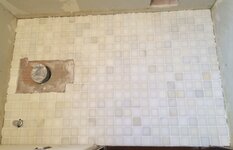
Prior to moving in I had already ordered new toilets and replaced the downstairs unit. We found some quartz(ite?) natural stone square tiles that felt nice and I proceed to start tearing out the old linoleum and subfloor to make space for the fairly thick tiles. The subfloor in the toilet room (and washroom adjacent to the unit bath) was a complex sandwich of a thick (highly stained and contaminated) linoleum, a 1.5mm plywood sheet stapled and glued to a 10mm chunked rubber sheet glued to 2 layers of 12mm sheetrock! and then finally the 15mm subfloor sheeting. I was super paranoid about "flex" as tiling on top of a spongy subfloor is the ultimate newb move, I also wanted to encapsulate the floor heating panel I bought.

This lead to one of those frustrating, "I know this exists, what do Japanese call it, can it be obtained?" episodes. I was trying to find 'self-leveling' cement, but it was really really difficult to find. Shipping cement from the US is maybe the stupidest of all things to do, but I was seriously considering to put a bag of the stuff in my suitcase on my trip to Hawaii. But persistence, and a lot of clicking on horrific Japanese websites (Japanese web design is some of the most cluttered horrific garbage known to mankind, full of Image based text so that translation doesn't work, a million links going to 'mascots' (every business has one) and other pointless "Message from the President" garbage, the Japanese cement industry is about the lowest depth of this nonsense you are likely to find.) So 2 bags of hopefully correct cement ordered I started laying everything out.

I wanted to match the floor level precisely, so I measured the tiles and the heating panel, calculated the amount of space the epoxy based tile adhesive would take, and then added some sheet cork under the heating panel to help insulate and direct the heat up. I had no idea how happy the panel was going to be submerged in the cement, but it seemed well sealed and I used the armored cable I brought from the states. (Lots of tools and supplies were brought back from Hawaii in place of the bags of cement that tempted me.)

For the hand basin I cut open the wall and installed a drain and a single water supply line that penetrated into the adjacent washroom. These two lines run behind the existing built in wash basin cabinet and were spliced into the existing drain and cold water feed. When I remodel the washroom they will be redirected down into the plumbing chase and more professionally integrated, but this quick and dirty hack is working perfectly at the moment.

I extended the toilet circuit to power the 2 zone floor heat controller (that will also service the main washroom when it is remodeled) and ran both zones 100vAC lines using the US armored cable (not sold here) prewiring the main washroom so I wouldn't need to tear this wall open again.

T02.jpg

In this picture you can see the drain and water supply, these actually needed to be very precisely located as all the sink plumbing and supply lines are exposed and everything needs to look super clean, no bodges that can be hidden by cabinetry.

T03.jpg

I reenforced the subfloor with additional pieces of plywood, so the next step was to pre-layout the tile and create a plywood pedestal for the toilet to mount to. Again they don't use the universal flange system in Japan so this plate allows the custom mounting flanges shipped with the toilet to be mounted without having to deal with the cement once poured. Again, a lot of precision was required to make sure everything lines up and is centered. I think I would do a lot of this in Fusion 360 now, but everything was done by hand back then.

T04.jpg

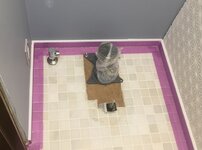
With everything glued and sealed (I didn't want the cement to drain into the first floor ceiling!) I mixed up the cement and poured the base surface. You can see here I mixed in too much air so it was a bit bubbly right after the pour, but it smoothed out and gave me a perfect surface for laying down the tile.

T05.jpg

I was using a really expensive two part epoxy tile cement, so I was super paranoid about time and didn't take any 'in process' photos, but here is after the tiles were set, and then grouted using traditional bacteria resistant white grout (epoxy grout still has me spooked. I'm not at that level yet.)

T06.jpg

With the floor in place I put up mineral board on the walls since I didn't want to tile on sheetrock. This isn't a high moisture area, but tiling on sheetrock is gross and stupid and you are a bad person if you do it. The screws here were all the correct mineral board specific anticorrosion screws from the states, where I also bought the correct alkali resistant fiber joint tape and penetrating stone sealant for the floor, all of which were totally unobtainable in Japan.

T07.jpg

The toilet stayed in this state for about 2 years as I changed focus to the unit bath :) and because I just couldn't decide what to tile the walls with. I knew I wanted some kind of mosaic, something that would be interesting, but I was having a lot of trouble finding tile that felt Japanese and was compelling enough to give the mood I was going for. Then I saw this special Mosaic tile made by Nagoya tile that used a traditional Japanese pattern and came in some interesting pre-templated designs, but the cost for these 'panels' was ridiculous. Wifu said she didn't care about the cost, but the individual tiles themselves were pretty reasonable, it was the pattern work adhering them to sheets that they were charging for, and being a cheap ******* with expensive tastes I used the only layout tool that made sense to me for a billion little colored triangles - Omnigraffle Pro - and started clicking out a mural that would cover the two walls.

With the design chosen, I started thinking about how I was possibly going to recreate the design in the real word. Mosaic tiles are typically shipped with either a perforated backing sheet (as my floor tiles used) or a water soluble glued paper facing sheet (the way these tiles are shipped.) This is to attempt to keep the spacing of a lot of little tiles uniform (it sometimes works) and the patterns of your mosaics in the case of a complex design. I ordered the raw tiles in single color sheets after calculating the numbers of each color the design would use. I was hoping I could remove and replace the individual tiles, reusing the sheets, or maybe cut out sections from the sheets and jigsaw them into place, but when the tiles arrived it was clear that none of that was going to work. Additionally the paper facing was extremely prone to tearing, the tiles were really poorly spaced, totally unusable. Also the tile quality was more inconsistent than I would expect from a Japanese company, about 30-40 tiles were over fired, chipped or had some type of defect and due to the paper being mounted to the face, it was impossible to spot flawed tiles before installing them with this method.

Plan B needed to be formulated. My research led me to acrylic and an IR laser, and I was a bit stunned to learn that there was a nearby maker space that would allow me to access their nice professional machine for very little money. I needed a very accurate template though, Omnigraffle was out of its comfort zone already, so I decided to give Fusion 360 a try. Honestly, coming from a very ancient CAD background I found a lot of Fusion 360 baffling. It wasn't intuitive to me at all and I was really frustrated with the whole timeline approach and the strange relationships between the sketching environment and the model. But I managed to Google my way through and created some fit test templates to get the tiles to snugly it and to understand the kerf that the laser would create. Once I had a good set of numbers I cut my template (the first one curved badly while cutting, we had to tape down the next attempt and to speed things up to put less heat into the acrylic.)

T08.jpg

The results were excellent and precise, but I found later there was a lot of tile size variability (+/-0.5mm) based on the colors so I had to do a lot of "will it fit in this spot, how about this one?" when I started making the panels. Now that I had the ability to lay the patterns out, I had to decide what kind of backing or face paper I could use. My research led me to a fantastic solution, available in the US only of course. FML anyway, the parents airmailed me the heavy roll of thick clear adhesive film. The glue was sticky enough for a firm hold, no shifting of tiles, and as it was clear and stuck on the front of the tiles, it decreased the chances I would misplace a panel and kept the adhesive off the face of the tiles. Using my Omnigraffle design as a guide I started creating the individual sheets.

T09.jpg

The toilet's walls are tiny, about 2-3 square meters I think, but it still added up to a shitload of these little tiles. Getting them in sheets was the cheapest way to buy them, but the existing facing paper and adhesive needed to be painstakingly scrubbed off prior to use. There was a lot of tedious repetitious work as I soaked and individually scrubbed batches of tiles, sorting them into little plastic bins for my layout work. Then I staged the panels in my Tatami room to properly absorb more Japanese Qi essence as I worked towards completion.

T10a.jpg

T10.jpg

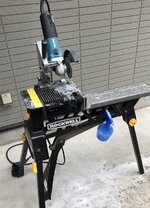
There was a need for some custom sized pieces, half lengths, the sink plumbing perforations and such. So I reused the acrylic sizing templates with a cheap chinese angle grinder cutoff adaptor to align precise and repeatable cuts, my new Makita variable speed angle grinder (I now have 3 angle grinders, I need an intervention) a nice diamond wheel and a Rockwell Jawhorse (which has done pretty good for me, it was available domestically, it folds up pretty small and provides a lot of flexibility given I need to do all "big" work in my driveway.)

T11.jpg
T12.jpg

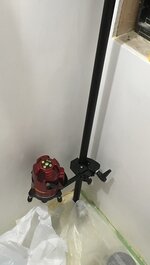
I then used my laser level mounted on a Manfrotto spring loaded Auto-Pole and a special offset arm clamp, a brass camera thread to survey thread adaptor, and by moving it carefully up the pole, marked out my horizontal seam lines to make sure I had a chance to keep everything straight. I was rushing against the short cure times of my epoxy adhesive (the stuff is super strong and makes a confidence inspiring bond, but yeah scary) so I wanted as many guides as possible. I continued to use the laser for vertical truing as well. No wall is ever flat, square or plumb, and errors tend to accumulate. With a regular pattern like this any spacing fuckups will jump out at you, so you can never do too much preparation.

T13.jpg
T14.jpg

I did well enough, as with anything I do I know I could do it better the second time. The biggest issue was depending on the adhesive bed to compensate for a fully smooth surface. Several screw heads stuck out just enough to tilt a tile so it reflects a little different or throws a little bigger shadow, I should have put down some kind of skim coat, but I worried I would reduce adhesion and you may have heard I had some issues the last time I tried making things 'flat', I didn't want to get trapped down that rabbit hole again. Oh, did I mention I was trying to do all this in the 3 days my Wifu was travelling as a surprise? That's why there was no complaints about the toilet sitting majestically in the middle of the living room!

T15.jpg
T16.jpg

The Deathstar looking thing ("That's no moo..., oh actually it is supposed to be a moon.") is made of special silver leaf tiles that are pretty reflective and will have a micro-spotlight on it to make them pop when the cabinets are finished. I used the same white grout as the floor, the corner there just had grout over squeeze that was gently chipped out and replaced with nice silicon calking later (always calk between tile transitions!) And then I mounted the custom moulding ("See Wifu, there is a reason I have all those routers!") which I painted in my new "portable" paint booth, basically a big camping tent that helps knock down overspray. I have to paint in my tiny parking spot directly adjacent to the road where children and Ferrari's are an arms length away, and so painting stuff is a super stressful process. I did buy a JDM Graco airless unit after this project so that I can use water based paints and not stink up the neighborhood. That will be for later projects...

T17.jpg

Here I've taped everything up for the floor trim to be calked. There is a floating foam spacer tucked in the crack to ensure the calk only has two fixed points of contact (it's a thing...) You can also see the antibacterial and waterproof wallpaper I picked out to match the tiles as well.

T18.jpg

This shows the half round trim I used to transition from the tile to the wall. The outlet there I installed and is tied to the Panasonic motion sensor based lighting and fan control switch I use. It allows you to set up the lighting levels based on natural lighting and time so that late night/early morning bathroom breaks don't blind you, the toilet has its own motion controlled lighting as well. The fan units timing is similarly controlled and it incorporates a cute little internal louver system to seal the room from draughts and heat loss when off. There will be a custom cabinet mounted above the window for storing extra toilet paper and such, it will incorporate the micro spotlights and some form of networked wireless speaker. The ceiling here needed a ton of leveling, but the low height and small size, along with my improved skills made easy work of it.

T19.jpg

Lastly I designed a little laminate topped shelf to mount under the sink. It is actually suspended from the sink rather than the sink being supported by it. With so little room I needed a good place for the toilet paper holder and the hand towel. You can see the bottle type gas trap and why the plumbing layout had to be so tightly placed.

T20.jpg

These photos bring out the flaws a lot more than they are visible in real life, I'm not a great photographer :(

T21.jpg
 
Last edited:
OP
B

Bakafish

Well-known member
Joined
Feb 7, 2017
Messages
477
Location
Tokyo
Well, I just finished reading the entire thread. I'm going to be calling 911 shortly as I need to go to the ER, stat. The next call will be to my therapist to schedule back to back sessions 2-3 times daily IF I can get released from the ER by next month...hopefully. Your life and "metered" laziness are a total inspiration to me and I'm sure many others who have followed this amazing thread and documentation of life in Japan. Truly amazing! It's like I've already traveled there and have experienced what life is like through your skill as a great storyteller. By the way, your wife is a saint but you already know that. Thank you for taking the time to post your journey through time. I can't believe that I didn't notice this thread prior to today. You, my friend, are "the man". Please, don't let this thread die...I'm begging now. :)

I'm but a pale and unworthy imitation of this giant amongst men: https://www.garagejournal.com/forum/showthread.php?t=185104

I've already arranged for a nurse to provide you IV sustenance as you are likely to be transfixed, motionless for the next few months reading that mega-thread of awesomeness.
 
To avoid these ads, REGISTER NOW!
Top Bottom