So a little change of subject, yesterday we received a surprise cooler from our friends that contained a dozen plump and quite live abalone, individually packed in ice chilled, oxygen filled bags of seawater. They regularly spoil us with food sent from their travels, a tradition of gift giving the country is well set up to support. Cheap and efficient overnight delivery is available from most resort area markets, so we are often getting fresh seafood or meats from them. Often the amount they send is extravagant, so I suggested that we bring some to one of our favorite local places to share with the master there, as it was too many for us to eat and he is excellent with seafood. Although I can cook, I stress out about wasting such treasures with my lack of skill, and it would have been a shame to freeze them. It may sound a little odd to bring your own ingredients to a restaurant, but over here if you have a close relationship with a place it isn't as uncouth as it sounds.
The shop is a family business, husband and wife, with their beautiful daughter helping out as she prepares to start university life. As I always have trouble with names, I often give our regular places nicknames which helps when I'm texting with my wife about where we should go (before Covid made me a hermit.) So we call this restaurant 'Island', mainly because the master is from the small islands about an hour or two by boat off the coast of Tokyo bay. As with every region of Japan, they have their own unique foods and traditions, obviously the sea being a big part of that culture.
We've been customers there from the first days of moving to this town 7 years ago, we're in the quieter outskirts of Shibuya, still close to the heart of Tokyo. I have to say that we've never had something that wasn't delicious from them, the food is outstanding and varied, and we always get 'Omakase' or the chef's choice of fresh seasonal sashimi, often with fish from the islands themselves. The mama-san is very lively and outgoing, she is quick to laugh and is in constant motion. The master is quiet and focused, working behind the counter methodically and with years of experience so no motion is wasted. The orders are called to him once, and he takes no notes and checks no slips, he just creates the delicious dishes in silence, never forgetting a single item.
One of the charming Japanese traditions is that regular customers often 'bottle keep' meaning you buy a bottle of alcohol (usually about 720ml) and they keep it on the shelf for you. I'm a big Shochu fan, and I typically keep a bottle of Buckwheat or purple Sweet Potato derived Shochu from the islands that I drink on the rocks. They bring us a nice ice set and my bottle when we arrive, my wife usually like to get the fresh unpasteurized draft beer (that due to deep distribution channels, heavy competition between breweries, and rapid daily delivery can be found in the farthest corners of Japan.) There is always a small dish of something seasonal, last night was steamed wild mustard greens and raw octopus in a mayonnaise sauce, one of my favorites.
With all the abalone on hand, he prepared it in 4 ways. Sashimi of course, but also steamed in sake, grilled in the shell with garlic butter, and lightly battered and fried. All of it was amazing, he managed to get the abalone so tender by perfectly cooking it, it is really easy to turn it into rubber. I didn't take any pictures, that's not my thing, but my wife snapped a shot of the sashimi plate with the fresh Awabi (abalone) and other fish caught around the islands by his friend that morning.

It is a very small place and the counter faces the kitchen, so we can watch the chef as he works. Next to us a pair of women were well into their drink, one of them seemingly worked with the mama-san at another shop many years ago before they made their own restaurant. Mama-san was losing her patience, and got really pissed off when the lady referred to me as 'Gaijin-san' (Mr. Foreigner) which is not at all uncommon and typically used without malice. The master showed an uncharacteristic flash of a smirk as he made quick eye contact with me, as if to say "Don't bother" when I tried to diffuse the situation. The drunken ladies curiosity of why my wife chose to marry a "Gaijin" (which again triggered the Mama-san to exclaim slowly, fully enunciating each syllable, as if to a petulant and perhaps dim witted child, "Donna-san" (the polite form of husband) to the woman, who obviously continued her inquiries. The drunk lady suddenly brightened with recognition and gestured with a V shaped chopping motion of both hands towards her groin, "You operated on my ..." Mama-san shrieked, "Odamari!" (Shut up) as papa actually froze and let out a quiet chuckle, unable to suppress a smile as he once again continued his work. This stopped the lady too for just a moment, as she mid-sentence and white faced, slowly scanned her head around the small restaurant, seemingly realizing the inappropriate nature of what she was about to say, nonetheless continued her exclamation to the silent room as if unable to stop herself... My wife, although she didn't specifically remember this patient, certainly as an OB/GYN knew where she had likely treated the lady, and didn't really need the exact location conveyed.
This led to the other tables, who had been practicing the long standing Japanese tradition of polite intentional obliviousness, breaking out in full laughter. And as one does in a 'local place', we all just cheered each other with a raised glass, drank and enjoyed ourselves. We rounded out our meal with one of his specialties, deep fried
Ashitaba leaf from the island. When I say deep fried though, it isn't what you would picture, his batter is like gossamer, incredibly light and crunchy, it melts in your mouth much like cotton candy does. The leaf itself is mild and complex, with subtle flavors of mint and celery. It is the perfect dish to finish on, and so this little slice of life over here will end as well.



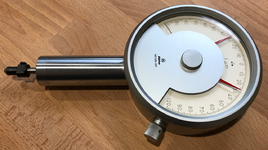

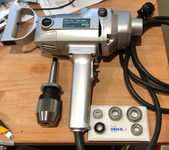
 With everything clamped down, it would dance my drill vice around a lot. This made me pause any further development as this needed to be resolved if this drill was going to do any serious work (the backing plate of my device would be easily adaptable to alternate tools.)




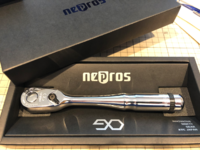
 Like many things, these Nepros tools are more expensive (through normal channels) here than they are overseas, and the limited editions of this tool are up to $5000 each. The current collectors set is about $25,000 and is made to order. Japanese take their professions seriously, I can imagine these tools are an expression of pride in what they do. It is very unlikely that they will ever see the harsh lights or oily air of a garage, they are the sort of thing that only a small number of people would recognize or appreciate. Something a successful mechanic might pull out to show a like minded craftsman over drinks at his house. As much as I would love to have one of these beautiful lacquer works of art, I have no business having one. I hope someday an acquaintance, with a sheepish smile, pulls a small wooden box out of some hidden niche and shows me such a treasure.